Dala Restaurant: Sweden arrives in Kraków
This restaurant in Kraków transforms Scandinavian traditions into a contemporary sensory experience.
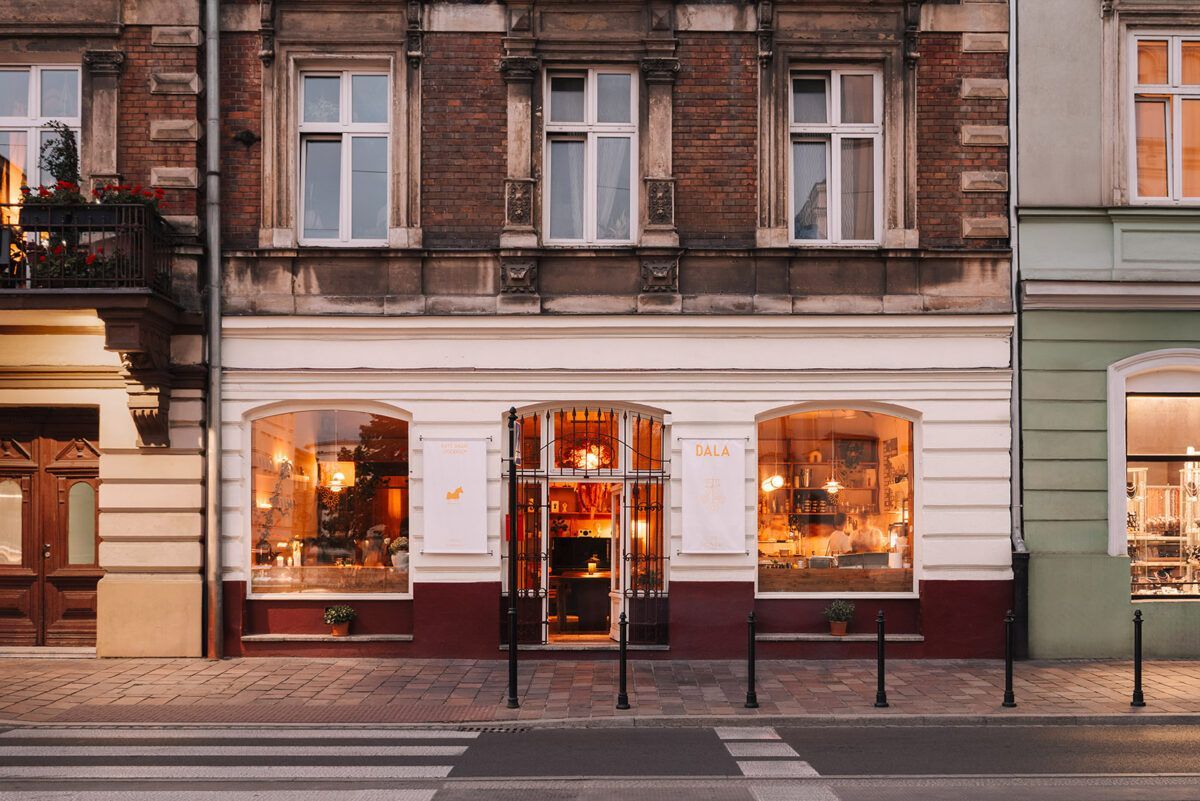
In the historic district of Kazimierz, one of the most culturally vibrant neighbourhoods in Kraków, Dala Restaurang has just opened its doors — a gastronomic space that invites visitors to immerse themselves in the world of Swedish traditions through architecture, design and culinary experience.
Located at Krakowska 35 and occupying 145 square metres, the restaurant offers more than a Scandinavian dining concept. Dala is conceived as a place where everyday customs and traditional Swedish celebrations are reinterpreted through space, creating an atmosphere that connects nature, ritual and conviviality.

The project was initiated by the founders of Kaffe Bageri Stockholm, who decided to go beyond the café format to create a restaurant where Swedish culinary culture could be experienced in a broader and more immersive way. To bring this vision to life, they collaborated with the architecture studio Znamy sie, responsible for the concept and spatial design.
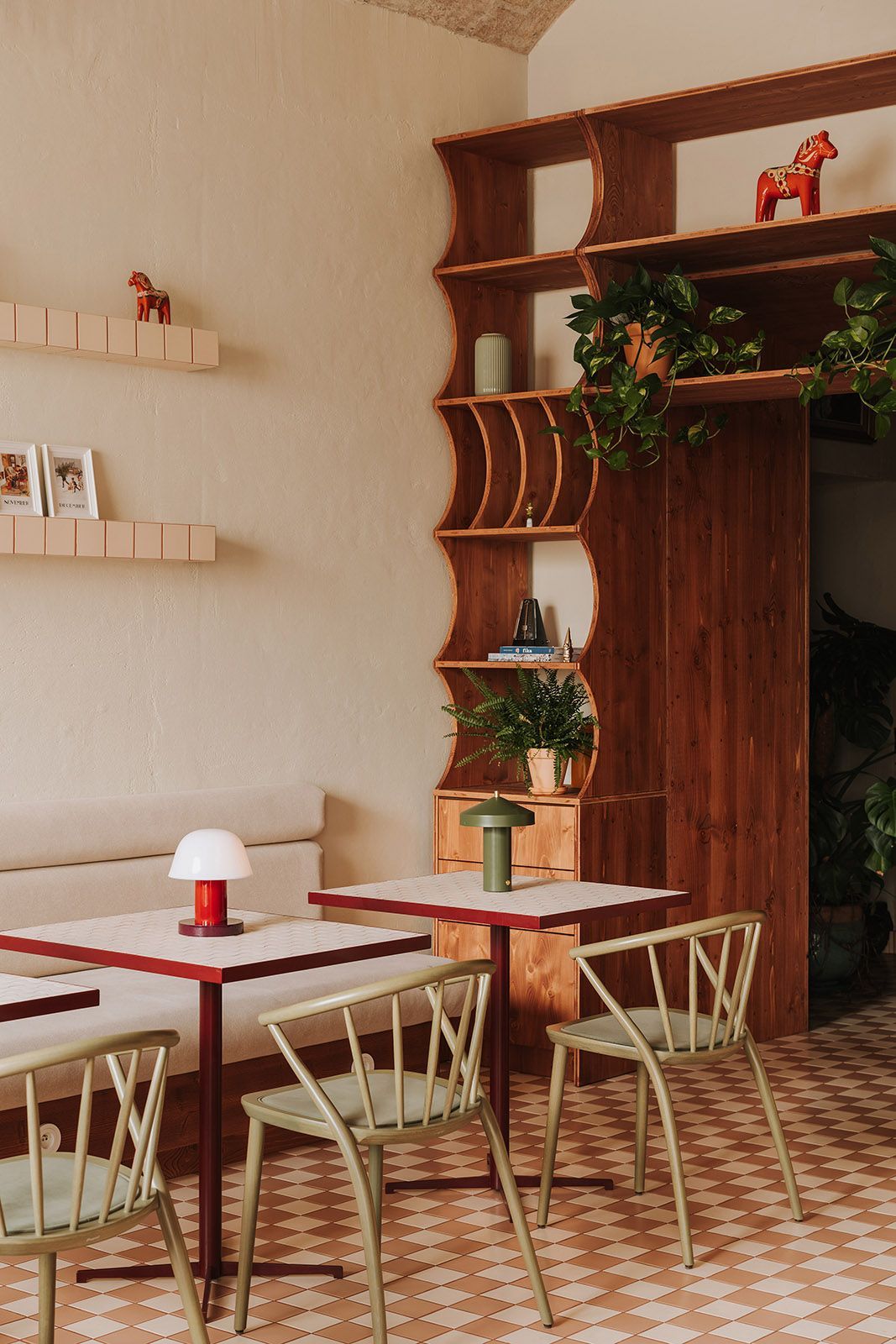
The symbol of the Dala horse
The restaurant’s name refers to the Dala horse — known in Sweden as the dalahäst — a hand-painted wooden figure that for centuries has been one of the country’s most recognisable cultural symbols. Traditionally given as a gift during celebrations and festivities, it represents good fortune, joy and hospitality.
Here, this popular object becomes a metaphor for the project. Like the horse itself, the restaurant is designed to move to the rhythm of celebration — understood not only as an exceptional event but as part of everyday life.
Within this spirit coexist traditions such as the ritual of fika, the informal gatherings known as mingel, and seasonal festivities as emblematic as Midsommar.
The intention is clear: to create a place where celebration is not limited to special occasions but can be experienced every day through food, design and social connection.
The Swedish landscape as inspiration
The concept for the interior begins with a very specific image: the Swedish landscape. Deep forests, crystalline lakes and wooden houses painted in vibrant colours form an imaginary world where life follows the rhythm of the seasons and natural cycles.
This connection with nature is translated into the restaurant’s design through a combination of colours, textures and forms that evoke different times of the year. The space proposes a sensory narrative recalling both everyday rituals and the traditional celebrations that shape Sweden’s cultural calendar.
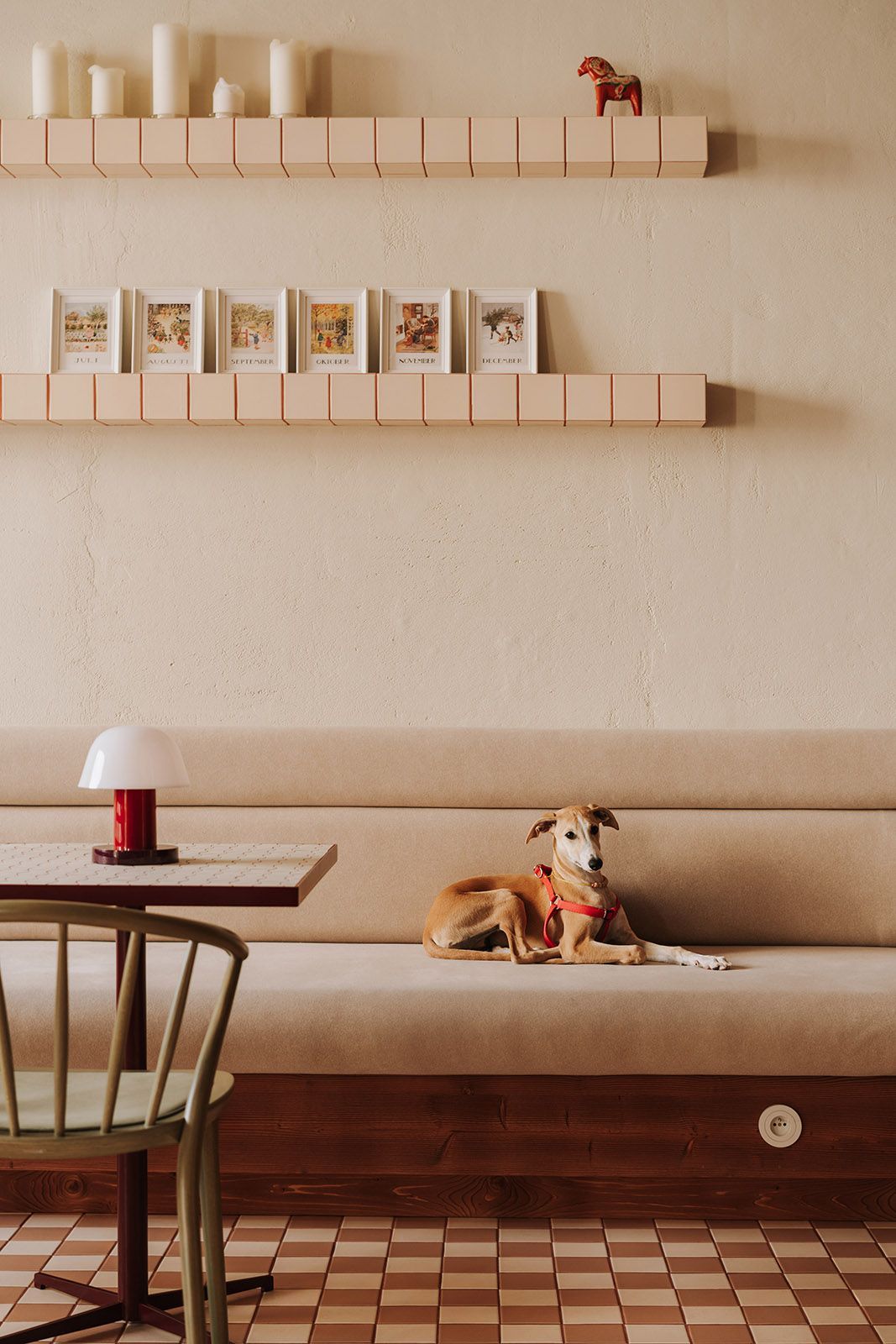
The result is an interior that doesn’t literally reproduce that landscape, but rather suggests it through warm materials, botanical details and lighting designed to accompany the changing hours of the day.
A story told through spices
One of the most interesting conceptual aspects of the project is the way colours and interior details reference the spices that have accompanied Swedish baking and celebrations for centuries.
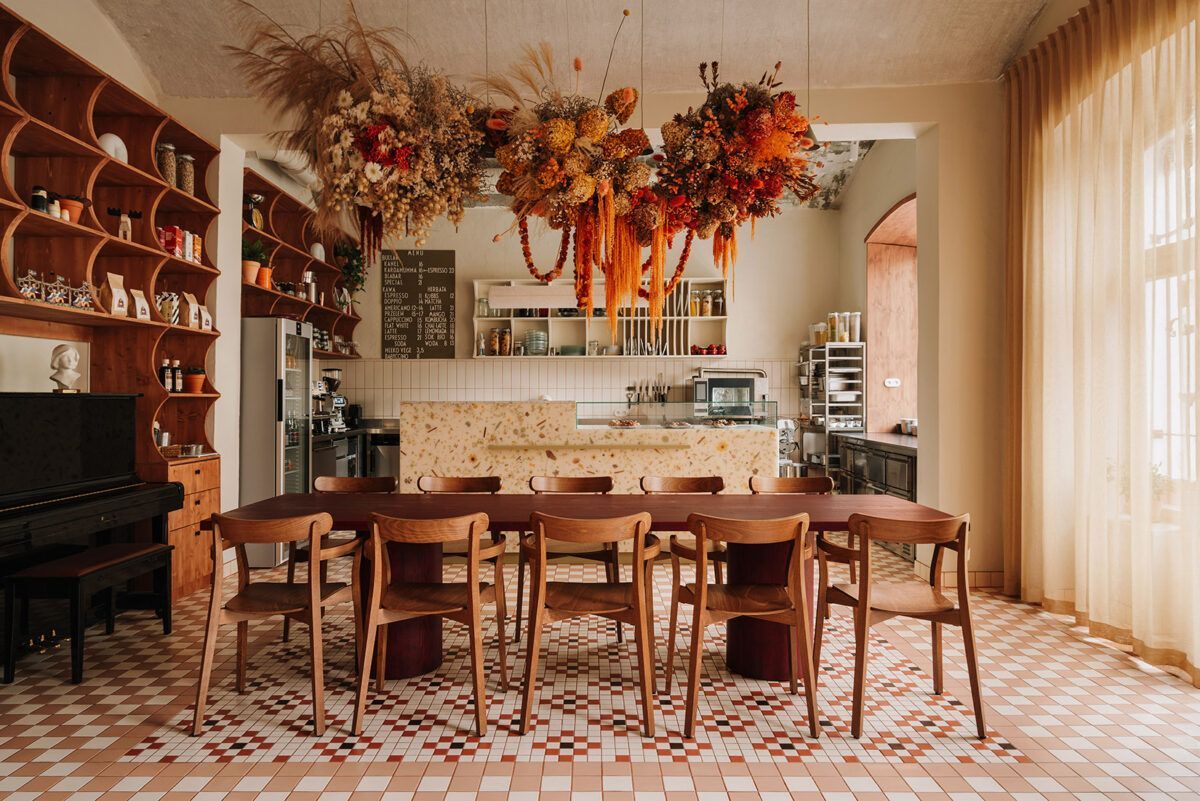
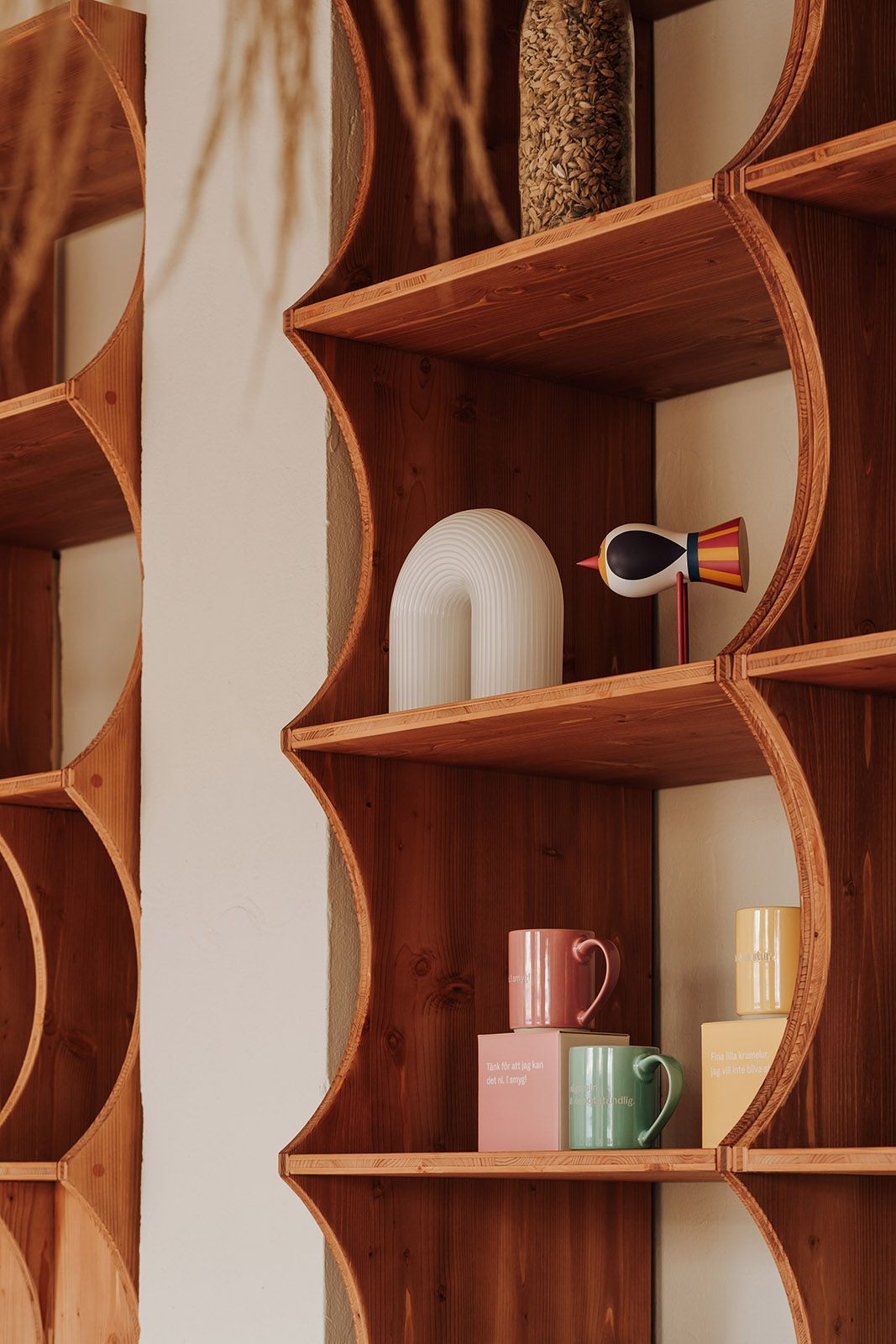
Cinnamon, the star ingredient of the famous kanelbullar served during the daily fika break, appears reinterpreted in dark wooden shelves with rounded edges and cylindrical backs reminiscent of cinnamon sticks.
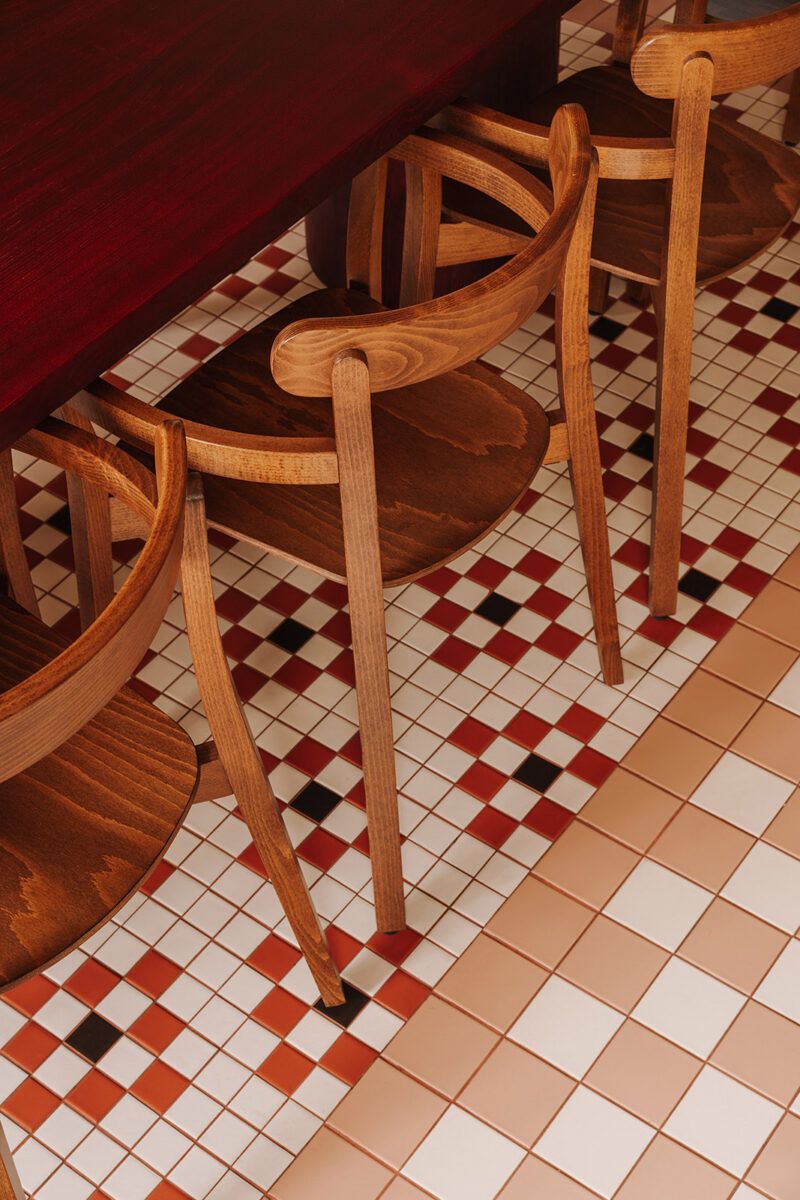
The red tones found on countertops and selected furniture elements bring warmth to the space while referencing saffron, the essential ingredient of lussekatter, the traditional buns prepared during Saint Lucia Day.
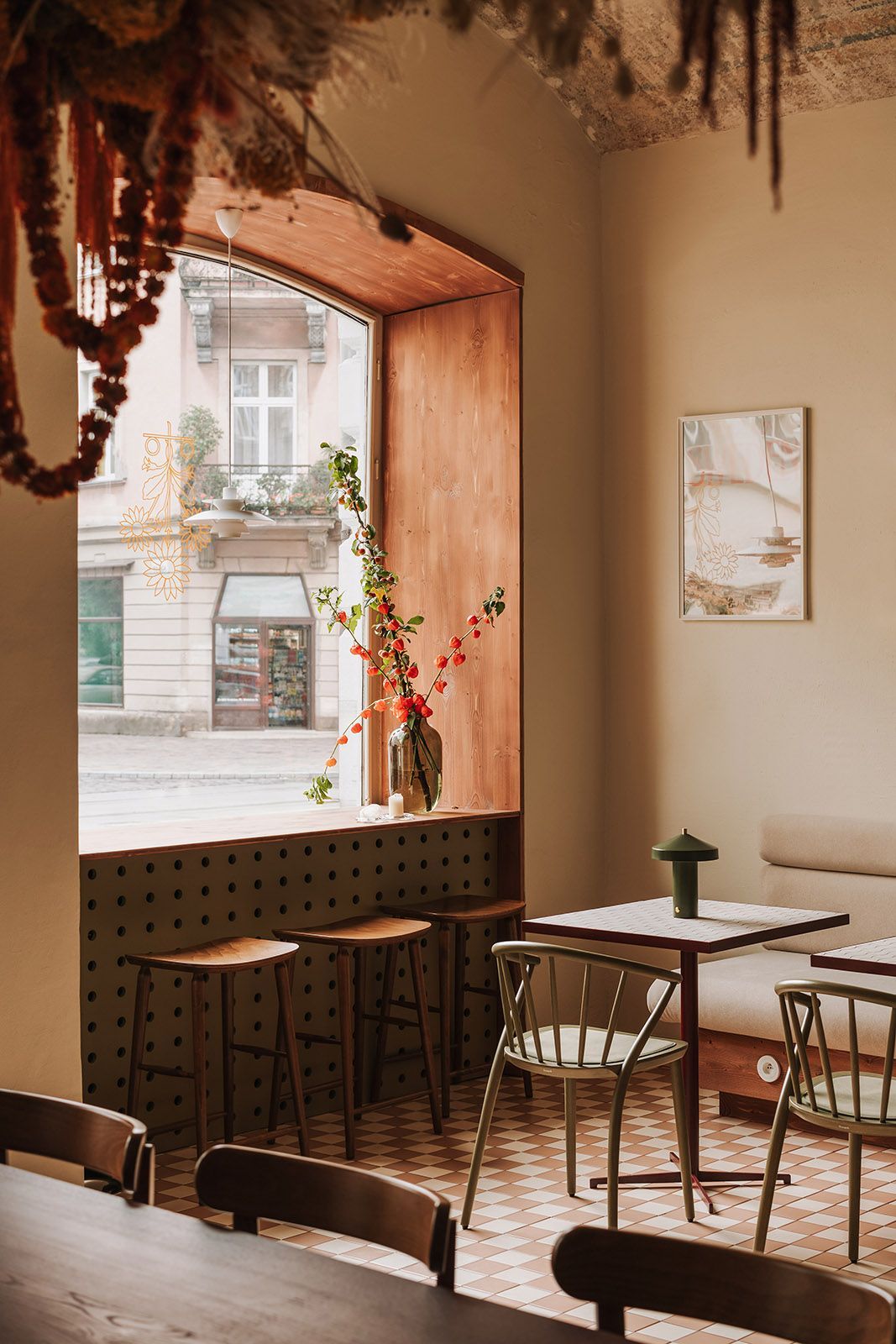
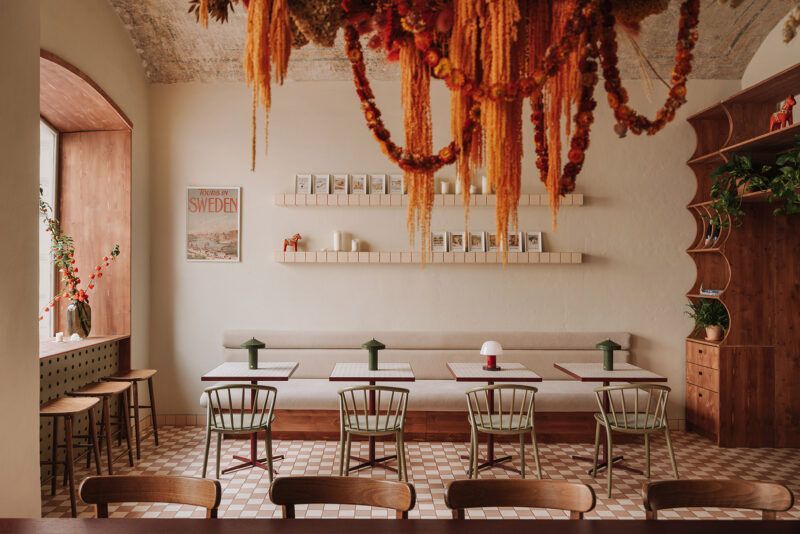
Meanwhile, cardamom, commonly used in semlor eaten during Fettisdagen, is translated into light green curtains subtly dividing the space and into lamps whose shades echo the shape of the spice’s seeds.
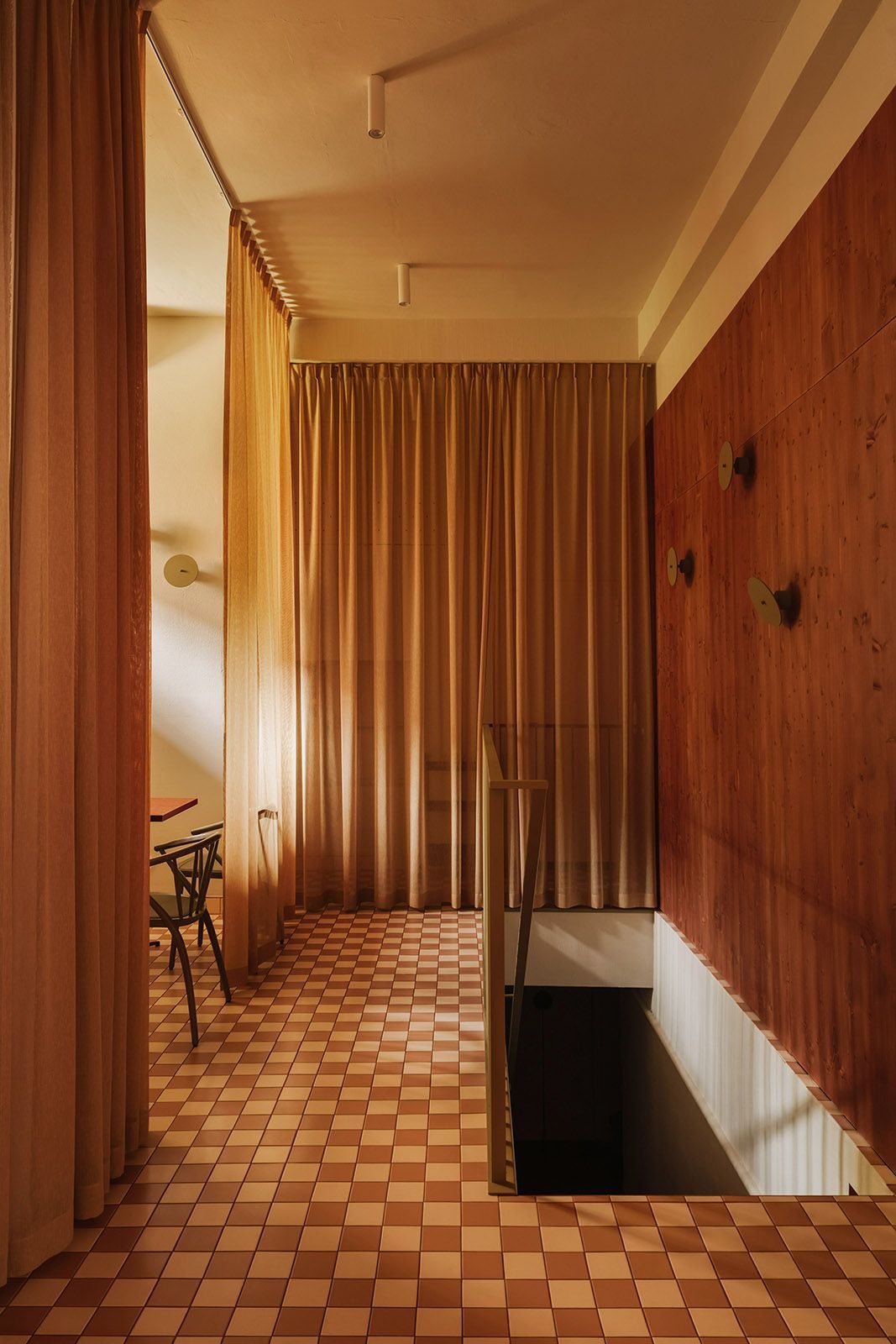
These three aromatic references intertwine throughout the interior design, creating a composition of colours, textures and forms that invite visitors to discover Swedish culinary tradition through a sensory perspective.
“The entrance area introduces visitors to the atmosphere of Midsommar, one of Sweden’s most important celebrations.”
Midsommar: the spirit of the summer solstice
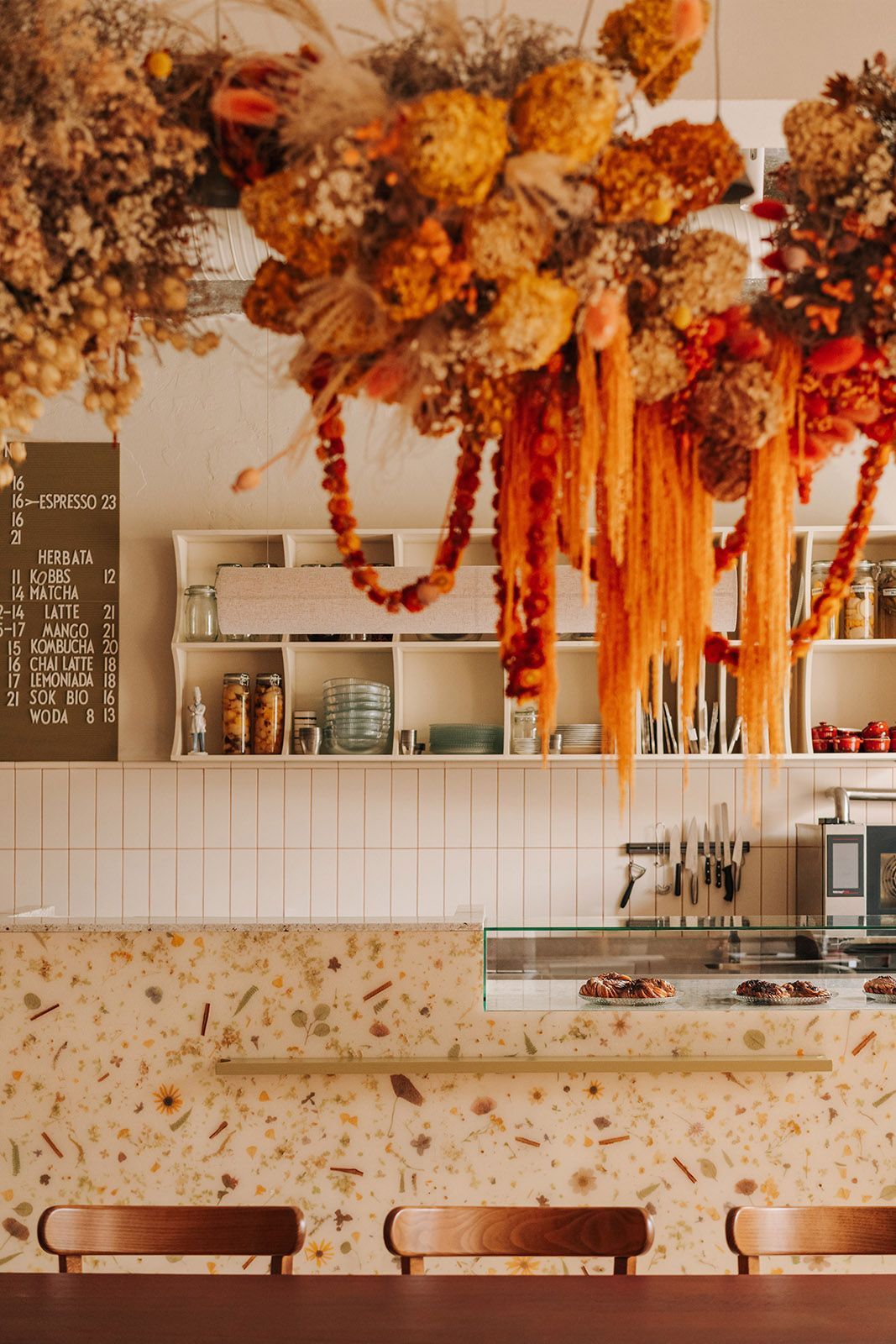
The entrance area introduces visitors to the atmosphere of Midsommar, one of Sweden’s most important celebrations marking the beginning of summer and the moment when the days reach their greatest length.
The setting is built through floral and botanical elements that evoke the flower crowns and countryside landscapes associated with this festival.
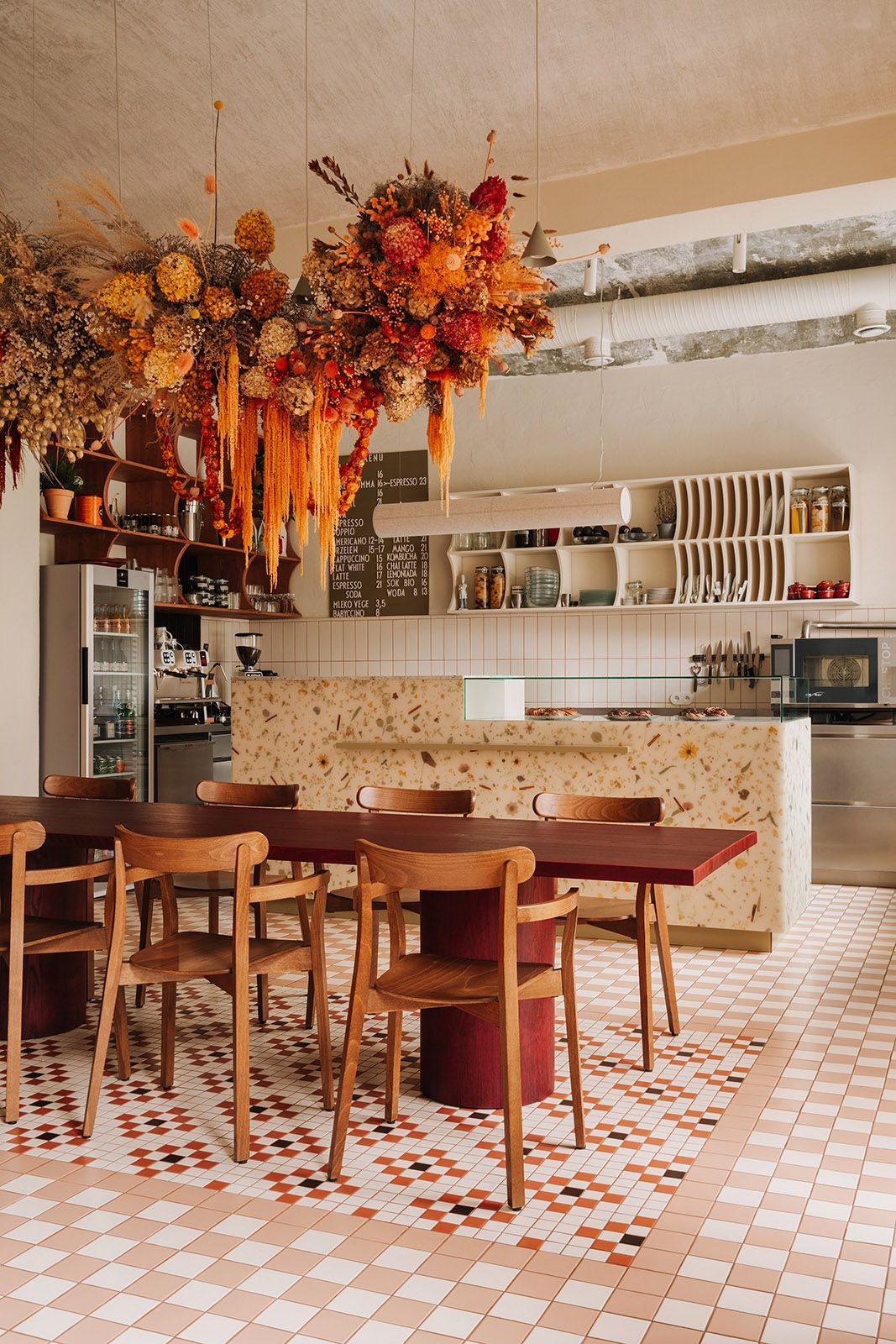
The bar incorporates flowers preserved in resin, while above the central table hangs a composition of dried bouquets inspired by the rustic arrangements traditionally present at outdoor celebrations.
A long table placed beside a piano reinforces the festive character of the space, recalling the communal meals that are an essential part of this tradition.
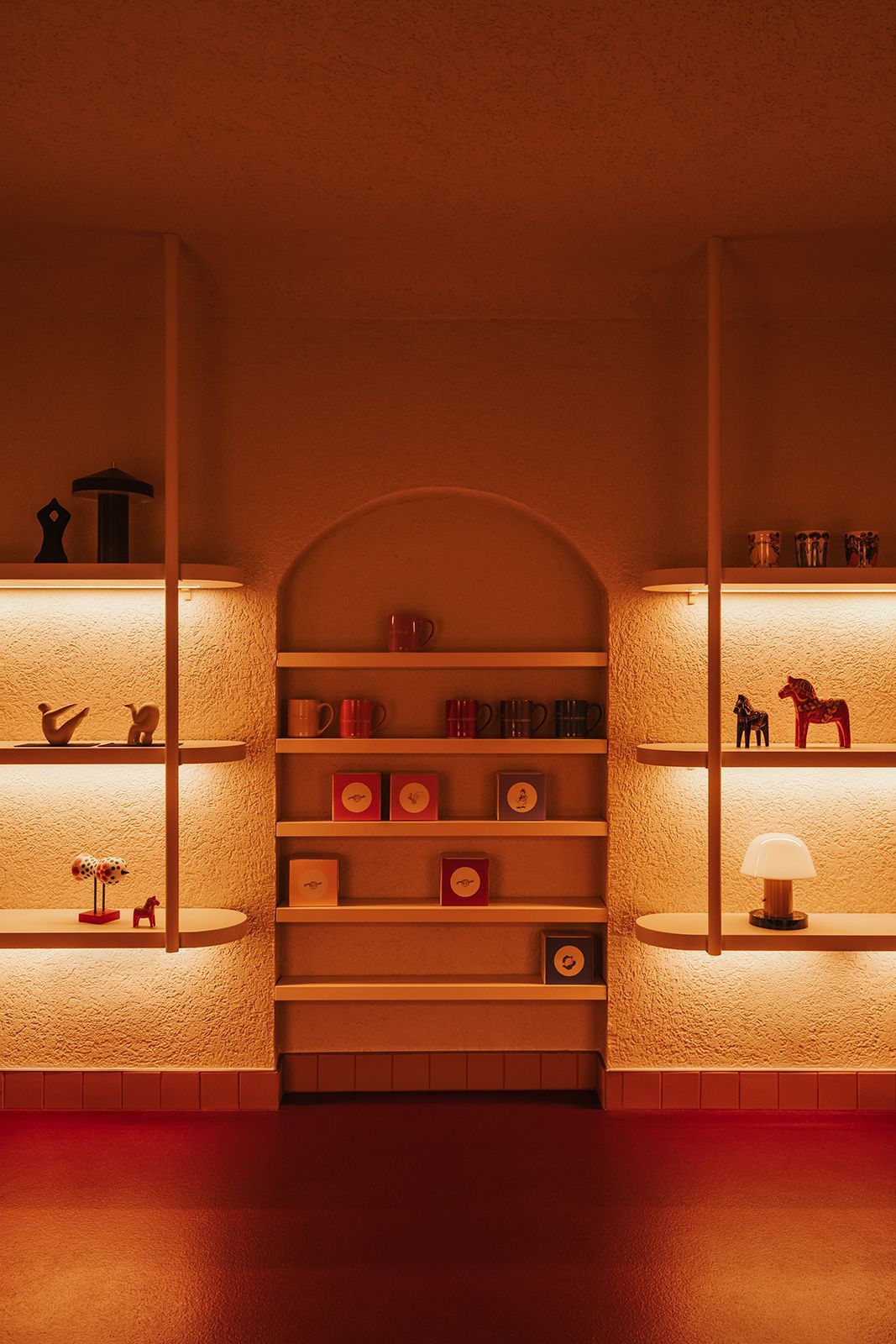
In smaller rooms, translucent curtains gently divide the space, creating more intimate areas, while metal canopy structures evoke the temporary tents and pavilions often installed during solstice festivities.
The ensemble is completed with natural aromas of chamomile, pine shoots and other herbs, filling the restaurant and reinforcing the connection with nature that characterises Scandinavian culture.
A space that changes with the rhythm of the day
The interior design also responds to the natural rhythm of the day. During the morning and afternoon, the atmosphere is oriented towards the experience of fika, with a bright environment inviting guests to enjoy coffee, pastries and unhurried conversation.
As the day progresses, lighting becomes softer and warmer, creating a more intimate setting reminiscent of the spirit of mingel, those informal gatherings where conversation, wine and companionship take centre stage.
The entrance area functions as a hybrid space inspired by Scandinavian domestic organisation: a combination of kitchen, dining room and living area, where the bar, the long table and an extended sofa create a welcoming and communal atmosphere.
The restaurant also includes a conceptual area with organic walls and bolder patterns inspired by the creative scene of Stockholm, introducing a visual contrast that adds dynamism to the space.
A place for sharing
Dala is conceived as a space where domestic warmth coexists with respect for nature and the simplicity of everyday life. Flowers, natural materials and open shelves filled with small objects help create a welcoming atmosphere reminiscent of a family home.
The owners share their passion for Scandinavian gastronomy here through a menu combining traditional ingredients with contemporary interpretations. The offering includes breakfast options as well as evening dishes, exploring new flavour combinations while maintaining the essence of Swedish cuisine.
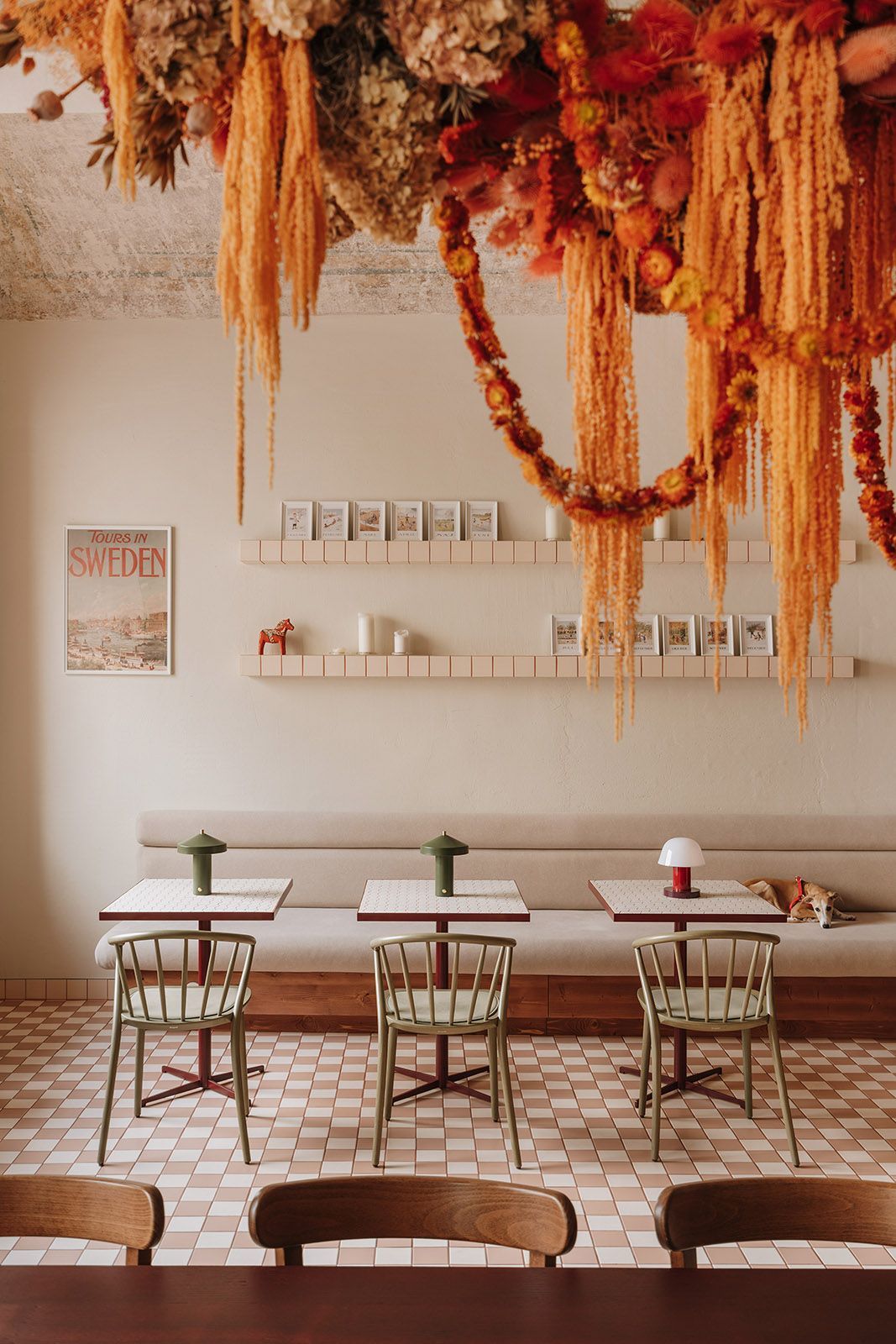
The layout reinforces this collective dimension, with open areas where the bar and long table encourage shared moments alongside more intimate corners designed for quieter conversations.
Through the restaurant’s large windows, visitors can observe the daily preparation of freshly baked buns, while decorative details, natural flowers and warm lighting create an atmosphere that invites guests to slow down and savour the moment.
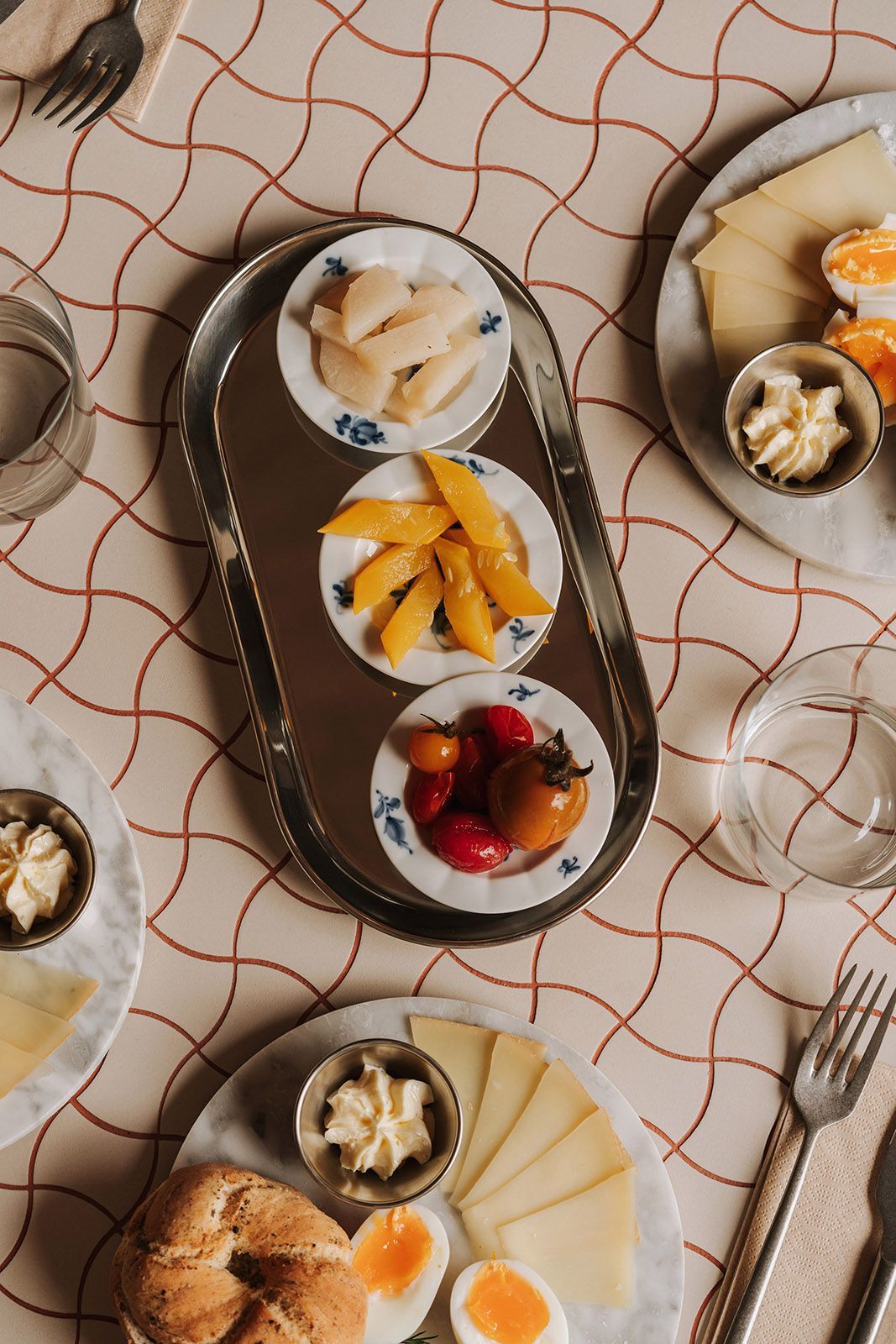
In this balance between nature, tradition and contemporary design, Dala proposes a different way of experiencing Scandinavian dining in the heart of Kraków — turning every visit into a small celebration of everyday life.
“Dala is conceived as a space where domestic warmth coexists with respect for nature and the simplicity of everyday life.”
Technique information:
Investor: Kaffe Bageri Stockholm.
Area: 145 m²
Location: Kraków, ul. Krakowska 35
Year: 2025
Scope of work: concept design, executive design
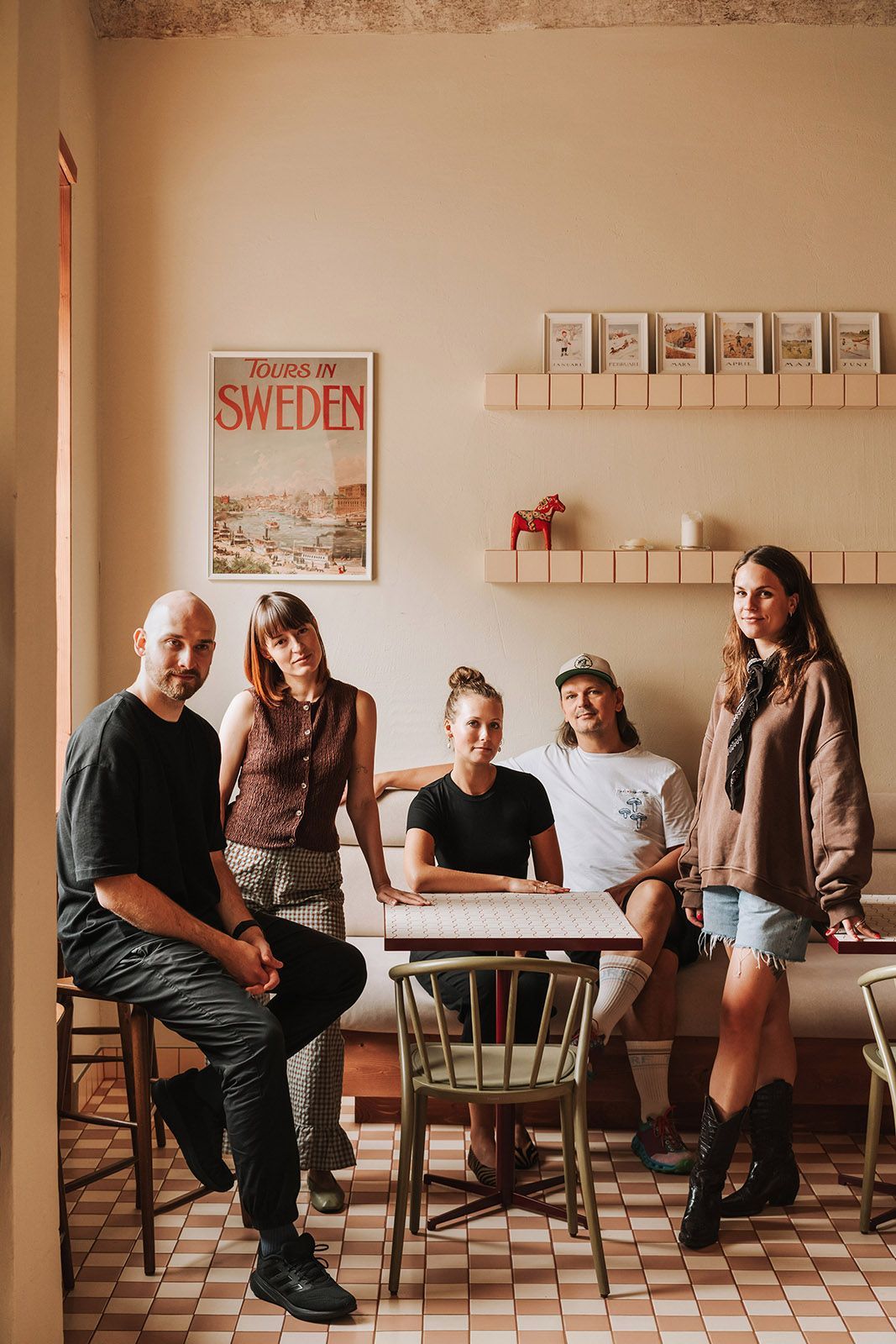
Project authors: Znamy sie (Wojtek Nowak, Bogna Kawa-Nowak, Monika Jokiel, Ula Dachnij-Seredynska, Anna Petryszyn)
Créditos: znamysie.com, instagram.com/znamysie_architects/
(*) Photos: Migdal studio.