Rebel Ramen: much more than ramen
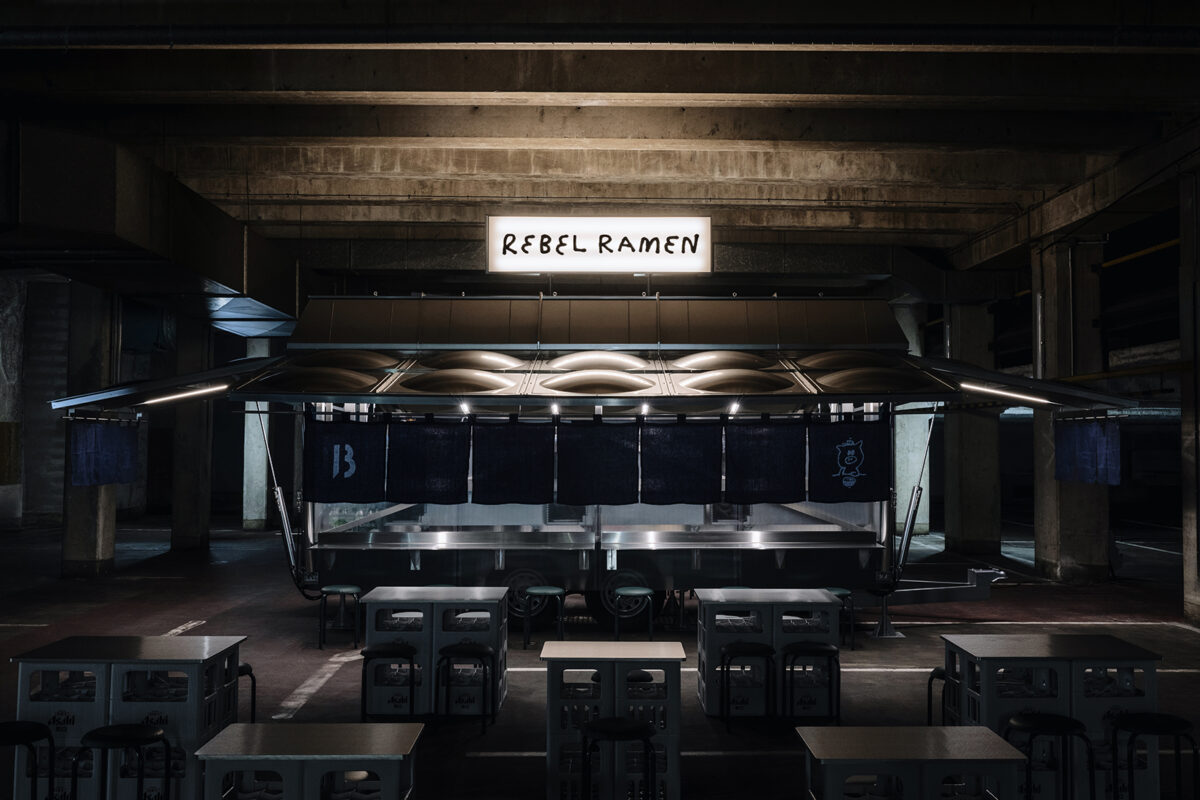
A yatai reimagined by Willo Perron, a custom-built sound system, three recipes developed over nearly three years and an underground car park in Paris. Rebel Ramen, the culinary project by Tokyo Burnside, shows how a bowl of ramen can also become a meeting point for food, design, music and contemporary culture.
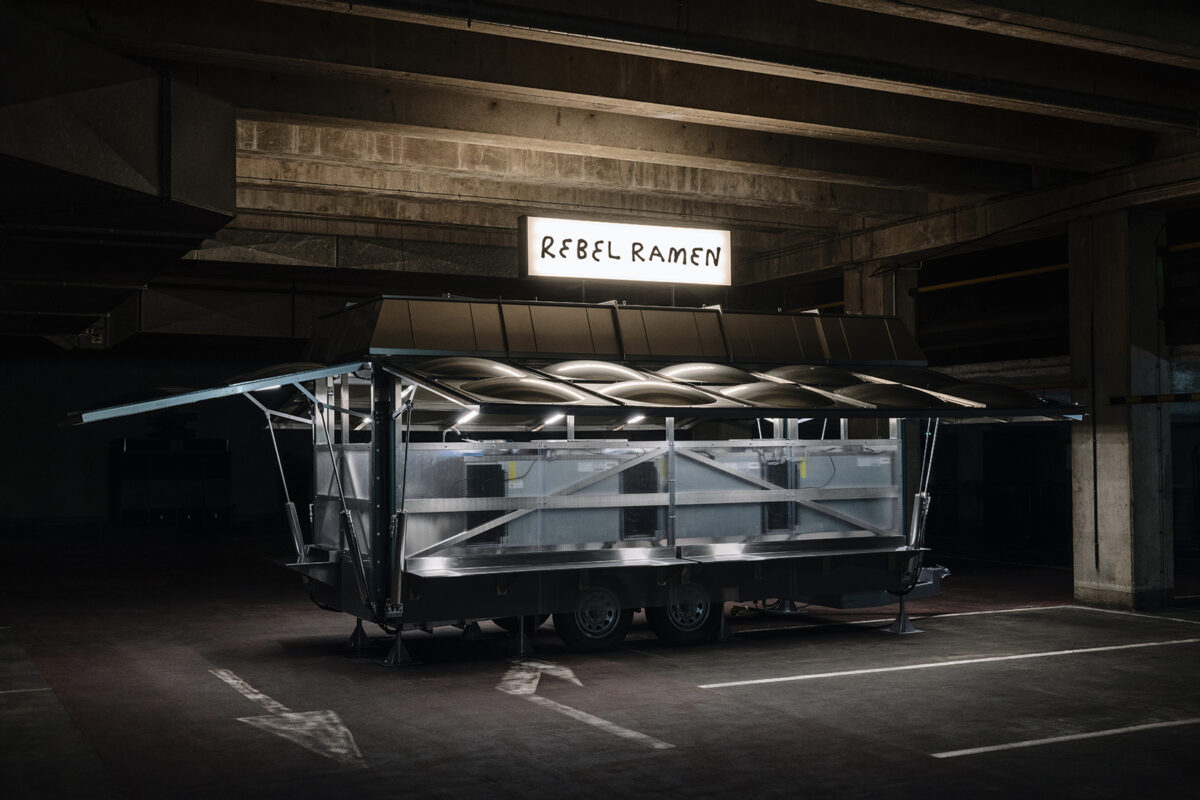
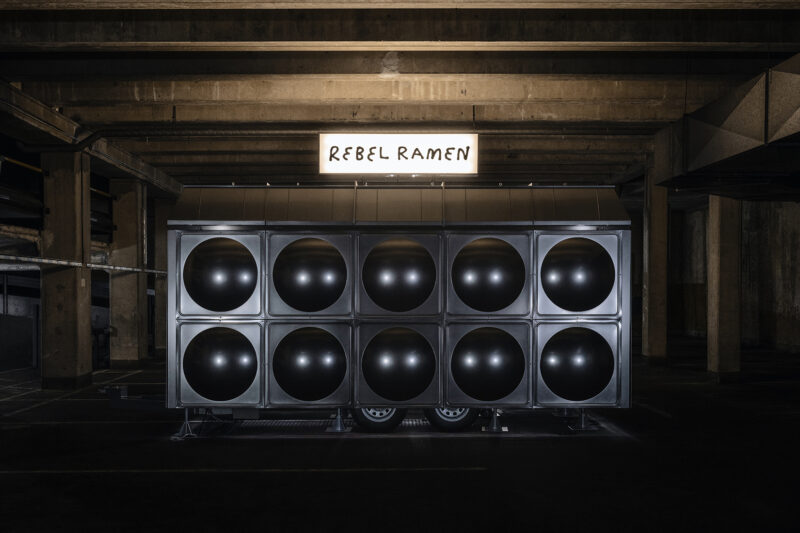
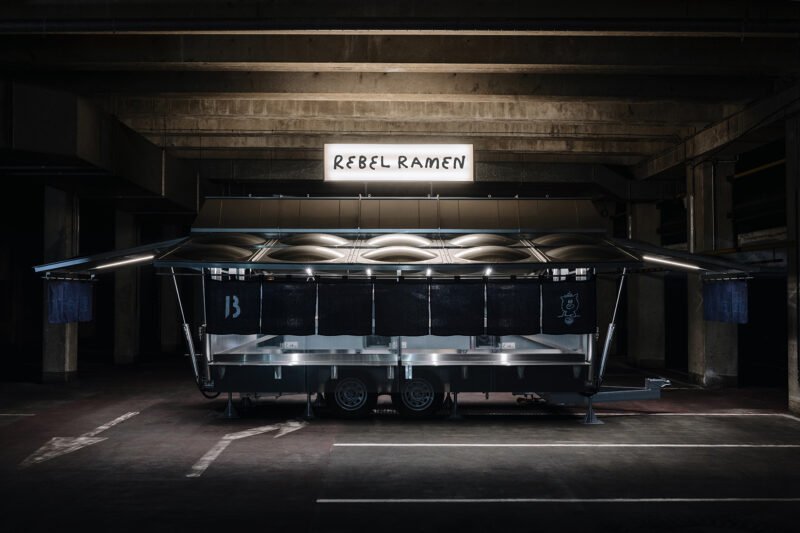
For three days, during the latest edition of Paris Men’s Fashion Week, an underground car park in the heart of Paris temporarily changed its purpose. Amid concrete, cars and ramps, an illuminated yatai appeared, accompanied by a sound system built especially for the occasion and a small menu featuring three different types of ramen.
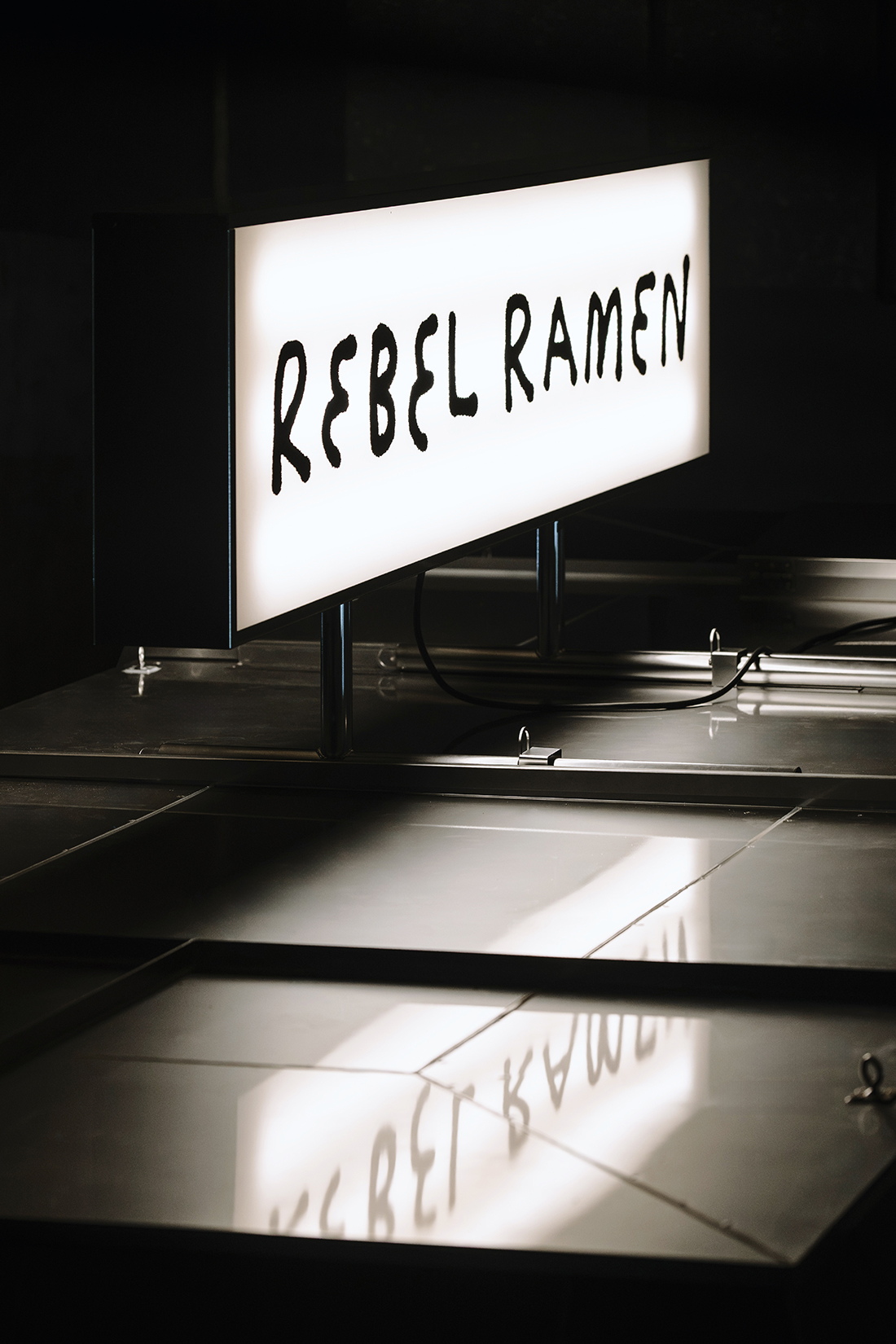
Behind the intervention was Rebel Ramen, a project developed over nearly three years by Tokyo Burnside, the Harajuku cultural space created by Japanese creative agency en one tokyo together with Norwegian architecture and design studio Snøhetta and Ghetto Gastro, the influential Bronx collective that has spent years exploring food as a cultural medium.
The choice of location was no coincidence. Nor was the timing. During a week when Paris becomes one of the main gathering points for the international fashion industry, Rebel Ramen moved the encounter away from the usual settings, bringing designers, creatives and figures from across the industry together around something as elemental as sharing a bowl of noodles. The collaboration with BYREDO, the yatai designed by Willo Perron and the sound installation by Matéo Garcia completed an experience in which no discipline seemed to function merely as an accompaniment to another.
Because the ramen matters here, but so does everything happening around it.
From Harajuku to the Bronx
To understand Rebel Ramen, we first need to travel to Harajuku, one of Tokyo’s great epicentres of urban culture. There, above a FamilyMart, sits Tokyo Burnside, conceived as a flexible space capable of operating as a café and casual restaurant during the day before transforming into a restaurant, bar, lounge or event space after dark.
Its architecture contains an unexpected conversation between Tokyo and New York. When en one tokyo began developing the project, Ghetto Gastro identified a parallel between two seemingly distant elements: the Japanese konbini and the New York bodega.
The former are an inseparable part of everyday life in Tokyo; the latter play an equally recognisable role in neighbourhoods such as the Bronx. Beyond their differences, both are neighbourhood spaces closely connected to food, takeaway culture and the constant succession of everyday encounters that ultimately become part of a city’s identity.
Snøhetta turned this connection into one of the starting points for Tokyo Burnside’s interior. Two large interlocking arches articulate the kitchen and dining area without completely separating them, while a palette dominated by dark materials and amber reflections changes character as the day progresses. The open, slightly elevated kitchen takes on an almost theatrical presence. Floral sculptures by Japanese artist Makoto Azuma are among the elements that complete the space.
The intention was never simply to design a restaurant. From the outset, Tokyo Burnside was conceived as a changing cultural infrastructure where guest chefs, parties, music, art and different creative communities could coexist.
And it is precisely within this ecosystem that Rebel Ramen was born.
Pure, Junk and Vegan
Developing an original ramen might seem like a fairly logical decision for a project born in Tokyo. Spending almost three years doing so, however, reveals a different level of ambition.
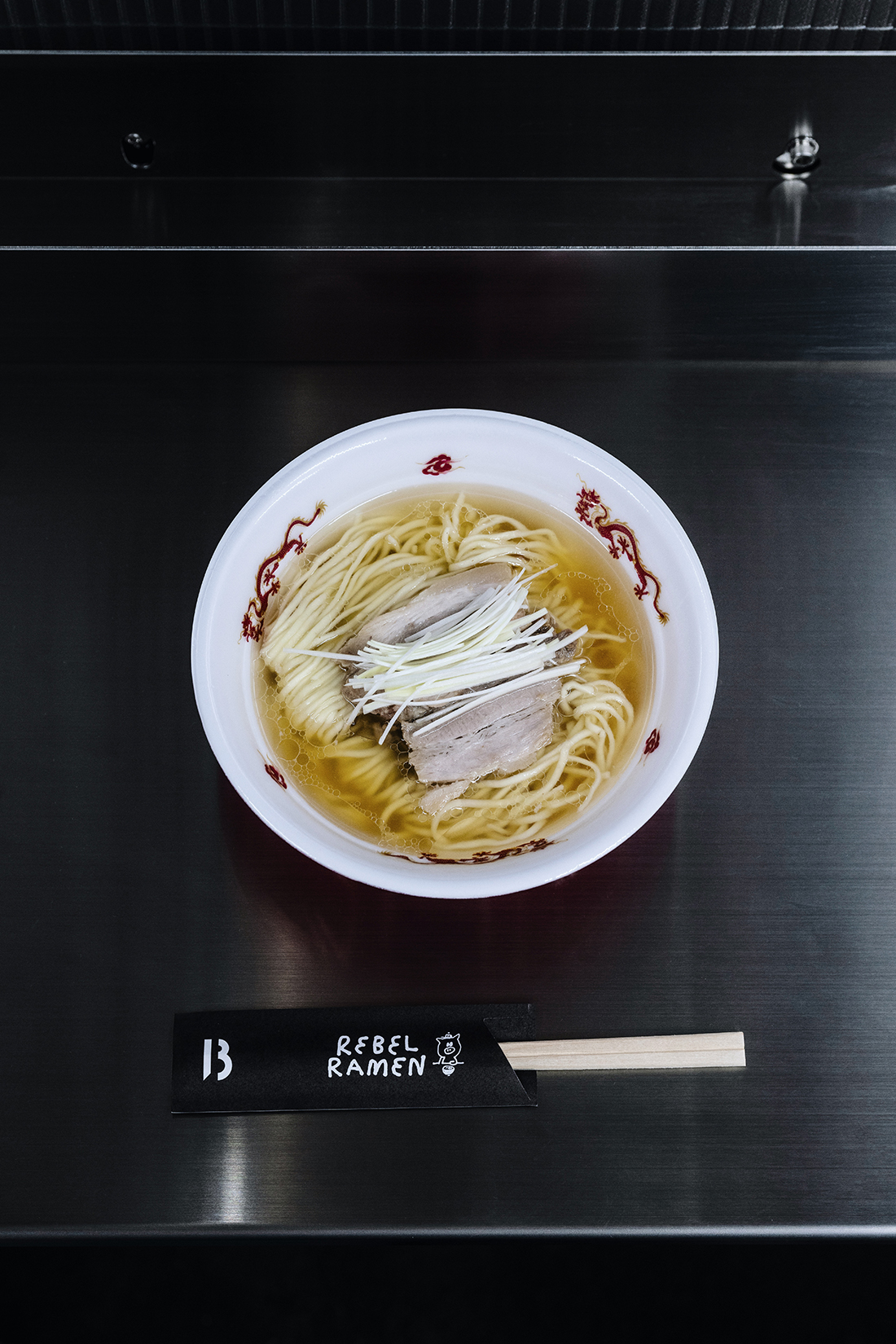
Rebel Ramen began with two almost antithetical recipes. Pure is all about precision and clarity: an additive-free ramen conceived to enhance the natural umami of a carefully selected range of ingredients. Junk deliberately heads in the opposite direction, with an intense proposition built around soy sauce and back fat. Purity versus excess and restraint versus intensity.
For its Paris debut, a third recipe was added: Vegan, made entirely from plant-based ingredients. With it, Rebel Ramen completed a collection of three flavours that avoids imposing a single definition of what good ramen should be.
The duality between Pure and Junk also says a great deal about the philosophy behind the project. Rather than turning Japanese gastronomy into an exercise in untouchable reverence, Tokyo Burnside appears more interested in understanding tradition as something that can evolve without necessarily losing its identity.
Something similar happens with the object around which the entire Paris experience was built.
Willo Perron reimagines the Japanese yatai
Long before contemporary ramen restaurants, yatai were part of Japan’s urban landscape. These small mobile food stalls travelled through neighbourhoods, allowing food to be prepared and served directly on the street. Their history is closely tied to a popular, accessible and spontaneous way of eating and engaging with the city.
To present Rebel Ramen in Paris, Tokyo Burnside invited Canadian designer and creative director Willo Perron to reinterpret one of them.
The choice is particularly interesting. Perron has built much of his career precisely within the territory where disciplines that once operated independently now intersect: music, fashion, design, architecture, branding and popular culture. His work has shaped stages, exhibitions, shops, identities and spaces for some of the most recognisable names in contemporary culture.
With Rebel Ramen, however, the starting point is an anonymous and deeply functional object.
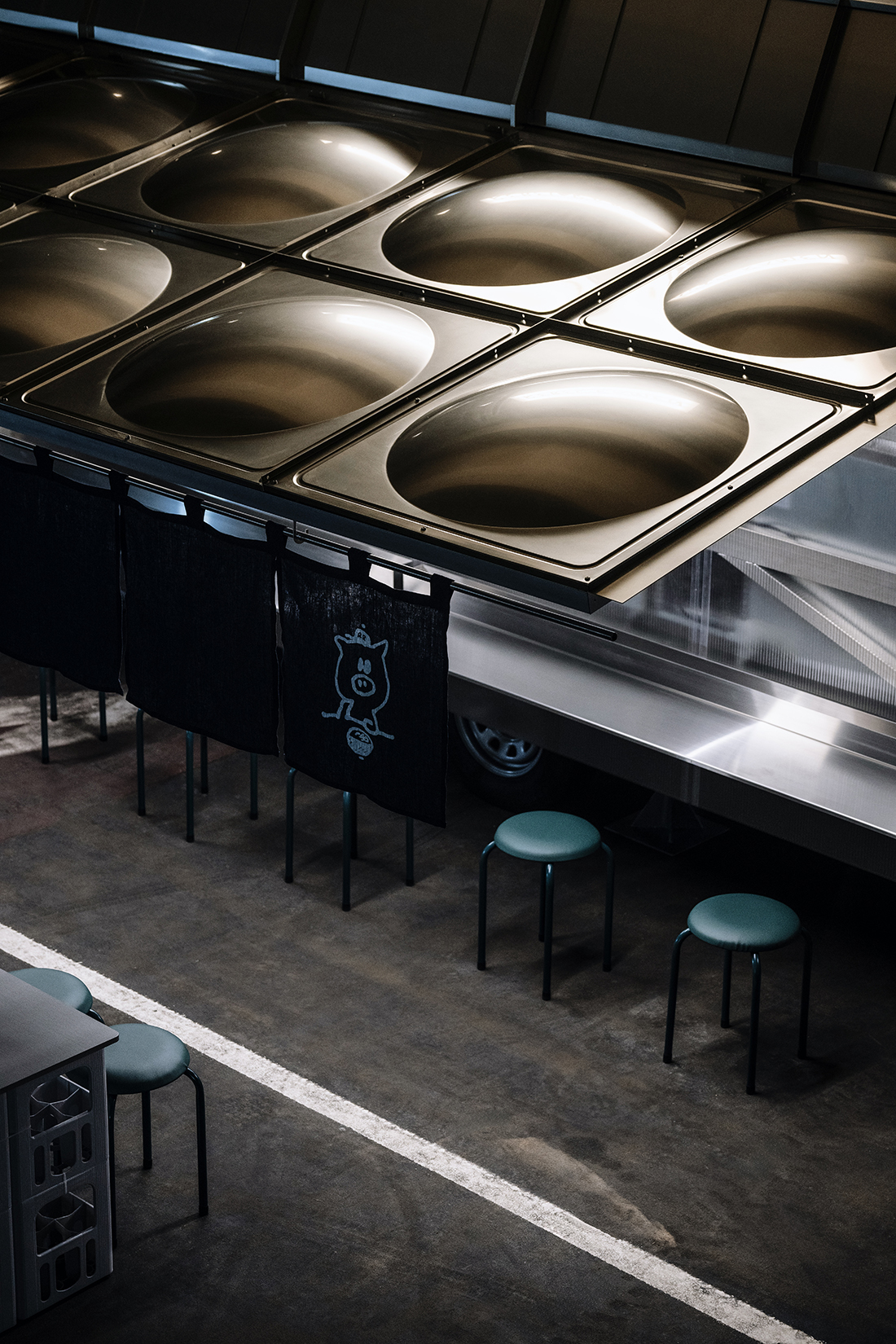
Perron retains the recognisable structure of the yatai while refining its language until it becomes a contemporary design object. He does not attempt to erase its origins or turn it into a sculptural piece detached from its purpose. It remains a place from which ramen is cooked and served, but takes on an entirely new presence.
Much of the project’s appeal lies precisely here: updating a tradition does not necessarily mean replacing it. Sometimes it is enough to understand what made it relevant in the first place and find a way to translate that logic into the present.
A car park, ramen and a great sound system
The Paris staging took that idea even further. Rather than installing the yatai in a restaurant, gallery or one of the countless temporary spaces used during Fashion Week, Rebel Ramen occupied an underground car park in central Paris for three days. Access was by invitation only, and the space brought together an international community from the worlds of design, fashion and other creative industries.
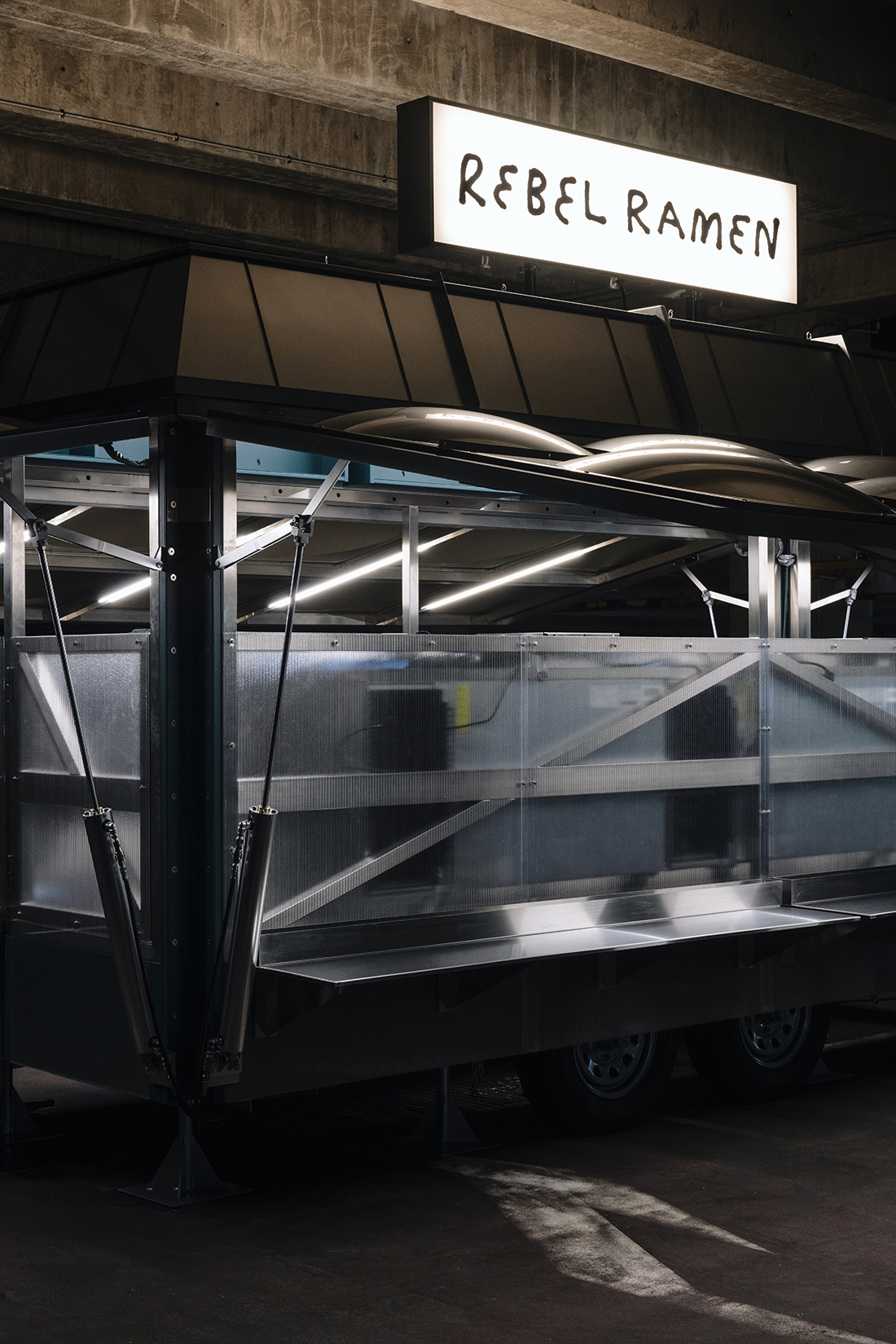
The bare concrete of the car park acted as a counterpoint to the precision of Perron’s cart. The experience also incorporated another element central to Tokyo Burnside’s identity: sound.
Paris-based speaker builder Matéo Garcia created a bespoke sound system for the event, responding to the acoustic conditions and materiality of the space. Music, conversation, food and design therefore ceased to operate as independent layers and became part of a single experience.
This is no minor detail. The original Tokyo Burnside had already incorporated sound as an important part of its identity, with the involvement of Devon Turnbull, founder of Ojas and known for his handcrafted sound systems. In Paris, that same attention to sound was translated through Garcia’s work and into an entirely different context.
When eating also creates culture
There is something distinctly contemporary about the ease with which Rebel Ramen moves across categories. It can be read as a culinary project, a design intervention, a fashion event, a temporary installation or a cultural gathering, yet none of those definitions entirely explains it.
In recent years, some of the most interesting projects to emerge around food have understood precisely this: a restaurant no longer has to be simply a place to eat. It can function as a social space, a creative laboratory, a platform for collaboration and a generator of community.
Ghetto Gastro has been working from this perspective for years. Founded in the Bronx in 2012, the collective has used gastronomy to champion food’s ability to tell stories about identity, place, politics and culture, developing experiences that can feel as close to an art installation as they do to a dinner.
Tokyo Burnside shares this desire to mix languages and disciplines, and Rebel Ramen takes that philosophy beyond Tokyo.
The fact that its first Paris appearance took place during Fashion Week doesn’t seem accidental either. At a time when the boundaries between fashion, gastronomy, art, music and design are becoming increasingly porous, the spaces where these communities can meet have become a fundamental part of a city’s creative culture.
For three days, that place was a car park beneath the streets of Paris. At its centre stood a yatai, music was playing, someone was cooking ramen, and others waited for their turn, talked, met one another or simply stayed after finishing their bowl.
A simple scene that somehow perfectly captured Rebel Ramen’s ambition: to use food not as the final destination, but as an extraordinary excuse to bring people together.
(*) Images provided by Radical PR.