Sónar+D 2026: the reset of digital culture
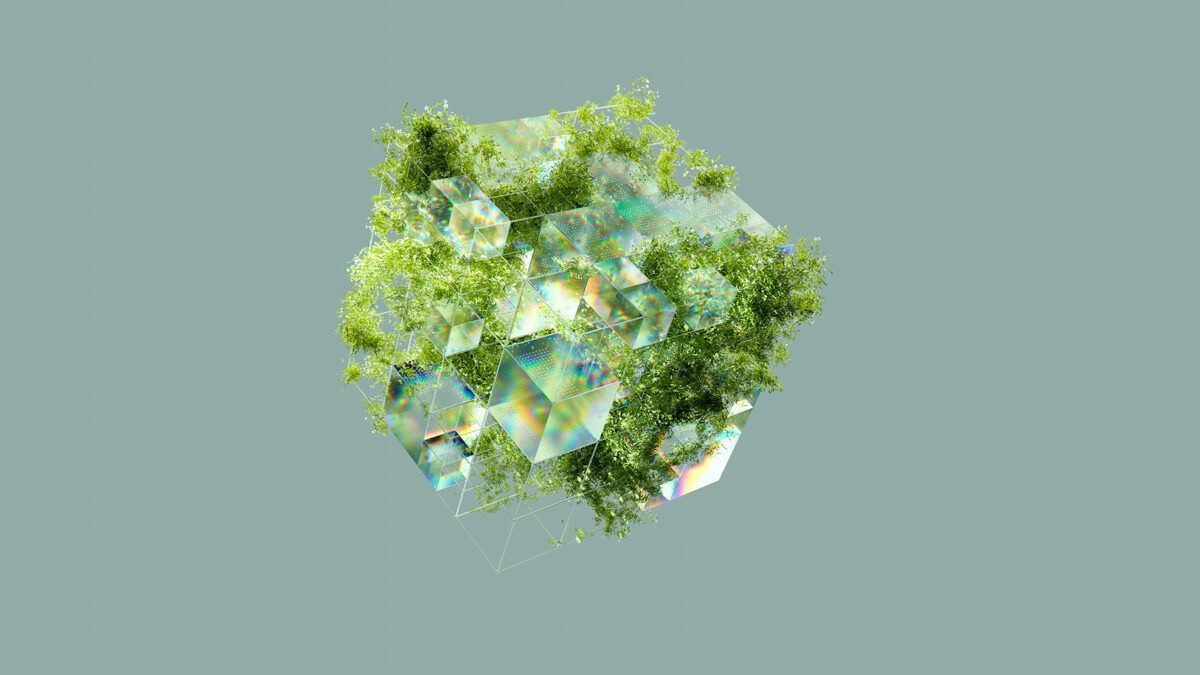
In 2026, Sónar+D is talking about a reset. But this is not simply a matter of a new venue or a different programme layout. This year’s edition, taking place on 18 and 19 June at La Llotja de Mar in Barcelona, poses a far deeper question: how can we reclaim spaces for expression, sensitivity and critical thinking at a moment when technology increasingly tends to simplify, automate and accelerate almost everything?
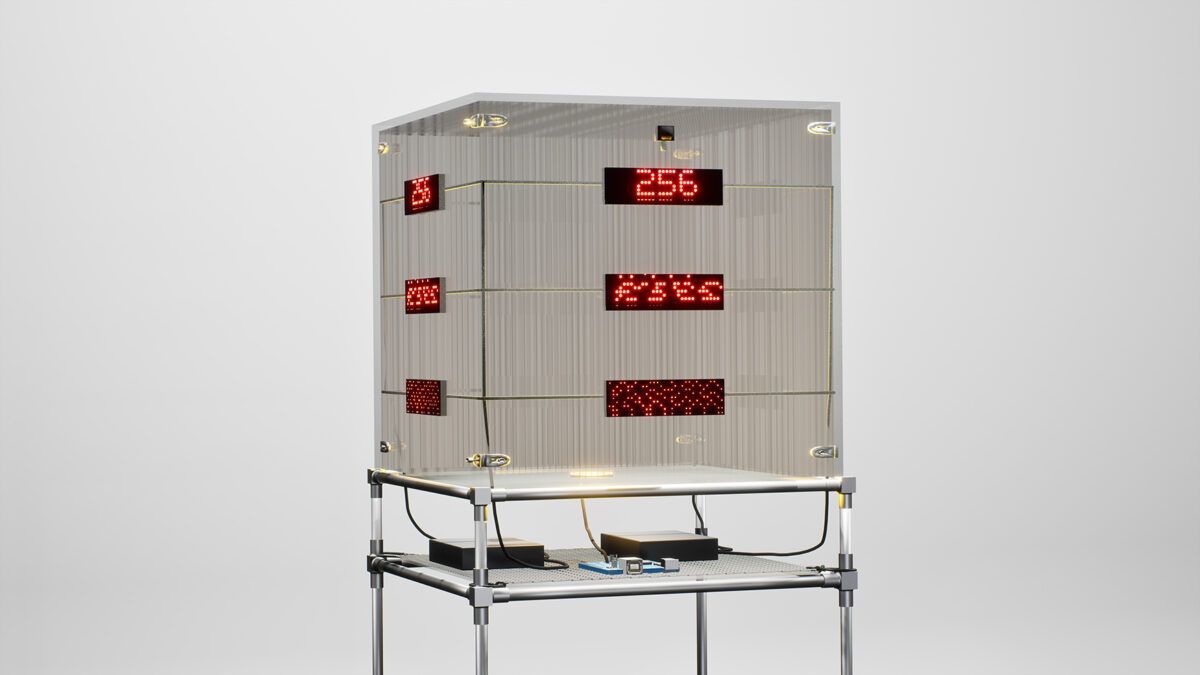

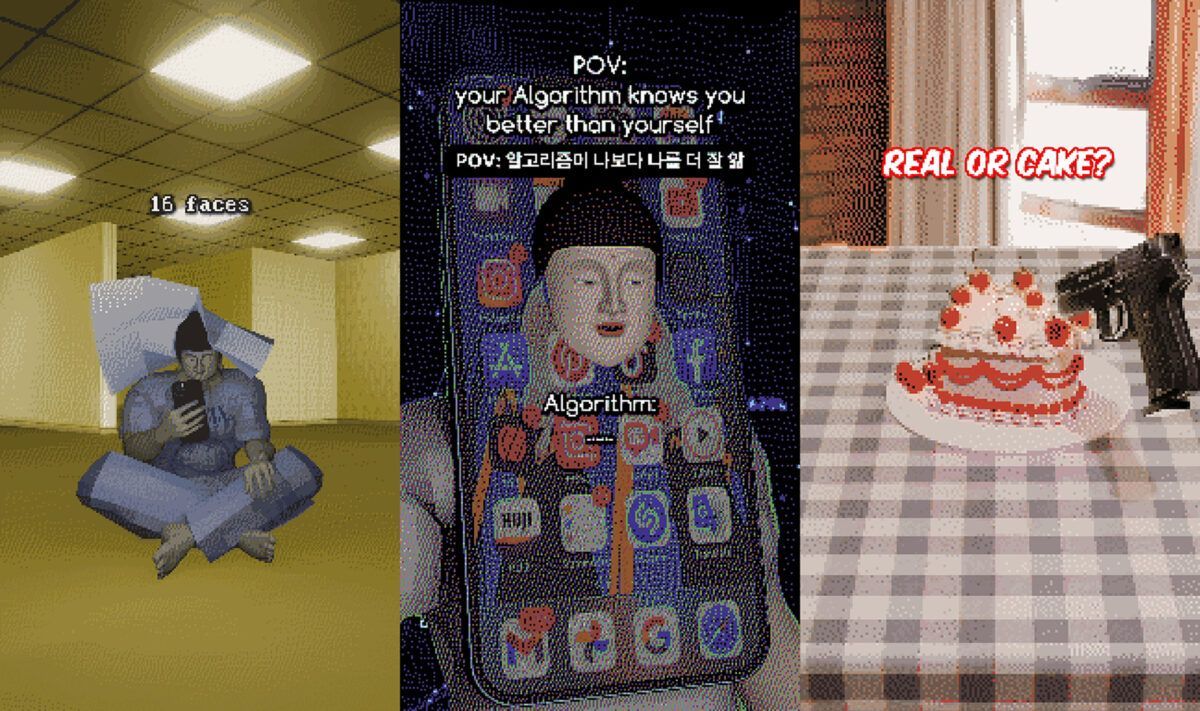
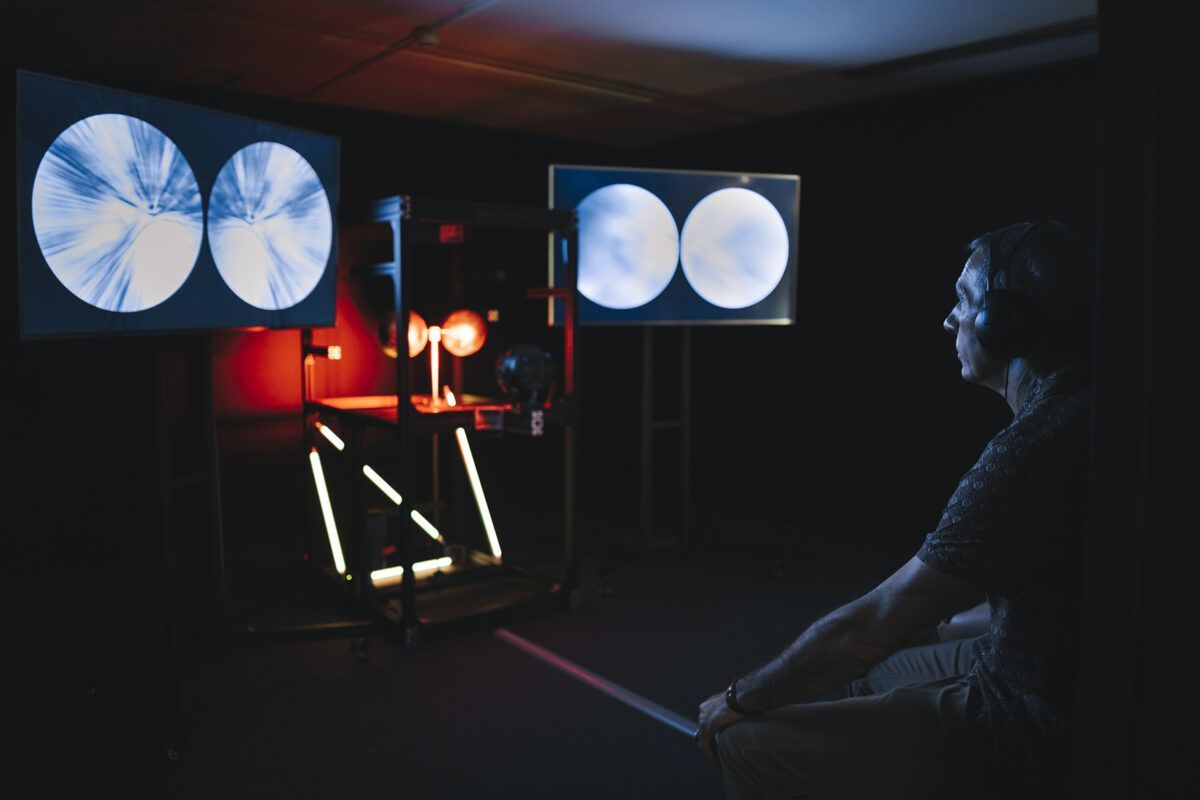
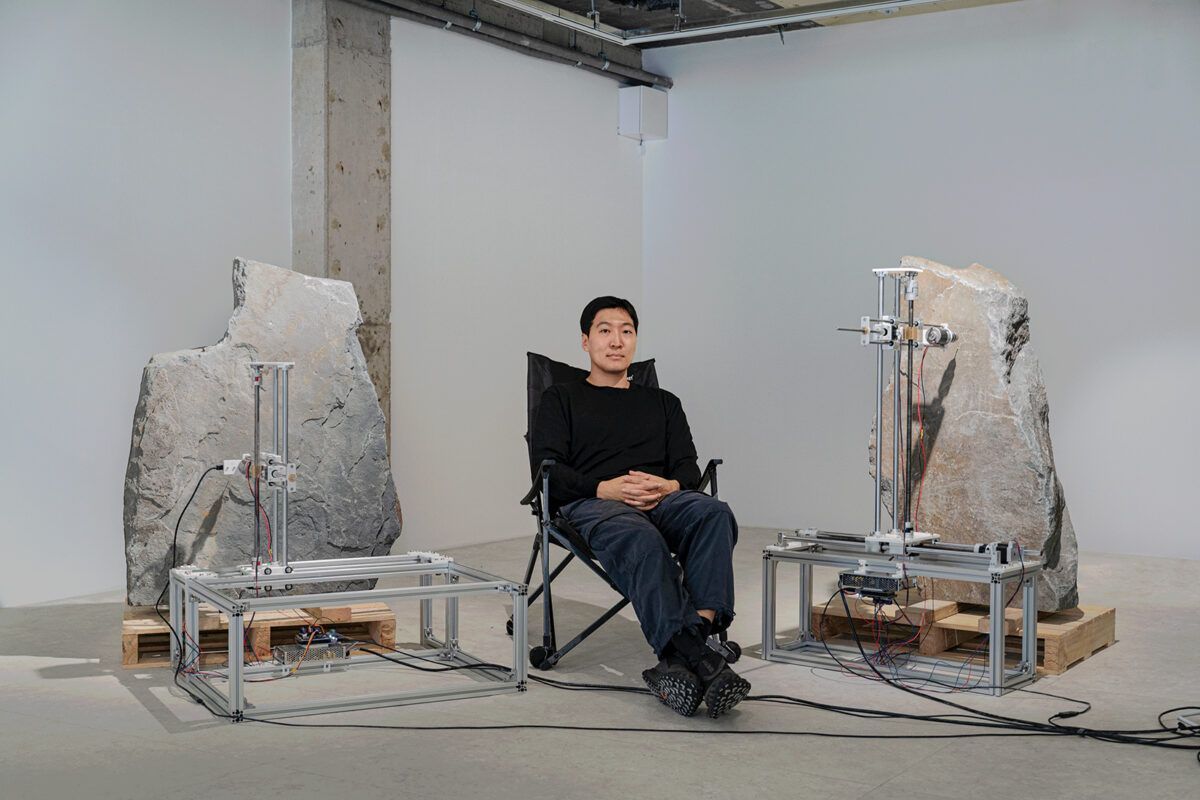
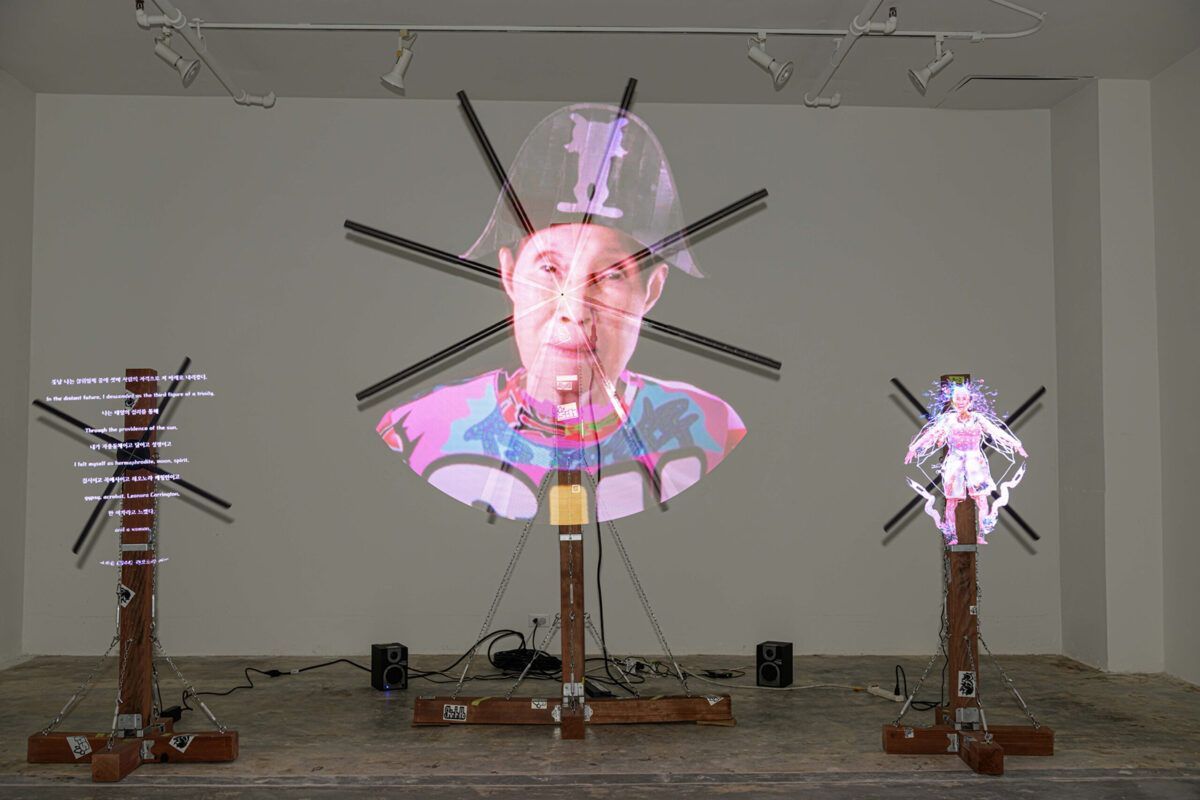
Structured around three major themes — AI & Music, Beyond the Screen and Digital Gardens and Dark Forests — the programme brings together talks, workshops, performances, installations, community spaces and projects that encourage a shift from passive technological consumption towards more active and conscious participation.
This new edition also arrives with more accessible standalone tickets for Sónar+D: €15 per day and €25 for a two-day pass, a decision that reinforces its commitment to opening the programme to new audiences, creative communities and participants who may previously have perceived Sónar+D as a more specialised environment.
We recently spoke with Cristina Checa, curator of Sónar+D about this new chapter, artificial intelligence, the internet, physical presence, Barcelona and the need to continue imagining alternative futures.
This year Sónar+D speaks about a “reset”. Beyond the change of venue, what does it really mean to reset a project that has spent years serving as one of the most accurate radars of digital culture?
A new opportunity to rethink formats, give visibility to projects within a unique context and offer tickets at more accessible prices.
In some ways, that “reset” is also connected to the content we are presenting this year: blurring boundaries, encouraging audiences to become active and critical users of emerging technologies, and understanding both the past and the present context in order to imagine alternative futures.
“That reset is connected to blurring boundaries, encouraging audiences to become active and critical users.”
As curator, what was the first intuition behind this edition? Was there a particular question that helped shape the entire programme?
The content team came together — Antònia Folguera, also curator of Sónar+D, Andrea Faroppa, Director of Sónar+D, and myself — and we focused on observing what was happening around us and what we felt was missing elsewhere. We shared projects, ideas and themes that had been occupying our minds.
From there, everything gradually fell into place: the formats, the thematic strands and the programme’s main axes. If there is one question running through the entire programme, it is this: how do we recover spaces for expression, connection and sensitivity in an environment that increasingly seeks to simplify and automate everything? To answer that question, we first need to understand where we come from and where we are today.
In 2026, the focus seems less about showcasing technology and more about understanding how we live alongside it. Did you feel it was necessary to shift the conversation away from technological fascination towards a more human and cultural perspective?
Yes, absolutely. There is a type of conversation about technology that is dominated by fascination with the tool itself: which model is more powerful, which technological demonstration is more impressive.
Too often, that kind of discussion leaves us as little more than fascinated spectators. We wanted to broaden the conversation and focus on how and why we design these technologies, how and for what purposes we use them, how we relate to one another through these systems and infrastructures, and how they are shaping our lives.
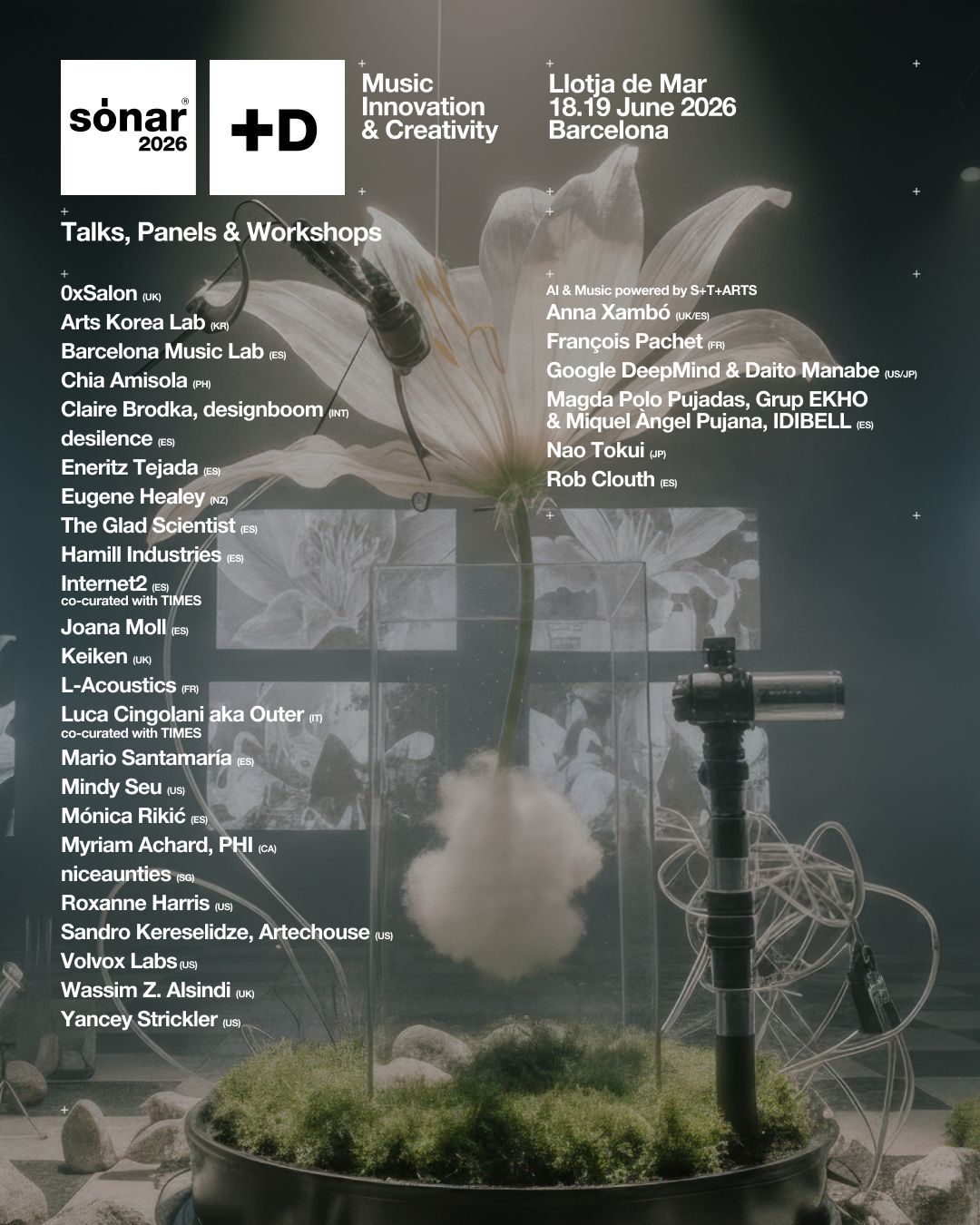
The programme brings together a remarkably diverse range of voices: Daito Manabe in dialogue with Google DeepMind, Joana Moll questioning digital infrastructures, Mónica Riki working through robotics, niceaunties exploring surrealist imaginaries and Yancey Strickler rethinking the internet. What curatorial criteria guided the selection of such varied perspectives?
The criteria are not particularly rigid, but we do place great importance on bringing together voices that would not normally share the same space, people with distinct and original perspectives, while maintaining a balance between critical thinking and constructive approaches.
By constructive, I mean being able to glimpse a light at the end of the tunnel. We wanted to include people who are actively building alternatives.
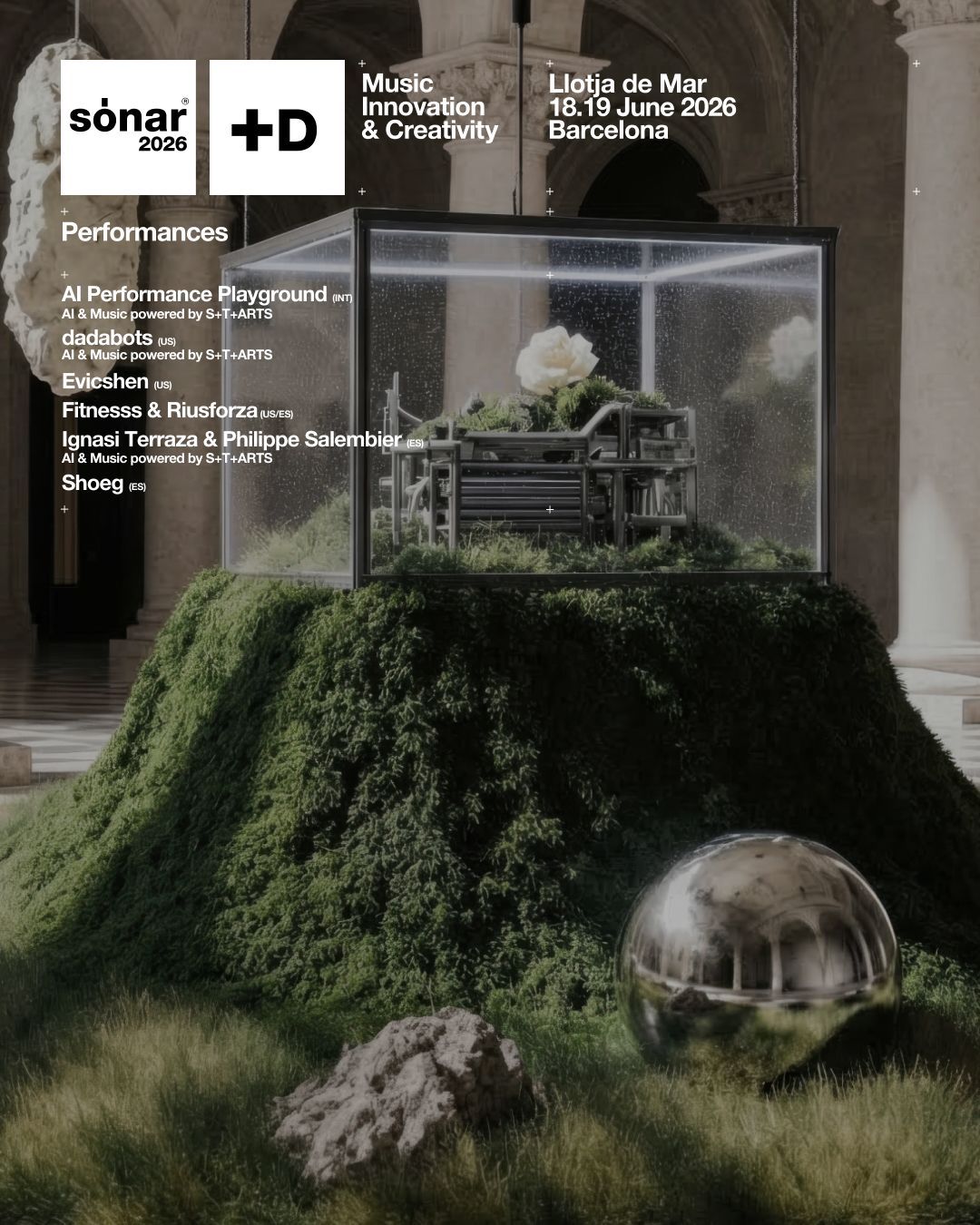
There is an interesting tension between artists exploring AI as a creative tool and others who highlight its limitations, frictions or even choose to step away from it, such as Shoeg. Were you consciously trying to create an edition that avoided simplistic positions on artificial intelligence?
There are no simple positions when it comes to artificial intelligence. On the one hand, AI can give rise to new forms of expression and entirely new aesthetics. It can amplify creativity, allowing you to reach places you might not be able to access on your own. On the other hand, depending on how it is used and which tools are involved, it can also contribute to the homogenisation of artistic creation, while raising complex ethical and legal questions.
We are also observing an interesting trend within the intersection of AI and music. Some of the artists who were among the earliest adopters of these technologies are no longer actively using them today. Shoeg is one example.
The same can be said of Claire L. Evans from YACHT. In an interview published on the Nina Protocol blog back in 2024, when asked whether she saw herself using AI to make music at that moment, her answer was no. Her challenge, she explained, was not a lack of ideas but deciding which ideas to pursue. At the same time, she acknowledged that working with AI had given her a different approach to lyric writing and encouraged a more abstract creative process.
“AI can give rise to new forms of expression and aesthetics; it can contribute to the homogenisation of artistic creation.”
AI & Music, Beyond the Screen and Digital Gardens and Dark Forests function almost as three cultural diagnoses of the present moment. How did these themes emerge, and what conversations were you hoping to open through each of them?
AI & Music emerged from a desire to ground this debate within a specific sector. We wanted to explore how music is adapting to a new reality in which AI has become a natural part of the creative landscape, how these tools are being used, what role artists play within this transformation and how they are preparing for the future, including from an ethical perspective.
This year’s programme reflects that ambition. Participants include Daito Manabe in collaboration with Google DeepMind, François Pachet, one of the pioneers working at the intersection of AI and music, and Nao Tokui from Neutone Morpho, a platform that enables users to train their own AI models in a simple and ethical way.
With Digital Gardens and Dark Forests, we wanted to open a broader reflection on the history of the internet, its current state and the alternative internets that are being built in parallel. What possibilities exist beyond the dominant platforms?
Joana Moll addresses surveillance capitalism online, while Mario Santamaría invites audiences to explore the physicality of internet infrastructures. They are joined by perspectives from Chia Amisola, who examines web design as a medium for self-expression, as well as Mindy Seu and, of course, Yancey Strickler.
Beyond the Screen asks what happens when digital art leaves the screen behind, extends into physical space and interacts directly with our bodies and environments.
Among the contributors are Mónica Riki, who reflects on the design of assistive robotics; Eneritz Tejada, who explores body-machine relationships through handmade wearables; The Glad Scientist, who will lead a TouchDesigner workshop focused on creating interactive artworks.
And also Keiken, a collective imagining new worlds through empathy, sensory experience and alternative forms of connection.
Sónar+D has always operated at the intersection of thinking, making and experimenting. This year, that combination seems even more expansive, with talks, workshops, performances, installations and community spaces coexisting within the same narrative. How do you create coherence within such a broad programme?
I wouldn’t say the mix is more radical. Rather, it approaches the same ideas from multiple perspectives: through language, through thought, through our hands, through the body and through space. And, in the case of community, through the shared time experienced by everyone who comes to Sónar+D.
That shared time — the conversations, collaborations, project beginnings and exchanges of ideas — is one of the most enriching aspects of the festival and a fundamental part of what Sónar+D is.
This edition places a strong emphasis on physical presence: the body, performance, sound, space and shared experience. After years of screen-mediated culture, do you feel that innovation now also involves reclaiming the tangible?
We want to highlight forms of digital art that extend beyond the screen, explore new ways of engaging with artistic practice, and celebrate artists who do not fit neatly into a single category but instead exist across multiple disciplines — or between them entirely.
We are also interested in deepening the relationship between humans and machines. Much of the most compelling innovation we are seeing today emerges precisely from that intersection: between the digital and the handcrafted, between technology and the body.
“Much of the most compelling innovation emerges from the intersection of the digital and the handcrafted, between technology and the body.”
Stage+D will adopt a circular format, placing artists and speakers at the centre of the room. What changes when knowledge is no longer presented as a frontal lecture and instead becomes something closer to an immersive experience?
It breaks the one-way relationship between speaker and audience. As the distance between those presenting and those attending becomes smaller, so too does the space that separates them.
The audience stops being merely spectators and becomes part of the experience itself. The format becomes less hierarchical and more participatory.
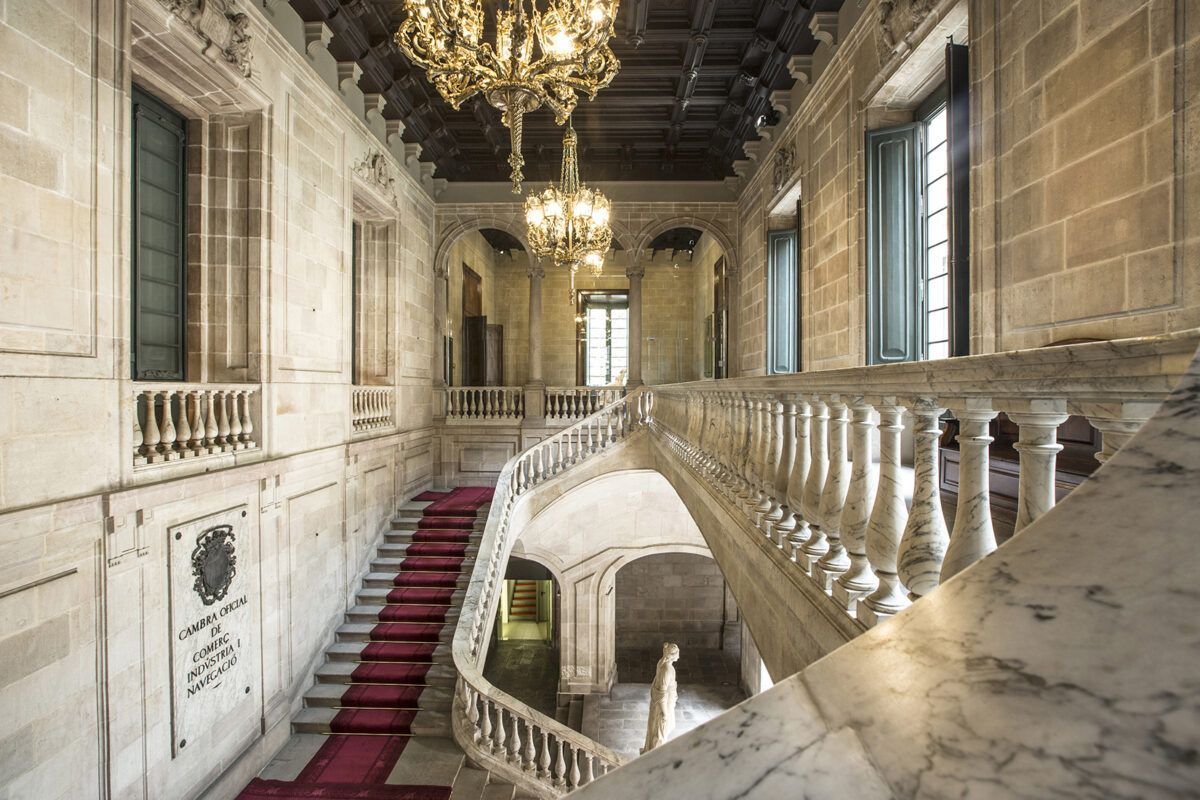
La Llotja de Mar is far from a neutral venue. It is a historic building in the heart of Barcelona, one that inevitably creates a different relationship between technology, the city and heritage. What possibilities did this space unlock that previous editions could not?
It allowed us to reimagine the festival’s spaces from the ground up and, thanks to the production team led by Maria Amils, to work more directly with the architecture itself, adapting each space to different types of content and making the most of the building’s unique qualities.
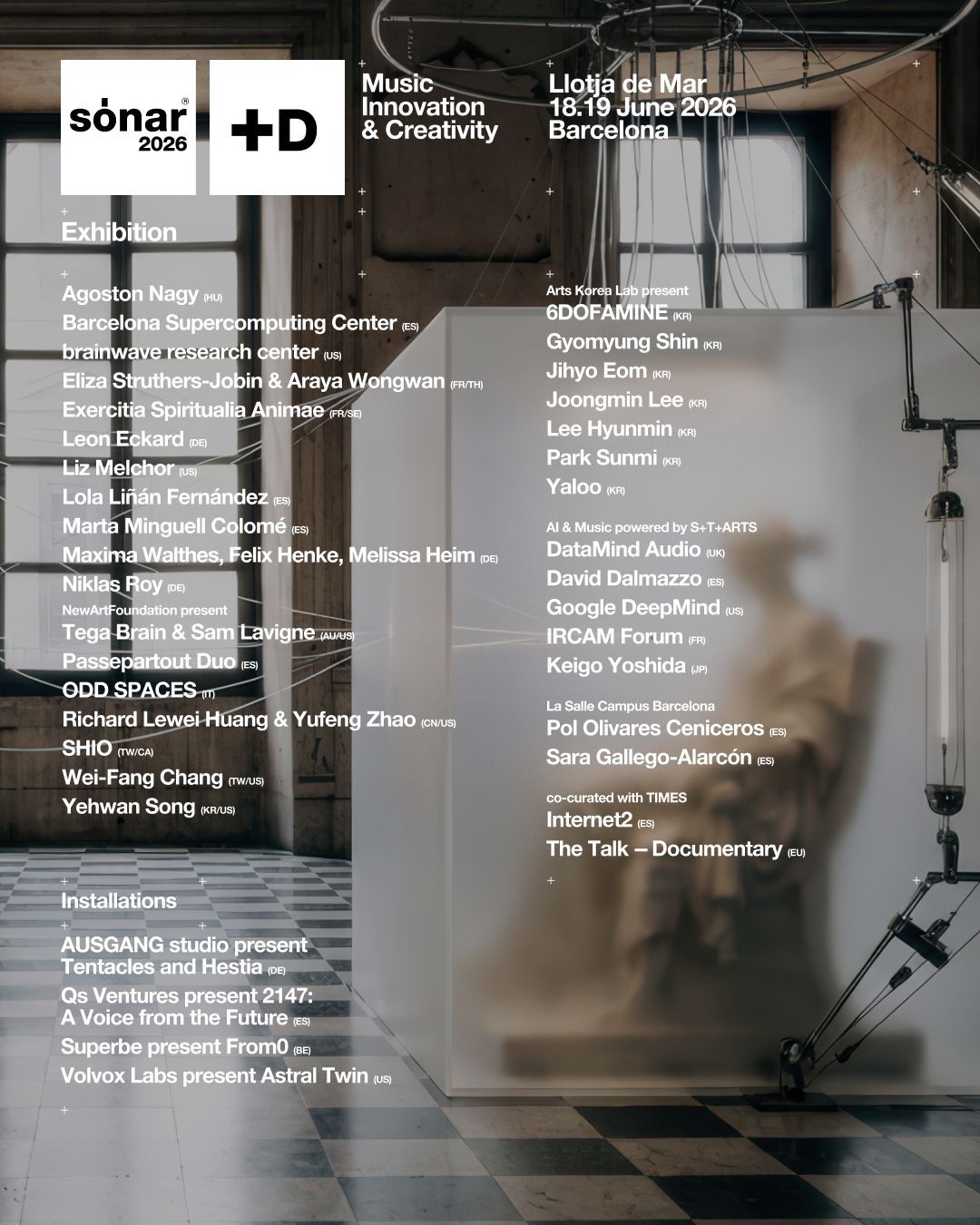
The circular format of Stage+D is a clear example of that approach. We have also worked through contrast, creating installations that enter into dialogue with the building’s historical character. Projects such as Astral Twin by Volvox Labs and Tentacles by Ausgang in the Àgora are good examples of this.
This year Sónar+D also extends into Fira Gran Via with Organysmo by LedPulse and other interventions. Can this be seen as a step towards a more seamless integration between Sónar by Day, Sónar by Night and Sónar+D?
Sónar+D remains in the city centre and continues to be an integral part of Sónar as a whole. It is a way of making Sónar+D content more accessible to the wider Sónar audience.
Organysmo by LedPulse will be the largest installation ever presented at Sónar.
The project will occupy Fira Gran Via with a reactive architectural sculpture measuring 30 by 30 metres, created specifically for Sónar 2026.
Combining volumetric light, spatial sound and responsive elements that react to audience behaviour, the installation promises to be one of the festival’s most ambitious interventions to date.
For a long time, some people perceived Sónar+D as a more specialised or industry-focused environment. This edition, however, feels far more open to new audiences and creative communities. Was breaking down that barrier one of your goals?
Sónar+D has always been a place for inspiration: a space to discover new ways of thinking about technology, stimulate creativity and the exchange of ideas, and connect with diverse communities — creative, professional and research-based alike.
This year, we are bringing back the workshop format. We would love people to return to their everyday lives, workplaces or universities and be able to apply what they have learned during their time at Sónar+D.
The Community programme places considerable emphasis on collectives, laboratories and local scenes such as Barcelona Music Tech Hub, Creative Coding Barcelona, DigitalFems and OFFF. What role does Barcelona play today within the global conversation around creativity, technology and innovation?
Barcelona is a city overflowing with talent: internationally recognised digital artists, design schools, research centres, associations and creative communities.
It is large enough to sustain a strong infrastructure, yet small enough for these different disciplines to remain in conversation with one another. I believe this creates opportunities for exchanges that, in larger cities, can sometimes become fragmented or less accessible.
That is one of Barcelona’s defining strengths, and something we should do much more to nurture. We have nothing to envy from cities such as London, Paris or Berlin.
This edition repeatedly returns to the idea of moving from a passive relationship with technology towards active participation. How does that translate into the curatorial approach and the audience experience?
Stage+D is positioned at the centre of the room, making the experience far more immersive and breaking away from the traditional frontal and one-directional format.
This year, many of the talks move beyond the conventional lecture model in favour of more hybrid and performative formats, evolving into lecture-performances.
One example is Mindy Seu‘s talk-performance, where the only visual material will come directly from audience members’ Instagram feeds.
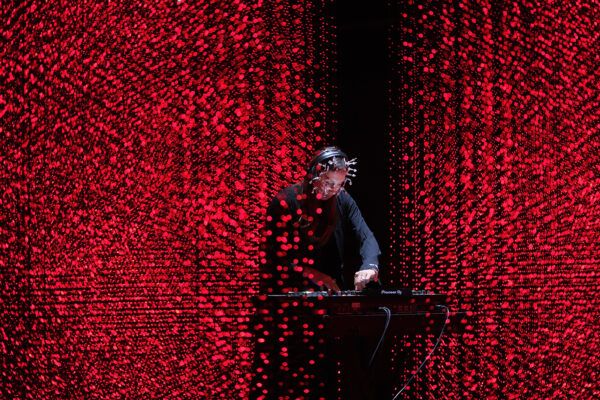
Within the music performance programme, Fitnesss & Riusforza will present a collective experience, while dadabots will invite audiences to actively participate as part of the work itself.
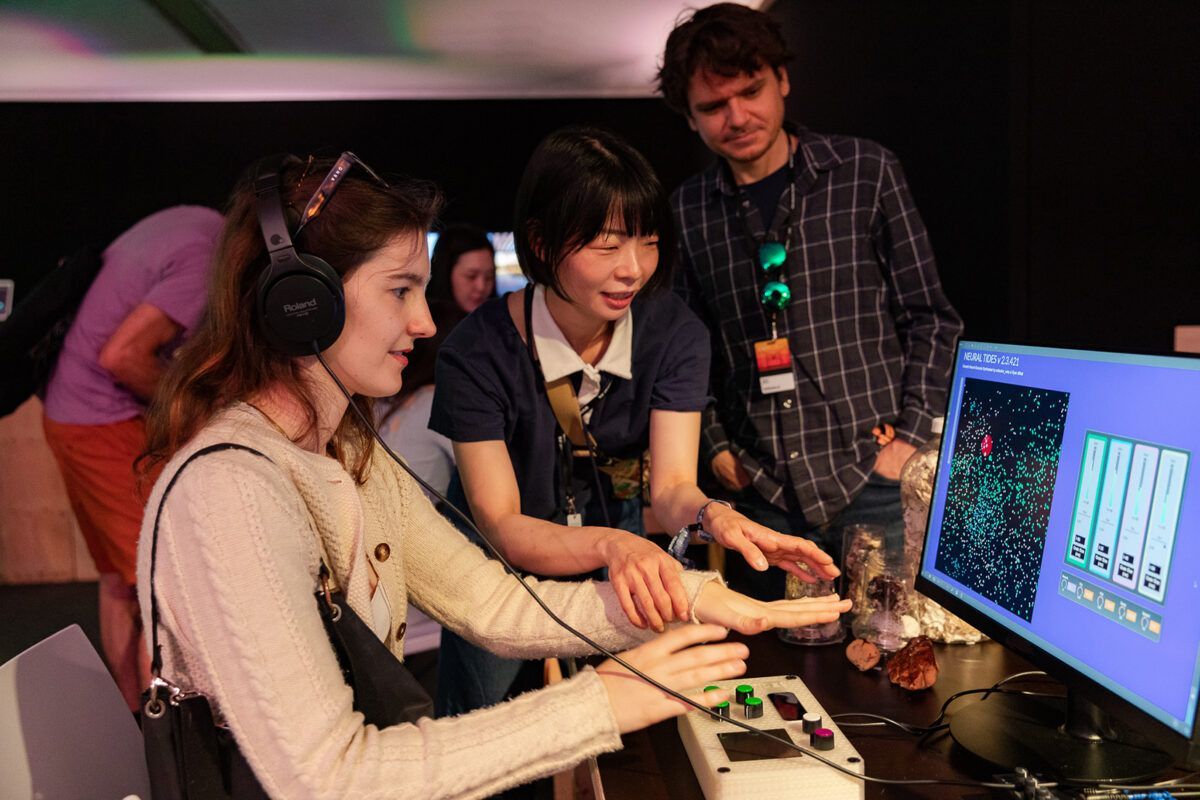
We are also bringing back workshops. And within the exhibition programme, the relationship with the audience has always been central. It is a space for play, experimentation and interaction with works created by artists, technologists and researchers from around the world.
What makes it especially valuable is the opportunity to engage directly with the creators themselves, ask questions and uncover the many layers behind each project. We have an extraordinarily curious audience.
“What we are seeing is a growing tendency towards private, safer and more intimate spaces.”
The internet appears throughout this edition not only as a tool but as a contested territory: surveillance, metrics, corporations, private communities and digital gardens. Do you think digital culture is trying to reclaim spaces of autonomy?
Although centralisation remains dominant, there are increasingly more layers coexisting across the internet: private communities, decentralised applications and alternative forms of digital interaction.
What we are seeing, however, is a growing tendency towards private, safer and more intimate spaces: Discord channels, Telegram groups, non-indexed websites and similar environments.
If you look closely, even on Instagram there is a clear shift towards sharing Stories rather than permanent posts.
This year, Sónar+D will welcome Yancey Strickler, co-founder of Kickstarter and Metalabel, as well as the creator of Dark Forest Operating System — an infrastructure designed to support private groups online, particularly for collaboration and communication among creative communities.
Sónar+D has always had a remarkable ability to identify conversations before they become culturally mainstream. Which topics do you think still seem marginal today but will become central over the coming years?
Among many others, privacy — but in a different sense. Much of the conversation over recent years has focused on human-company privacy. The next debate will be machine-to-machine privacy.
What happens when your AI agent interacts with a company’s AI agent without any direct involvement from you? And, above all, cognitive privacy: protecting our mental states.
Another topic is the growing importance of weirdness and imperfection as values in opposition to algorithmic standardisation.
By design, AI models tend to generate the most expected outcomes. This year, for example, Expo+D will feature a work by Barcelona-based artist Internet2 titled Curiosity: Learning out of Boredom, which explores precisely this idea — the anti-AI, the anti-algorithm. An AI that actively seeks out the unusual, the unexpected and the things that break established patterns.
What would you say is the fundamental difference between the Sónar+D of ten years ago and the Sónar+D of 2026?
The spirit remains exactly the same: bringing together ideas and projects that cannot be found anywhere else and giving visibility to the people behind them.
In a way, we continue to be part of the story of projects that first emerged or evolved through Sónar+D, and we continue to evolve alongside them.
Today, however, the focus is more firmly placed on digital culture than on music itself.
Another significant difference is accessibility. This year, tickets are much more affordable: €15 for one day and €25 for both days.
After creating an edition so deeply shaped by questions around AI, the internet, creativity and automation, what reflection would you like audiences to take away from Sónar+D 2026?
That there is still room to imagine.
Is there a particular project, artist or moment within the programme that, for you, best captures the spirit of this edition?
It’s difficult to choose because every participant brings something different. But if I had to pick one, it would probably be Yancey Strickler.
What he proposes resonates strongly with many of the themes running throughout the programme: small, intimate spaces built at the margins of the internet.
I think that serves as a powerful metaphor for the overall feeling of this edition.
When Sónar+D 2026 comes to an end, what question would you like to remain in people’s minds?
I would like everyone to leave with their own questions.
Ultimately, what we want to encourage is critical thinking and curiosity. Especially in the moment we are living through today, it is important to recognise and value the qualities that distinguish us from machines.
“We want to encourage critical thinking and curiosity. To value the qualities that distinguish us from machines.”
There is still room to imagine
Perhaps the most compelling aspect of Sónar+D 2026 is not simply its ability to identify emerging technologies, but its willingness to ask what we choose to do with them, what kinds of relationships they create and which forms of sensitivity they may be displacing.
At a time defined by artificial intelligence, closed platforms, automation and digital saturation, the festival does not offer a single answer. Instead, it proposes something far more uncomfortable — and far more productive: learning how to look again.
The reset proposed by Sónar+D isn’t about starting from scratch. It is about reclaiming an active position within digital culture. Returning to touch, listening, questioning, experimenting, doubting and imagining. Understanding that technology is not merely a tool, but also a way of organising the world: its rhythms, languages, desires and systems of relationships.
That is precisely where much of this edition’s relevance lies. Rather than simply celebrating innovation, it places it under scrutiny. It asks who designs the interfaces we inhabit, which bodies remain excluded from technological narratives, what kinds of communities might emerge at the margins of the internet and what role weirdness, imperfection and human intuition still have to play in an age of algorithmic standardisation.
Within that gesture lies the true strength of Sónar+D: seeing technology not as an inevitable destination, but as a cultural territory that remains open to debate. A space that can be questioned, hacked, humanised or even imagined differently.
Because, despite appearances, there is still room to build futures that are less automatic, more sensitive and profoundly human.
Tickets are available via this link.
(*) Images courtesy of Sónar+D.