HEREU exhibits Oscar Tusquets’ collection at Segona Residència
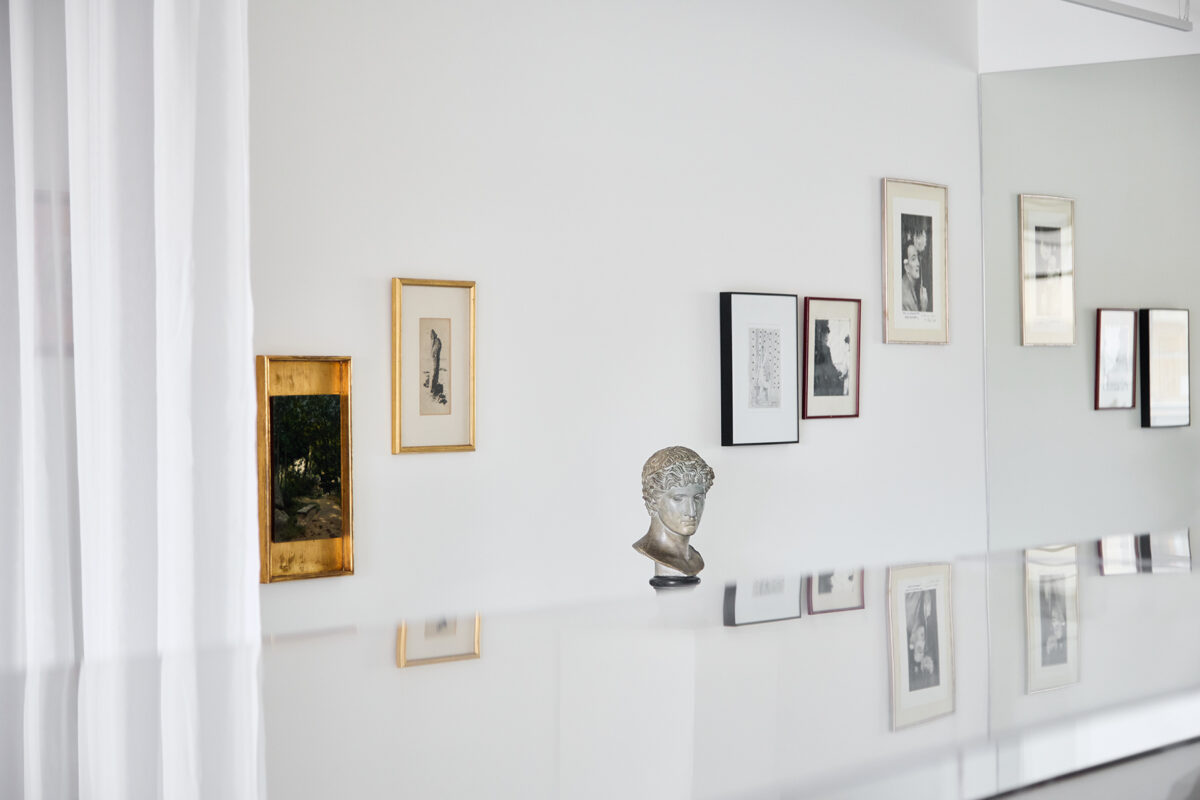
HEREU brings a selection of works from Oscar Tusquets’ private collection to its Barcelona space. We speak to the label’s founders, José Luis Bartolomé and Albert Escribano, about what they discovered at Villa Andrea, the house the Barcelona architect designed as his home and studio.
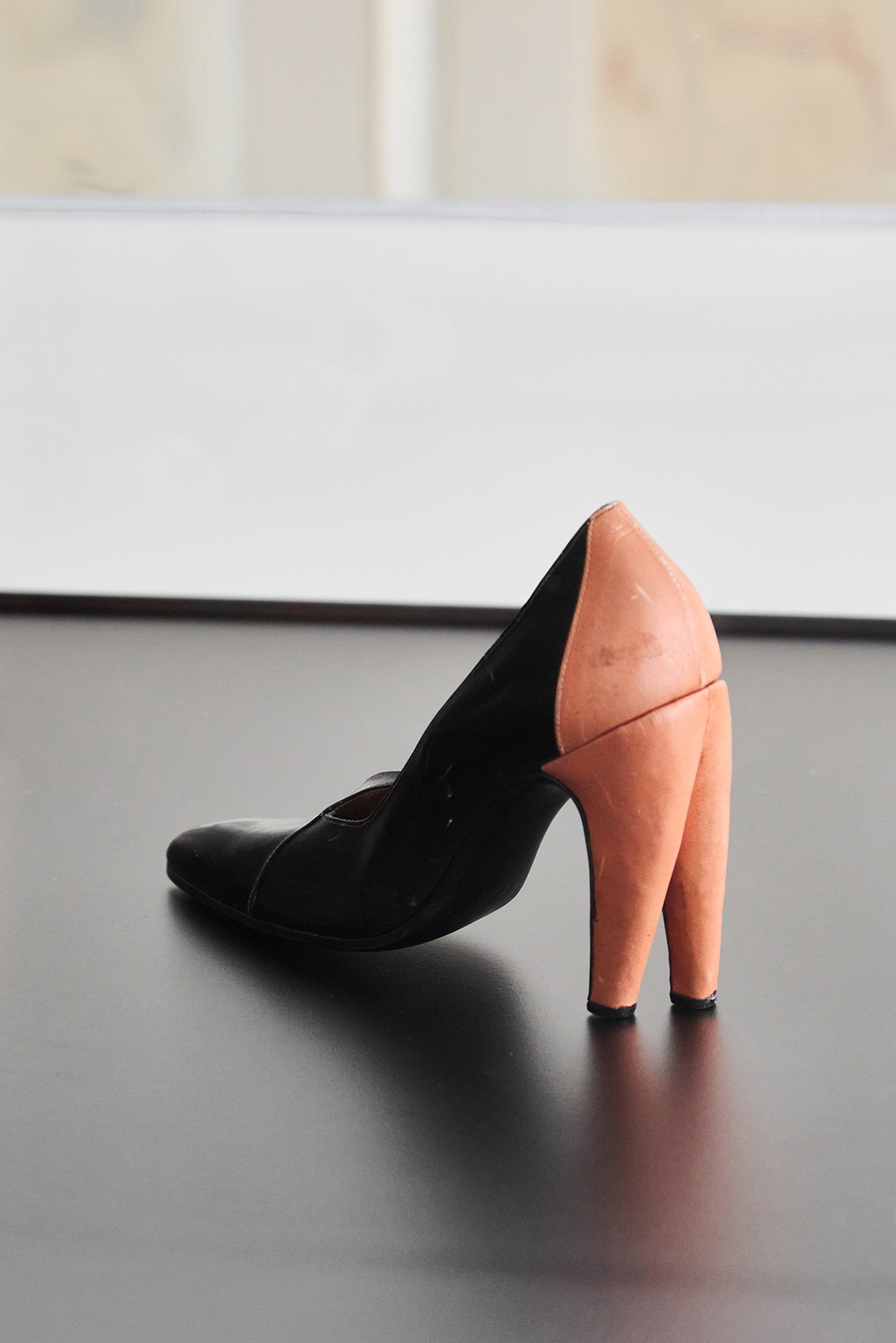
Among the pieces Oscar Tusquets has chosen to keep over the years is a shoe by Antonio Miró. That it should have found its way into an exhibition by HEREU, a label best known for its shoes, is a happy coincidence. To trace its journey to HEREU’s space in Poblenou, we have to go back to Villa Andrea, in the upper part of Barcelona.
There, Tusquets found just as good a reason to live with one of Miró’s creations as he did with a ceramic piece by Miquel Barceló or a bust by Josep Llimona. It is hard to imagine anyone else bringing together quite those three pieces.
Until 18 December 2026, a selection of works from the collection has a second address on Carrer de Pere IV. This is the second edition of Segona Residència, HEREU’s project exploring the personal collections of artists and fellow creatives. The first, held in the spring, was devoted to the photographer Daniel Riera.
If you know Tusquets through his Gaulino chair, his extension to the Palau de la Música Catalana or his books, this is a rather rarer opportunity to get to know him. For once, we meet him through the choices he has made while looking at other people’s work. Here, too, his taste is very much his own.
How Segona Residència came about
In Catalan, hereu means ‘heir’. Since 2014, José Luis Bartolomé and Albert Escribano have worked with family-run workshops in Spain on collections of shoes and bags whose shapes owe something to memories as specific as the footwear they remember seeing as children. With Segona Residència, their curiosity about where other people’s creative influences come from has led them to knock on a few doors.
How did the idea for SEGONA RESIDÈNCIA come about, and what appealed to you about telling the stories of other creatives through the objects they have chosen to live with?
SEGONA RESIDÈNCIA grew out of a desire to explore the lives of artists and creatives from a different perspective to the one we are used to. We were interested in finding out what happens outside their professional practice, in a setting as intimate and personal as their home. The objects we surround ourselves with say a great deal about us. They speak of our interests, our memories, the people who have been part of our lives and the things we value.
The idea is to understand personal collections less as an accumulation of works or objects and more as a kind of self-portrait built up over time. Each collection has a logic of its own, sometimes quite conscious and sometimes entirely intuitive. SEGONA RESIDÈNCIA is a way of getting closer to those stories and discovering what lies behind the things someone has chosen to live with.
Villa Andrea, the house that puts the collection in context
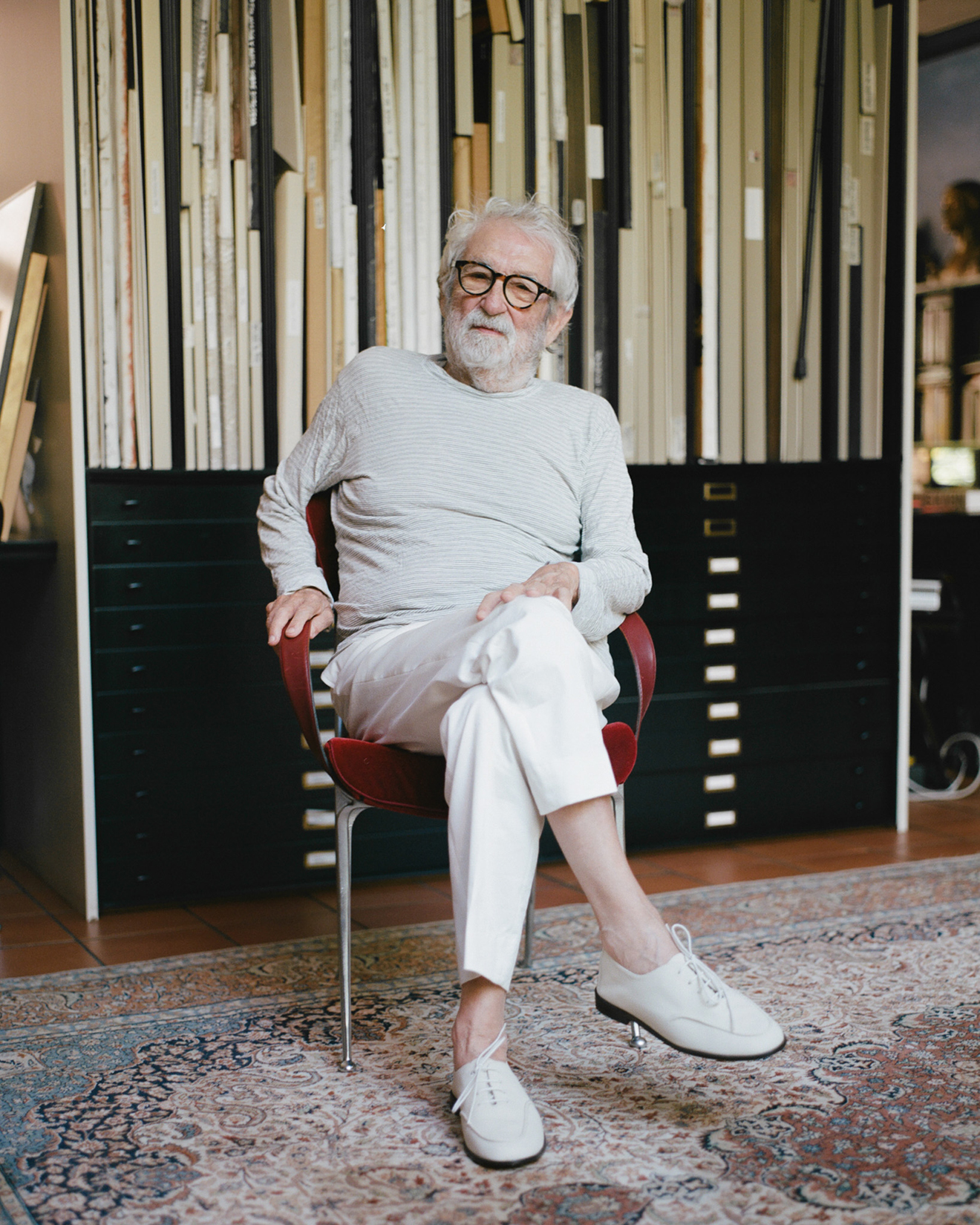
Tusquets designed Villa Andrea between 1989 and 1992 as a three-storey cube. He reserved the upper two floors for his architectural practice, which occupied them until 2008, and placed the living quarters on the ground floor, opening onto the garden.
At the centre is a room he describes as a sitting room, library and study all at once. Even when the office was upstairs, there was still a place downstairs to work among the books.
The symmetry of the floor plan is a tribute to Andrea Palladio. For the Doric portico, Tusquets took the Athenian Treasury at Delphi as his model. Once you discover that his collection includes Greek and Roman antiquities, you feel inclined to take another look at that entrance.
His love of the classical world was there in the design of the house, before he had even decided where to put a single piece.
What first sparked your curiosity about Oscar Tusquets’ collection? When you saw it up close, what did you discover about him that you hadn’t seen in his work as an architect or designer?
Oscar Tusquets is an essential figure in our culture. When we began drawing up a list of people we might feature in SEGONA RESIDÈNCIA and thinking about a possible schedule, Tusquets was one of the first names that came up. We knew his house, Villa Andrea, and we knew a little about some of the pieces in it, but stepping inside and seeing the collection up close was quite another thing.
We were welcomed into a place filled with objects that, in one way or another, define who he is. It was fascinating to discover how different ways of understanding art coexist there and, above all, to see how curious Oscar still is about everything around him.
His creativity is tireless, which is something we truly admire. Getting to know him beyond his professional life gave us a sense of someone with a very particular way of relating to the world.
From an anonymous antiquity to a work by Dalí
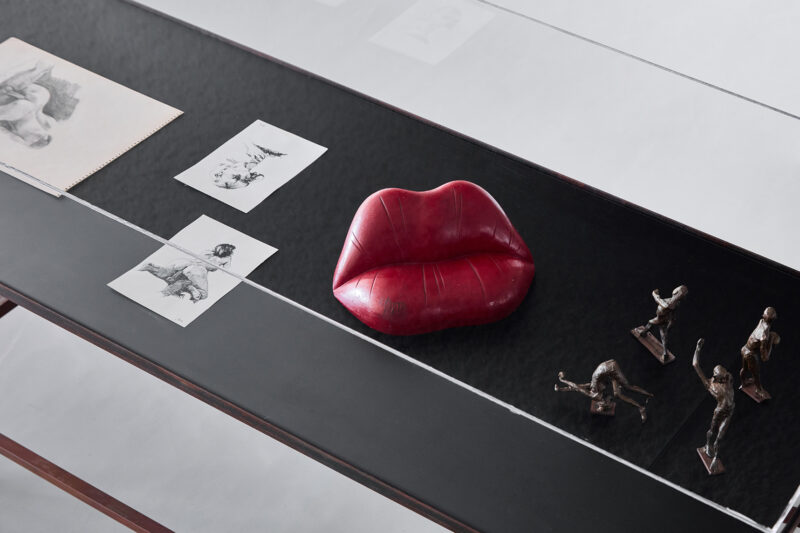
The selection in Poblenou includes works by Salvador Dalí, Pablo Gargallo, Josep Llimona, Miquel Barceló, Juan Bordes and Javier Mariscal, alongside anonymous pieces from classical antiquity. It is a fairly unorthodox way to cover more than two thousand years of Mediterranean culture.
All it took for a piece to qualify was for Tusquets to have wanted to live with it. That gives an object by an unknown maker as much right to be here as a Dalí, leaving visitors free to decide which of the two deserves more of their time.
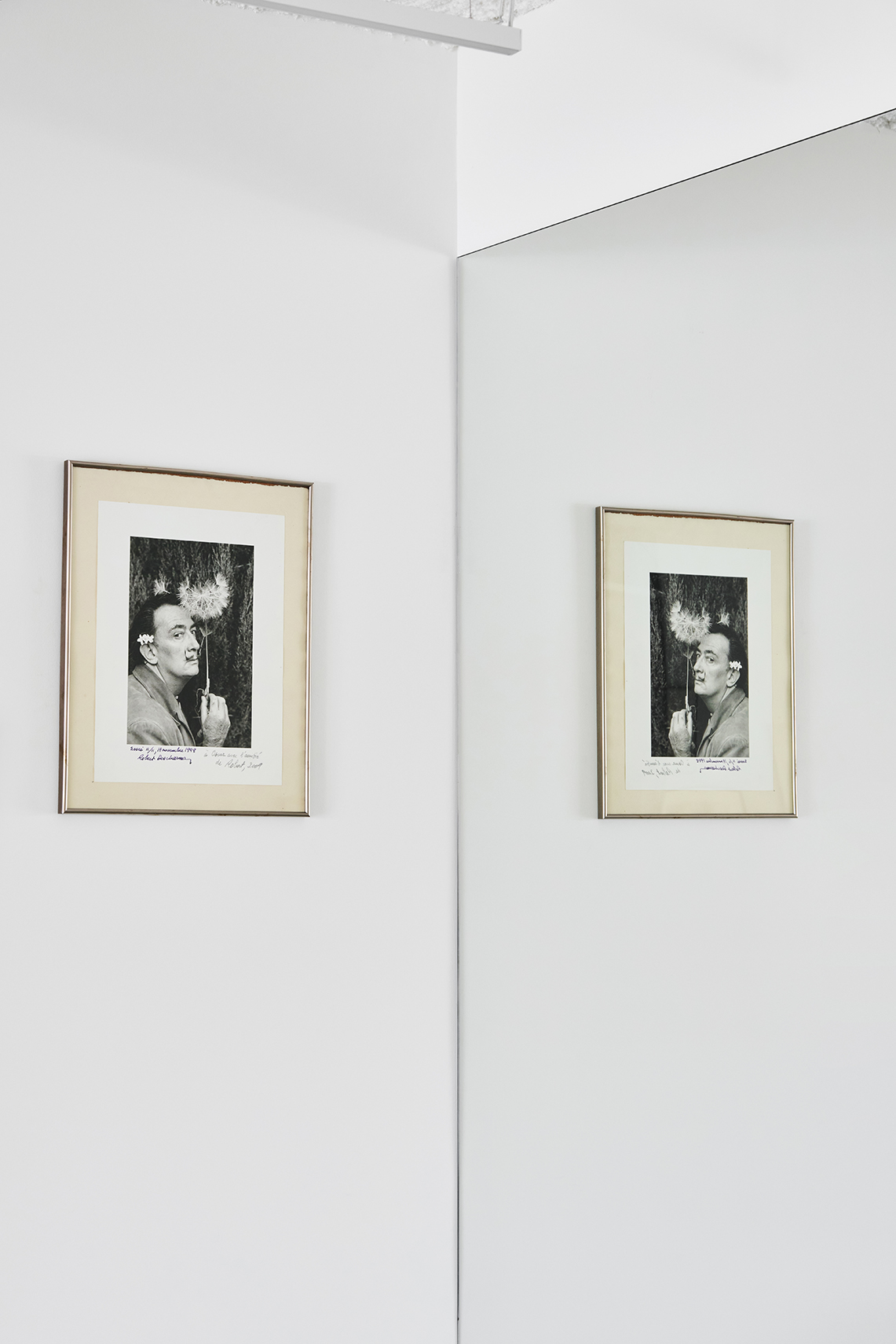
Some names take us a little further than the exhibition label. Tusquets and Dalí conceived the Mae West room at the Dalí Theatre-Museum in Figueres together. Seen from one precise spot, the elements of the room form the actress’s face. Juan Bordes, meanwhile, is credited as a sculptor on Villa Andrea itself.
In one case, the relationship between two artists can be traced to a museum anyone can visit. In the other, it leads back to the very house the pieces came from.
Another thread worth following is the human figure. Before graduating in architecture, Tusquets studied drawing at La Llotja, where he won prizes for both figure drawing and drawing from life. Decades later, when the Fundació Vila Casas brought together more than two hundred of his works for a retrospective, it called the exhibition Cuerpos, ciudades, interiores (Bodies, Cities, Interiors).
The first of those three subjects suggests one possible route through the show. You might begin with the way Llimona models a bust and end up in front of an object as intimately connected to the body as that shoe by Antonio Miró.
A book that takes us back to Villa Andrea
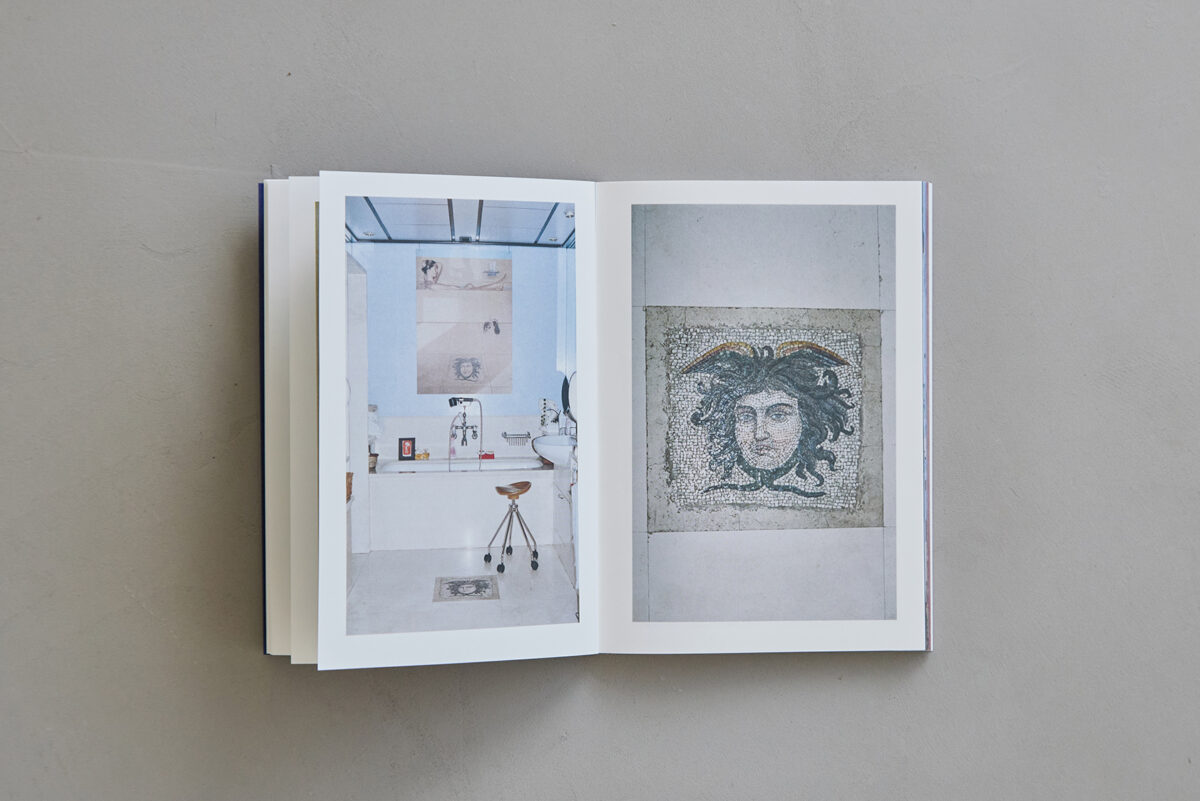
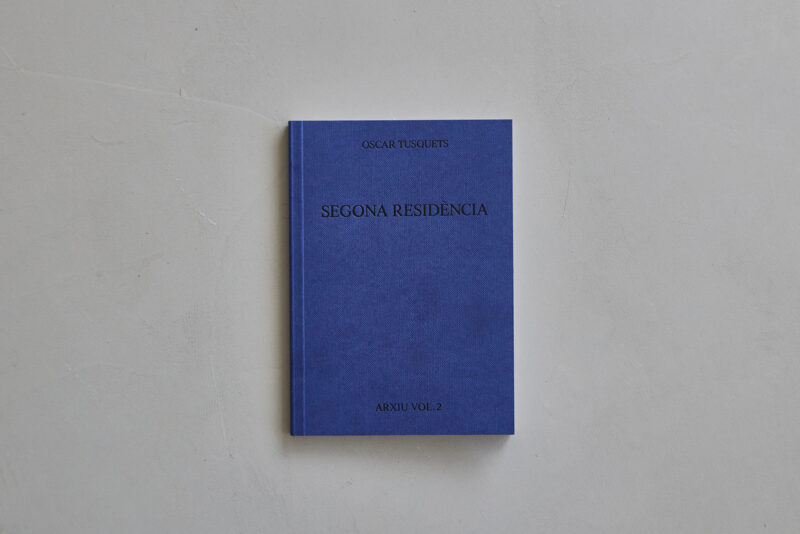
One detail only comes into focus when you open Arxiu Vol. 2. Oscar Tusquets. You can see what stood beside each of the pieces now on show on Pere IV when it was still in the architect’s home. Published by Biblioteca Hereu and edited by Jeric Acuña, the volume brings together photographs of Villa Andrea and a conversation with its owner. It measures just 12 by 17 centimetres, with 80 pages, a sewn binding and texts in Catalan, Spanish and English.
The catalogue for SEGONA RESIDÈNCIA Vol. 02 includes photographs of Oscar’s home and a conversation with him. What did you want readers to discover about Oscar by seeing how he lives with his collection?
We conceived the catalogue as a physical record of the project, without feeling that it had to mirror the exhibition itself. We wanted to offer another way in, one that would allow readers to delve deeper into the stories behind these objects and into the way each person builds and makes sense of their collection. Through the photographs, we wanted to show the pieces in context, just as they are when Oscar lives with them at home, preserving a sense of the space they occupy and how they relate to the objects around them.
What makes the interview important is precisely that it allows us to get to know people beyond the surface. At a time when almost everything is consumed in an instant, conversation remains one of the most honest and direct ways of getting to know someone and the world they inhabit.
If you visit the exhibition, we suggest saving the book for afterwards. First, choose the piece you would take home. Then open the book and see what you would take home from Villa Andrea. Once you have seen the pieces in Tusquets’ own home, you might just change your mind.
Visiting the exhibition. 16 October to 18 December 2026. Carrer de Pere IV, 78, fourth floor, door 5, Barcelona. Visits are by appointment only. To arrange yours, email info@segona-residencia.com.