“Bugonia”: Lanthimos’ most radical take on contemporary absurdity

Yorgos Lanthimos has turned the unsettling and the unusual into a narrative signature as distinctive as it is disorienting. In “Bugonia”, his latest film, he sharpens that sensibility to its fullest, crafting a hyperbolic fable about collective anxiety, digital conspiracies, and the collapse of shared reality.

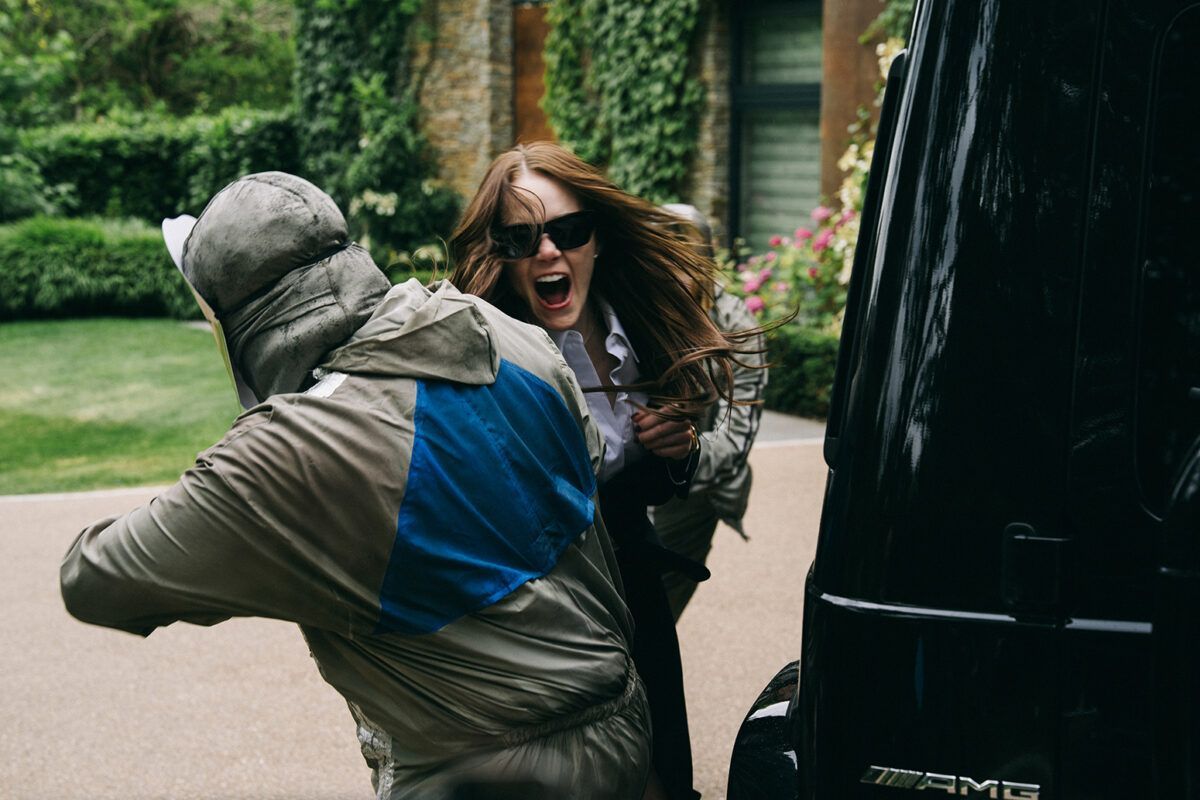
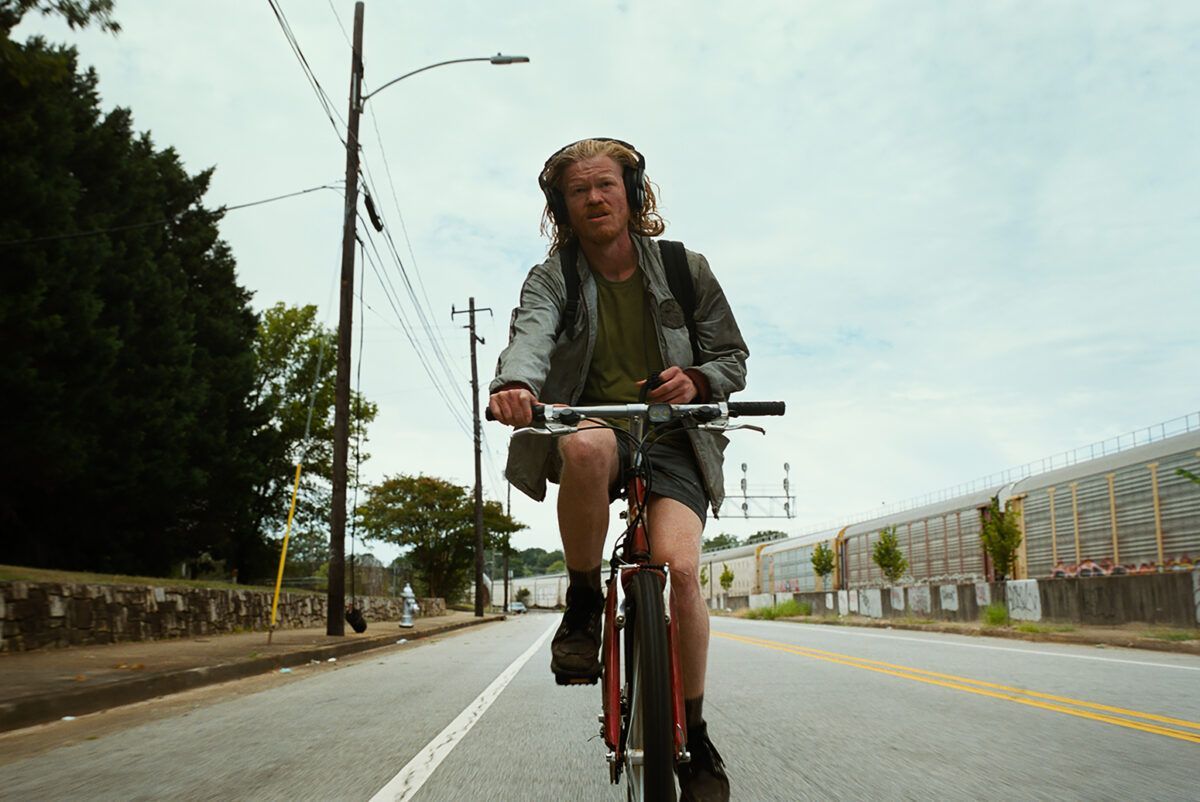
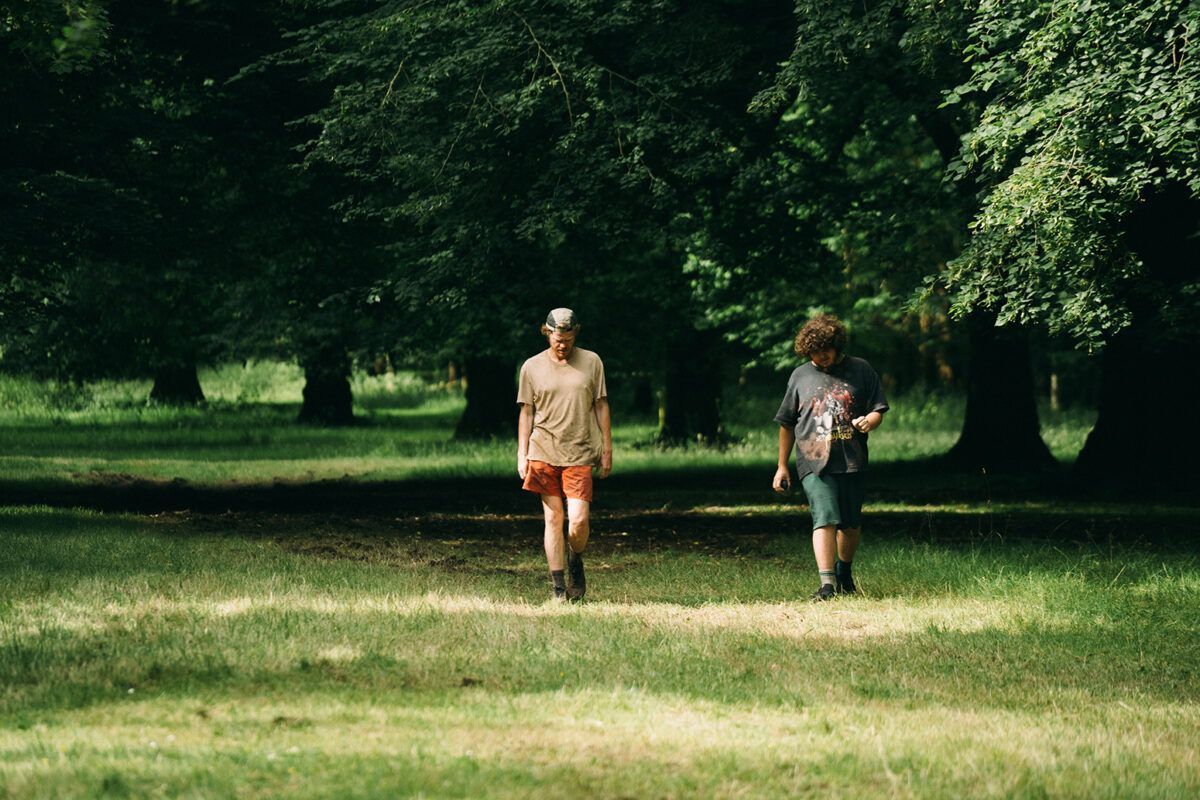
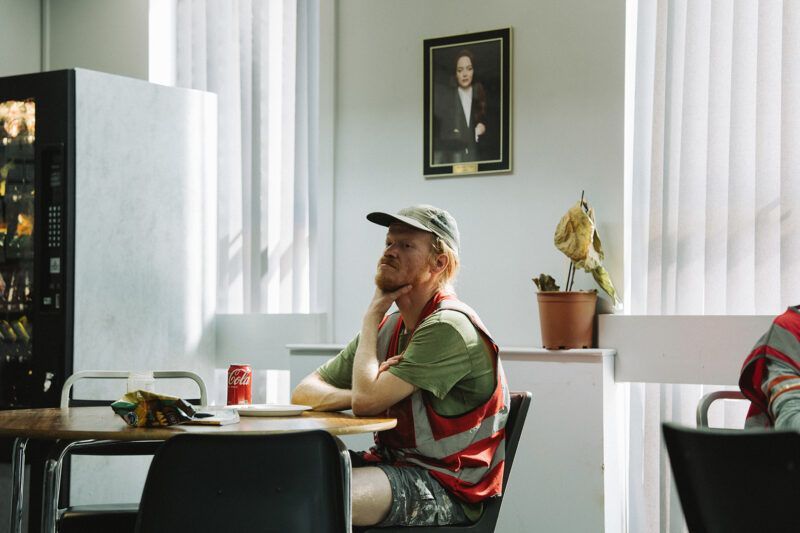
A loose adaptation of the South Korean film“Save the Green Planet!”, “Bugonia” becomes, through the lens of Greek director Yorgos Lanthimos, a sublime physical, visual and emotional experiment about the breakdown of rational discourse. The result is a piece that shifts between claustrophobic thriller, social grotesque and low-frequency science fiction. A radical portrait of what it means to exist in a present saturated with noise, fear and misinformation.
“Bugonia is a radical portrait of what it means to exist in a present oversaturated with noise, fear and misinformation.”
A kidnapping as narrative device
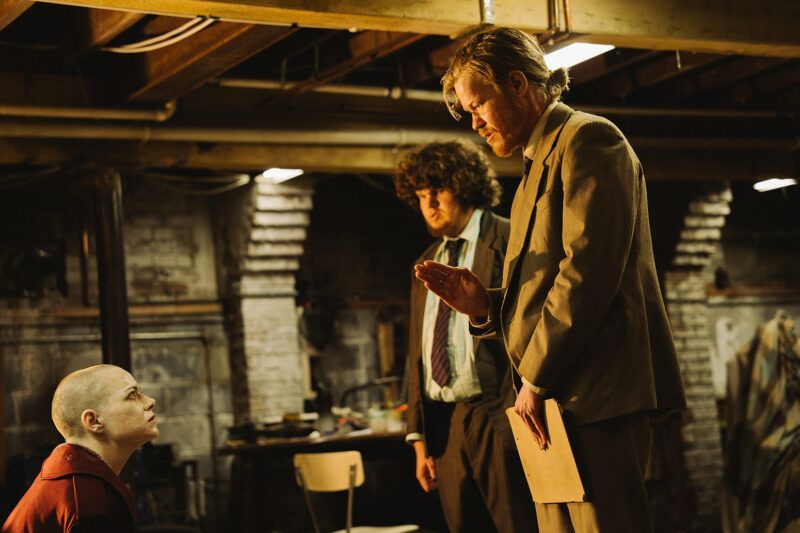
The film revolves around a premise as absurd as it is unsettling: Teddy (Jesse Plemons) and his cousin Don (Aidan Delbis) kidnap Michelle (Emma Stone), a powerful pharmaceutical executive, convinced she is an alien infiltrator plotting to destroy Earth. In this basement — both literal and symbolic — much of “Bugonia”’s metadiscourse is concentrated: a tension between reality and fiction that, although partially resolved, culminates in a plot twist as unexpected as it is impactful.
Lanthimos sets the main action in a confined, almost theatrical space, where bodies, silences and objects become expressive vectors. As in “Dogtooth” or “The Lobster”, body language and the internal rules of the narrative universe are not meant to be realistic, but revealing. Here, Teddy’s madness is as absurd as it is coherent. And Michelle’s resistance is as rational as it is suspicious.
A still life of chaos: photography in VistaVision
Visually, “Bugonia” is one of Lanthimos’ most ambitious works. Shot in VistaVision, with a hypersaturated colour palette and a composition that echoes both Flemish still life painting and contemporary photojournalism, each frame seeks to transform confinement into a canvas of psychological tension.
The static framing magnifies faces and minimises gestures. Michelle’s body, shaven and covered in an absurd mix of anti-alien lotions, becomes a sculpture of vulnerability.
It is no coincidence that Lanthimos constructs the basement as a pop still life of the apocalypse: tins, beehives, rusted suits, an old TV looping conspiracy theories. Everything arranged with an obsessively detailed art direction that evokes the mental order of the paranoid, where each object holds symbolic function.
Emma Stone and Jesse Plemons: duelists of the inexplicable
Emma Stone, in her fifth creative alliance with Lanthimos, fully commits to a performance that is unrestrained, visceral and profoundly magnetic. Michelle is a sphinx who moves from arrogance to fear, from sarcasm to manipulation. In that play of layers, the actress navigates with internal tension, avoiding histrionics and embracing disorientation.
Jesse Plemons, meanwhile, turns Teddy into a tragic character without abandoning his grotesque nature. His performance is simply extraordinary: the vacant stare, his logic-defying ramblings, the sickly tenderness he shows towards Don… everything about him points to a loneliness that has morphed into fanaticism.
It’s impossible not to read his character as an allegory for disconnected men, those who find in collective delusion an emotional refuge.
Comedy as the sharp edge of horror
“Bugonia” is not a comedy, but it allows itself to be comic — in the most brutal sense.
Lanthimos’ humour is built on awkward silences, improbable reactions and senseless rituals. The ridiculous outfits, the interrogation with questions about bees and eclipses, the absurd rules of the plan to save the planet… Everything is profoundly ridiculous and, precisely for that reason, chilling.
The director does not judge his characters, but neither does he grant them redemption. He presents them in their distorted humanity. “Bugonia” is not a parody of conspiracies; it is an exploration of why they work, what voids they fill, how a shared lie can become truth when the real world no longer offers certainty.
A political fable without moralising
If “Bugonia” stands out within contemporary cinema, it’s for its ability to be political without being didactic.
The critique of the pharmaceutical industry, extractive capitalism, misinformation and technology as a generator of parallel realities is not delivered as a manifesto, but rather permeates the atmosphere.
This is where strangeness enters — Lanthimos’ signature not merely as an aesthetic choice, but as a narrative tool: a form of deprogramming that destabilises certainties, shifts perception and forces the viewer to rethink everything from a place of disorientation.
Michelle may not be an alien. Or maybe she is. It doesn’t matter — and we’re not here to spoil it.
Because what’s truly at stake in the film is not the truth, but the characters’ (and the viewer’s) ability to endure ambiguity. Will Tracy’s script, fast-paced, brutal and full of double meanings, builds this tension without offering easy exits.
A cinematic experience
Lanthimos has insisted that “Bugonia” must be seen in cinemas. Not only for its immersive sound design, the grandeur of VistaVision or the fabulous soundtrack — which accompanies and destabilises with surgical precision — but because it proposes a communal experience. A shared nervous laugh. A collective shudder. An immersive exercise that comes to life in the darkness and silence of a cinema.
“The film explores how a shared lie can become truth when the real world no longer offers certainty.”
A film about the present, with no nostalgia and no future
There is no nostalgia for the analogue in “Bugonia”, nor any faith in technology. Only a hyper-accelerated present, confused and dangerously performative.
This is a film about how narrative shapes reality. About how heroes can become monsters if given a strong enough motive. And about how alienation doesn’t need spaceships: all it takes is a motherless home, an empty hive, and an internet connection.
“Bugonia” doesn’t seek to provide answers, but to disturb. And in that, as with Lanthimos’ best films, it finds its power. A work to laugh at with fear, to doubt everything, and to leave the cinema with a single question echoing: What if they’re right?
One final vision
The final images of “Bugonia” are among the most visually stunning seen in recent cinema. They are surreal, evocative and deeply poetic. It’s a closing gesture that lingers, suggesting that even after the plot concludes, the emotional and symbolic resonance continues to unfold.
Credits with an authorial signature
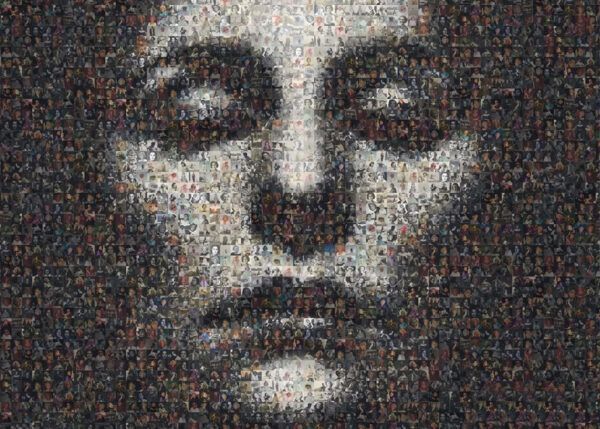
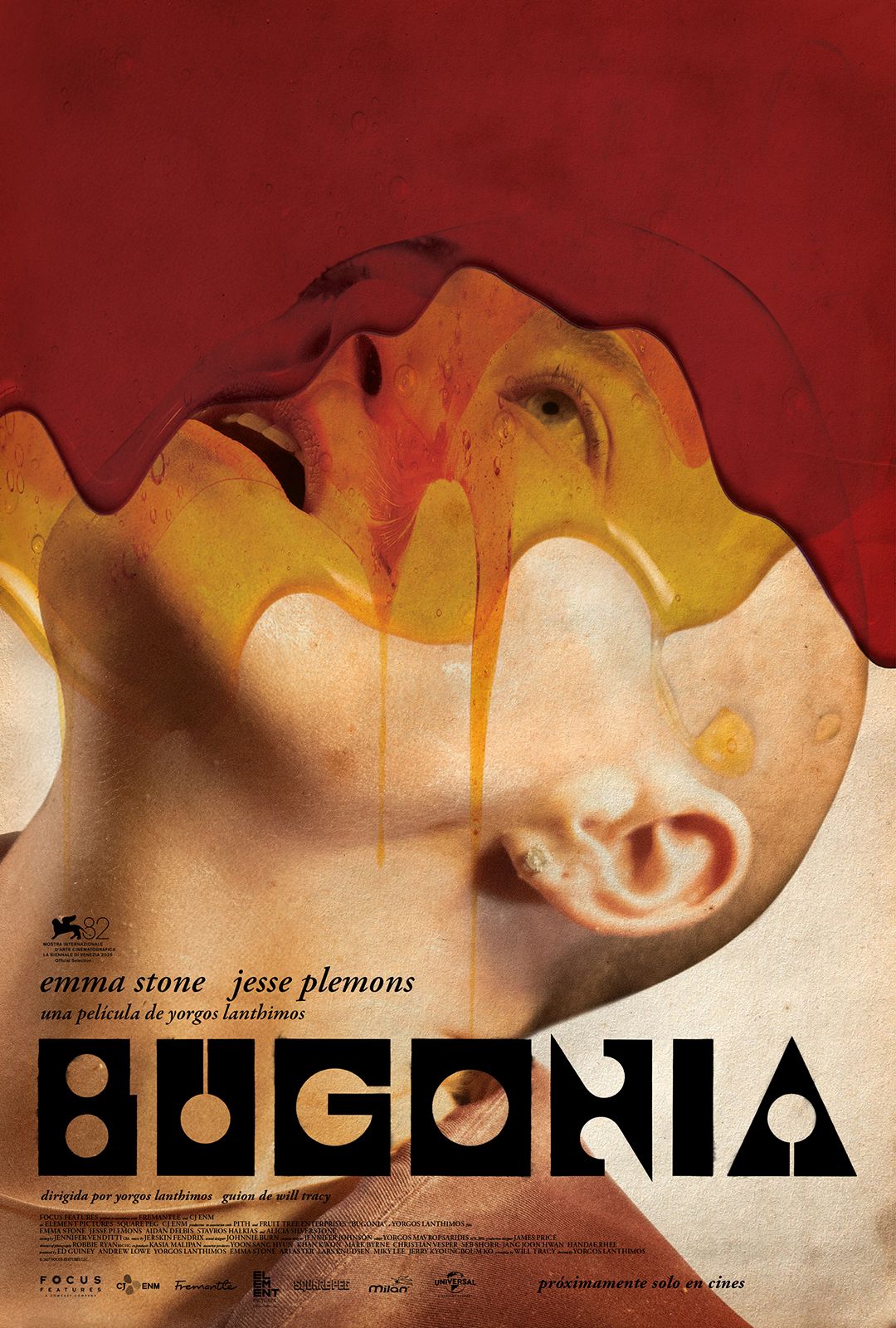
The film’s poster and opening titles were designed by renowned Greek designer Vasilis Marmatakis, a regular collaborator of Lanthimos whose work visually translates the director’s unsettling, precise and symbolic universe. We’re sharing with you the interview we did with him during his participation in the Paradis Festival in Valencia.
Highly recommended.
(*) Images: UPI Media.