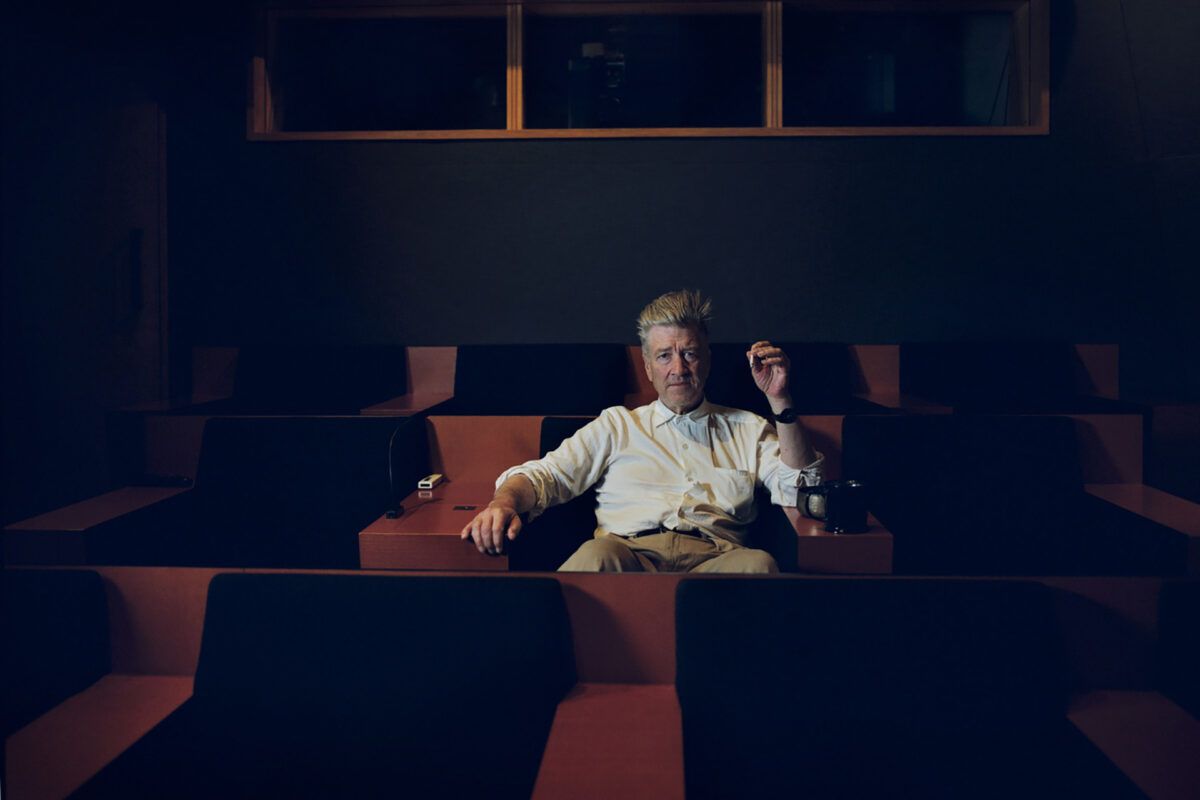
The best quotes by David Lynch
“The idea is the beginning of everything. Everything we do starts with an idea.”
A reminder of the power of creativity and the importance of nurturing it.
“You don’t have to suffer to create. Creativity is happiness.”
Lynch emphasized that the artistic process doesn’t have to be linked to pain.
“Follow the ideas wherever they take you.”
An invitation to trust intuition and let inspiration guide you.
“Beautiful things arise when you open yourself to mystery.”
A reflection of his fascination with the unknown and the inexplicable.
“The subconscious is like a garden. You water it with meditation and ideas blossom.”
A reference to his practice of Transcendental Meditation and how it nurtured his creativity. In fact, in July 2005, he founded the David Lynch Foundation for Consciousness-Based Education and World Peace (also simply known as the David Lynch Foundation), to financially support middle and high school students interested in Transcendental Meditation, as well as fund research on the technique and its effects on learning. The Foundation has expanded its focus to include other “at-risk” populations, such as homeless people, U.S. war veterans, African war refugees, and prisoners.
“Art has the ability to change the world, but it begins by changing the individual.”
Lynch emphasized the transformative impact of art on both personal and collective life.
“The world is a strange place, but there is beauty in its strangeness.”
A statement that encapsulates his unique vision of the world.
“The darkness always has a hidden light.”
A hopeful underlying message even in the darkest moments.
“Cinema is a language. It is a living art.”
His philosophy on the cinematic medium and its expressive potential.
“Negativity is the enemy of creativity.”
He always emphasized the impact negative emotions and thoughts can have on the creative process. For Lynch, creativity emerged from a free and open mental state, where ideas could flow unrestricted.
Catching the Golden Fish…
In his book “Catching the Big Fish”, David Lynch invites us to dive into the depths of his creative mind. This text is both a life manual and an artistic manifesto, where Lynch shares his thoughts on meditation, creativity, and the art of turning ideas into tangible realities.
The title, which alludes to the search for ideas as if they were golden fish in the vast ocean of the subconscious, perfectly captures Lynch‘s approach to creativity. For him, the best ideas are like deep-sea fish: they require patience, attention, and a serene mental state to be discovered.
Lynch details his daily practice of Transcendental Meditation, a discipline he considers fundamental to his creative process. Through meditation, he clears his mind of negativity and opens himself to a constant flow of ideas. This book also discusses his philosophy that suffering is not necessary to create, a stance that challenges the myth of the tortured artist.
In simple yet profound style, “Catching the Big Fish” is composed of short thoughts ranging from personal anecdotes to universal principles of creativity. Lynch doesn’t try to give definitive lessons, but offers glimpses of his own experience, allowing the reader to draw their own conclusions.
The book is not only an inspiration for artists but also a reminder of the importance of caring for the mind and spirit. With its accessible tone and revealing content, “Catching the Big Fish” is a gem for those wanting to understand how the ideas that gave life to Lynch’s masterpieces originated.
David Lynch and Angelo Badalamenti: an unforgettable sonic alchemy
The relationship between David Lynch and Angelo Badalamenti is one of the most iconic collaborations in film history, a creative marriage that transformed music and sound into fundamental narrative tools for exploring the unknown.
Over more than three decades, this duo created a unique symphony of images and sounds that redefined the boundaries of auteur cinema. Badalamenti, who passed away in 2022, was more than a composer for Lynch; he was his artistic accomplice. They shared a visceral understanding of the deepest and darkest human emotions, and together they found a way to bring them to life through hypnotic melodies and soundscapes that defied convention.
From their first meeting, in which they discussed the musical tone of “Blue Velvet” (1986), their connection was immediate. Lynch didn’t speak to him in technical or structural terms but described emotions and dreamlike landscapes. Badalamenti responded at the piano, interpreting what Lynch had in mind, and thus one of their most recognizable pieces, “Mysteries of Love”, was born. That moment marked the beginning of a collaboration that would extend to masterpieces such as “Twin Peaks” (1992), “Wild at Heart” (1990), “Lost Highway” (1997), and “Mulholland Drive” (2001). In 2018, they came together under the name “Thought Gang” and released a self-titled album.
In a world where cinematic collaborations are often limited by commercial demands, Lynch and Badalamenti reminded us that true art is born from complicity and creative freedom. In Lynch’s words, “Angelo could transform silence into a whisper that reached the soul”. And that’s exactly what they achieved together: an eternal whisper that will continue to inhabit our minds and hearts.
Weather report: Lynch and the weather forecast
Among the many eccentric aspects of David Lynch, his weather reports on YouTube became a peculiar and fascinating phenomenon. In these brief videos, Lynch, with his characteristic sober and mysterious style, reported on the weather conditions from Los Angeles, combining the simplicity of a daily bulletin with his unique artistic presence. With his calm voice and succinct phrases, he managed to transform something as mundane as the weather into an almost hypnotic ritual, reinforcing his status as a master of the unusual. These seemingly trivial segments reflected his obsession with the mundane and his ability to imbue the simplest details of everyday life with meaning. The first clip is dated May 11, 2020, and the last on December 16, 2022 (exactly two years and one month before his death).
A journey through his filmography
David Lynch has left behind a cinematic legacy as profound as it is bewildering. His work is an odyssey through the darkest and most wonderful corners of the human mind. In this article, we will explore each of his films, a journey through dreams, nightmares, and alternate realities that defined his career.
“Eraserhead” (1977)
Lynch’s first masterpiece is a surrealist journey into the heart of anxiety and alienation. With a low budget and monochromatic aesthetics, this film redefined experimental cinema. The story of Henry Spencer and his mutant child is both a horror tale and a philosophical meditation on fatherhood and isolation.
“The Elephant Man” (1980)
With this film, Lynch entered commercial cinema without losing his artistic sensitivity. Based on the life of Joseph Merrick, a severely disfigured man, this work is a tribute to human dignity. Starring John Hurt and Anthony Hopkins, it combines Lynch’s visual lyricism with a heartfelt and accessible narrative.
“Dune” (1984)
Although it was a project marked by studio interference, “Dune” remains a fascinating piece within Lynch’s filmography. His vision of Frank Herbert’s universe is grand, full of oppressive atmospheres and stunning visual designs. Despite its narrative flaws, it is a window into Lynch’s potential as a world builder.
“Blue Velvet” (1986)
With “Blue Velvet”, Lynch solidified his unique style. This psychological thriller blends the everyday with the grotesque, revealing the dark side of an apparently idyllic suburb. Dennis Hopper’s performance as the disturbing Frank Booth is etched into film history.
“Wild at Heart” (1990)
A visceral exploration of love and violence, “Wild at Heart” is a road movie with surreal touches. Starring Nicolas Cage and Laura Dern, it’s a love letter to excess and creative freedom.
“Twin Peaks: Fire Walk with Me” (1992)
A dark and emotional prelude to the iconic TV series “Twin Peaks”. In this film, Lynch delves into the final days of Laura Palmer, creating a work that blends psychological horror with tragedy.
“Lost Highway” (1997)
With a fragmented narrative and unsettling atmosphere, “Lost Highway” marks the beginning of an even more abstract phase in Lynch’s career. The film challenges the linearity of time and space, leaving the viewer in a state of fascination and confusion.
“The Straight Story” (1999)
In a surprising turn, Lynch directed this moving and simple story based on real events. “The Straight Story” follows the journey of an elderly man who crosses the country on a riding mower to reconcile with his brother. It’s a deeply human and poetic work.
“Mulholland Drive” (2001)
Considered by many to be his masterpiece, “Mulholland Drive” is a cinematic puzzle that explores dreams, desires, and the darkness of Hollywood. Naomi Watts gives an unforgettable performance in this tale of love, betrayal, and mystery.
“Inland Empire” (2006)
Lynch’s most experimental film is a three-hour odyssey through the labyrinths of identity and perception. Filmed with digital cameras, Inland Empire is a testament to his commitment to unrestricted artistic exploration.
“Twin Peaks: The Return” (2017)
Although it is a television series, this continuation of “Twin Peaks” deserves to be mentioned as a cinematic achievement. With 18 episodes that defy categories and expectations, Lynch created a modern masterpiece that expands his mythology while reflecting on time, memory, and the nature of evil.
An Eternal Creative Universe
David Lynch didn’t just direct films; he created experiences. His ability to explore the depths of the subconscious and translate them into unforgettable images is unique. His influence extends far beyond cinema, permeating television, contemporary art, and music. In fact, he collaborated on the creation of music videos, including Michael Jackson’s “Dangerous” (1992), Yoshiki’s “Longing” (1995), Rammstein’s “Rammstein” (1996), Moby’s “Shot in the Black of the Head” (2009), and Nine Inch Nails’ “Came Back Haunted” (2013), among others.
In 2001, he released his first album, “BlueBob”, with a strong rock, industrial, and gothic influence. In 2011, he released his second album, “Crazy Clown Time”, which featured a collaboration with Karen O of Yeah Yeah Yeahs. In his next album, “The Big Dream” (2013), he invited Lykke Li. In 2024, he published his latest musical material, “Cellophane Memories”, with Chrysta Bell, and directed its music videos.
In an increasingly predictable cinematic landscape, Lynch’s work remains a beacon of innovation and creative bravery. His filmography doesn’t just tell stories; it redefines the limits of what is possible in art. And although he is no longer with us, his work will live on forever, guiding us through the dark and wonderful corners of our own minds. R.I.P.