Ultrafragola: the mirror that turned design into desire
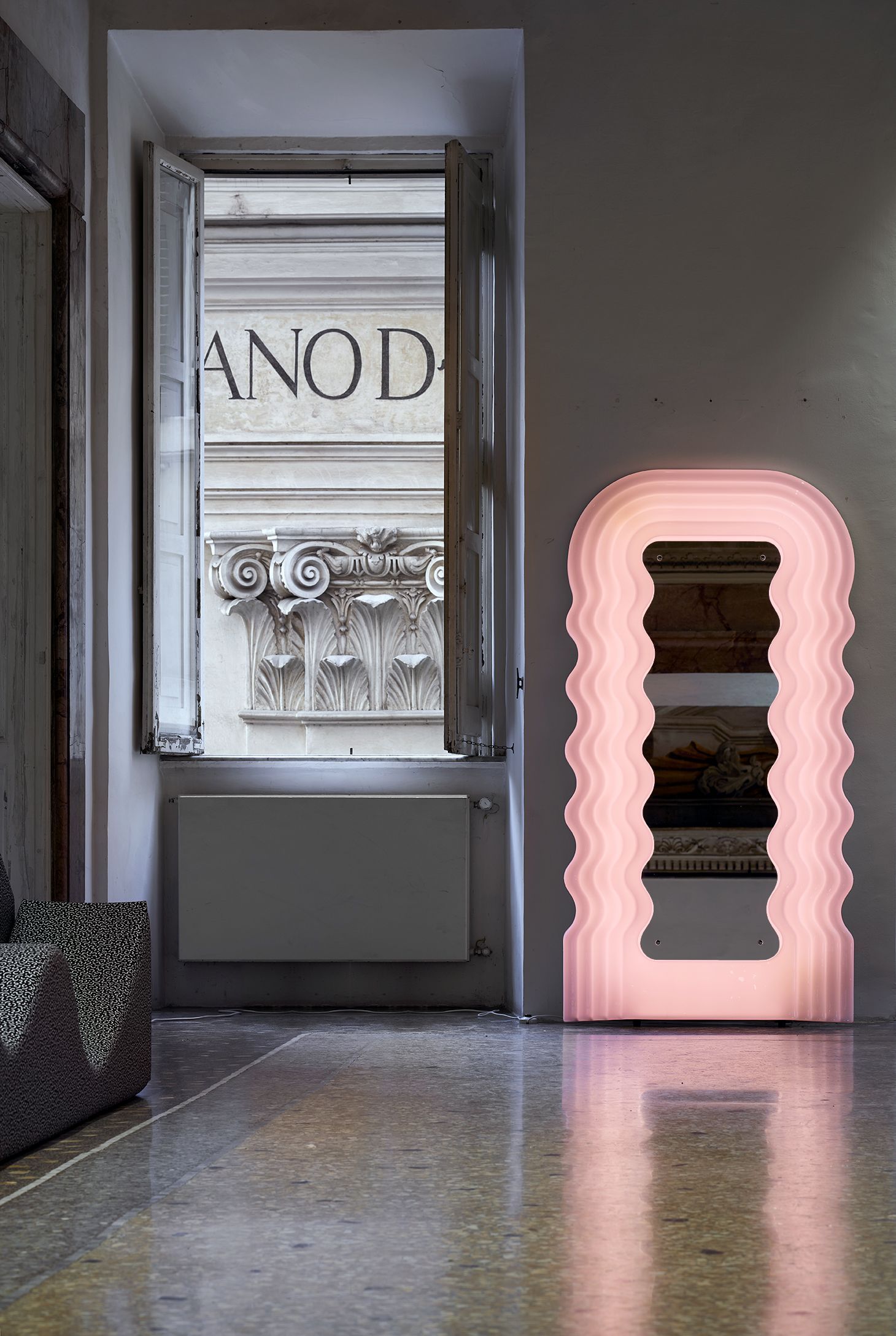
In 1970, Ettore Sottsass designed the Ultrafragola mirror for Poltronova—a piece that, with its wavy curves and neon pink glow, broke away from the functionalist conventions of the time.
Over 50 years later, this mirror-lamp remains an icon of Italian Radical Design and a coveted object in today’s design culture.
A design that broke the rules
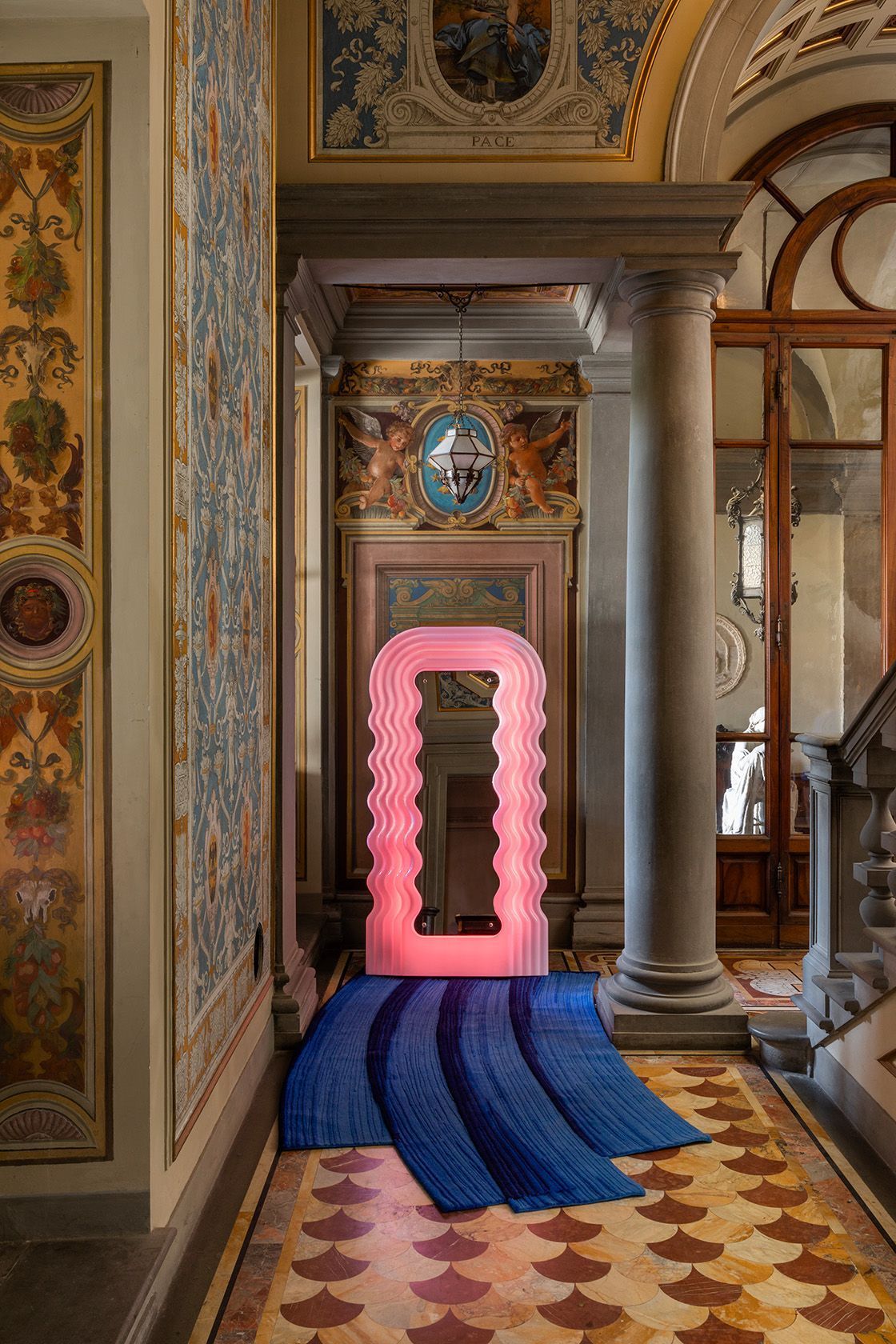
Ultrafragola, meaning “ultrastrawberry”, was originally conceived as part of the Mobili Grigi series, a collection of bedroom and living room furniture presented at the third Eurodomus fair in Milan. Although most of the collection remained as prototypes, the mirror stood out for its innovative design and was the only piece to go into production.
Made of thermoformed opaline plastic (PETG) and lit with pink LEDs, the mirror measures 195 cm high, 100 cm wide and 13 cm deep. Its sinuous profile evokes a flowing mane of hair, adding movement and sensuality in stark contrast to the dominant straight lines of the time.

From cult object to contemporary phenomenon
While not initially a commercial success, Ultrafragola gained attention in the 1980s with the rise of the Memphis Group, founded by Sottsass. This collective championed bold, colourful aesthetics, challenging the established norms of modernist design.
In recent years, the mirror has seen a revival thanks to its popularity on social media and its adoption by celebrities like Bella Hadid, Lena Dunham, and Nicolas Ghesquière. Its distinctive pink light and sculptural form have earned it the title of the ultimate “selfie mirror”, frequently featured in interior magazines and digital publications.
The philosophy behind the design
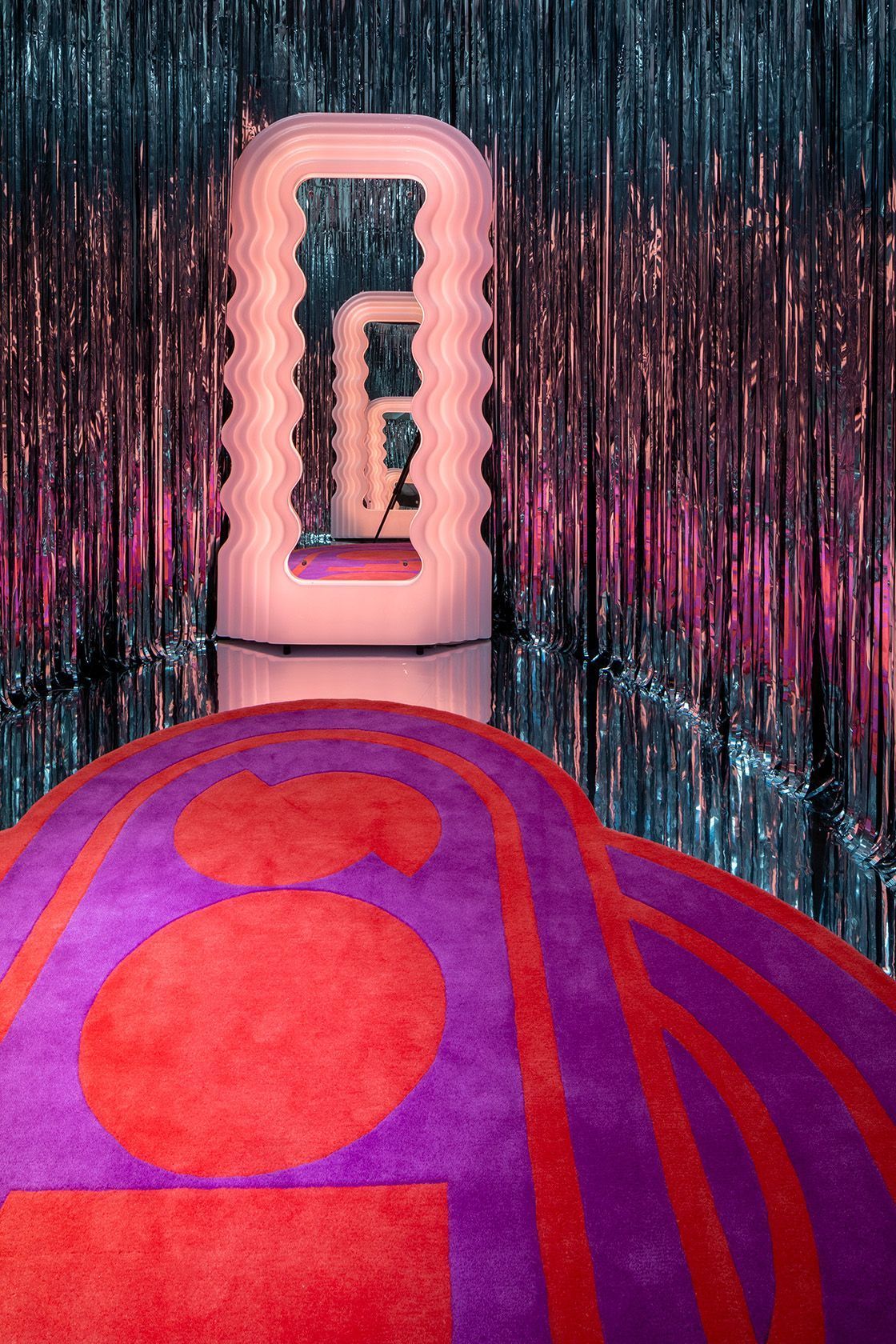
Ettore Sottsass believed that design should go beyond function, aiming to provoke emotion and sensation.
Ultrafragola embodies this idea, combining form and light to create a visual and emotional experience. Sottsass described the mirror’s glow as “the splendid whiteness of the skin of breasts”, underlining his intention to evoke sensuality and vitality.
His approach distanced itself from the rationalism of the Modern Movement, advocating instead for a more human, expressive form of design. Ultrafragola was one of the clearest expressions of this vision — a challenge to convention and a celebration of individuality.
A legacy that endures
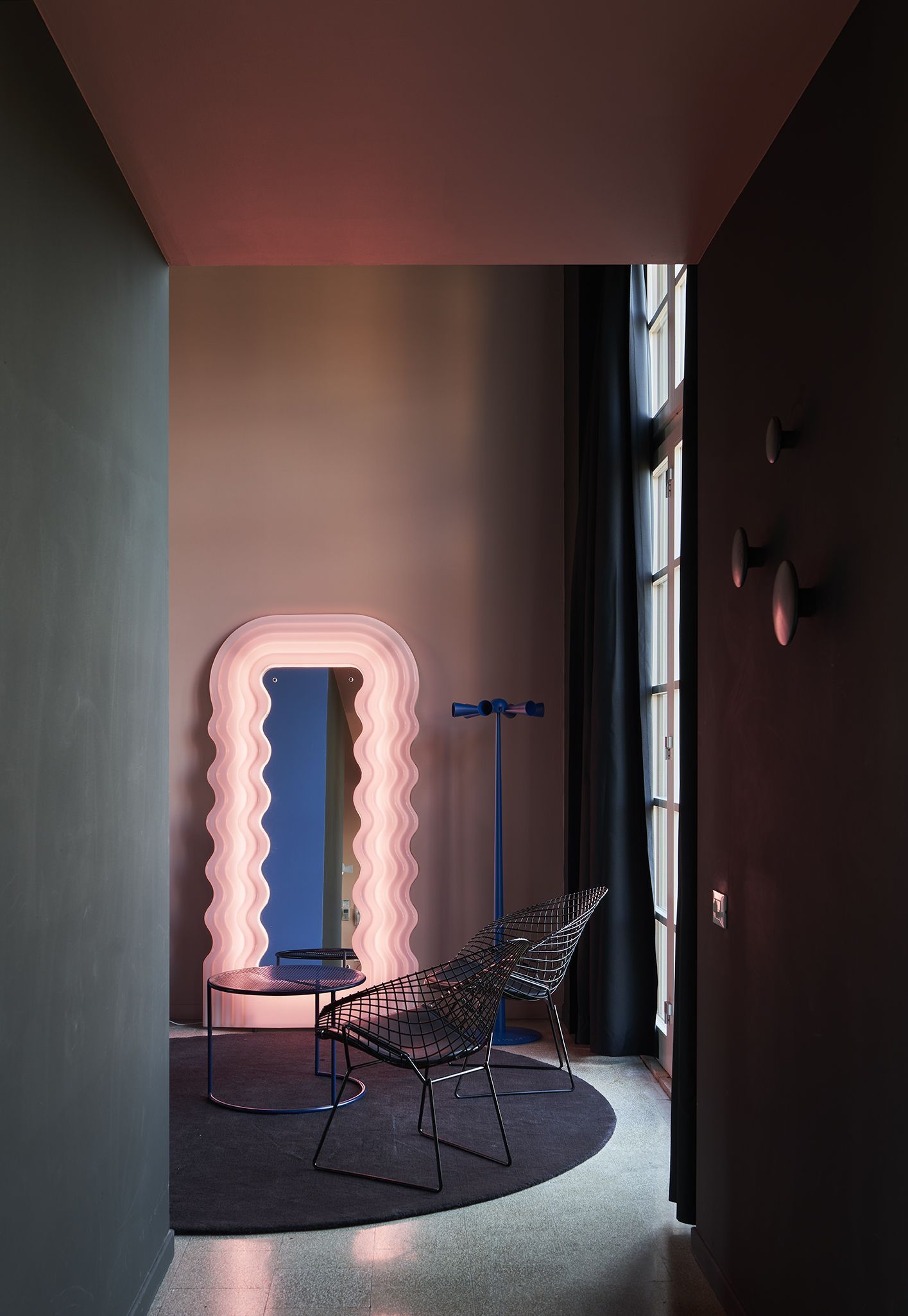
Today, Ultrafragola is still produced by Poltronova using the original 1970 moulds. Its value has increased significantly, with vintage pieces fetching over €10,000 in collector markets. Despite many imitations, the original stands out for its craftsmanship and faithfulness to Sottsass’s design.
Beyond its function as a mirror, Ultrafragola has cemented its status as a work of art and a symbol of design evolution. Its ability to adapt across contexts and influence visual culture makes it a timeless piece that continues to inspire new generations of designers and art lovers.
“As for the lights that are coming out of ‘The grey furniture’, don’t tombs always have a trembling light to illuminate the blue of the spirits wandering in the valley of dust? Don’t submarines have a trembling green light in their belly? The lights anyway are supposed to come out from the fibreglass bodies, like the ever–glowing of the breast’s white skin, like the ever–glowing of the penis red head in pornographic nights, something of this kind: I mean something like the Japanese lights of the glow worm that are turning the nights into matter. Could anything be more ridiculous?” Ettore Sottsass Jr., 1970
Ettore Sottsass Jr.: the master who changed the language of design
Visionary, provocative and radical, Ettore Sottsass Jr. (Innsbruck, 1917 – Milan, 2007) didn’t just design objects — he designed new ways of seeing. An architect by training, he graduated from the Politecnico di Torino in 1939 and, after the war, opened his studio in Milan, beginning a career that would leave a lasting mark on contemporary design history.
His early collaborations with Domus in the 1940s and his role as consultant for Olivetti from 1958 placed him at the heart of Italian industrial design, earning him four Compasso d’Oro awards. But his creative drive pushed him far beyond that. In the ’60s and ’70s, as art director at Poltronova, he created iconic pieces such as Ultrafragola and connected deeply with the Italian Radical Avant-Garde, exchanging ideas with groups like Archizoom, Superstudio, and UFO.
In the 1980s, he became a key figure in postmodern design as the founder of the Memphis Group, a joyful explosion of colour, irony and rebellion. At the same time, he launched Sottsass Associati, together with Zanini, Thun, and Cibic, working on architectural projects around the world.
His work was recognised internationally, including an honorary doctorate from the Royal College of Art in London in 1996. In the 2000s, he reconnected with the Centro Studi Poltronova per il Design, reinforcing his legacy with one of the brands that helped shape his career.
In 2017, to mark the centenary of his birth and the tenth anniversary of his death, major exhibitions around the world celebrated his incomparable genius. Today, more than ever, the Sottsass universe continues to resonate — experimental, emotional, and unapologetically free.
(*) Images courtesy of Poltronova.