Fujiko Nakaya and the art of transforming the invisible
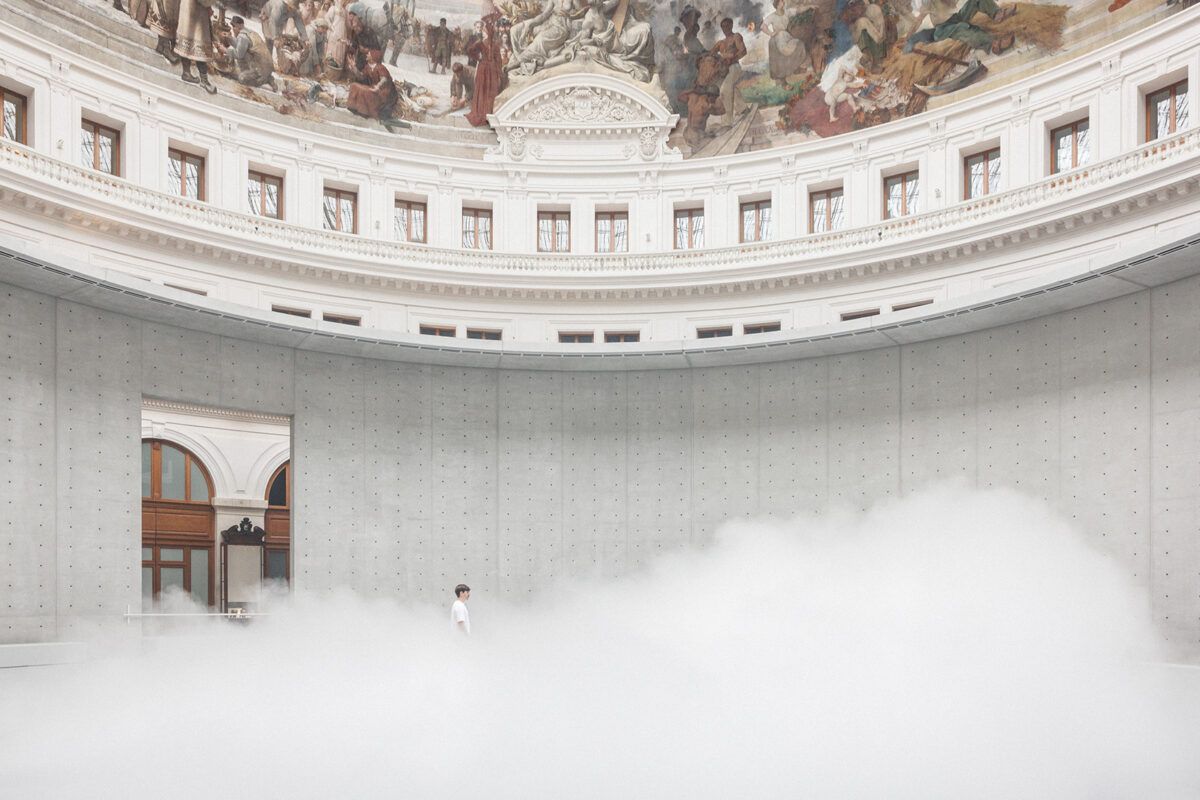
The pioneer of fog sculpture takes over Paris’s Bourse de Commerce with a new intervention that engages in dialogue with Tadao Ando’s architecture and more than five decades of research into perception.
Fog is usually understood as an atmospheric condition. For Fujiko Nakaya, however, it is also a sculptural material. Since the early 1970s, the Japanese artist has developed a unique practice in the history of contemporary art, using water vapour to create installations that alter the perception of space and transform the relationship between the body, architecture and the surrounding environment.
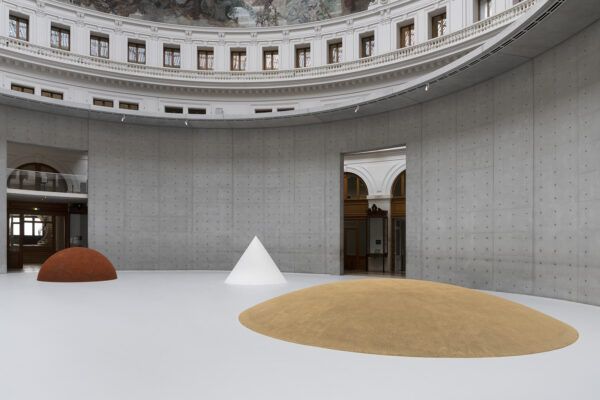
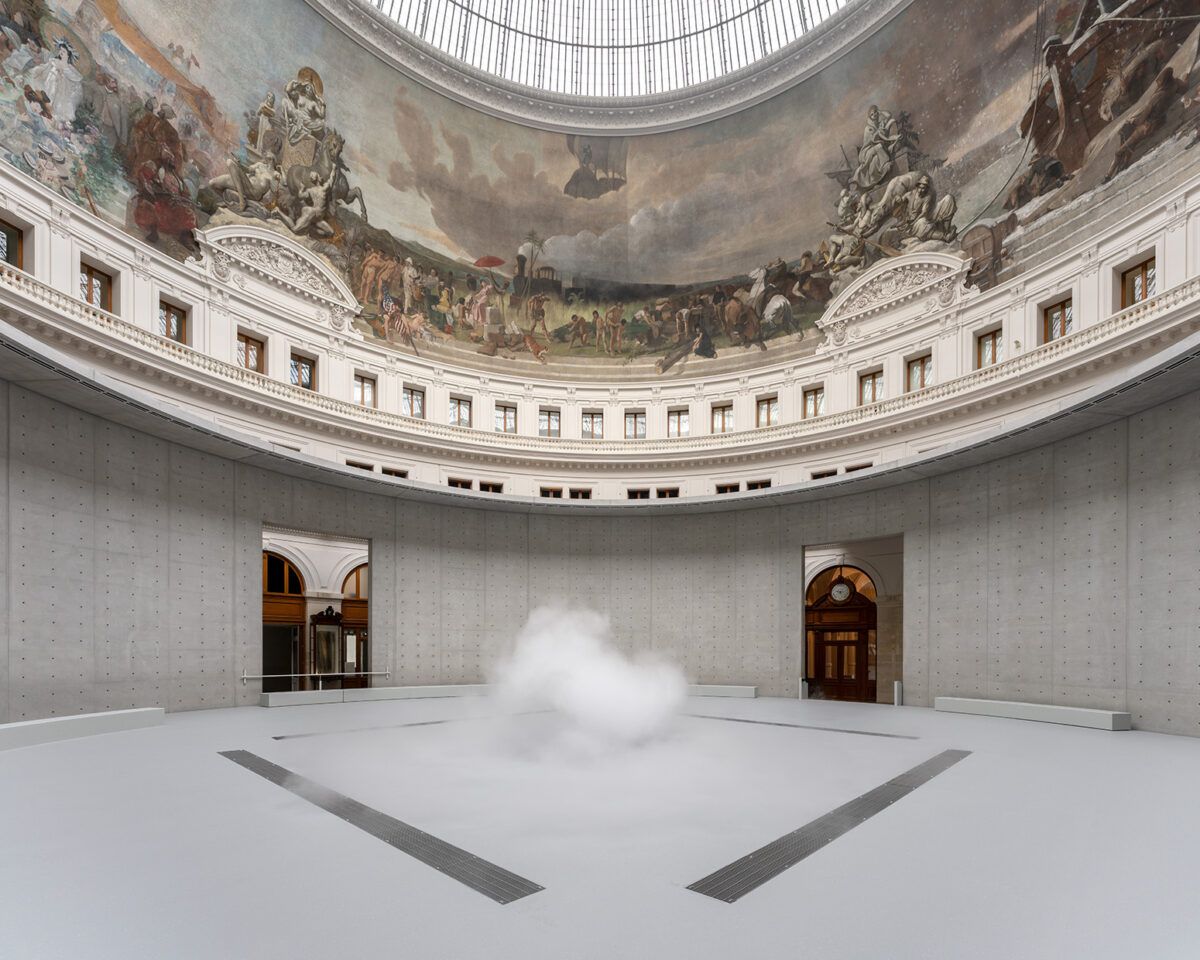
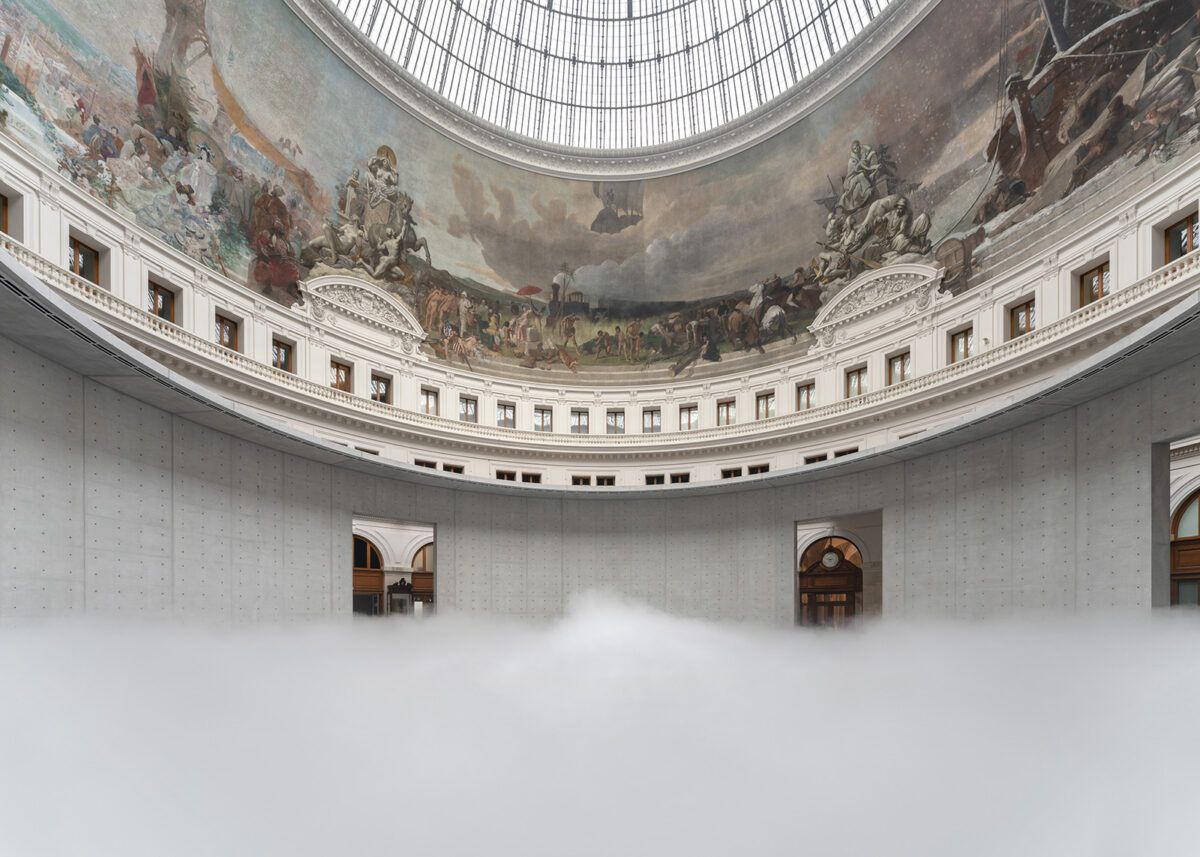
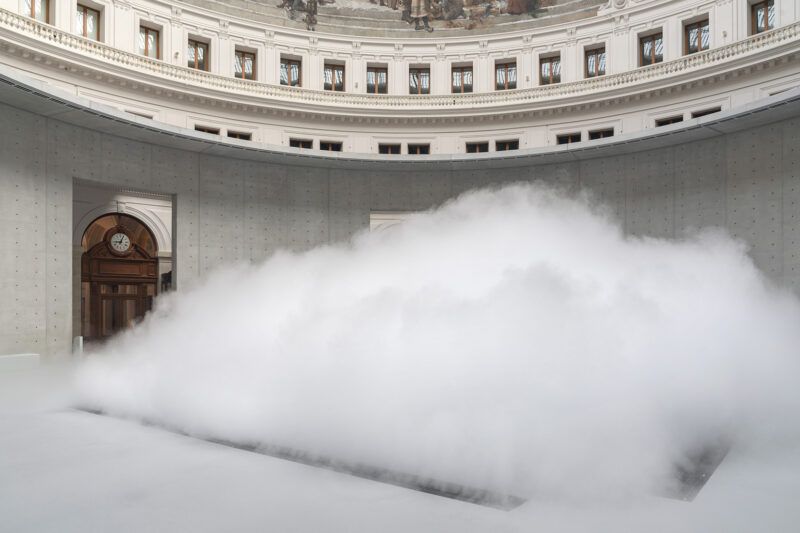
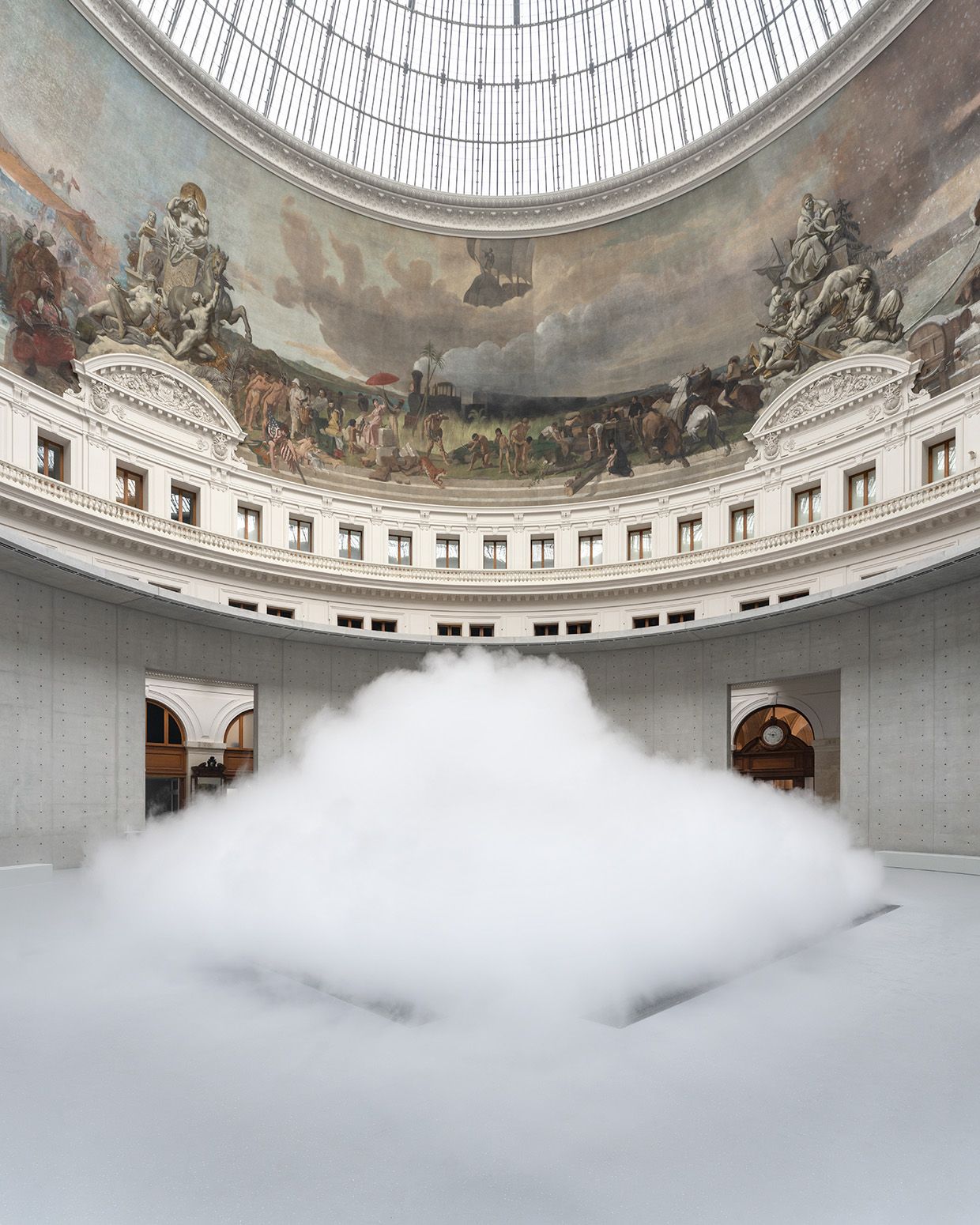
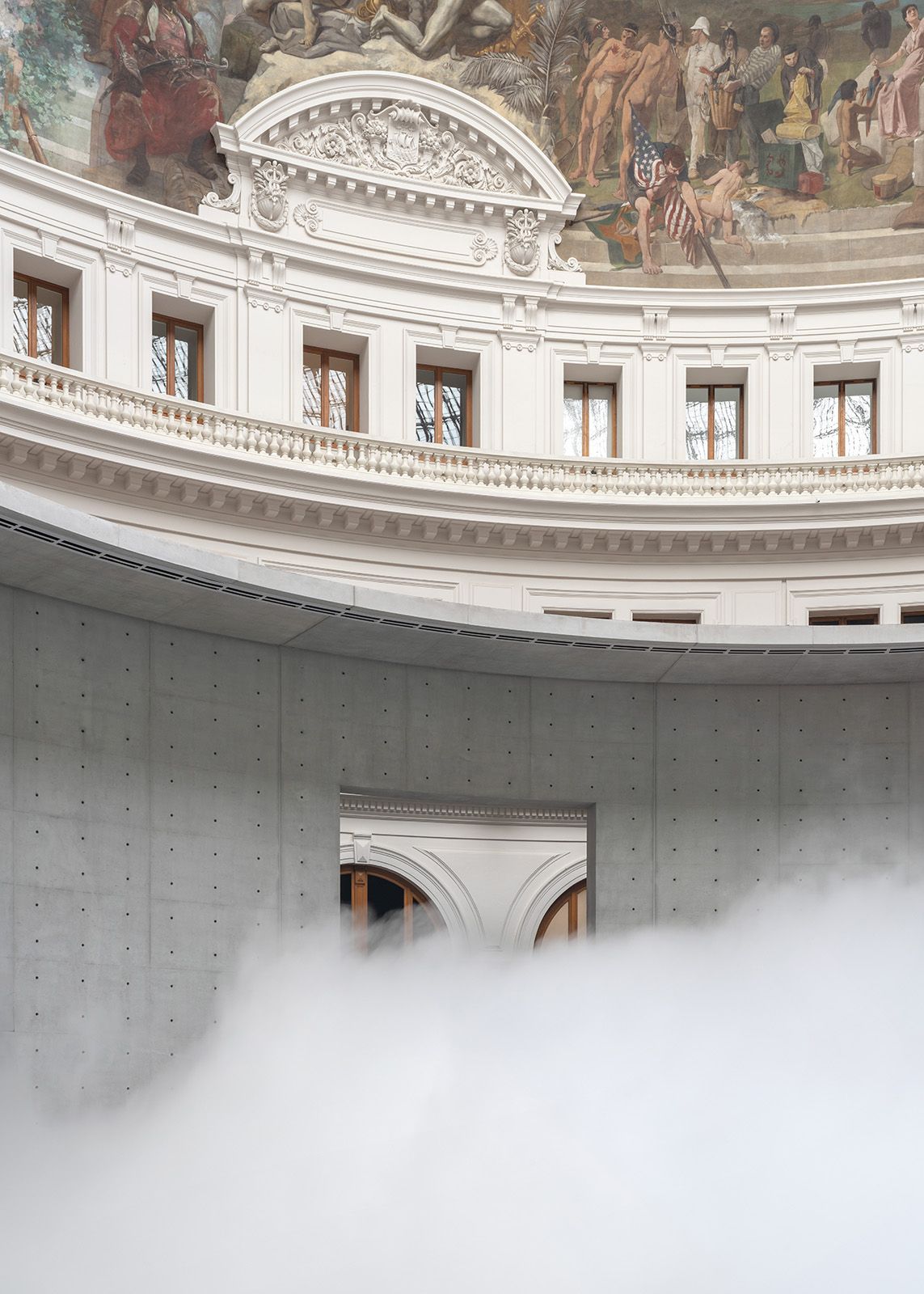
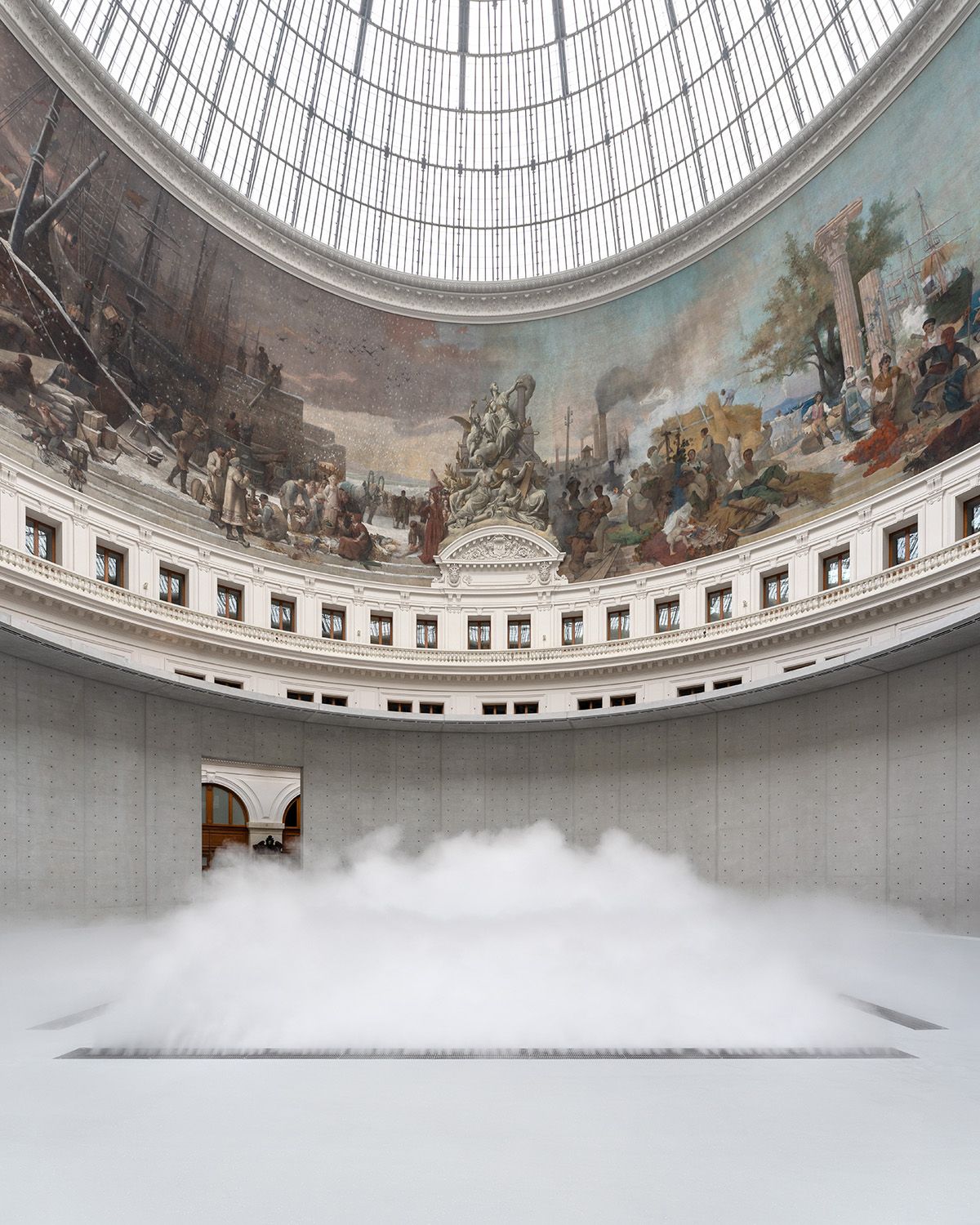
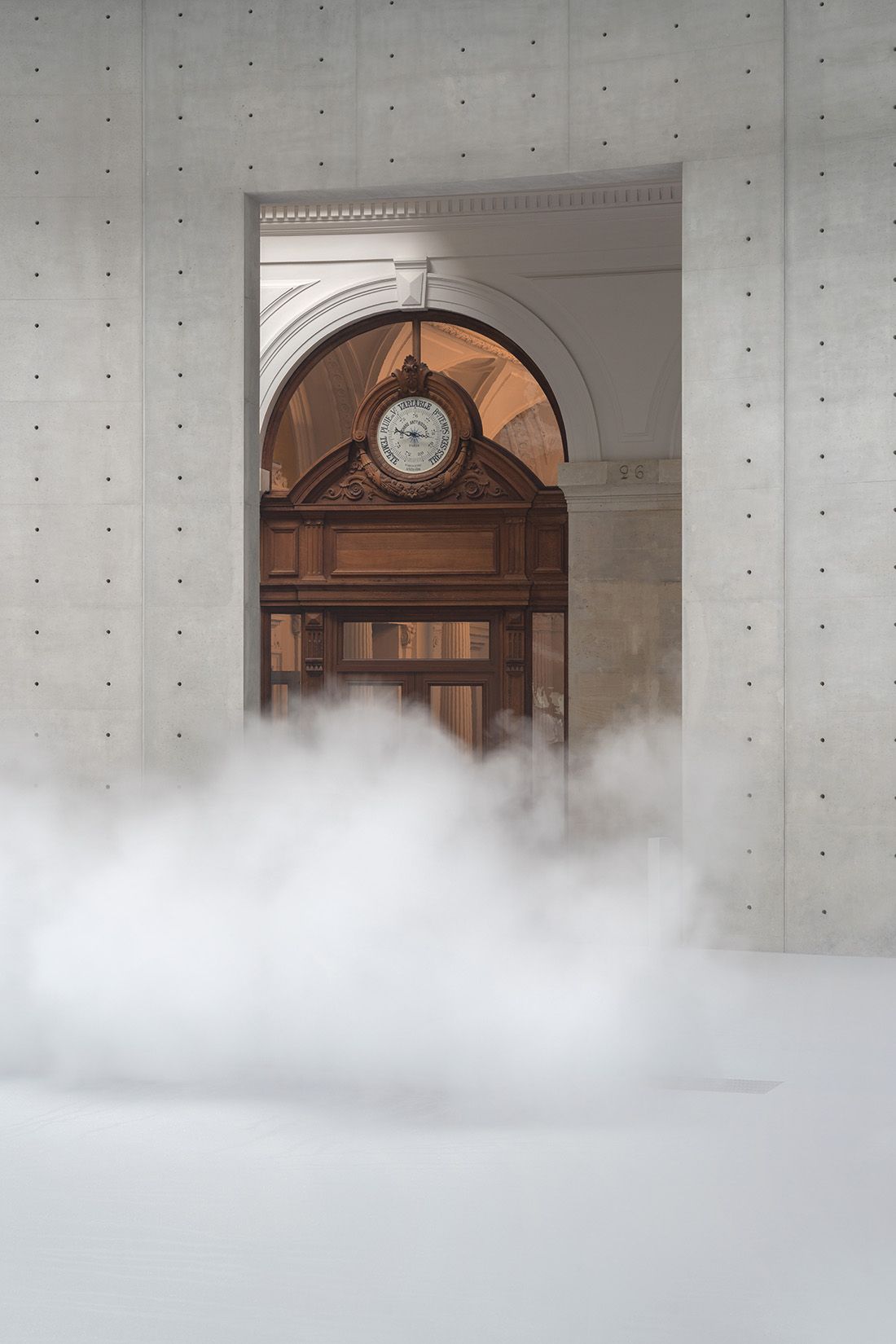
This summer, Nakaya presents a new intervention at the Bourse de Commerce – Pinault Collection in Paris. Entitled Cloud #07156, the work occupies the building’s monumental Rotunda and establishes a particularly meaningful dialogue with the architecture conceived by Tadao Ando for the Parisian institution.
Rather than a piece designed to be observed from a distance, the installation temporarily transforms the conditions of the space, making the atmosphere itself an essential part of the architectural experience.
A career built around an elusive material
At the age of 91, Fujiko Nakaya occupies a singular position within the international art world. While fog sculptures are now firmly embedded within the visual language of contemporary art, when she first began working with them in the late 1960s there was no comparable precedent.
“Fujiko Nakaya’s first major intervention was presented at Expo’70 in Osaka.”
Her first large-scale intervention was unveiled during the Osaka World Expo in 1970. There, she developed one of the earliest large-scale fog sculptures, a project that marked the beginning of an artistic investigation that continues more than half a century later.
Since then, her installations have been exhibited in museums, parks, public spaces and landmark buildings around the world, always adapting to the specific conditions of each location.
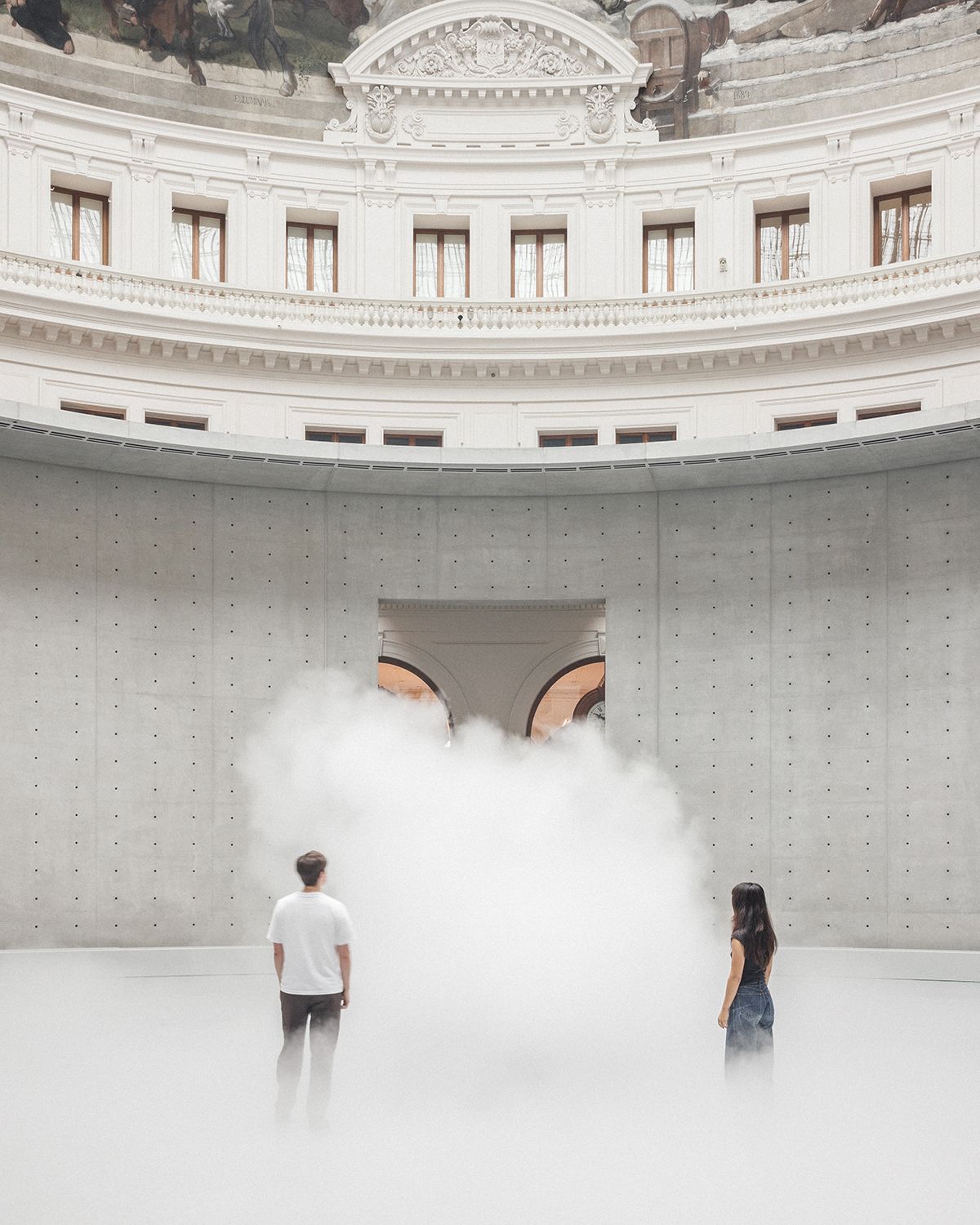
Unlike a traditional sculpture, Nakaya’s works have no fixed form. They are created through high-pressure water atomisation systems that generate microscopic particles capable of forming dense masses of fog. The outcome is constantly influenced by external factors such as temperature, humidity and air currents, meaning that every manifestation of the work differs from the one before.
This ever-changing condition has been one of the defining characteristics of her practice from the outset. Far from pursuing the permanence historically associated with sculpture, Nakaya has developed an artistic language rooted in continuous transformation.
From the laboratory to artistic practice
The artist’s relationship with atmospheric phenomena also has a biographical dimension. Her father, Ukichiro Nakaya, was one of the most influential scientists in the study of snow crystals and was the first person to successfully create artificial snow in a laboratory.
Although Fujiko Nakaya forged an independent path within contemporary art, an interest in natural processes and the changing states of matter has accompanied her work from the very beginning.
It is no coincidence that she chose fog as her medium of expression. It is a phenomenon that exists in a constant state of transformation and resists any attempt to fix it into a definitive image.
This relationship between science, technology and nature has made her work a reference point for several generations of artists interested in environmental systems and living processes. Long before ecology and sustainability became central themes in cultural discourse, Nakaya was already working with natural phenomena as an essential component of her artistic practice.
A dialogue with Tadao Ando
The presentation of Cloud #07156 at the Bourse de Commerce acquires a special significance because of the architectural context in which it unfolds.
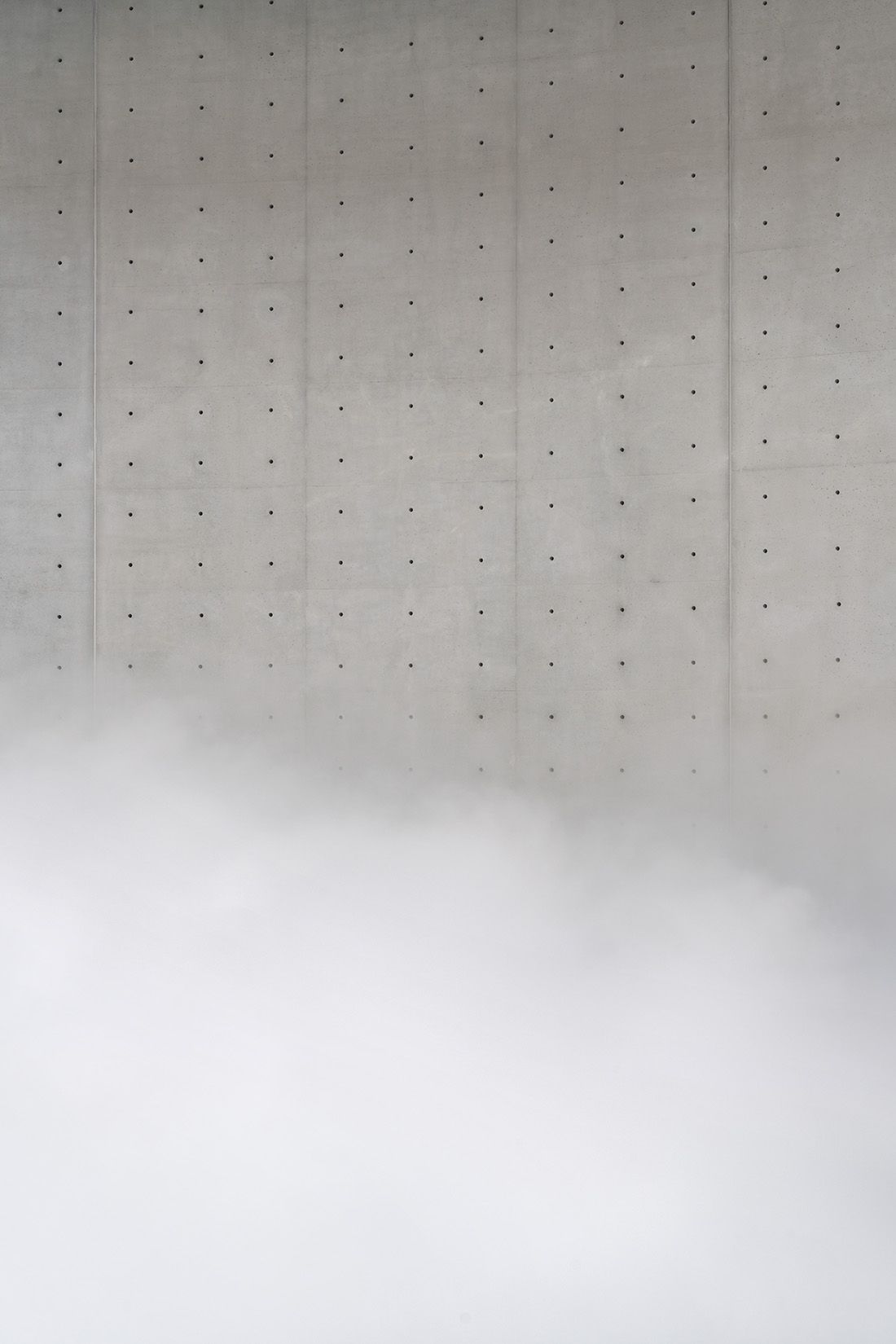
When Tadao Ando transformed the historic Parisian building to house François Pinault’s collection, he introduced a vast concrete cylinder into its interior, reorganising circulation and defining the museum’s spatial experience. The intervention has become one of the most recognisable elements of the project and one of the most important architectural contributions made to Paris in recent years.
Nakaya’s work is installed precisely within this central space.
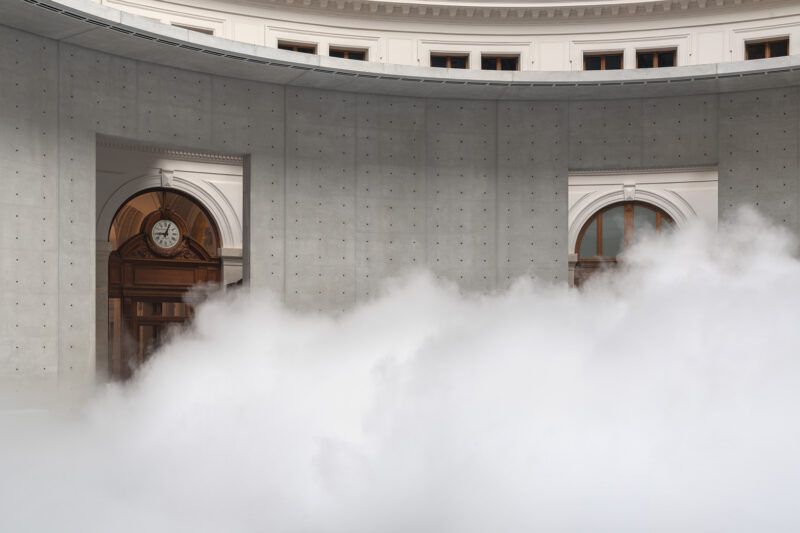
The fog temporarily alters the reading of the architecture, changing the perception of scale and transforming the relationship between visitors and the building. Concrete surfaces partially disappear and then gradually re-emerge as the cloud moves through the space. The Rotunda ceases to be perceived as a static structure and instead becomes a shifting environment where visibility constantly fluctuates.
Rather than intervening in the architecture itself, Nakaya appears to work with what normally remains outside it: air, humidity, light and the imperceptible movements that travel through space.
The influence of Japan beyond aesthetics
Fujiko Nakaya’s work is often associated with a distinctly Japanese sensibility, although not so much for formal reasons as for the way it approaches space and perception.
In many of her installations, attention shifts away from the object itself towards the relationships established between different elements.
Fog doesn’t function as a conventional sculptural form but rather as a condition that transforms the experience of the environment. What matters is not the cloud itself, but what happens when it appears.
This approach resonates with certain Japanese cultural traditions in which concepts such as impermanence, transformation and attentiveness to one’s surroundings play a fundamental role. Without relying on obvious symbols, Nakaya’s work incorporates a vision of space that moves away from Western monumentality and towards a more dynamic and fluid perception of reality.
“Her father was one of the most influential scientists in the study of snow crystals and was the first to create artificial snow in a laboratory.”
A key figure in the history of contemporary art
Fujiko Nakaya’s influence extends far beyond the field of fog sculpture. Her work formed part of the experimental environment that emerged around Experiments in Art and Technology (E.A.T.), the platform established in the 1960s to foster collaboration between artists, engineers and scientists.
At that time, many creatives began exploring the possibilities of technology as an artistic tool. Yet while many of those projects remained tied to the technological devices of their era, Nakaya’s work has retained a remarkable capacity for adaptation.
Perhaps the reason lies in the fact that she never used technology as an end in itself. The technical systems that make her installations possible remain in the background. What continues to matter is the physical experience of space and the ability to alter perception through elements as fundamental as water, air and light.
An intervention for the Bourse de Commerce
The arrival of Cloud #07156 confirms the Pinault Collection’s commitment to placing architecture and exhibition space at the centre of its programming. The installation does not simply occupy the Rotunda; it temporarily redefines the way in which it can be experienced.
More than five decades after her first atmospheric sculptures, Fujiko Nakaya continues to demonstrate that some of the most radical investigations in contemporary art don’t necessarily depend on the introduction of new tools, but rather on the ability to observe differently what has always been in front of us.
“Fog does not function as a conventional sculptural form but rather as a condition that transforms the experience of the environment.”
In Paris, the artist once again works with a material that cannot be stored, collected or preserved. A material that exists only while specific conditions allow it to do so. Perhaps it is precisely this fragility that explains the enduring relevance of a body of work which, for more than half a century, has continued to remind us that perception itself can be a territory for artistic exploration.
(*) Photographs courtesy of Presse Bourse de Commerce – Collection Pinault.