MCRBCN: a creative love letter from Manchester to Barcelona
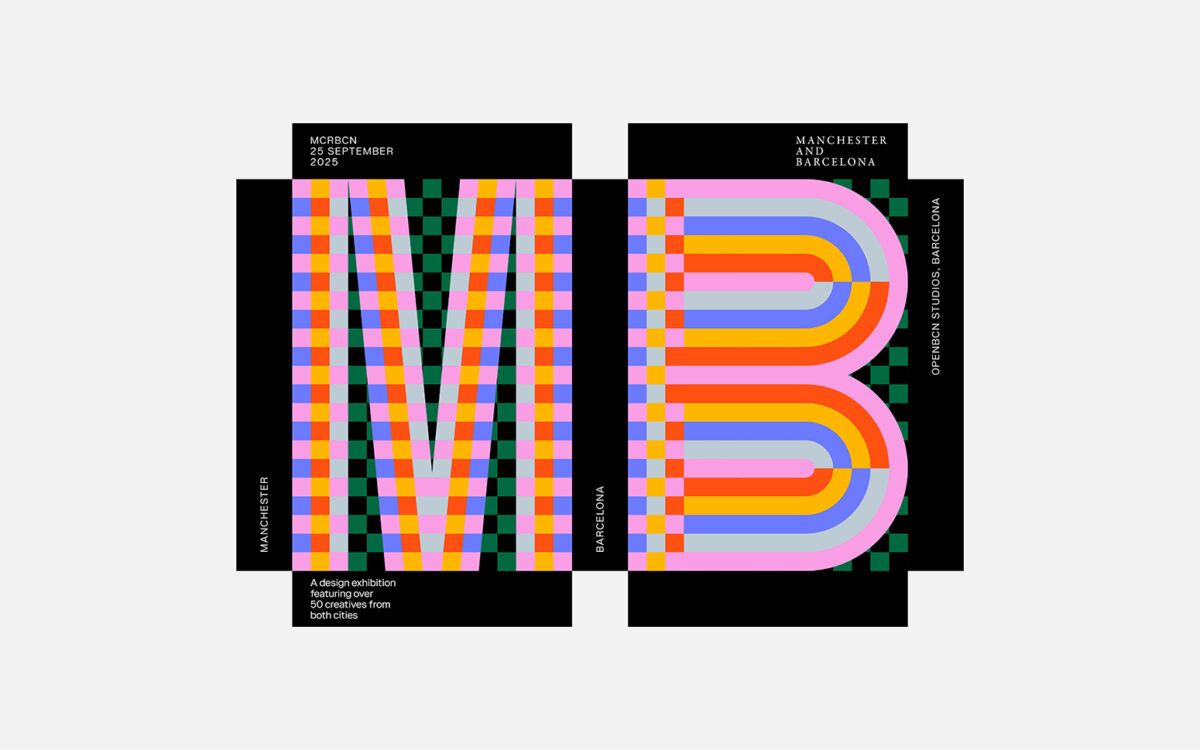
This September, during Barcelona’s iconic La Mercè Festival, creativity will take centre stage in the form of MCRBCN, a groundbreaking cultural exchange that brings together the talent, energy and ideas of a new generation of designers from Manchester and Barcelona.
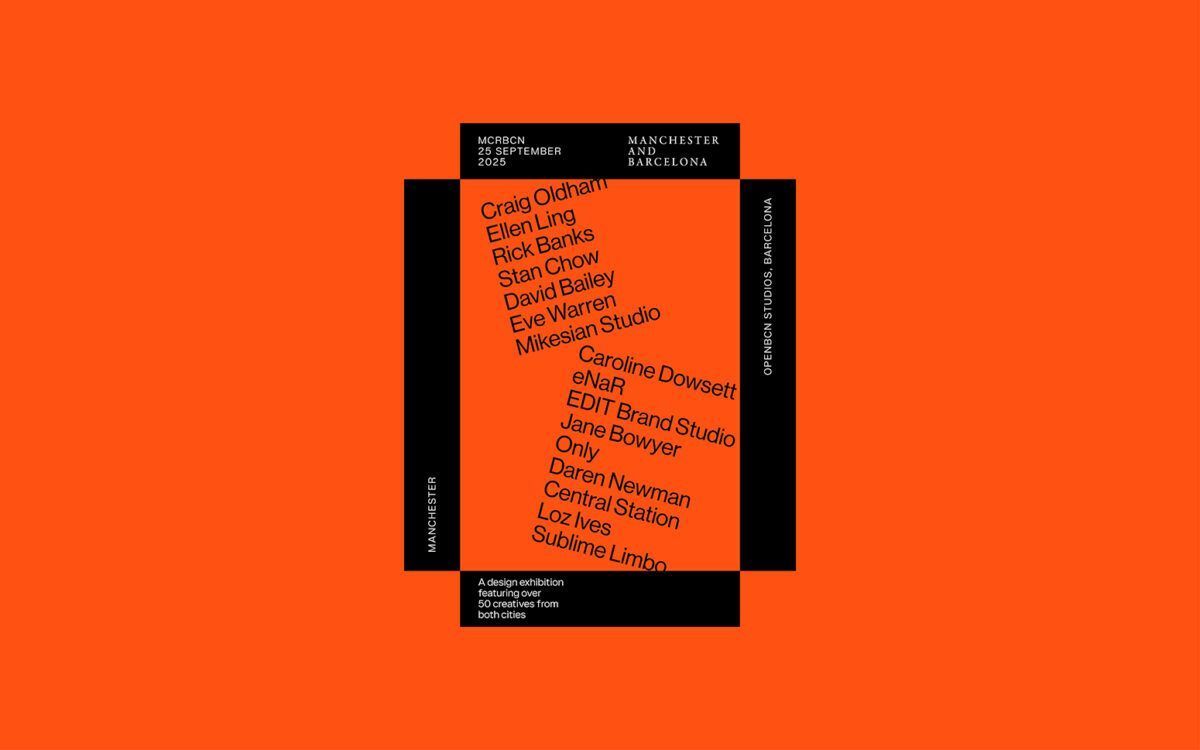
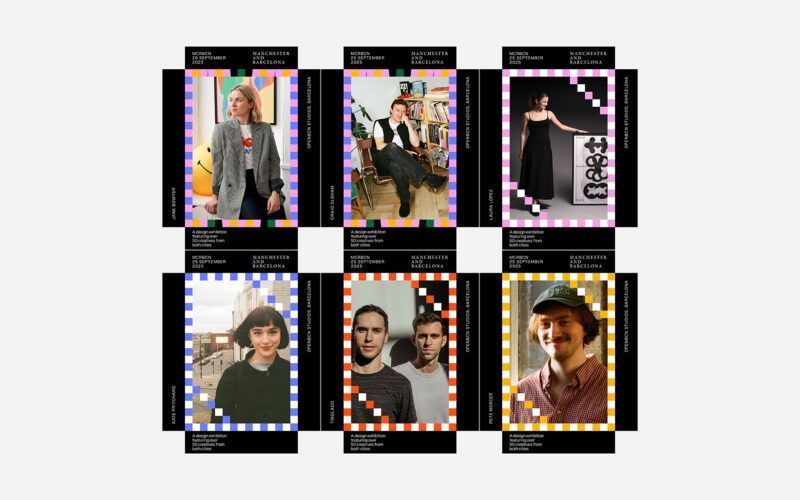
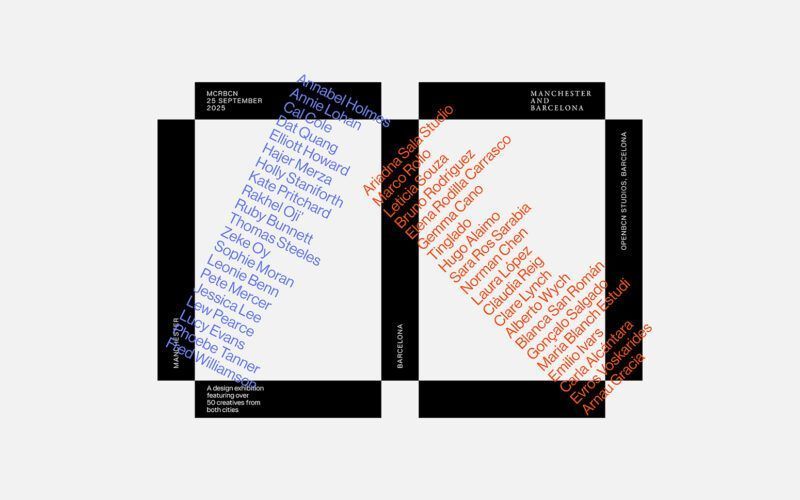
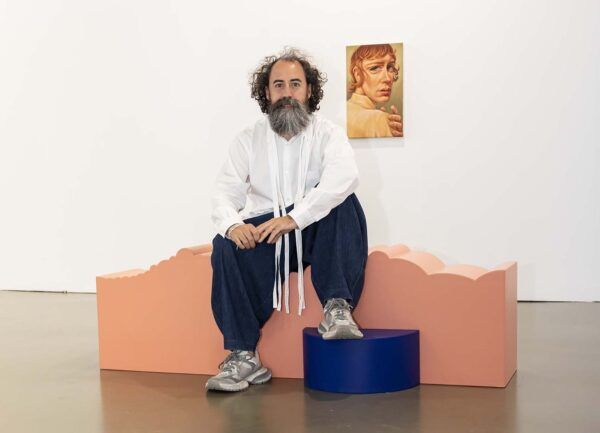
Curated by Dave Sedgwick, founder of Manchester-based StudioDBD, MCRBCN is both an exhibition and a cultural gesture: a vivid statement about the bonds that connect two cities with strong creative identities and an international outlook.
The project gathers 40 emerging creatives—20 from Manchester and 20 from Barcelona—across disciplines including design, illustration, typography and digital media. Each participant has been hand-selected by Sedgwick for their distinctive thinking and bold visual language, representing the forefront of design practice in 2025.
“At the heart of the exhibition stands a striking, large-scale cube, installed at OPENBCN Studios.”
At the heart of the exhibition stands a striking, large-scale cube, installed at OPENBCN Studios in the Gràcia district. Each side of the cube has been co-designed by a Manchester/Barcelona creative duo, responding to a shared brief: “A Love Letter to Your City”. The result is a powerful visual metaphor: 20 collaborations forming a single structure, embodying the interconnectedness of contemporary design communities.
“It’s not just about showing work, it’s about building real creative relationships”, says Sedgwick. “The idea of a cube, with its interconnected faces, mirrors how this generation of designers are connected globally. It’s an object, but it’s also a symbol of shared values, mutual inspiration and a creative bond between Manchester and Barcelona”.
Alongside the cube installation, the exhibition will feature banners by 14 established creatives, offering additional layers of dialogue between emerging voices and renowned figures in design.
MCRBCN also reflects a longer narrative. It is the direct evolution of BCNMCR, a project launched by Sedgwick in 2013 that invited leading Barcelona studios such as Hey, Lo Siento and Mucho to Manchester. In 2025, the exchange comes full circle: this time, Manchester exports its vision and energy to Barcelona.
“Barcelona and Manchester share a creative energy that feels both authentic and international”, notes Àlex Gobern Gorris, President of ADG FAD. “We’re cities with strong identities, but also open to new ideas and collaboration. I hope this project is another chapter in the ongoing relationship between our two design communities”.
“In 2025, Manchester exports its vision and energy to Barcelona.”
Supported by Marketing Manchester, and coinciding with Manchester being Guest City at La Mercè Festival (the first time a UK city has been invited), MCRBCN underscores the city’s creative ambition and international confidence.
The exhibition will open to the public on Thursday 25th September 2025, from 1pm to 4pm, followed by an invite-only launch event at 5:30pm, featuring short talks by Sedgwick and Gobern.
MCRBCN is not just an exhibition—it is a creative love letter written collaboratively by two cities, a symbol of shared vision and the promise of ongoing cultural dialogue.
Interview with Curator Dave Sedgwick
To learn more about the soul of the project, we spoke with curator Dave Sedgwick about MCRBCN’s origins, its challenges, and the legacy it hopes to leave behind.
MCRBCN is described as a “creative love letter” between Manchester and Barcelona. What does this phrase mean to you personally, and how does it capture the spirit of the project?
MCRBCN simply stands for Manchester and Barcelona, a shorthand that brings the two cities together. The project began life as BCNMCR back in 2013, when I brought leading creatives from Barcelona to Manchester. This year, for the first time, we are taking Manchester’s creative community to Barcelona, so it felt right to flip the name.
The idea of a “creative love letter” really sits at the heart of the brief I gave to the participants. I wanted them to produce something original for the exhibition, something that expressed their emotions, thoughts and feelings about the place they live or work. A love letter is open to interpretation, it can be bold, playful, personal or poetic and that freedom has shaped the work you will see in the show.
The cube is the central symbol of the exhibition. Why did you choose this form and how do you see it reflecting the ideas of collaboration and connection?
There are 21 cubes in total, each created by a pair of emerging creatives, one from Manchester and one from Barcelona. With six sides on a cube, two are left intentionally blank, which gives the collaborators four sides to design together. I felt this was a more interesting and flexible way to represent collaboration than a poster or a flat print.
It forces each pair to consider how their work sits alongside another voice, whether they create in isolation or blend their ideas. The cube itself becomes a physical symbol of connection, with every side telling part of a shared story.
You’ve curated 40 emerging creatives from two cities, each with distinct cultural identities. What criteria guided your selection process?
It was definitely a challenge to narrow it down. I know so many people in both Manchester and Barcelona, so I focused on emerging talent to give me more objectivity and distance from personal friendships.
I wanted to curate a snapshot of the most exciting practices happening right now, so the line-up includes designers working with AI, risograph printers, illustrators, photographers, typographers and collage artists. Some have even created bespoke typefaces just for the exhibition. Together, it’s a genuine cross-section of disciplines and approaches that capture the energy of new talent in both cities.
MCRBCN is the evolution of BCNMCR, which began over a decade ago. Looking back, what has changed in the creative relationship between Manchester and Barcelona since then?
A lot has changed, but in some ways nothing has changed at all. Technology, for one, has transformed how we connect. Back in 2013, video calls were far less common, and now they are a natural way of collaborating across borders. The pandemic also showed us just how important those virtual connections can be.
At the same time, the essence of it all remains the same. Creative relationships still matter most. Many of the people I first met in 2013 are still in touch and still part of the story, and some are even coming to the show on September 25th. So while technology has made it easier, it is the people and friendships that have kept the relationship alive.
“Creative relationships still matter most.”
Collaboration across borders can be both rewarding and challenging. What have been the most surprising or inspiring outcomes of pairing creatives from these two cities?
The moment I realised the show could be about collaboration was when the whole idea clicked. Pairing creatives together meant that connections were happening even before the exhibition opened, and that was the most exciting part for me.
I’ve loved seeing friendships form over video calls and emails, and knowing that some pairs will meet in person for the first time at the exhibition.
Of course it can also be a challenge. You are asking busy people to find time to create together, and sometimes one has more capacity than the other. There are cultural differences too, and part of the project has been about navigating that. But those challenges make the outcomes even more rewarding, because the collaborations reflect real life, with all its differences and negotiations.
Manchester is Guest City at La Mercè Festival, the first UK city to be invited. What does this moment represent for Manchester’s creative community on the international stage?
It feels incredible to be the first UK partner city. I know a huge amount of work has gone on behind the scenes to make it happen, and I cannot wait to see the impact in Barcelona and beyond.
For Manchester’s creative community, it is another chance to show what we can do on the international stage. When I graduated in 2001, most of my peers left the city for London or abroad. Now, so many stay here to build studios and careers, and that says everything about Manchester’s growth and ambition. Being part of La Mercè is proof that Manchester has a place in the global creative conversation.
Looking ahead, what legacy would you like MCRBCN to leave, both for the participants and for the wider creative communities of Manchester and Barcelona?
I think legacy happens naturally, it cannot be forced. What I hope is that MCRBCN continues to strengthen the creative relationship between the two cities. Maybe some of the younger creatives will look to Manchester in the future, or stay connected to what is happening here.
On a personal level, my own connection with Barcelona started back in the 1990s when I visited as an art student, and that shaped my career. Who knows what seeds might be planted now that could grow in the next 10, 15 or 20 years. For me, everything comes back to people. If MCRBCN creates even one lasting connection that helps someone’s career or creative journey, then that will be legacy enough.
Save the date!
(*) Visual identity created by Dave Sedgwick.