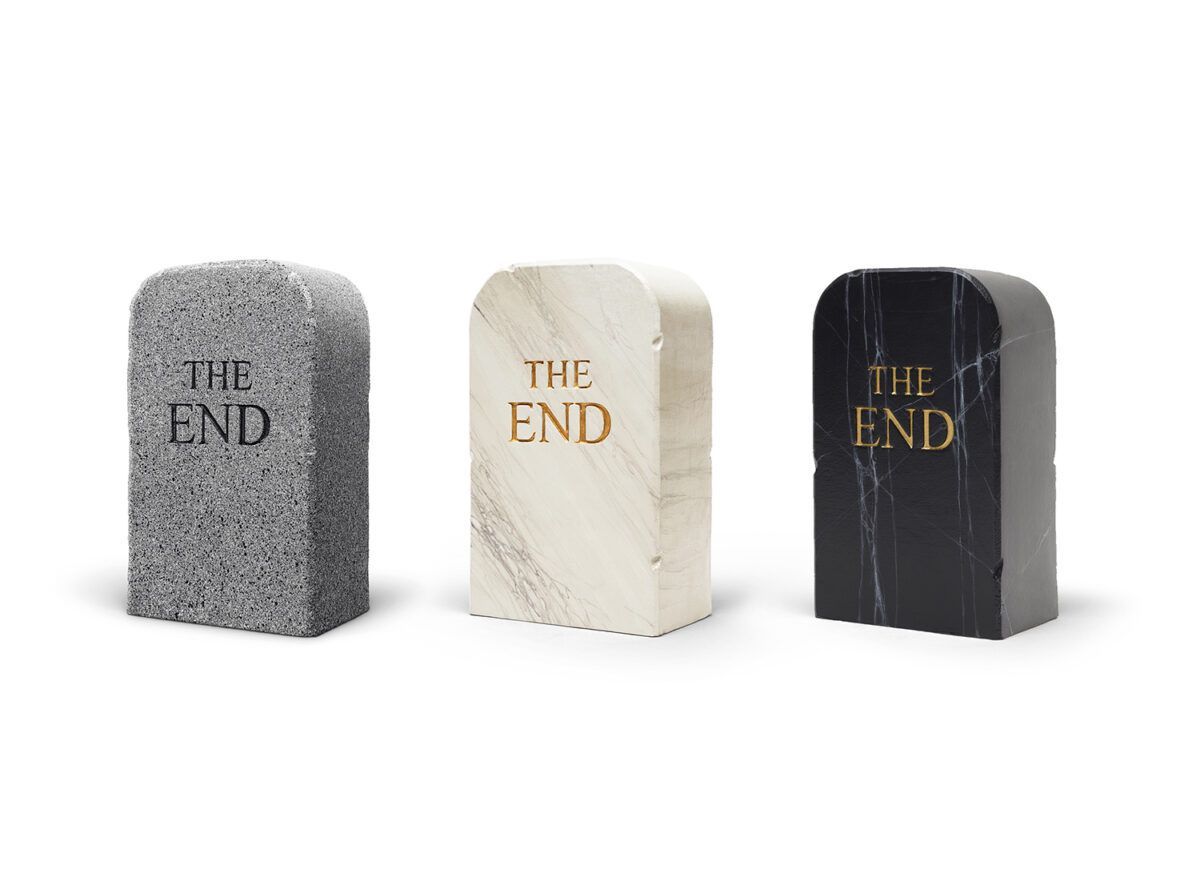
THE END: art, satire and design in the shape of a tombstone
Designed by Toiletpaper for Gufram, this sculptural pouffe reimagines the solemnity of funerary marble with irony, provocation and humour.
An epitaph to conventional design
Nothing is quite what it seems in Gufram’s universe—especially when Toiletpaper, the irreverent artistic collective led by Maurizio Cattelan and Pierpaolo Ferrari, enters the scene. THE END—a tombstone-shaped pouffe—is a provocative celebration of absurdity, a satirical homage to death, and above all, a sharp critique of conventional design norms.
Conceived as a limited-edition piece, THE END blends Italian craftsmanship, innovative materials and a radical spirit that blurs the boundaries between art, functional object and cultural commentary. It’s no ordinary joke. It’s a piece that—literally—sits on design clichés.
From graveyard to living room
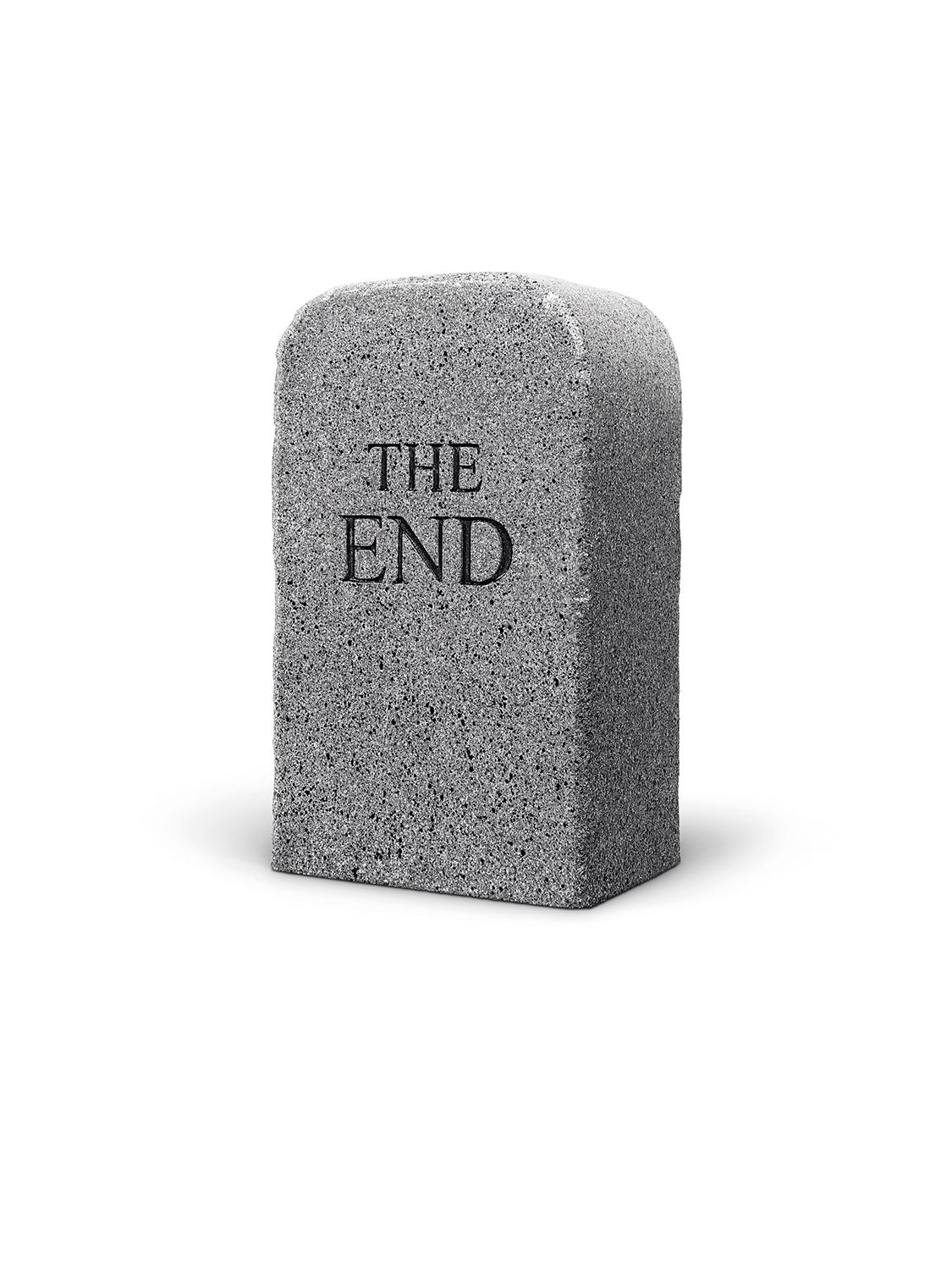
At first glance, THE END looks like a classic headstone: upright form, solemn volume, marbled surface, typographic inscription. But up close, everything changes. The texture is soft, almost cushion-like; the shape, though visually heavy, is surprisingly light; and most unexpected of all—it’s something you can sit on.
Made of flexible polyurethane and hand-finished with Guflac®, a proprietary coating developed by Gufram, the piece showcases the brand’s mastery with unconventional materials. Guflac® not only replicates the veining and roughness of marble, but also ensures that the pouffe remains durable, elastic, and conceptually coherent.
“It’s not just a seat, it’s a joke in sculptural form.”
Toiletpaper and humour as a disruptive tool
Toiletpaper is known for its ability to disturb through visual means. Their photographs, campaigns and objects mix absurdity, kitsch, pop aesthetics and surrealism. With THE END, Cattelan and Ferrari push their provocation into the realm of furniture.
“It’s not just a seat, it’s a joke in sculptural form”. That may be the simplest way to describe their intention. But THE END is more than that. It’s also a way to reflect on endings: of things, of ideas, and perhaps of design itself.
Gufram: the radical legacy
Founded in Turin in 1966, Gufram began as an artisanal venture and grew into a cornerstone of Italian Radical Design. With iconic pieces like the BOCCA® sofa, PRATONE® lounge chair and CACTUS® coat stand, the brand has continually erased the line between art, industry, function and play.
Now led by Sandra and Charley Vezza, Gufram continues to explore the intersection of utility and absurdity, domesticity and sculpture. THE END, first released in 2014 and still relevant today thanks to its bold visual and conceptual impact, is a perfect example of this philosophy. It doesn’t abandon utility, but it also never lets go of irony. At Gufram, sitting is always a conceptual act.
The power of the ironic object
In art and design, laughter is often subversive. THE END doesn’t aim for easy laughs—its humour is dark, intelligent and unsettling. It’s the sly smile of someone breaking the rules with elegance. The piece serves as a visual commentary on the death of icons, the transformation of symbols and the fleeting nature of style.
Its gold-lettered inscription, “THE END”, might be read as a closing—but also as a new beginning. A break in the narrative of everyday objects.
Materiality and contradiction
One of THE END’s greatest strengths lies in its ability to create cognitive dissonance. It looks cold, but it’s warm. It seems hard, but it’s soft. It appears static, but it’s easily moved. These formal and material tensions are at the heart of Radical Design: to provoke the user, make them think, invite them to experience differently.
Handmade, each pouffe varies slightly, reinforcing its status as an almost artistic, unique, unrepeatable object. Its limited production makes it a sought-after item in contemporary design collecting, featured in bold interiors and art and design exhibitions alike.
From living room to museum
Like other Gufram creations, THE END has moved beyond the domestic space to enter the institutional art world. Its presence in museums and design fairs confirms its multiple identities: seat, sculpture, manifesto. And in that multiplicity lies its power.
At a time when design often feels trapped between extreme functionality and superficial luxury, pieces like this offer a third way: design as idea, as critical gesture, as humorous provocation.
A pop epitaph
THE END doesn’t just parody death—it mocks our fear of it. It turns it into an object, gives it colour, and recontextualises it. In doing so, it becomes a pop epitaph, a tombstone that doesn’t mourn, but winks. As if to say: “Don’t worry, this too shall pass… but at least sit comfortably in the meantime”.
“THE END may also be read as a new chapter in the story of everyday objects.”
A piece that doesn’t ask for permission
THE END’s power lies in its freedom. It doesn’t ask for permission. It doesn’t apologise. It doesn’t try to please everyone. It’s true to itself—like any great object of Radical Design. And in an era of likes and algorithms, that is refreshingly bold.
THE END is far more than a tombstone. It’s a declaration of intent, a piece that mocks its own solemnity and invites us to take design (and life) a little less seriously. Because, as Wilde said, “Life is far too important a thing ever to talk seriously about”.
(*) Images by Gufram.