The new life of Edicola 518
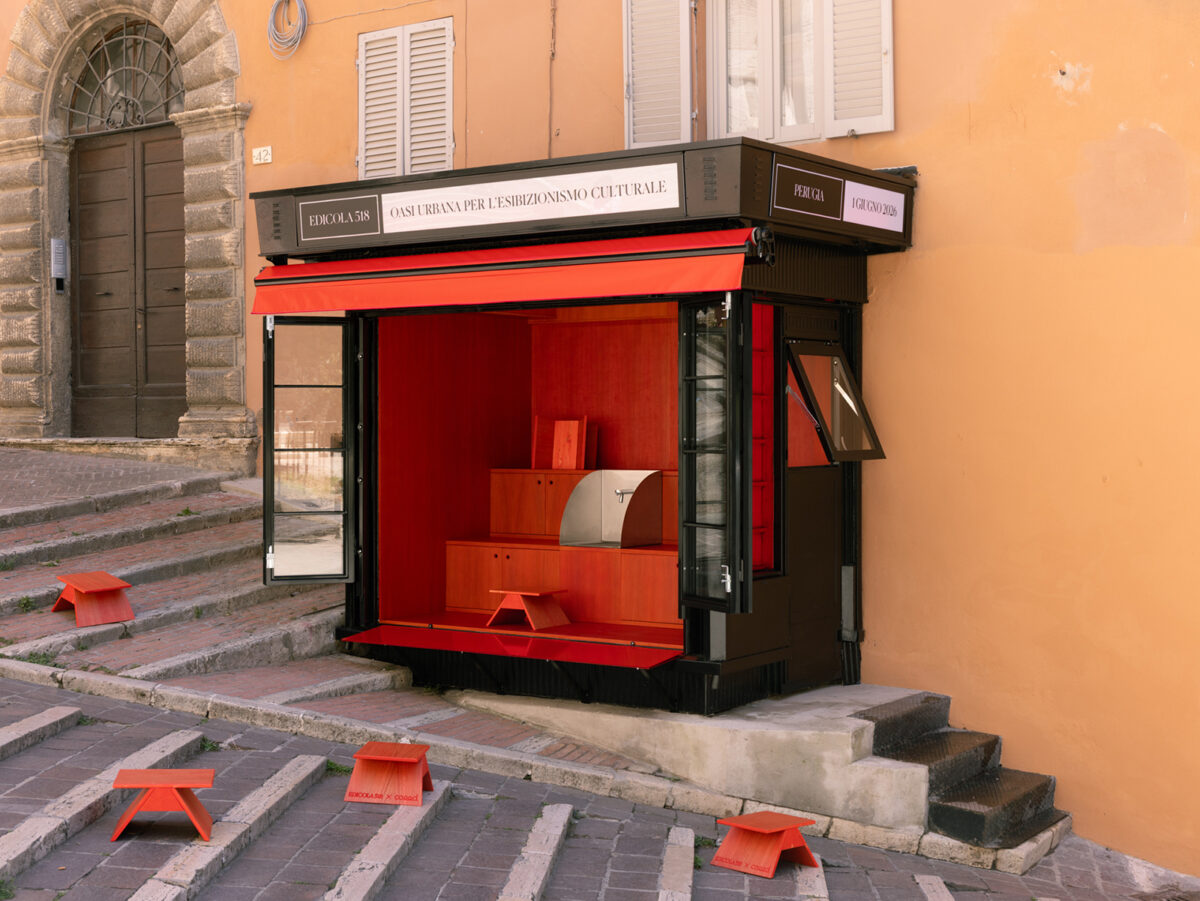
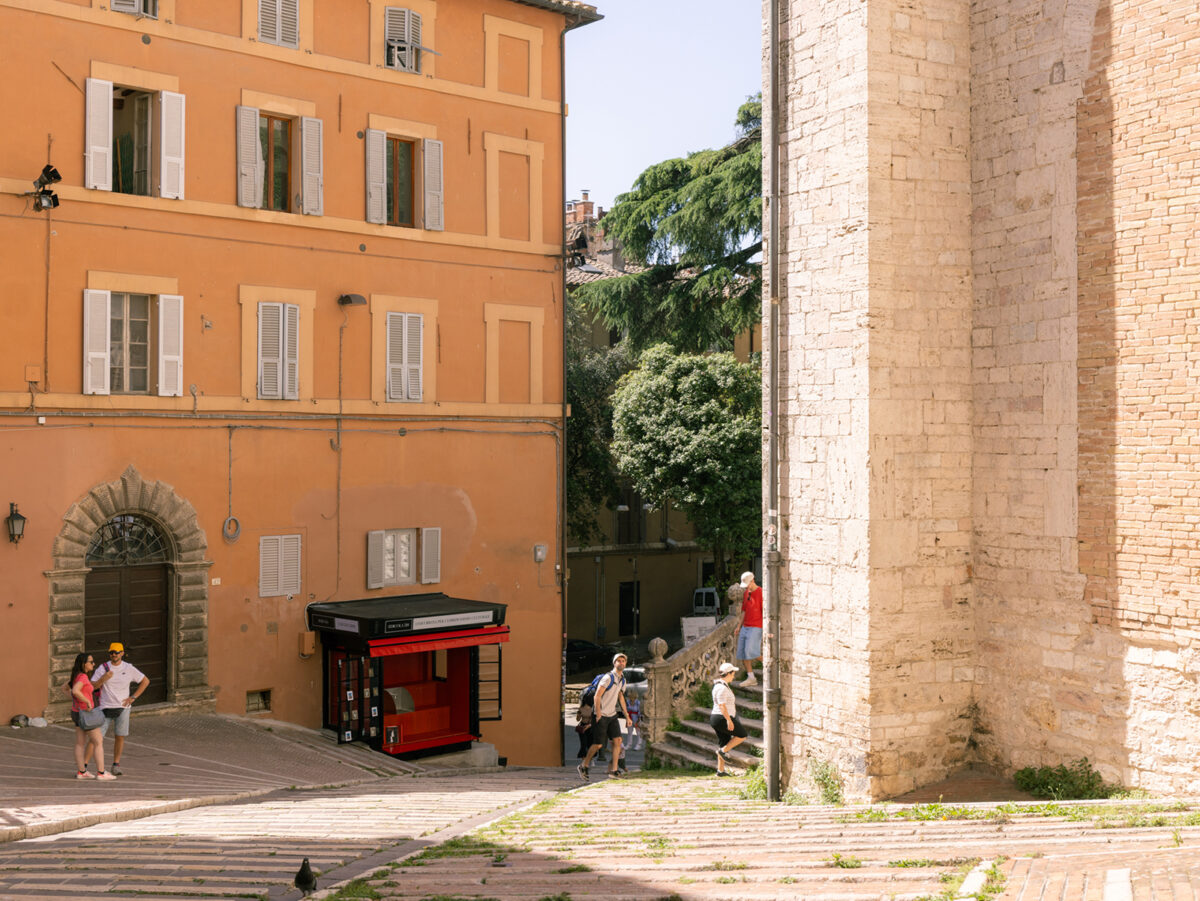
Some places, despite their modest size, manage to become cultural landmarks. Not because of their scale, but because of the intensity of the ideas they contain. For the past decade, Edicola 518 — the historic newsstand dedicated to independent publishing on the steps of Sant’Ercolano, in the heart of Perugia — has demonstrated that culture can flourish even within one of the city’s smallest spaces.
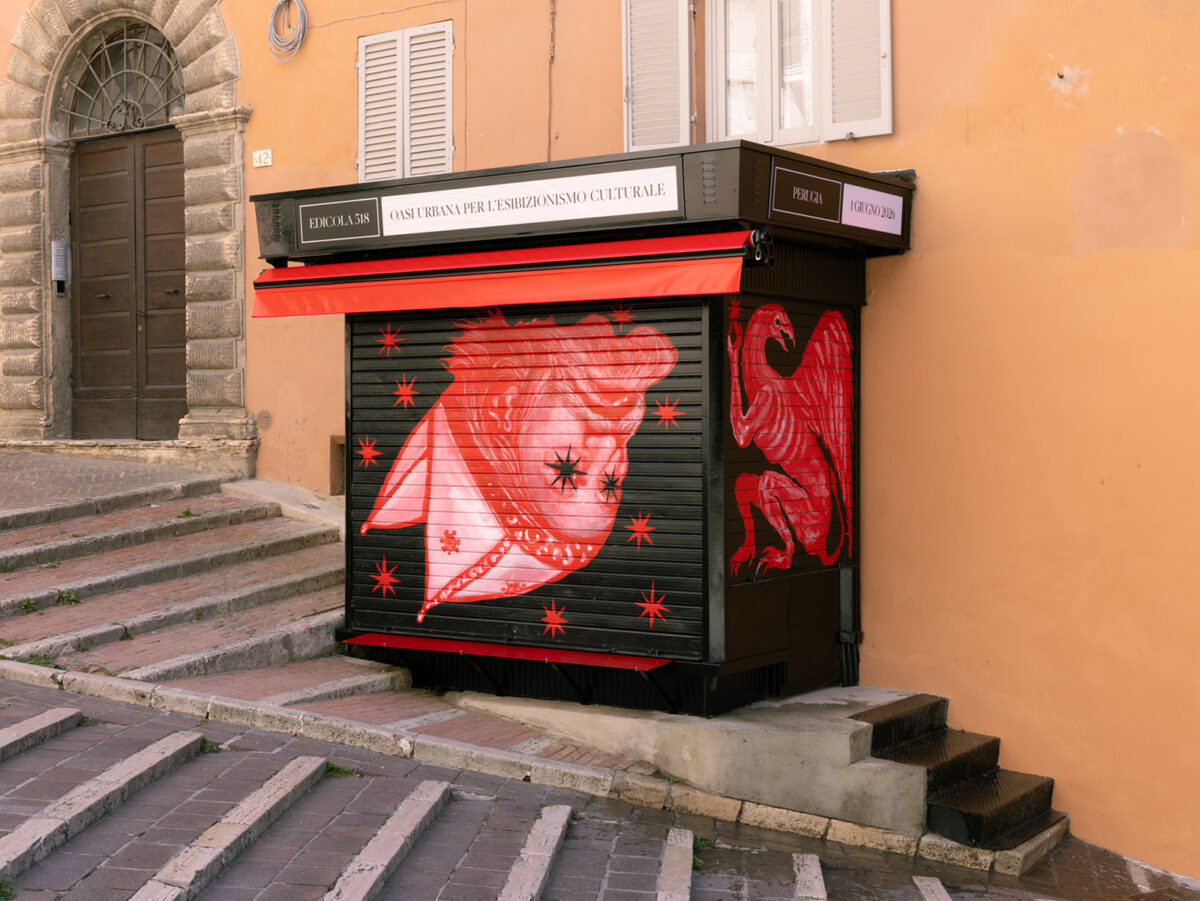
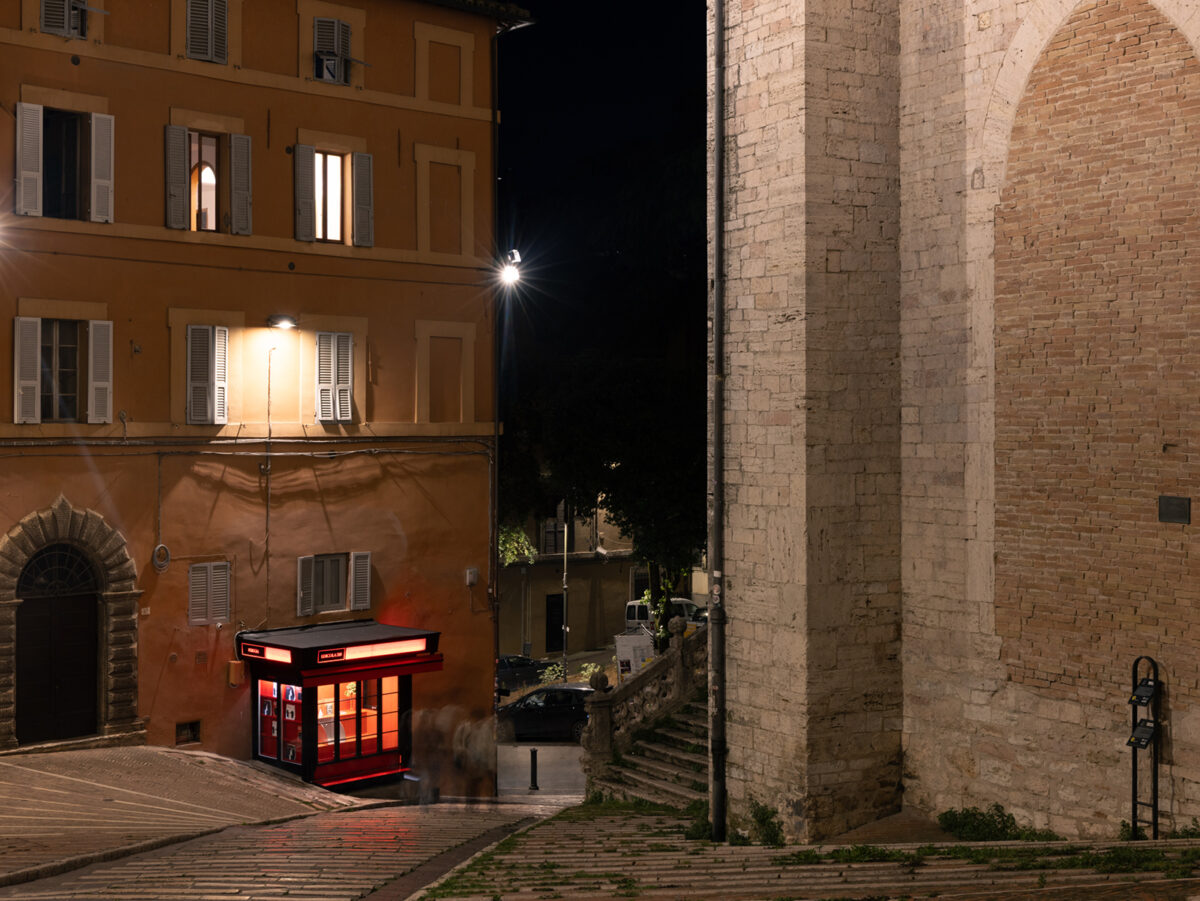
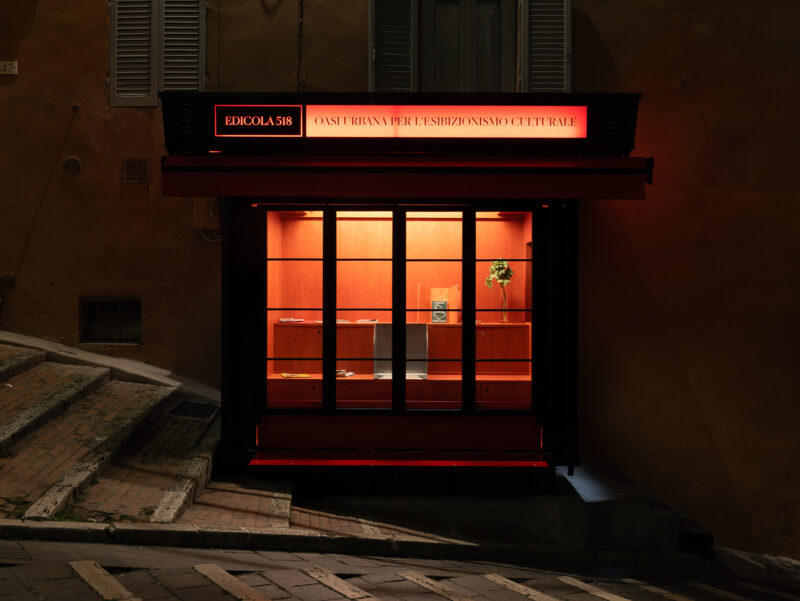
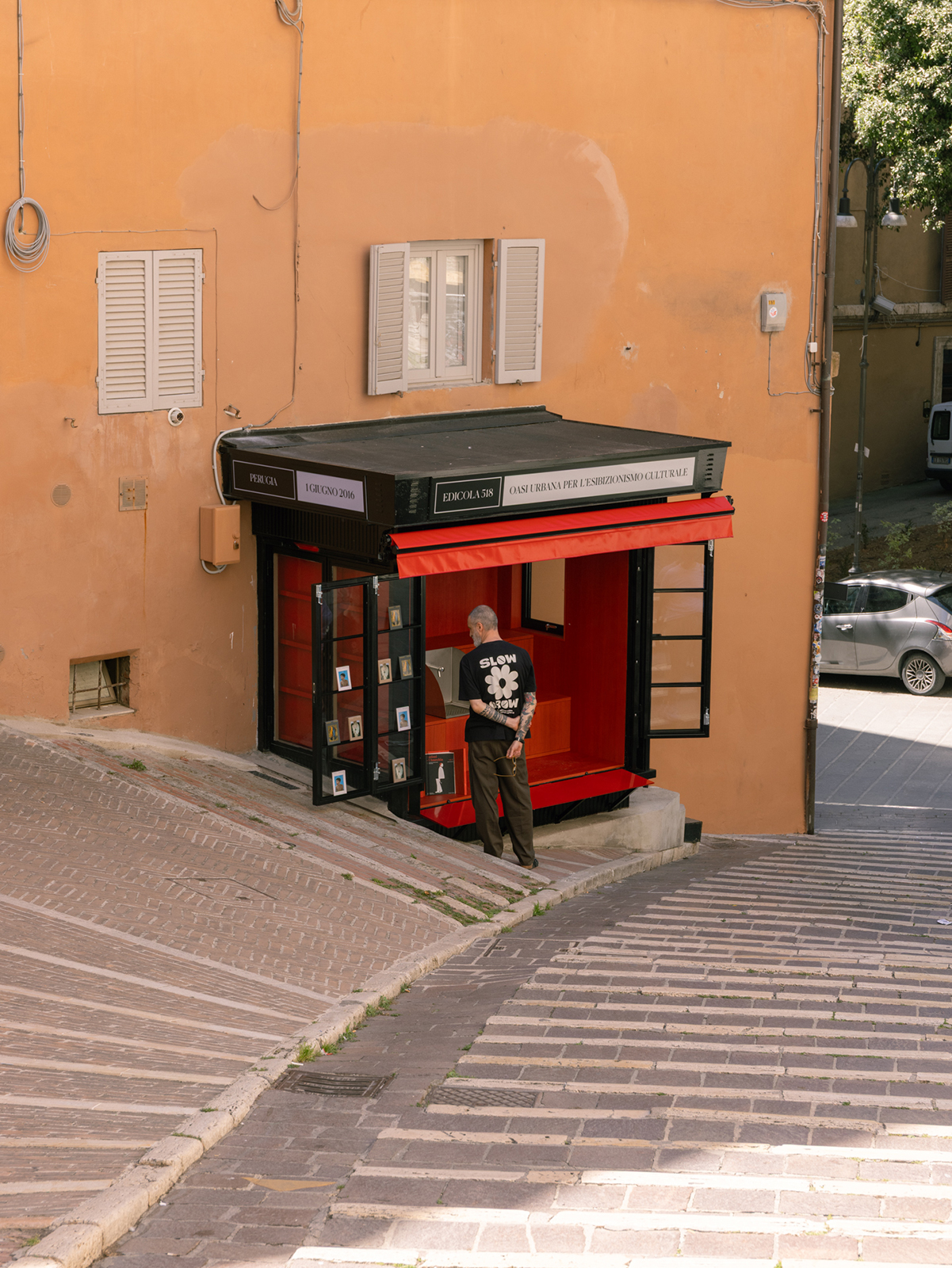
Now, as it celebrates its tenth anniversary, this singular project begins a new chapter thanks to the intervention of Sicilian designer Giuseppe Arezzi. The result is far more than an architectural refurbishment; it is a reflection on the way people occupy public space and on the role design can play in encouraging new forms of urban life.
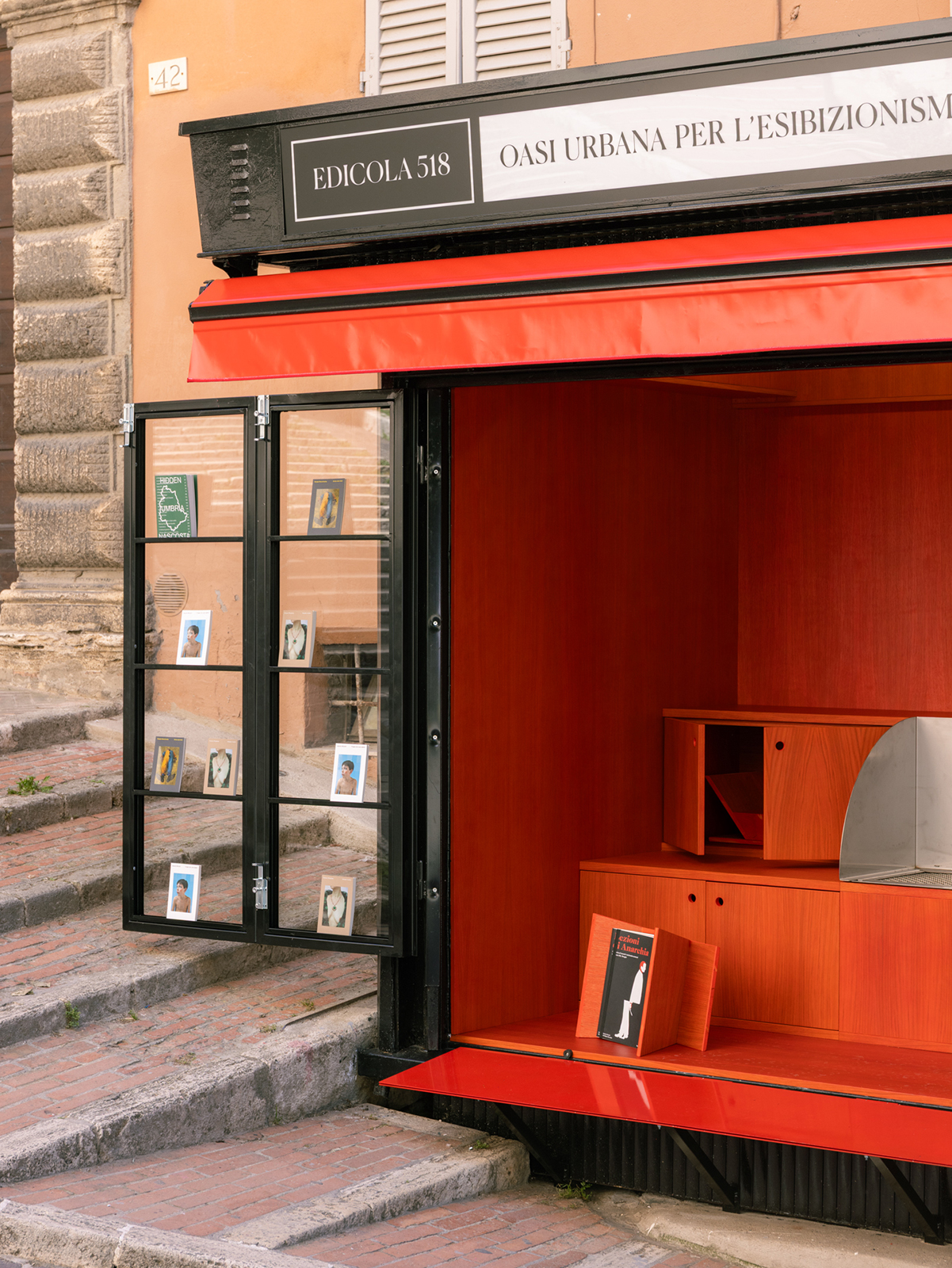
Conceived under the evocative title “An Urban Oasis for Cultural Exhibitionism”, Edicola 518 reopens as a place to read, pause, meet and exchange ideas.
Redefining the newsstand as a place to gather
For decades, the newsstand was one of the defining stages of everyday urban life. It was where people bought newspapers, magazines and information itself. The relationship between vendor and customer was clearly structured around a counter that established a physical boundary.
Giuseppe Arezzi‘s intervention deliberately dismantles that model.
The project removes the notion of separation, transforming the kiosk into a fully permeable space designed to be inhabited even when closed. Architecture ceases to function merely as a container and instead becomes a permanent invitation to stay.
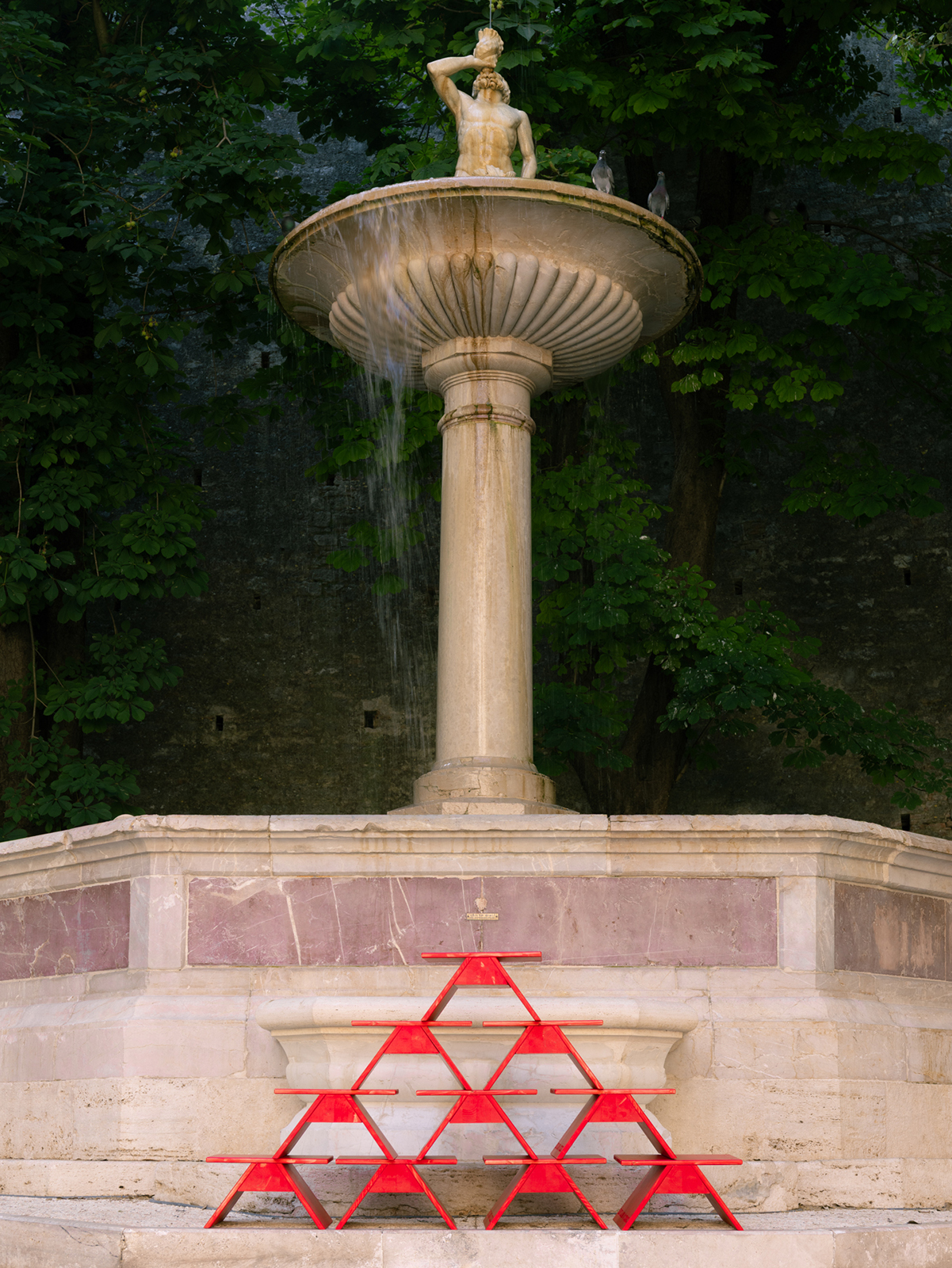
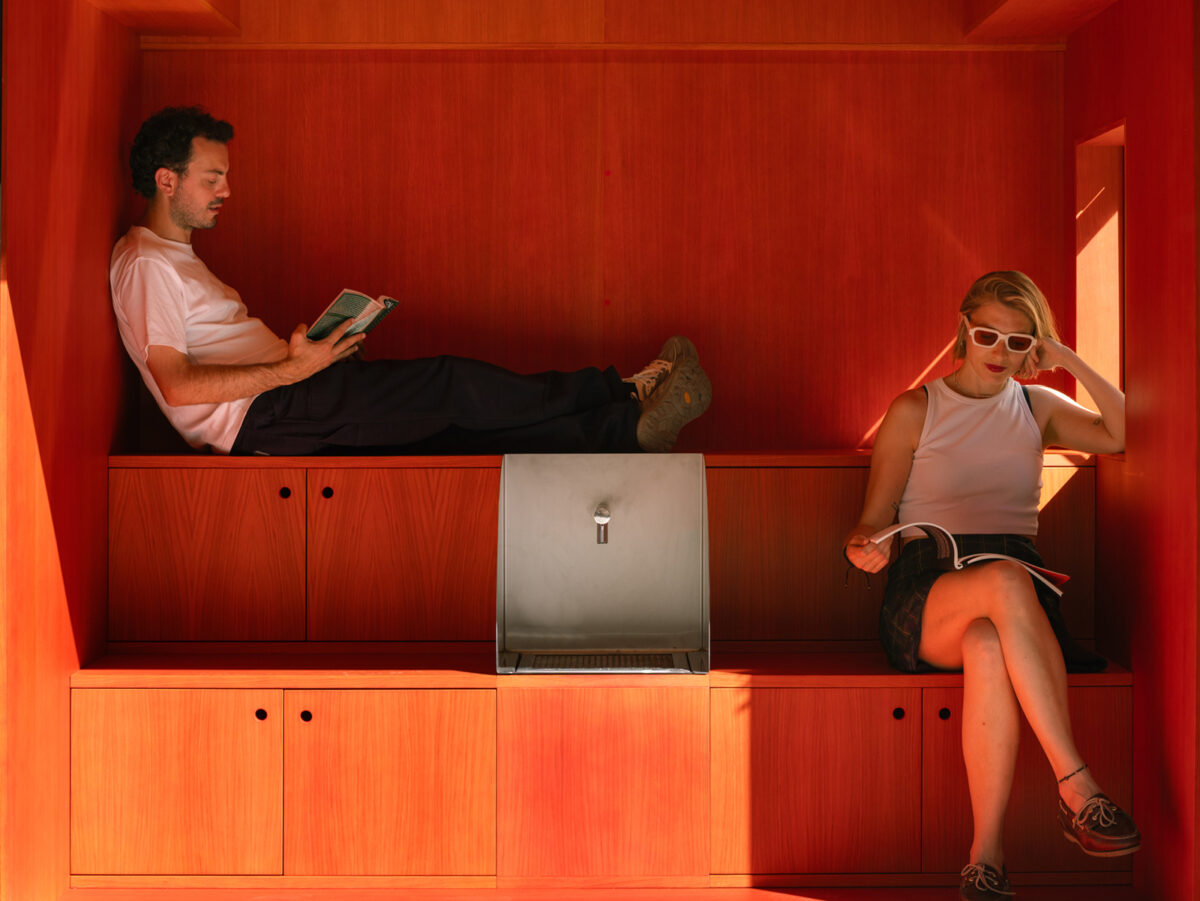
Visitors no longer arrive simply to purchase a publication. They are encouraged to pause, sit down, browse a magazine, strike up a conversation or simply rest while making their way up the historic steps of Sant’Ercolano.
Culture is no longer a transaction; it becomes an experience.
Minimal architecture, maximum transformation
For years, Giuseppe Arezzi has explored the possibilities of compact spaces and multifunctional furniture. Edicola 518 represents one of the clearest expressions of that ongoing research.
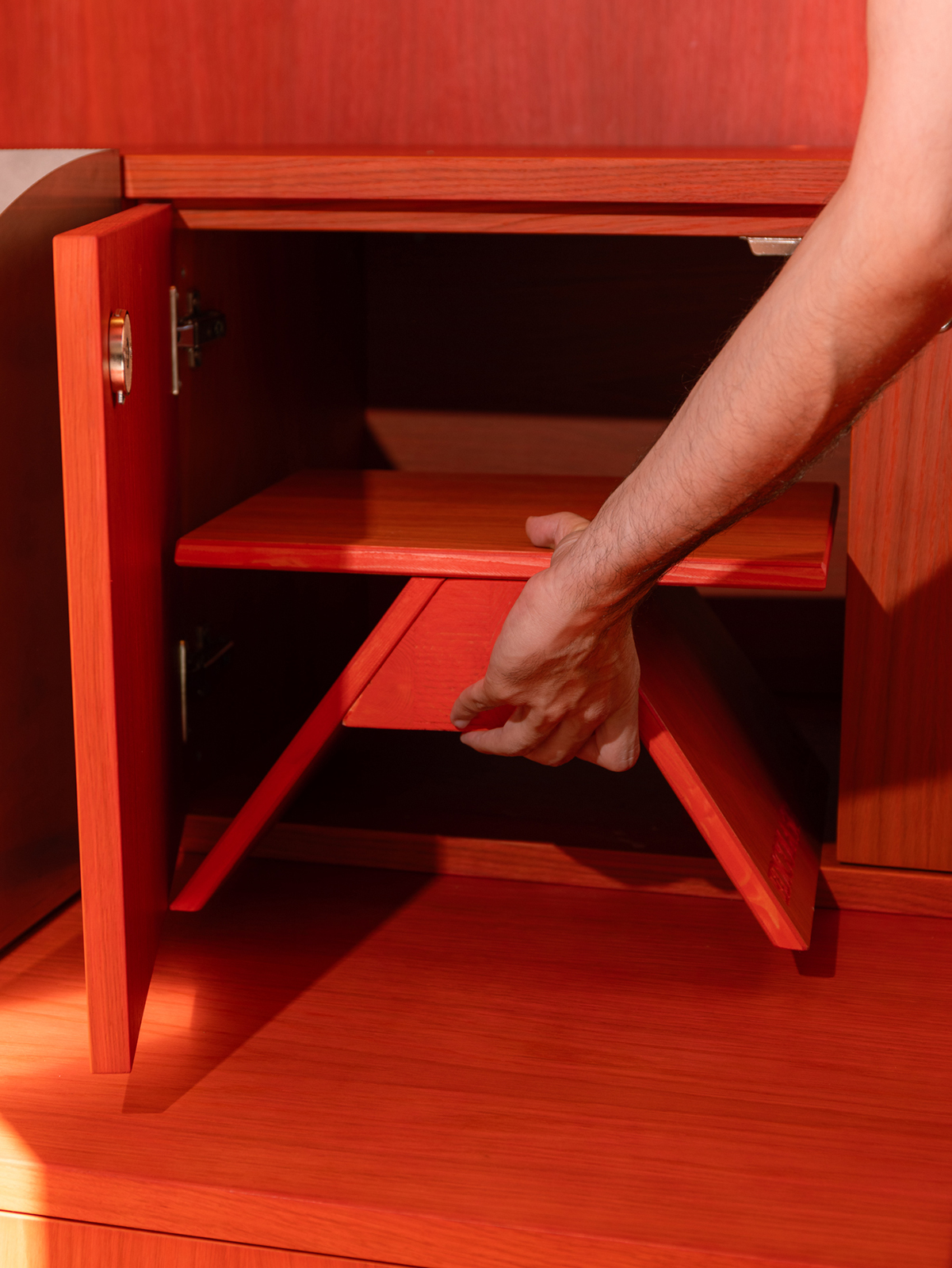
Every element performs several functions simultaneously.
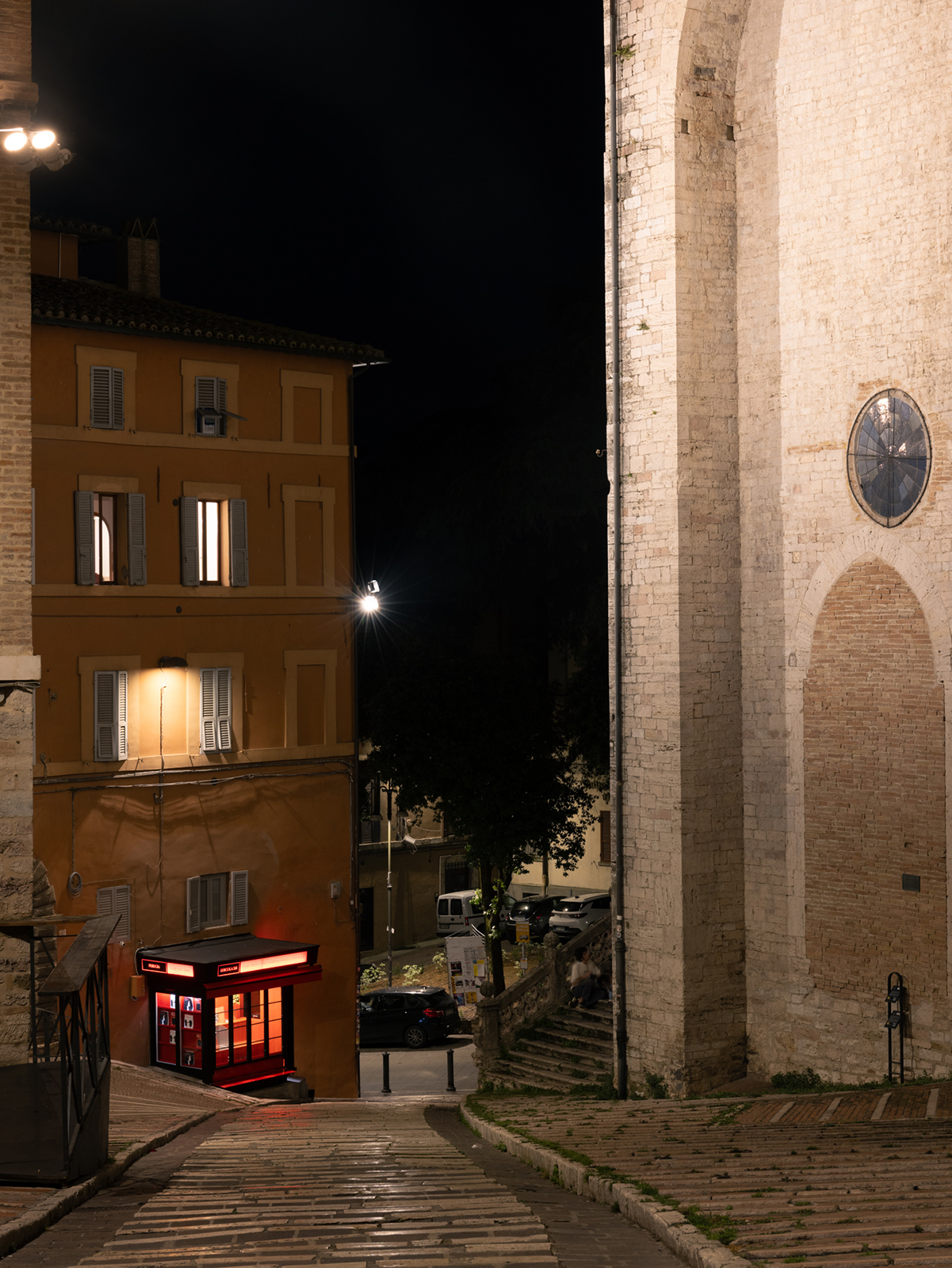
The intervention preserves the original structure of the kiosk, respecting its history while introducing a completely renewed identity through a striking shade of red that transforms the small building into a new visual landmark within the city.
Inside, a large volume of lacquered oak serves simultaneously as seating, steps, furniture and architectural structure. Every component performs multiple roles while discreetly incorporating the technical elements required for the space, preserving the clarity of the overall design.
The project demonstrates how contemporary design can unlock the full potential of just a few square metres through intelligent solutions capable of transforming the perception of space.
A drinking fountain as a symbol of a new public service
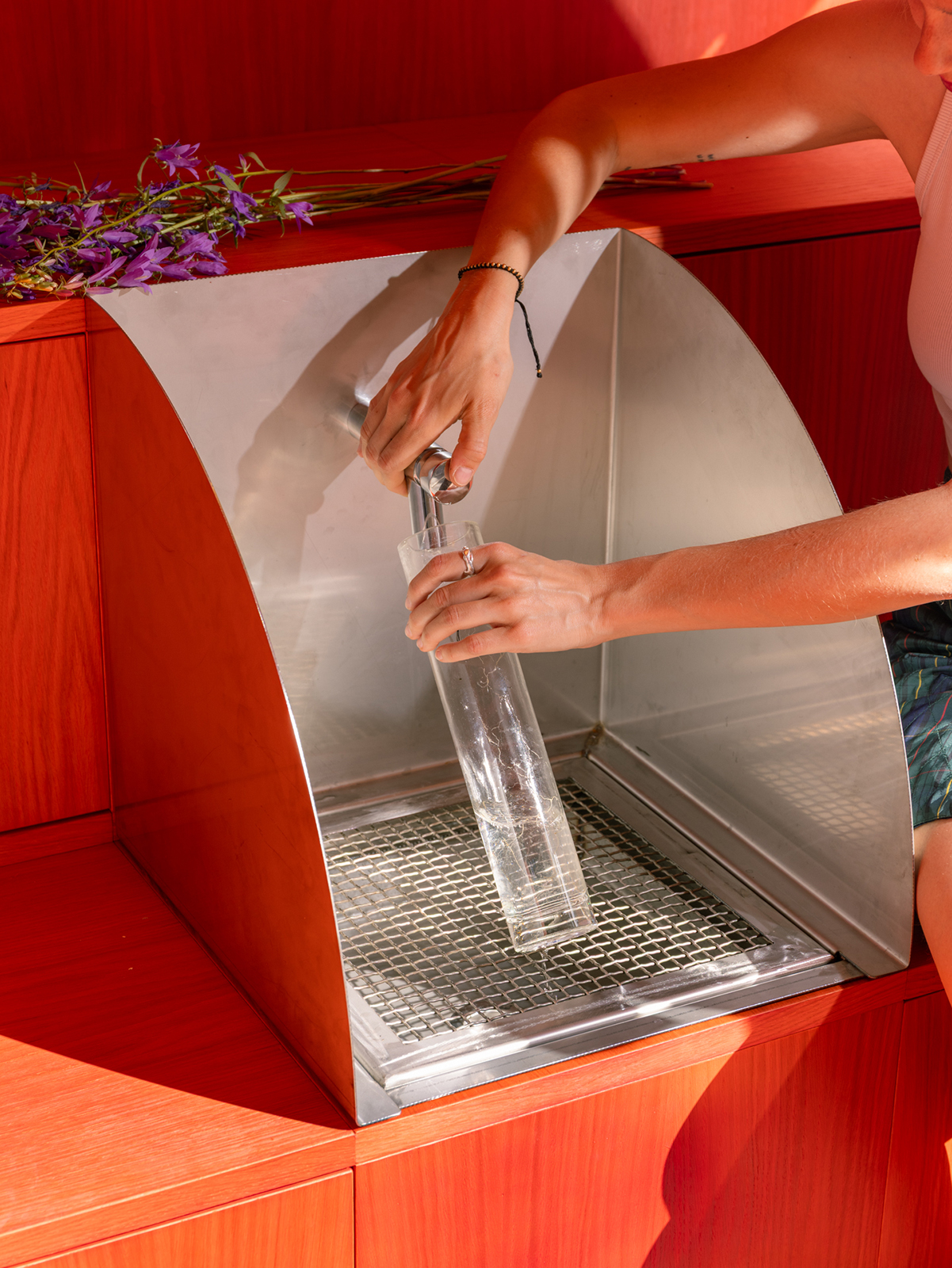
Perhaps the project’s most unexpected gesture is also its most meaningful. At the centre of the kiosk stands a stainless-steel drinking fountain offering free potable water to anyone passing by.
Beyond its obvious practical function, the fountain carries a powerful symbolic message.
For Giuseppe Arezzi, access to clean drinking water and access to quality information share the same essential nature: both are public goods that should remain available to everyone.
The fountain transforms the everyday act of drinking water into an invitation to pause, rest and spend time in the space. It is precisely within that pause that the project finds its deepest meaning, allowing reading to move beyond a private activity and become a shared experience within the city.
The fountain transforms the everyday act of drinking water into an invitation to pause, rest and spend time in the space.
A space that remains open even when closed
One of the project’s most compelling qualities is its ability to extend beyond the physical boundaries of the kiosk itself.
A new outdoor platform increases the usable area and creates a place where people can stop, sit and spend time throughout the day, even outside opening hours. Rather than closing the space off, the intervention keeps it active, offering an inviting place to pause at any time.
This approach reflects an increasingly influential idea in contemporary architecture: that public space should remain available to citizens for as long as possible, encouraging open, informal and spontaneous forms of use.
Edicola 518 is no longer simply a specialist bookshop. It becomes a piece of urban infrastructure designed to serve the community.
Ambo: an object designed to move into the city
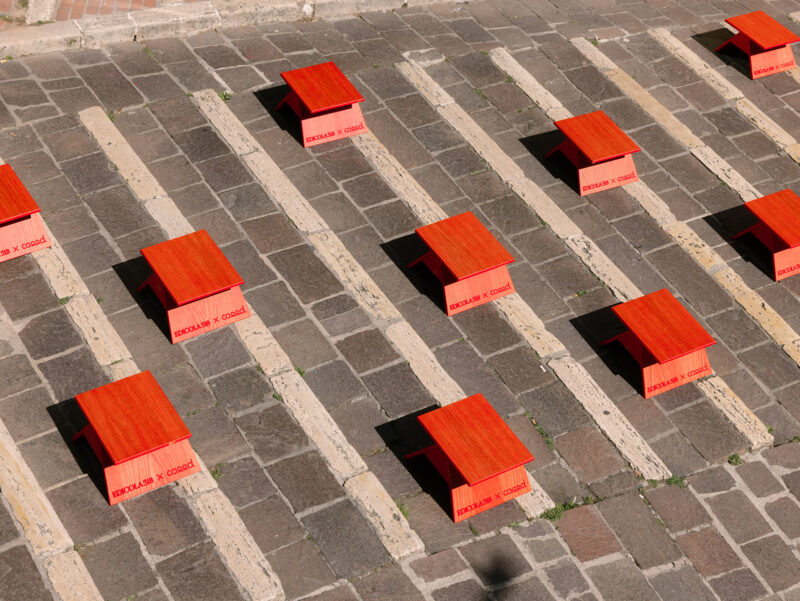
The intervention is completed by Ambo, a piece created specifically for the collaboration between Edicola 518 and Seed Festival.
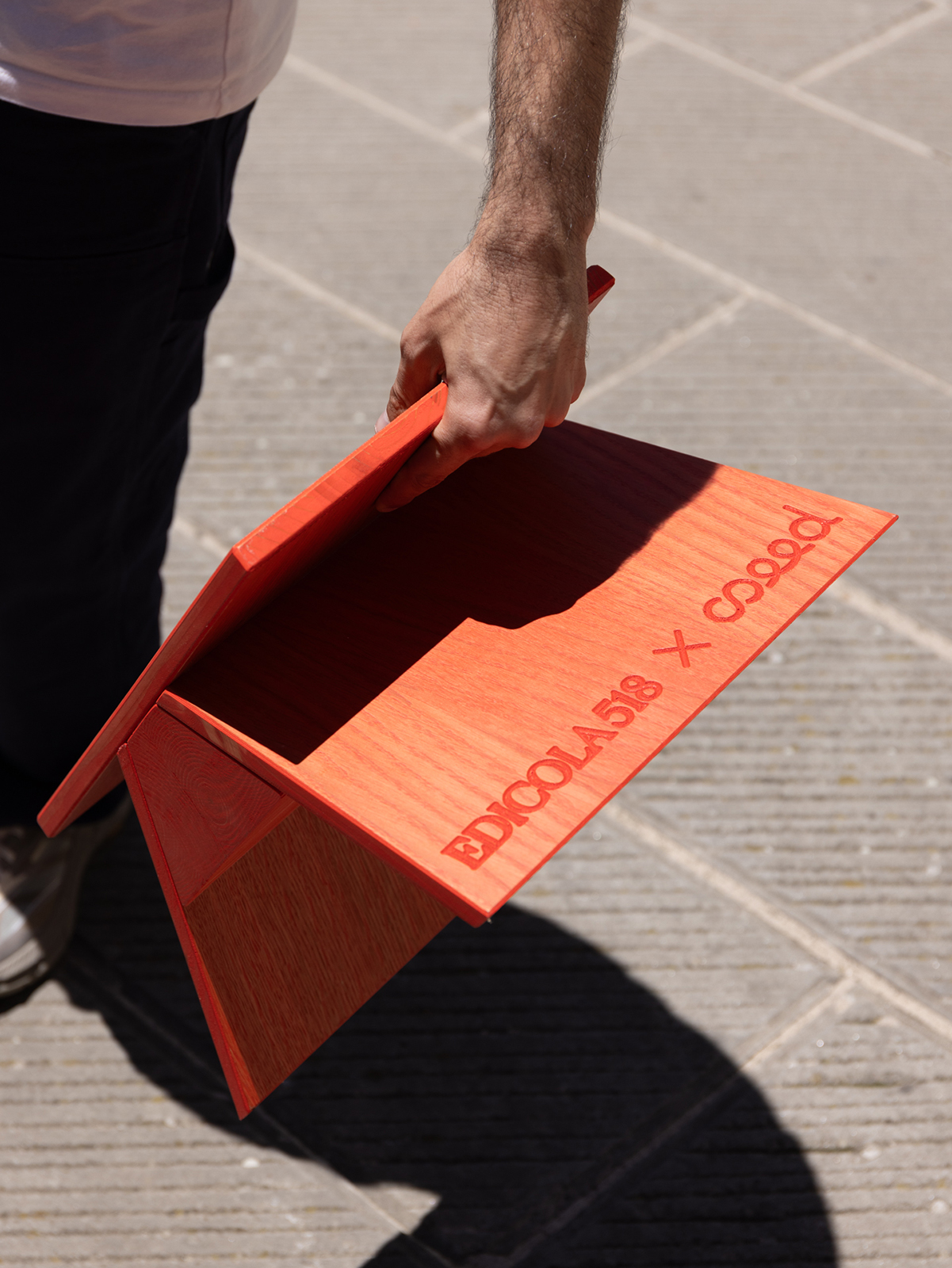
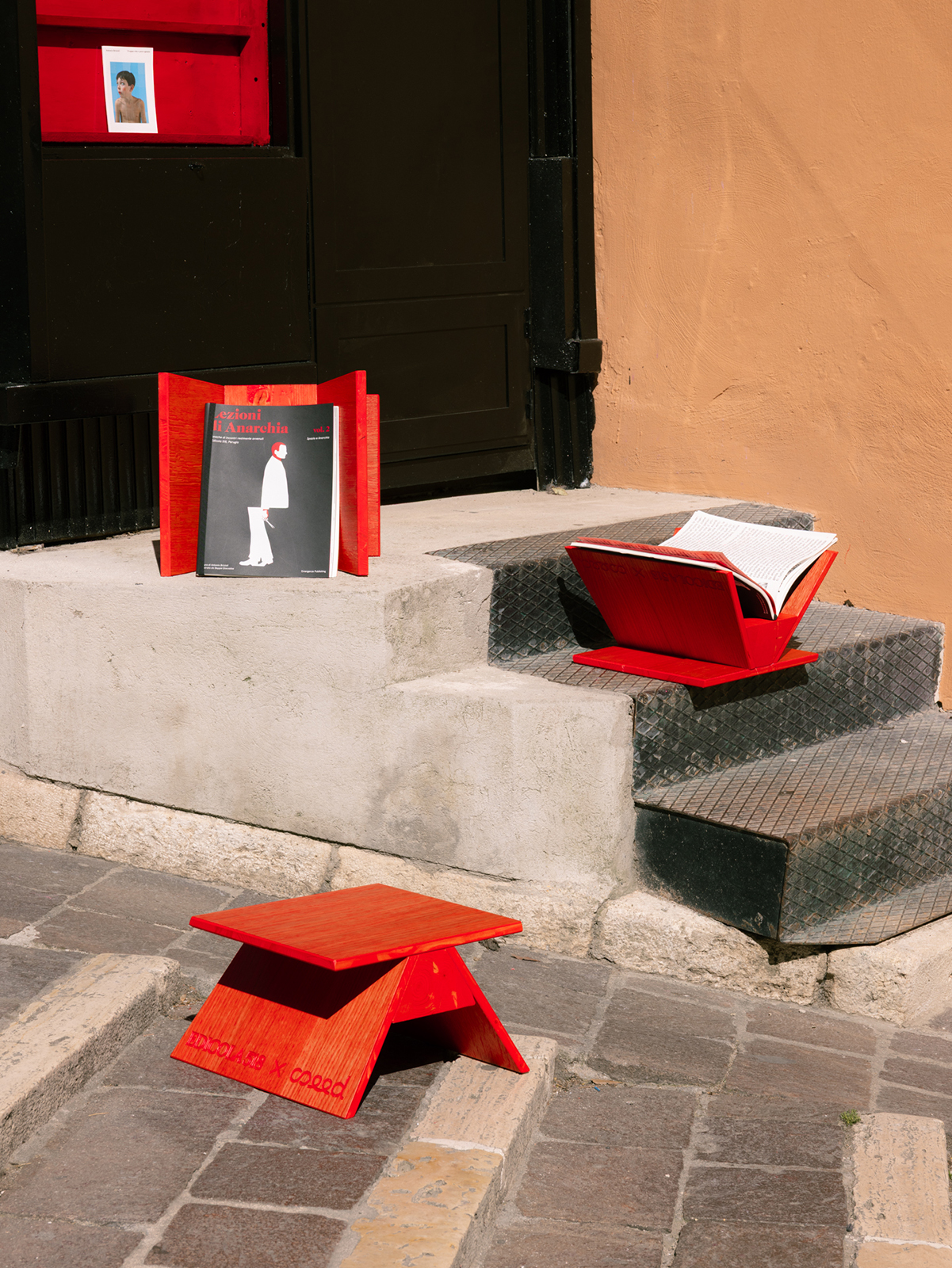
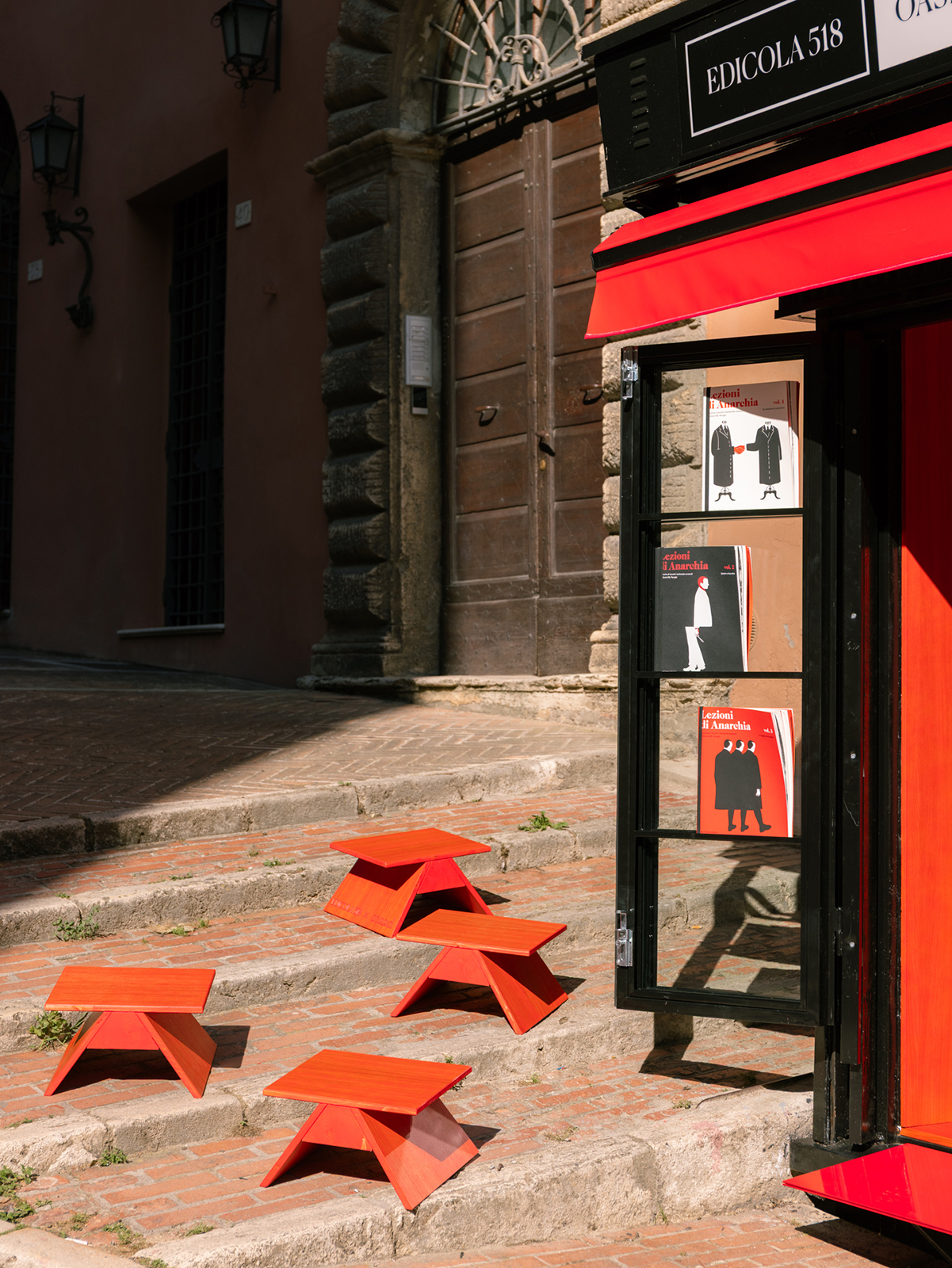
At first glance, it appears to be a small red lacquered wooden stool. Its real ingenuity, however, is revealed when it is repositioned.
Turned on its side, it becomes a reading lectern. Placed upright, it functions as a display stand for books and magazines. Used conventionally, it serves as a seat that helps compensate for the uneven levels of the historic steps.
Its versatility encapsulates much of Giuseppe Arezzi‘s design philosophy: creating objects capable of adapting to different situations without sacrificing formal clarity.
Beyond its practical functions, Ambo acts as a physical extension of the project itself. It can be carried beyond the kiosk and into the surrounding streets, supporting cultural activities, public gatherings and events organised by Seed Festival.
Design as a tool for activating the city
Giuseppe Arezzi‘s work constantly moves between product design, architecture and research into new ways of inhabiting space.
Working from his studio in Ragusa, the Sicilian designer has built an internationally recognised practice grounded in a contemporary interpretation of Italy’s design legacy, deliberately avoiding any nostalgic approach. His work forms part of permanent collections including the Vitra Design Museum and France’s CNAP, while also receiving significant international recognition in recent years.
At Edicola 518, this ongoing research finds one of its most fertile expressions.
The ambition is not simply to create a beautiful object, but to encourage new forms of social interaction through design. Every decision seeks to make encounters between people easier, promote reading and restore the street as a place for everyday community life.
Ten years of building a cultural community
Since opening in 2016, Edicola 518 has established itself as one of Europe’s leading references for independent publishing.
What began as a small newsstand created by writers, artists and students has evolved into a cultural cooperative with several spaces across Perugia’s historic centre and a vibrant publishing programme.
Today, Edicola 518 is recognised as one of Europe’s most influential hubs for independent publishing.
Over the past ten years, it has hosted more than two hundred cultural events, collaborated with international institutions and festivals, and built a carefully curated collection of independent publications that are difficult to find through conventional commercial channels.
Its influence now extends well beyond Italy, attracting the attention of specialist media and becoming a compelling example of how a local initiative can achieve international impact when driven by a clear vision and a committed community.
A small project with great ambition
The transformation of Edicola 518 demonstrates how a modest intervention can completely redefine the use of an everyday urban space. Giuseppe Arezzi has turned a historic newsstand into a place for reading, resting and meeting, reinterpreting one of the most recognisable elements of the Italian streetscape.
Through restrained architecture and carefully considered furniture designed to accommodate multiple uses, the project expands the kiosk’s original function and transforms it into a cultural space that remains accessible beyond its commercial activity.
It is a thoughtful intervention that illustrates how design can enrich urban life without relying on grand gestures, proving that even the smallest spaces can become catalysts for community, culture and everyday encounters.
(*) Photography by Giovanni Emilio Galanello, courtesy of Giuseppe Arezzi.