ARoS, the Aarhus museum that won us over
Some museums become one of the best memories of a trip. ARoS was one of them. We visited during our recent stay in Aarhus and came away delighted: by its installations, its exhibitions and its ability to keep our curiosity alive from one floor to the next. It has earned a place among our favourite museums for contemporary art, although its collection encompasses much more.
In this Danish city, ARoS offers encounters with art that can be luminous, disconcerting, intimate or playful. A walkway changes the colour of the streets; a couple beneath a parasol takes on unexpected proportions; a dome turns the sky into something you can barely stop looking at. And, as we move between works, we begin to discover just how much our perception depends on where we are looking from.
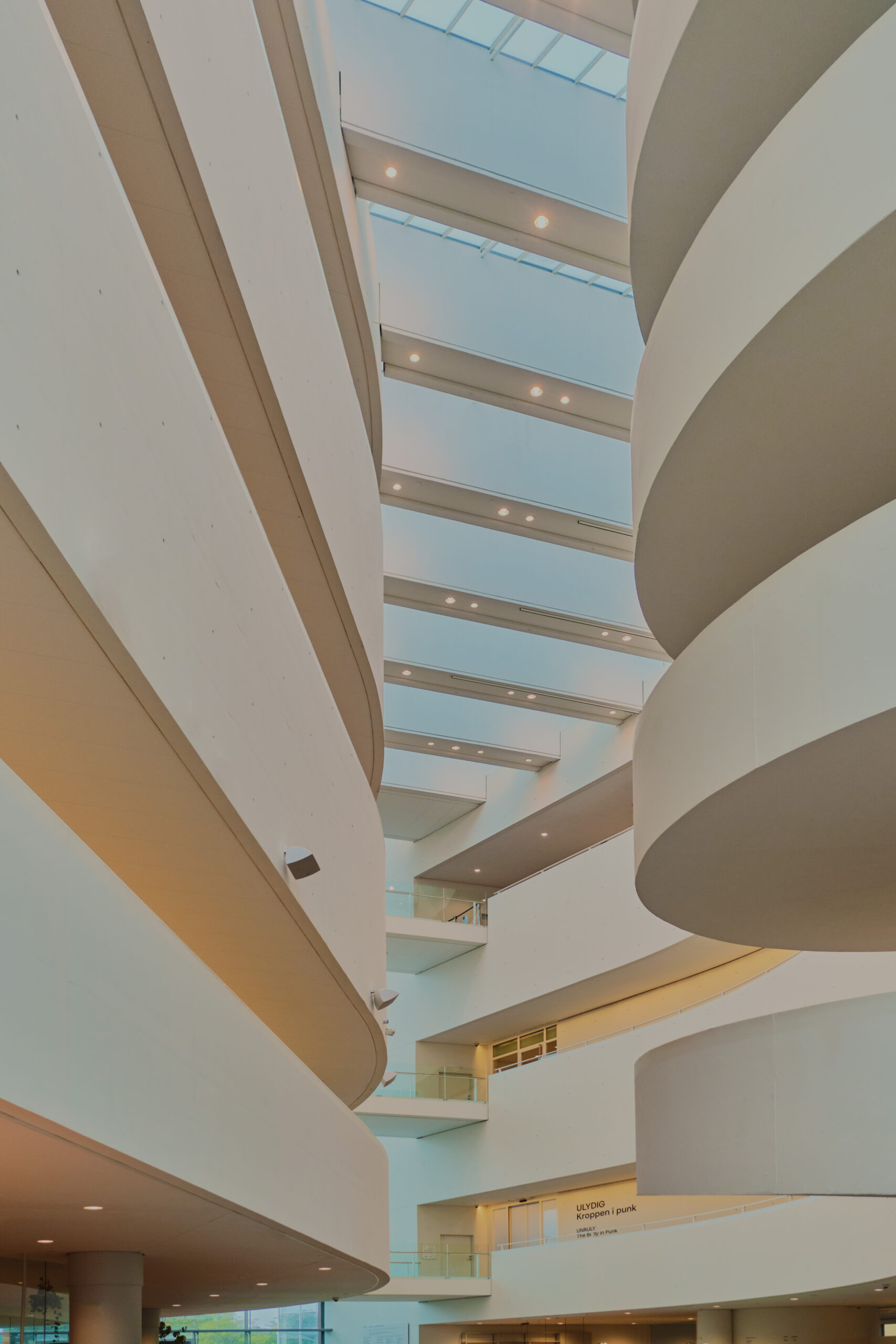
A museum for following your curiosity
With more than 8,000 works of Danish and international art, from the 18th century to the present day, ARoS has a collection that spans very different periods and artistic languages. Its five galleries and floor dedicated to immersive installations accommodate a programme bringing together artistic heritage, contemporary practice and works conceived to occupy space in unusual ways.
This diversity is one of its greatest attractions. Those who enjoy recognising artists will find plenty of reasons to pause; those arriving with little prior knowledge can begin with a sensation, an image or an intriguing detail. Some works also reveal themselves through the body: by walking, waiting, listening or discovering that something seemingly right in front of us has a depth that is difficult to judge.
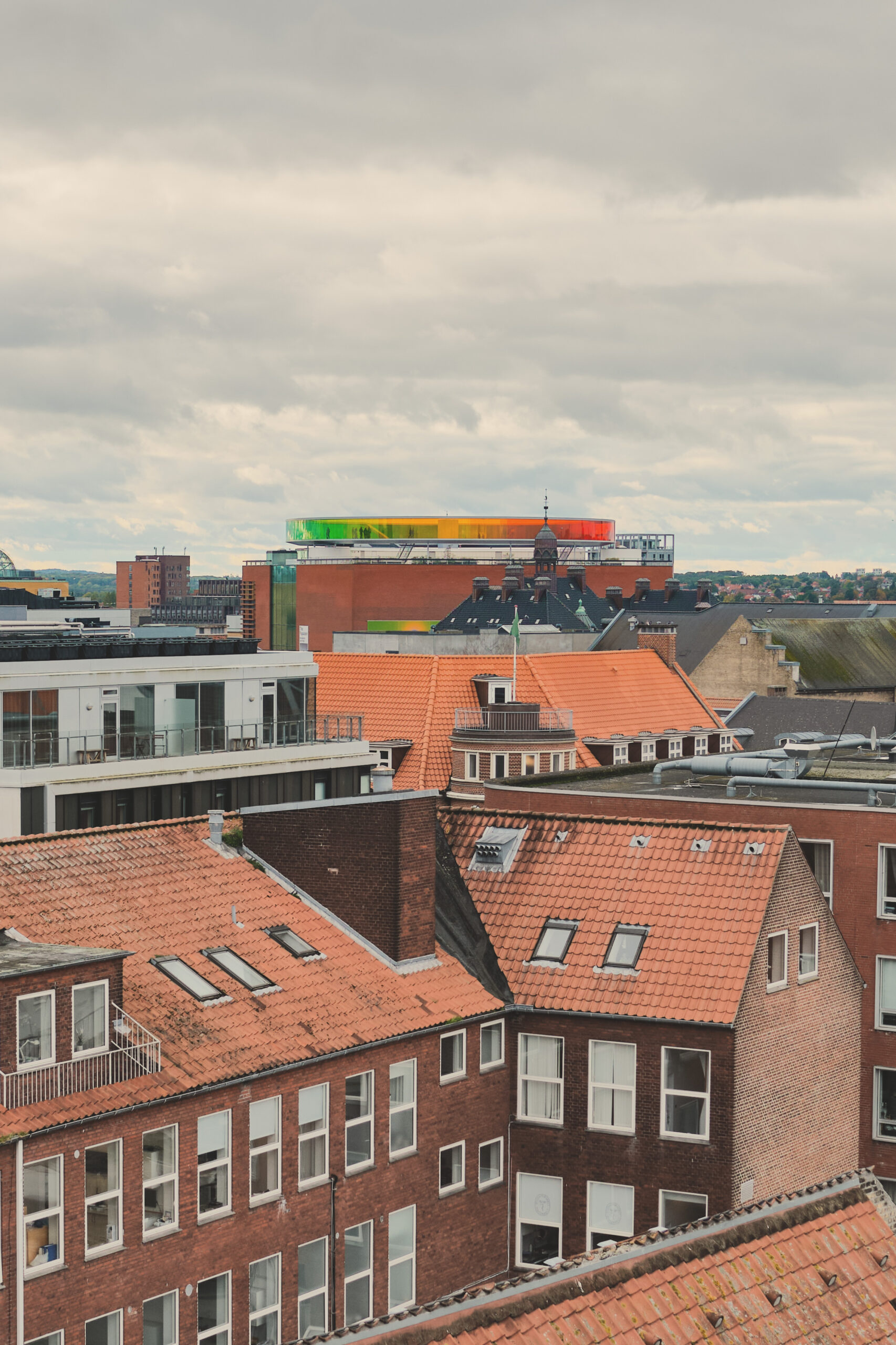
The museum’s commitment to installation art is also sustained. ARoS gives these works the space and conditions they need, allowing visitors to discover artistic practices that would be difficult to experience in quite the same way outside the museum. That ambition is particularly apparent in two works that have strengthened its relationship with the sky above Aarhus.
Olafur Eliasson and Aarhus in every colour
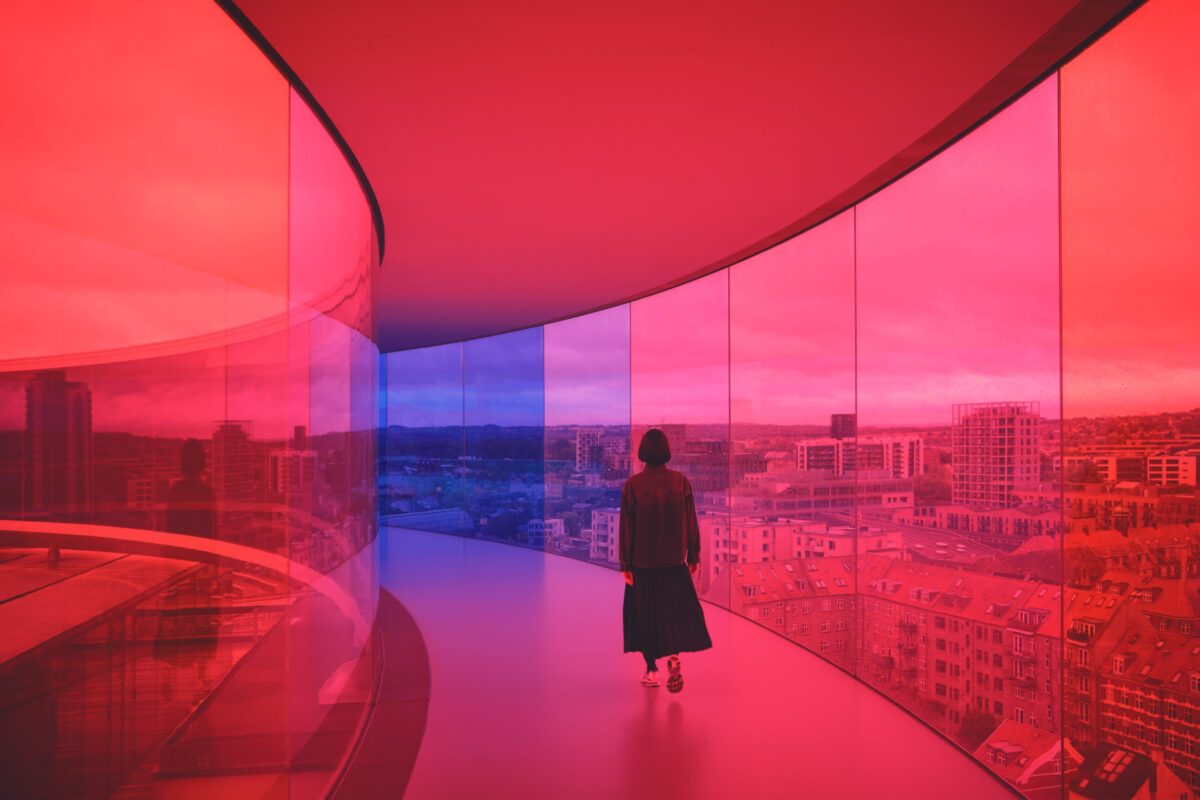
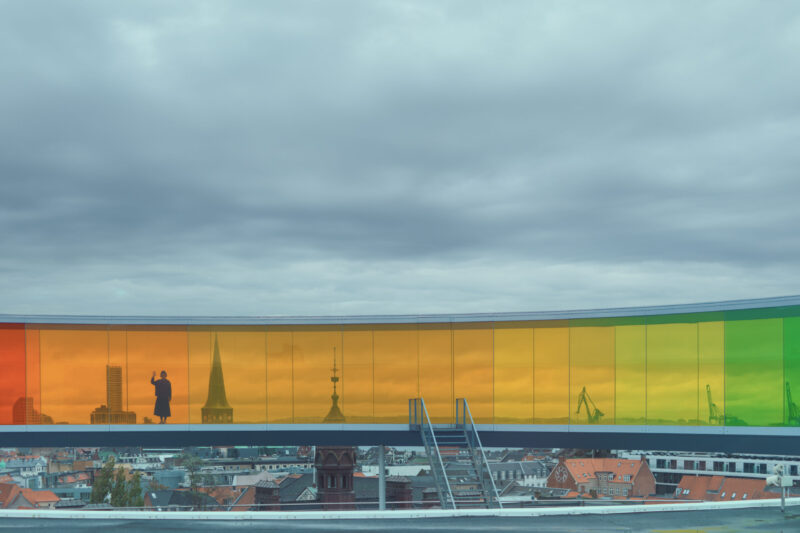
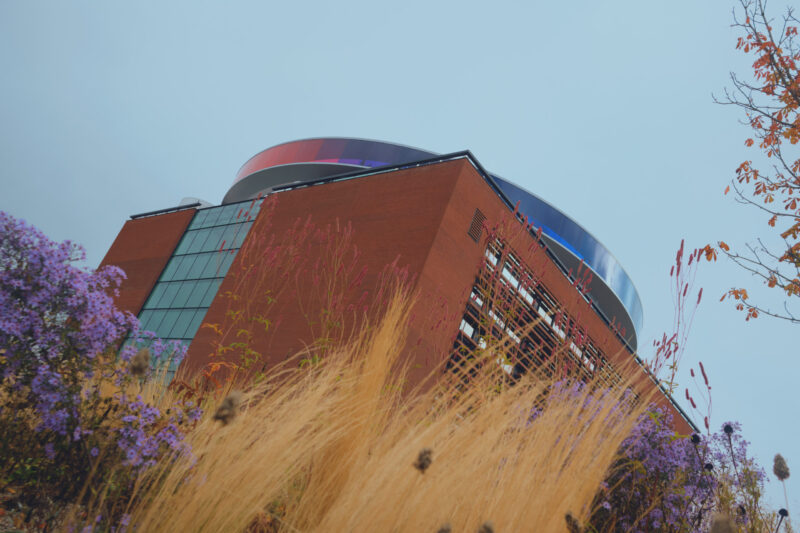
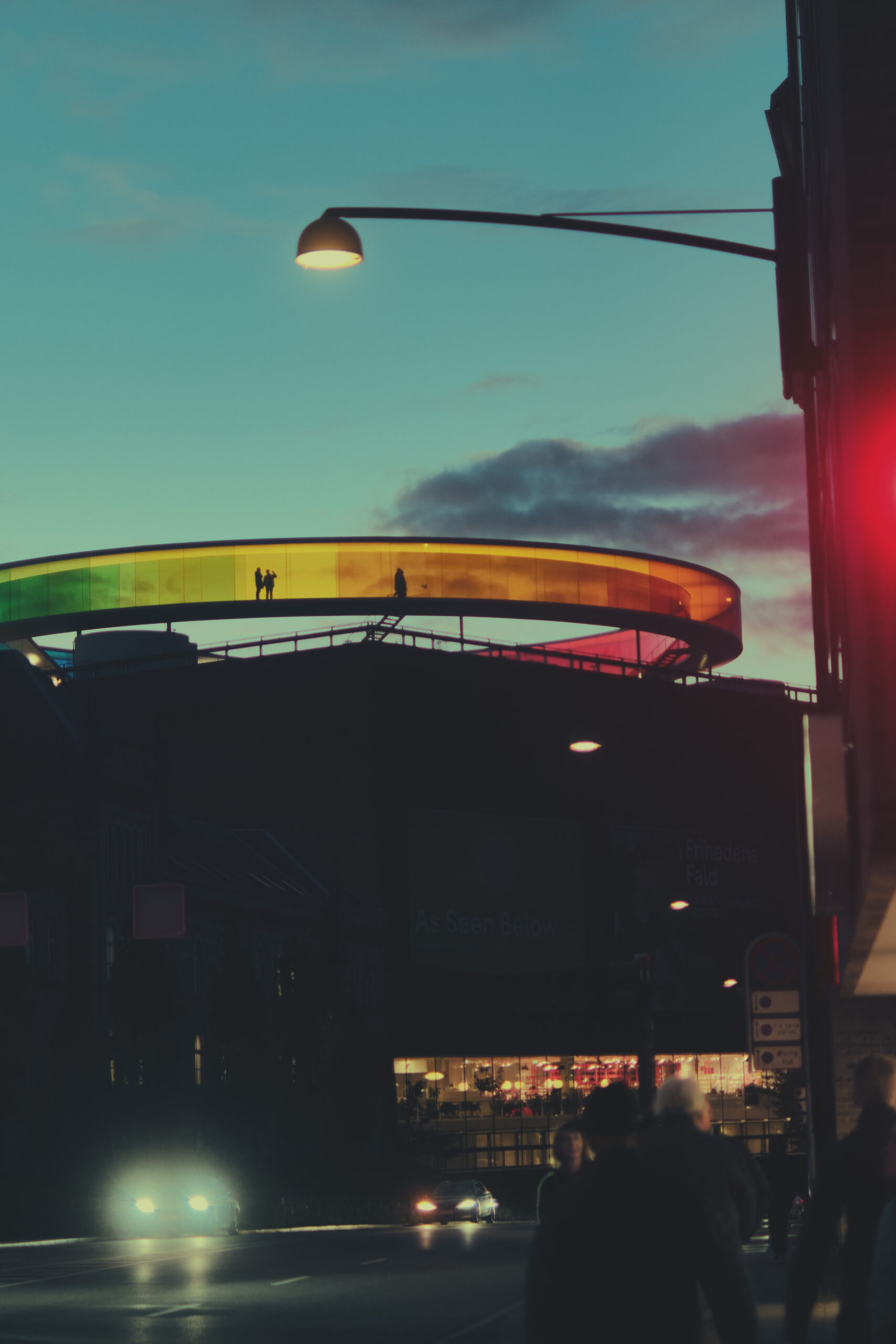
On the rooftop,“Your rainbow panorama” (2011), by Olafur Eliasson, provides one of ARoS’s most recognisable images. This circular glass walkway, 150 metres long, allows visitors to look out over the city and the bay through the colours of the spectrum.
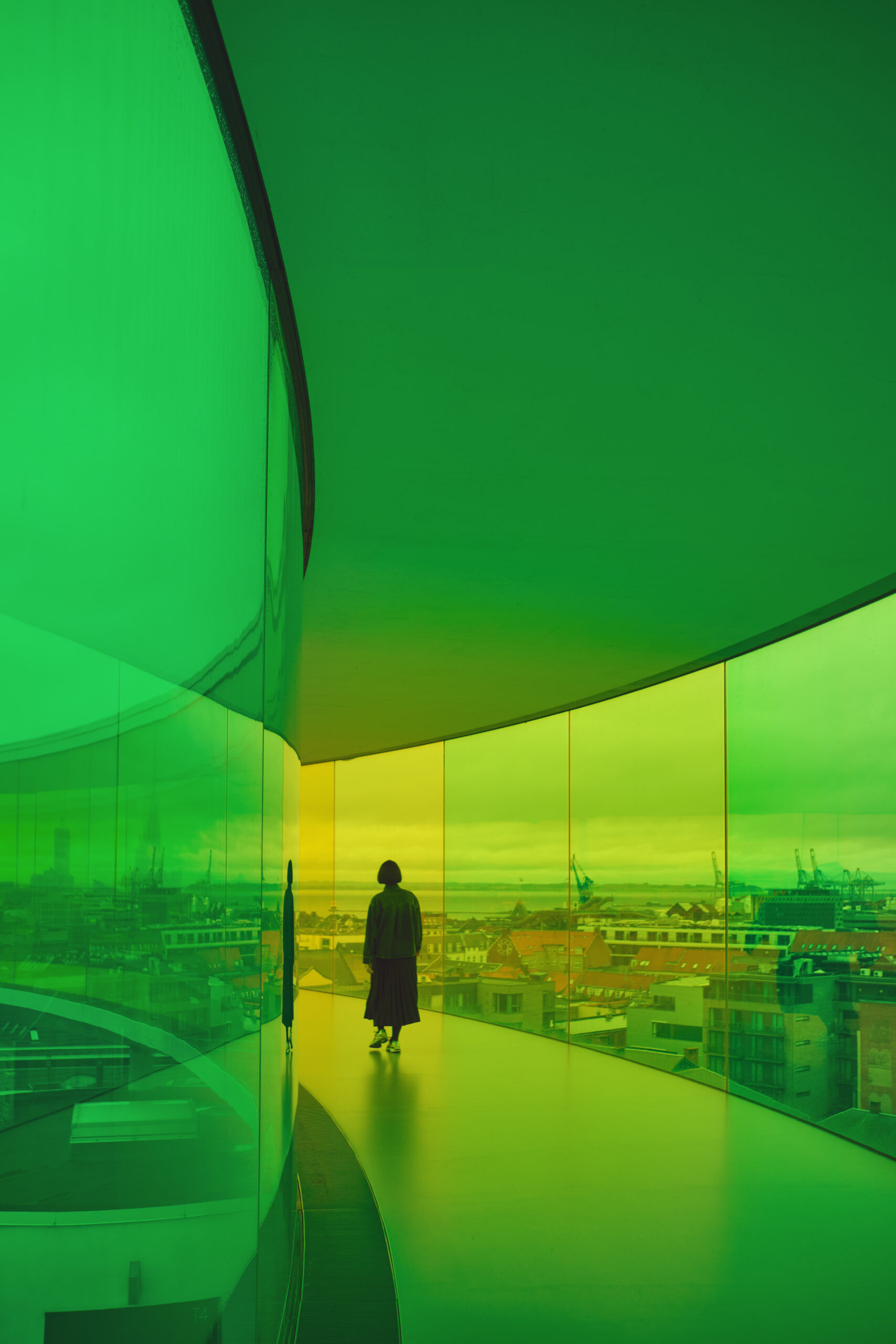
On the rooftop, ‘Your rainbow panorama’, by Olafur Eliasson, provides one of ARoS’s most recognisable images.
Walking through it means watching the same landscape change as we move along. Colour transforms the atmosphere and the way we perceive distances, buildings and the sky. The city is still there, but each stretch reveals a different version of it. At times, we felt we were somewhere unreal, looking at a city that seemed imagined.
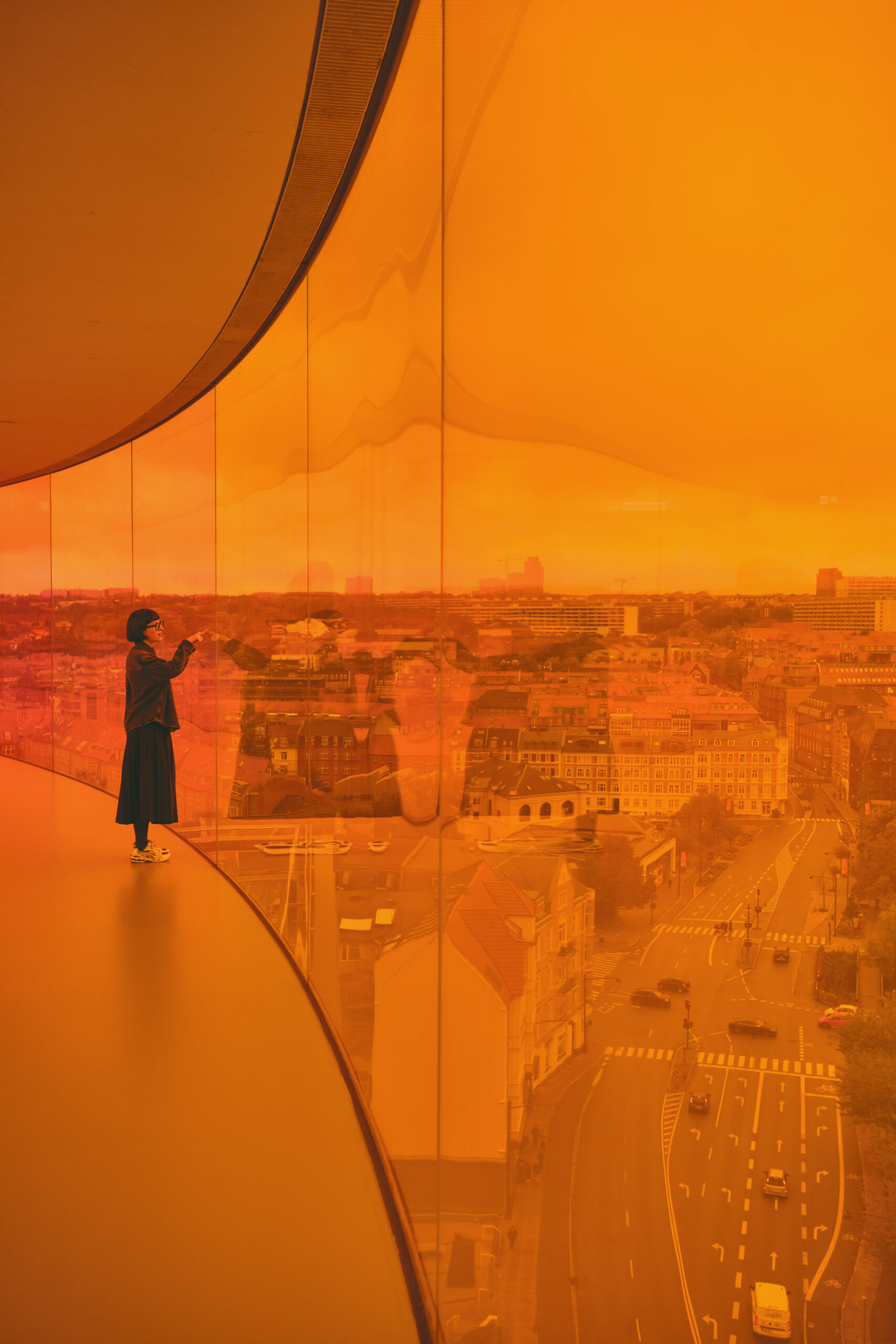
We also loved the relationship Eliasson creates with Aarhus. He makes the city part of the artwork, so that, for a while, simply looking becomes all you want to do.
James Turrell and the sky as a work of art
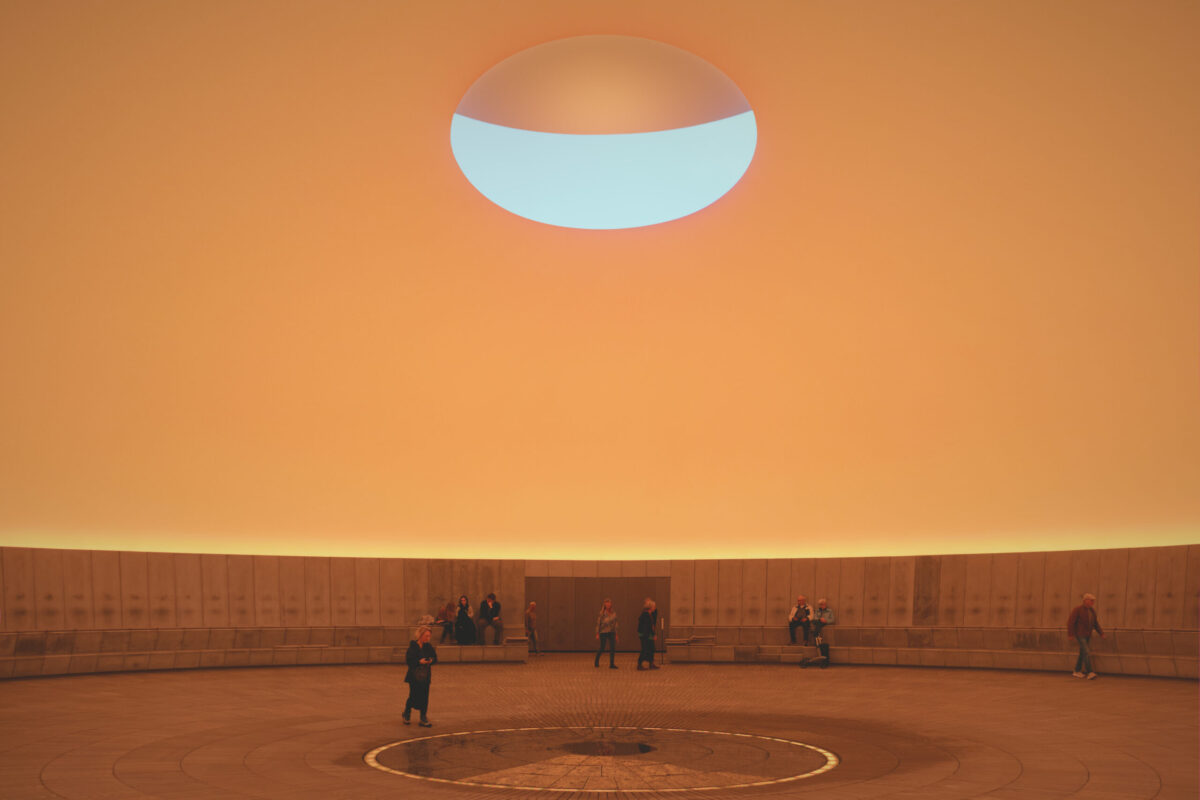
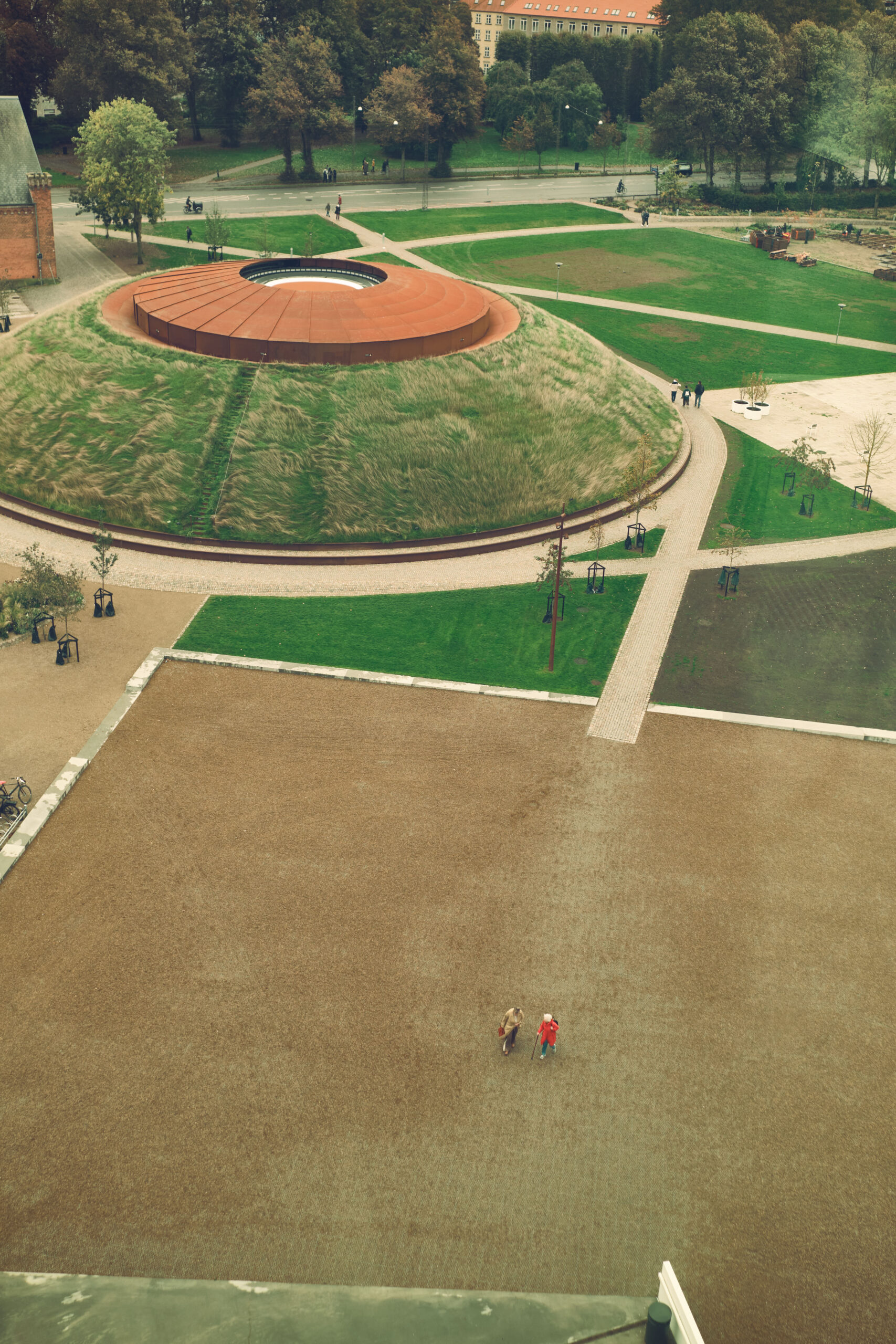
The relationship between light, space and perception takes on another dimension in As Seen Below – The Dome, a Skyspace by James Turrell. Opened on 19 June this year, this permanent installation is one of the most compelling reasons to visit ARoS. It is the artist’s hundredth Skyspace and the largest created in a museum setting.
This is the artist’s hundredth Skyspace and the largest created in a museum setting.
The approach is part of the experience. An underground corridor leads into an enormous chamber crowned by a dome measuring 16 metres high and 40 metres in diameter — dimensions that the museum’s press release compares to the monumental scale of Rome’s Pantheon. Above, a circular opening lets the sky in. After the journey underground, encountering this fragment of the outside world completely changes our relationship with the space.
The scale is impressive, but what happens as we look is even more disorientating. We know the sky is above us, yet at times it can seem like a surface of colour suspended within the dome.
Without the usual points of reference — the horizon, buildings, trees — its depth becomes difficult to judge. Something so familiar takes on a strange presence, almost impossible to locate in space.
James Turrell has spent more than five decades exploring the gap between what we see and what we think we are seeing. Born in Los Angeles in 1943, he grew up in a Quaker family in which silence and contemplation played an important role.
He also gained his pilot’s licence at a young age. Spending hours in the air, observing how the colours of the sky changed with altitude, weather and the time of day, nurtured a fascination that would eventually become central to his work.
His background in art and the psychology of perception helps explain the precision with which he constructs these experiences.
Since his involvement with the Light and Space movement in the 1960s, he has worked with light as a material capable of shaping a place, altering its boundaries and changing our perception of it. This exploration runs through his Skyspaces and Roden Crater, the project he has been developing for decades inside a volcanic cone in Arizona.
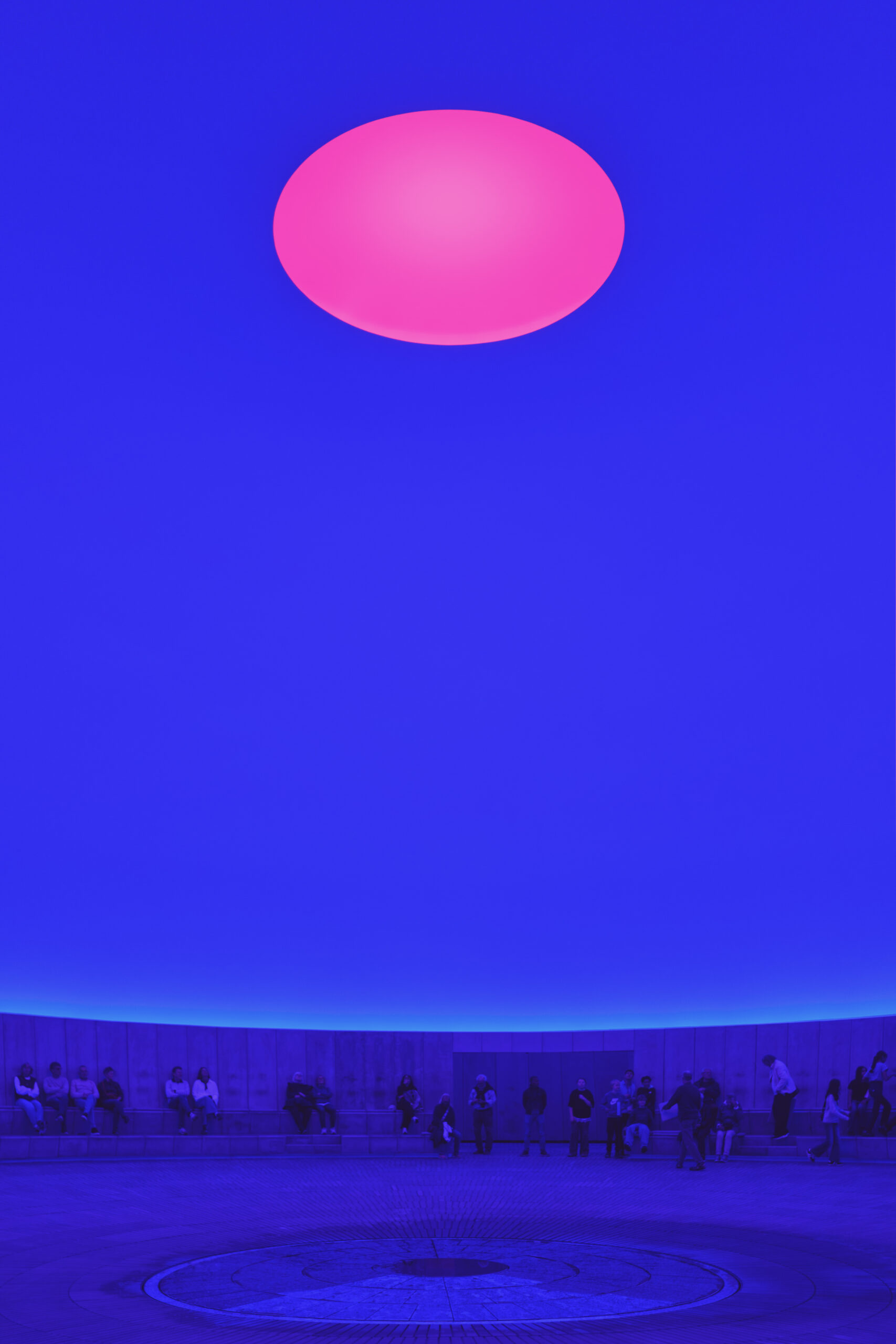
In Aarhus, the installation can be experienced in three different ways. In Open Sky, the opening remains uncovered and the sky becomes part of the work in all its variations. What we see depends on the clouds, the brightness of the day and the light reaching the interior. There is no fixed image: the space has been constructed with extraordinary precision, but some of what happens within it is left to the weather.
In Colour Shift, the opening closes and the experience changes completely. The lighting transforms the interior until the walls seem to lose their solidity and the boundaries become less distinct. Colour fills the field of vision, and the light acquires a density that almost invites you to touch it.
What is most surprising is how profoundly light can change what we perceive: the dome is still there, but at times it is difficult to make out where it ends. It is a strange and fascinating sensation that photographs can barely convey.
James Turrell has spent more than five decades exploring the gap between what we see and what we think we are seeing.
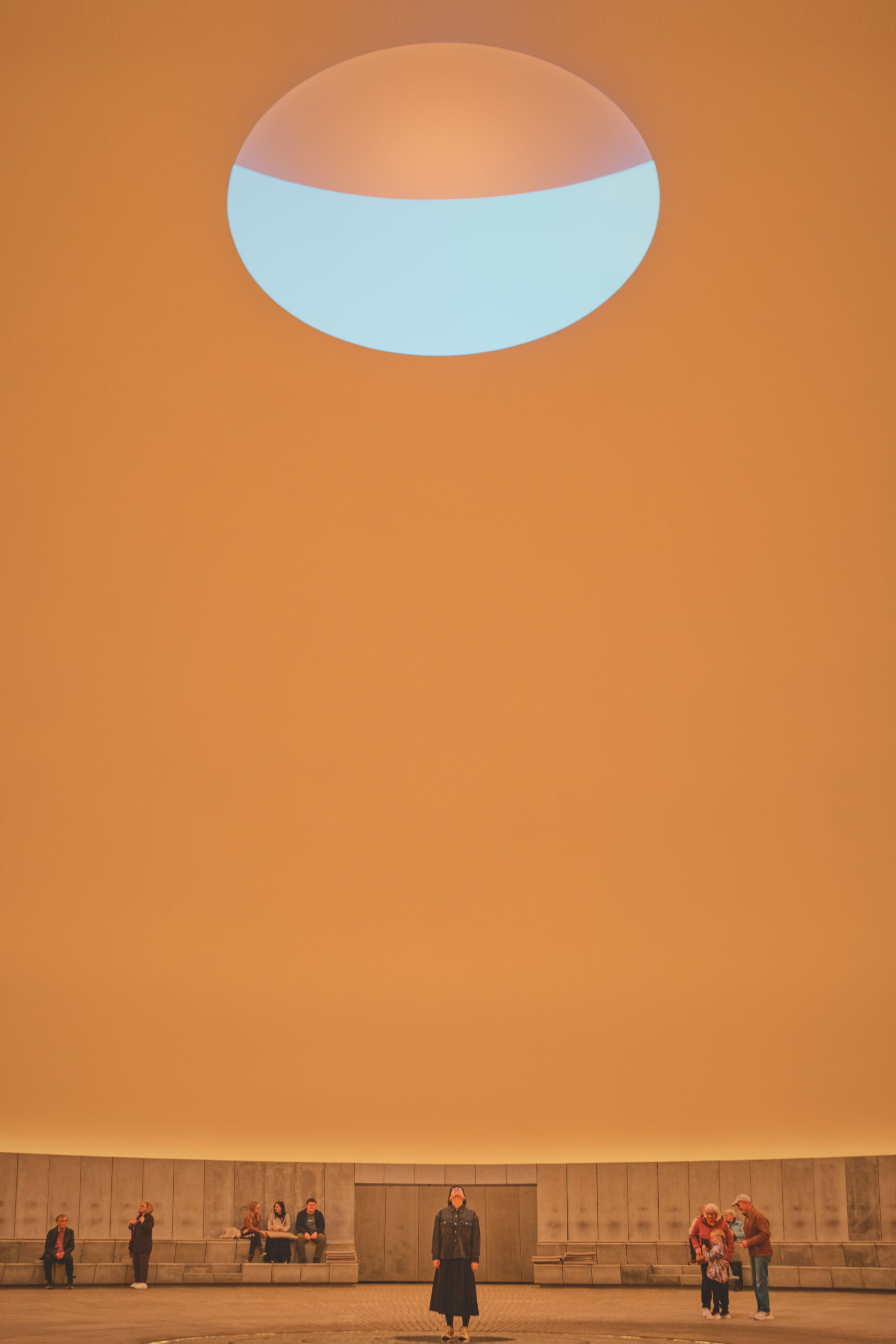
What particularly interests us about this work is that it begins with something anyone can do: look up. Here, though, that gesture is sustained and becomes much more conscious. You start by looking at the sky and end up paying attention to your own eyes, to how they adjust and to how easily something you took for granted can change.
That is why it is worth setting aside time for it during your visit. The first impression is one of scale; then the nuances begin to emerge. Staying allows you to discover how the sense of depth changes, how one colour alters the next and how that circle of sky can come to hold your full attention. It is a unique experience.
The Hidden Spaces, stories beneath the surface
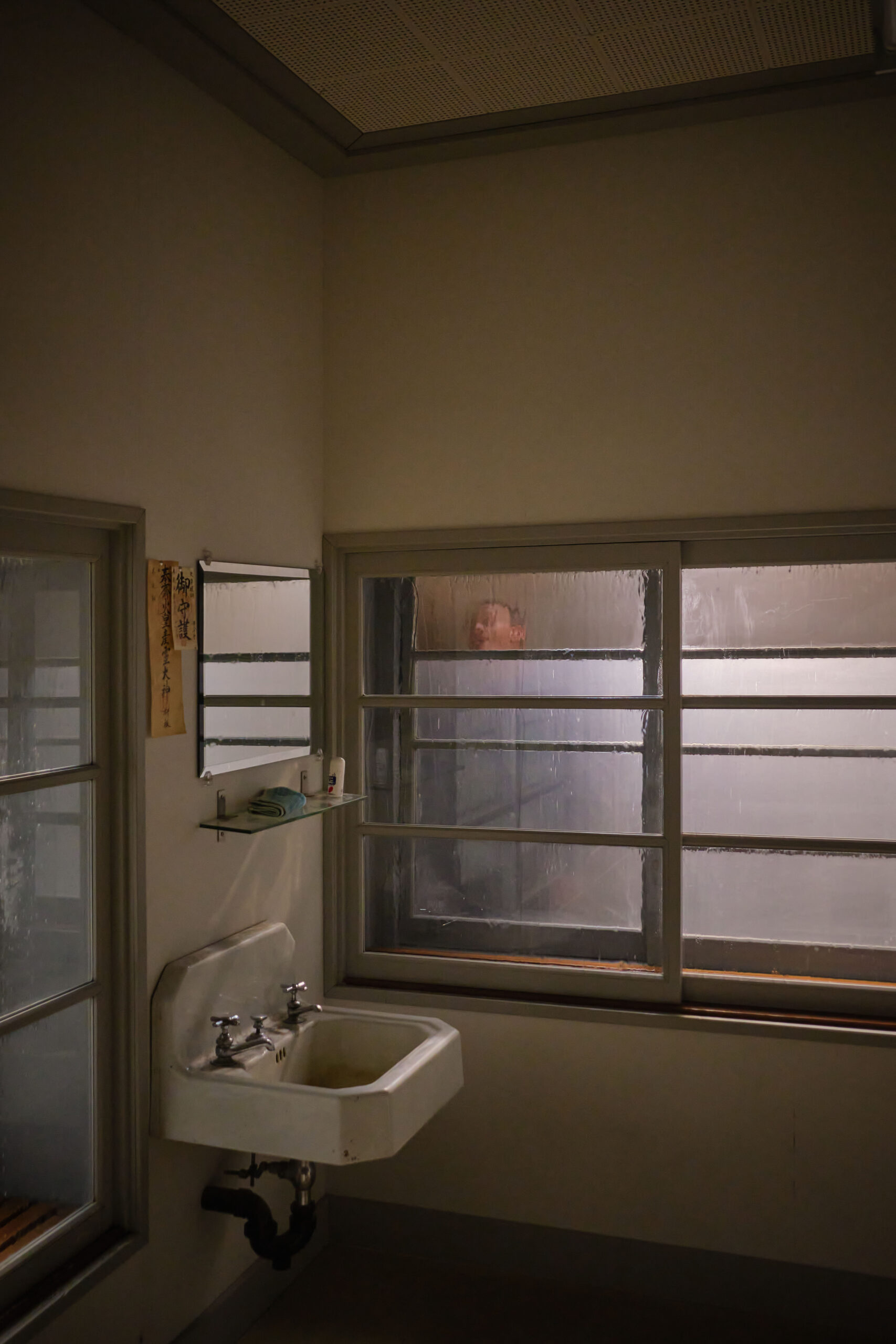
On Level 0, “The Hidden Spaces” brings together light, video and sound installations. It is one of the areas that best expresses ARoS’s ability to take us somewhere unexpected.
In “Storm Room” (2009), Janet Cardiff and George Bures Miller recreate an abandoned dental surgery in Japan, battered by a storm. Rain, lightning and thunder build an enveloping fiction. Meanwhile, Pipilotti Rist recreates a domestic sitting room in “Dawn hours in the neighbour’s house” (2005), condensing the passage of a day into eight minutes through video, sound and light.
These works are joined by “Colony Howl” (2020), by Jonah Freeman and Justin Lowe, a labyrinthine architectural installation connected to narratives of societies and countercultures. Each work establishes a different relationship with the visitor: some unsettle the everyday; others place us within a story we must piece together.
These installations deserve an unhurried visit. In these rooms, a first glance offers only a hint of what is unfolding: sounds, images and shifts in light gradually reveal each scene, while moving through the spaces uncovers new clues. It is worth staying, listening and allowing the stories to develop. Part of the appeal lies in that uncertainty, in not quite knowing what will happen next.
The Populace and the strangeness of looking
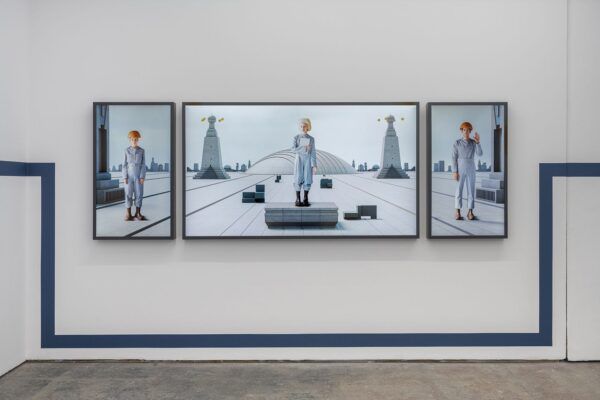
Among the exhibitions we encountered during our visit, “The Populace”, by Nina Beier and John Miller, deserves a special mention. Presented in the underground Salling Gallery, it brings together mannequins positioned opposite photographs of painted portraits recovered from forgotten archives.
The arrangement produces a strange scene: figures we associate with shop windows appear to contemplate images of people. On entering, visitors become part of this exchange of gazes, taking their place among artificial bodies and representations of other bodies.
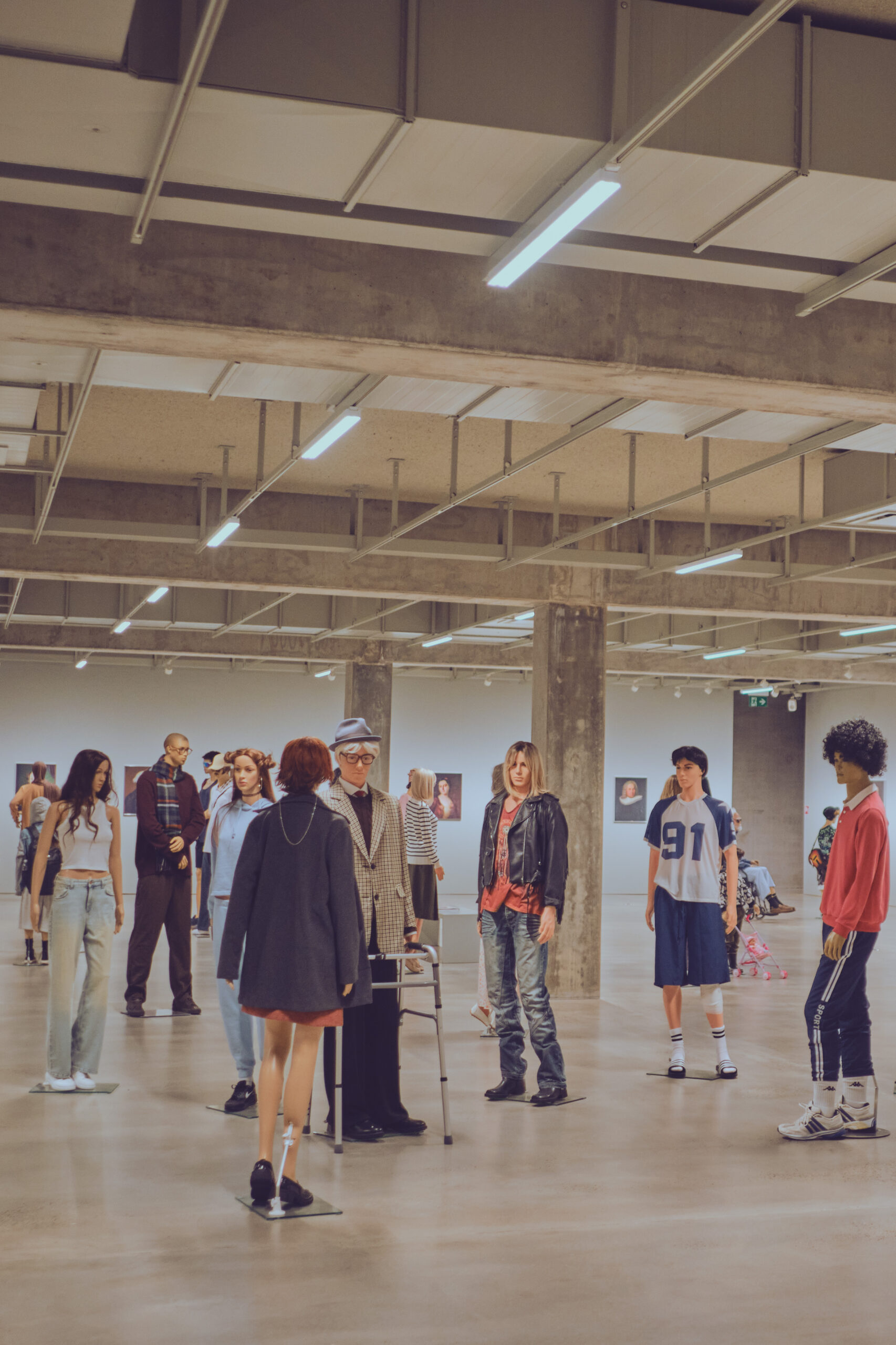
Using recognisable materials, the artists explore identity, the conventions of portraiture and consumer culture. They also encourage us to consider the hierarchies we establish when looking: whom we give our attention to, what we consider distinctive and what we accept as an interchangeable figure.
The exhibition’s appeal lies in the way these questions emerge from a tangible visual situation. We can approach out of curiosity about the scene and continue thinking about it afterwards. The exhibition runs until 29 March 2027.
Collection Favourites and the humanity of Ron Mueck
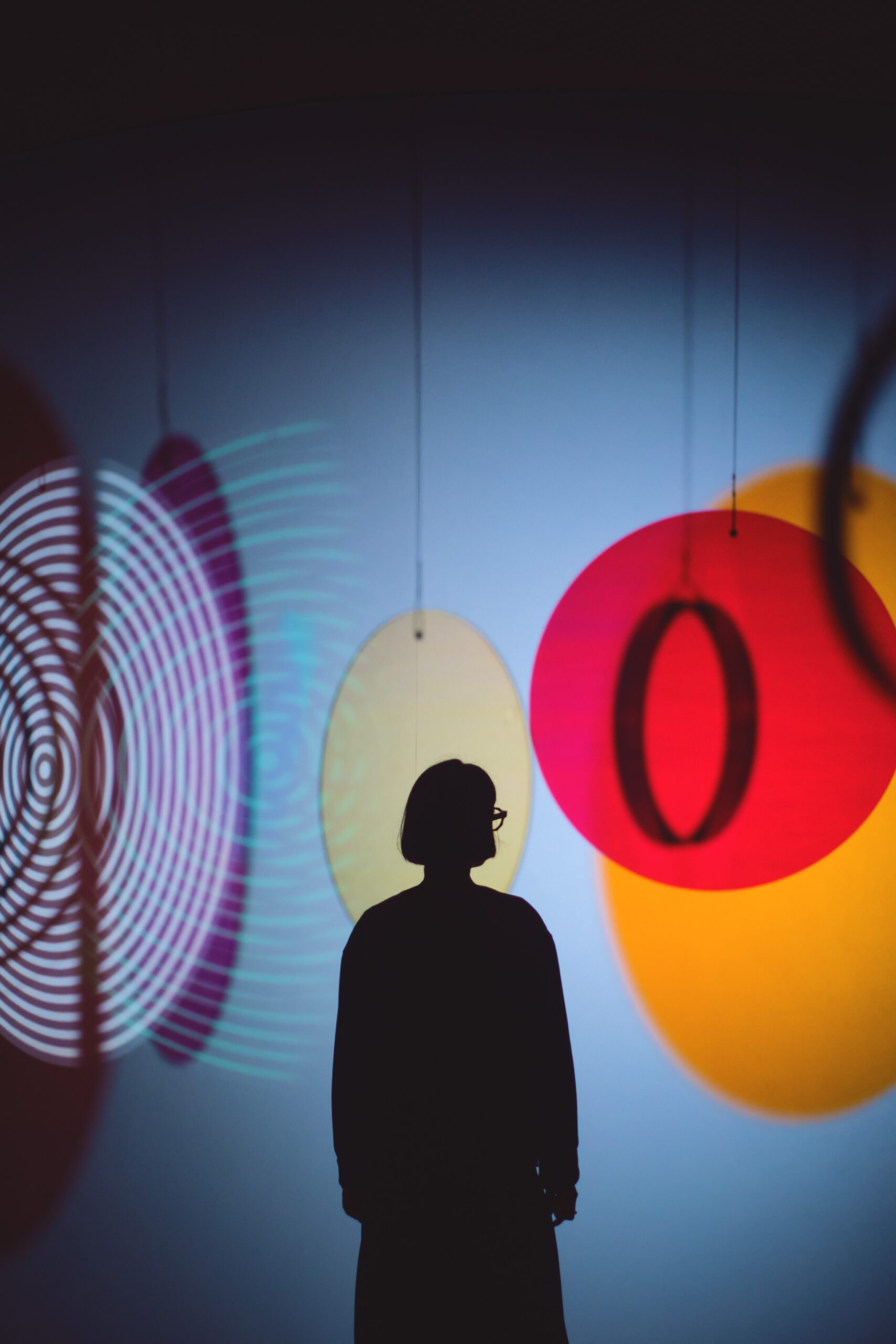
Another highlight is “Collection Favourites”, which revisits significant works from the museum’s recent history. Olafur Eliasson, Rose Eken, Shirin Neshat, Bill Viola and Tony Oursler are among the artists featured in a selection encompassing sculpture, video, ceramics and photography, alongside other media.
It also includes “Couple Under an Umbrella” (2013), by Ron Mueck, on temporary loan from Museum Voorlinden in the Netherlands. The work depicts an older couple beneath a parasol, rendered at twice life size with the hyperrealist precision characteristic of the artist.
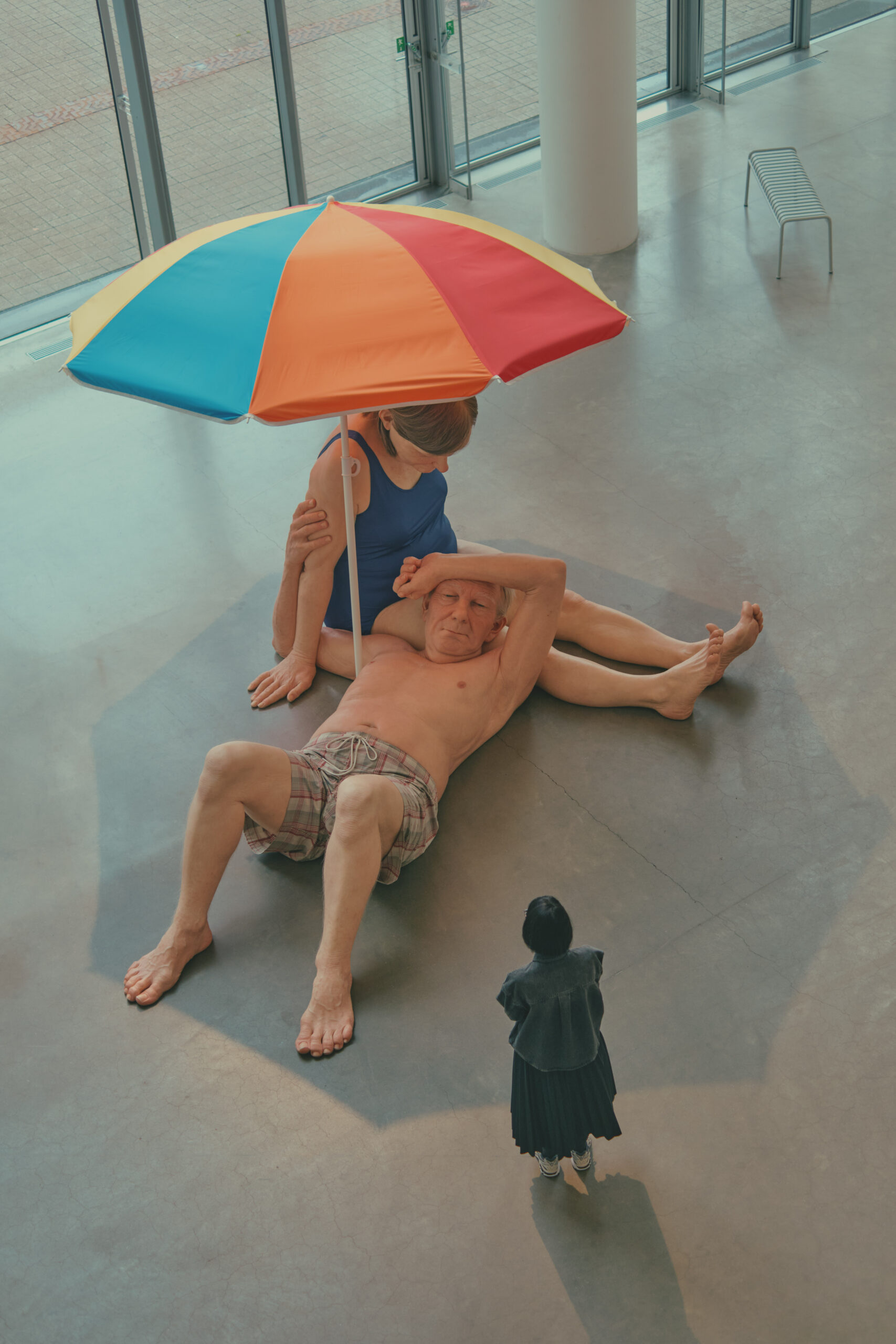
That combination of scale and detail makes an everyday scene demand our full attention. The skin, posture and proximity of the bodies invite reflection on age, intimacy and vulnerability. Mueck has an extraordinary ability to make figures seem unfamiliar while allowing us to recognise so much of ourselves in them.
During this exchange, “Boy” (1999), one of ARoS’s emblematic works, is on loan to the Dutch museum. Anyone planning a visit with that sculpture in mind should therefore check whether it is on display. “Collection Favourites” runs until 29 August 2027.
A shop worth making time for
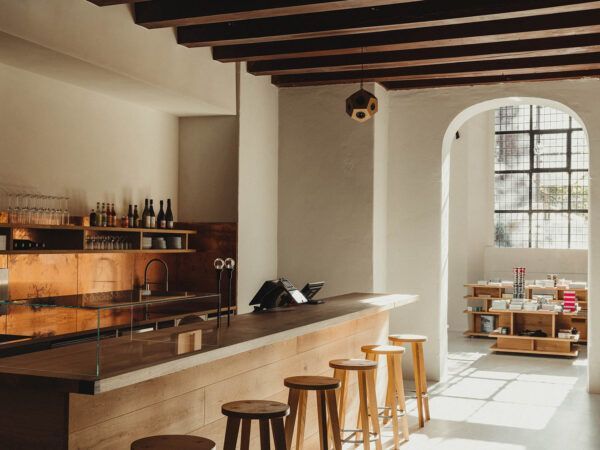
The ARoS shop deserves its own place in the visit. For those of us who enjoy art, design and publishing, its selection of books on art, architecture and design is a considerable temptation. These sit alongside posters, homeware, accessories and creative activities for children.
It is a good place to continue exploring interests sparked during the visit or to discover an unfamiliar publication. Admission to the shop is free, and its profits contribute to the museum’s activities.
We left ARoS feeling we had found somewhere we would happily return to. The quality of its works won us over, as did the variety of encounters it offers with them. There is room for wonder, for discomfort and for that particular pleasure of discovering something we cannot yet quite explain. If you are planning a trip to Aarhus, give it time. It deserves far more than a visit squeezed between other plans.
(*) Photos: Ely Sánchez (CC/studio · CC/magazine).