“Nouvelle Vague”: Richard Linklater and the revolution that changed cinema forever
Richard Linklater’s new film revives the spirit of the “Nouvelle Vague” and pays tribute to Godard, Seberg and Belmondo — a milestone of nostalgia, cinephilia and pure cinematic art.
At a time when filmmaking is increasingly constrained by industry imperatives and algorithmic logic, Richard Linklater — one of the most consistent and iconoclastic voices in American independent cinema — releases “Nouvelle Vague”, a film that is not only a tribute to the cinematic movement that forever changed the way we make films, but also a love letter to creative freedom, restless youth and chaos as a driving force of revolution.
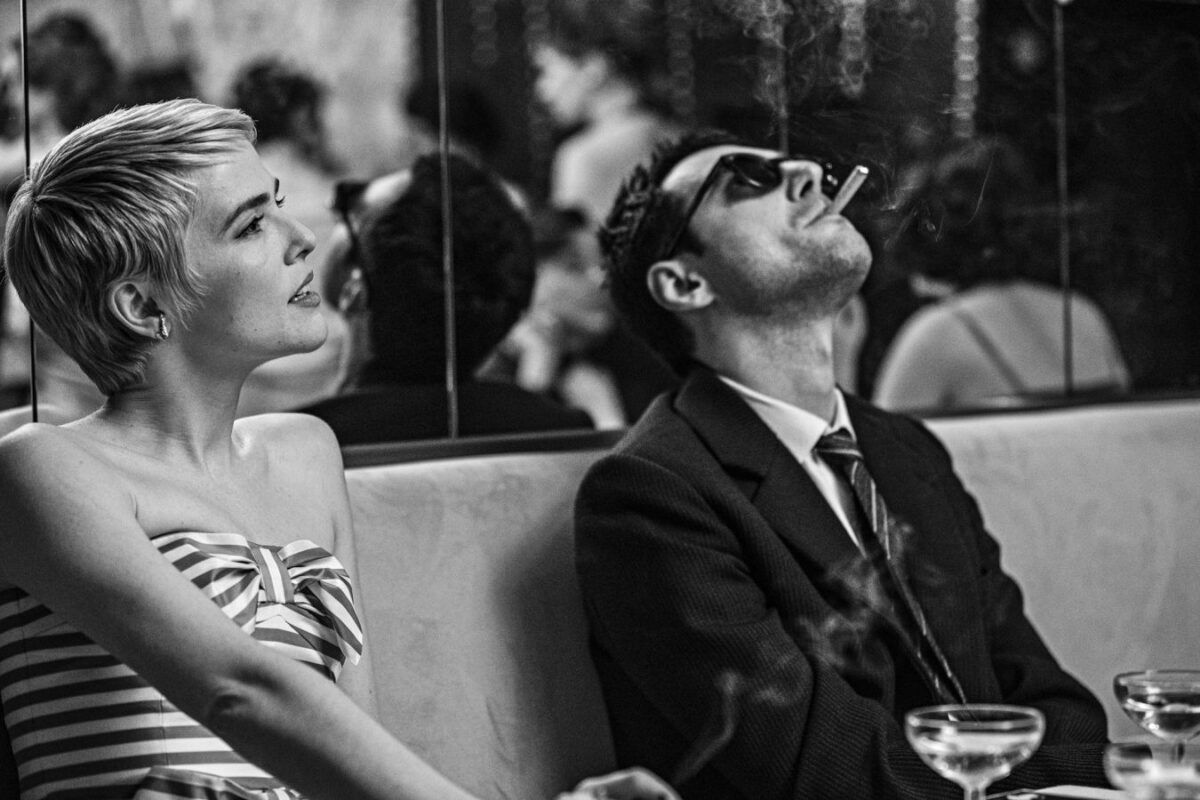
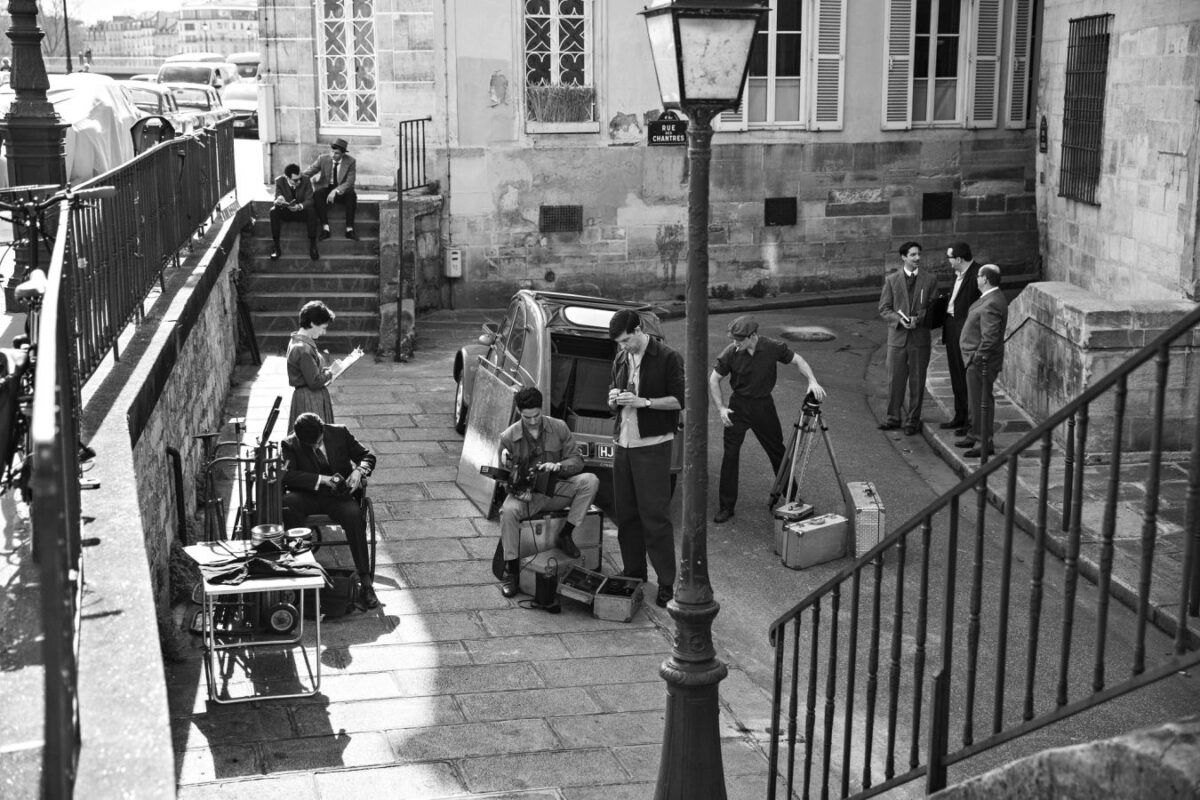
Far from falling into empty reverence or conventional biopic territory, Linklater reconstructs the frenzied 17-day shoot of “À bout de souffle” (Breathless), the debut feature by Jean-Luc Godard which, upon its release in 1960, launched the French Nouvelle Vague and symbolically opened the doors to cinematic modernity.
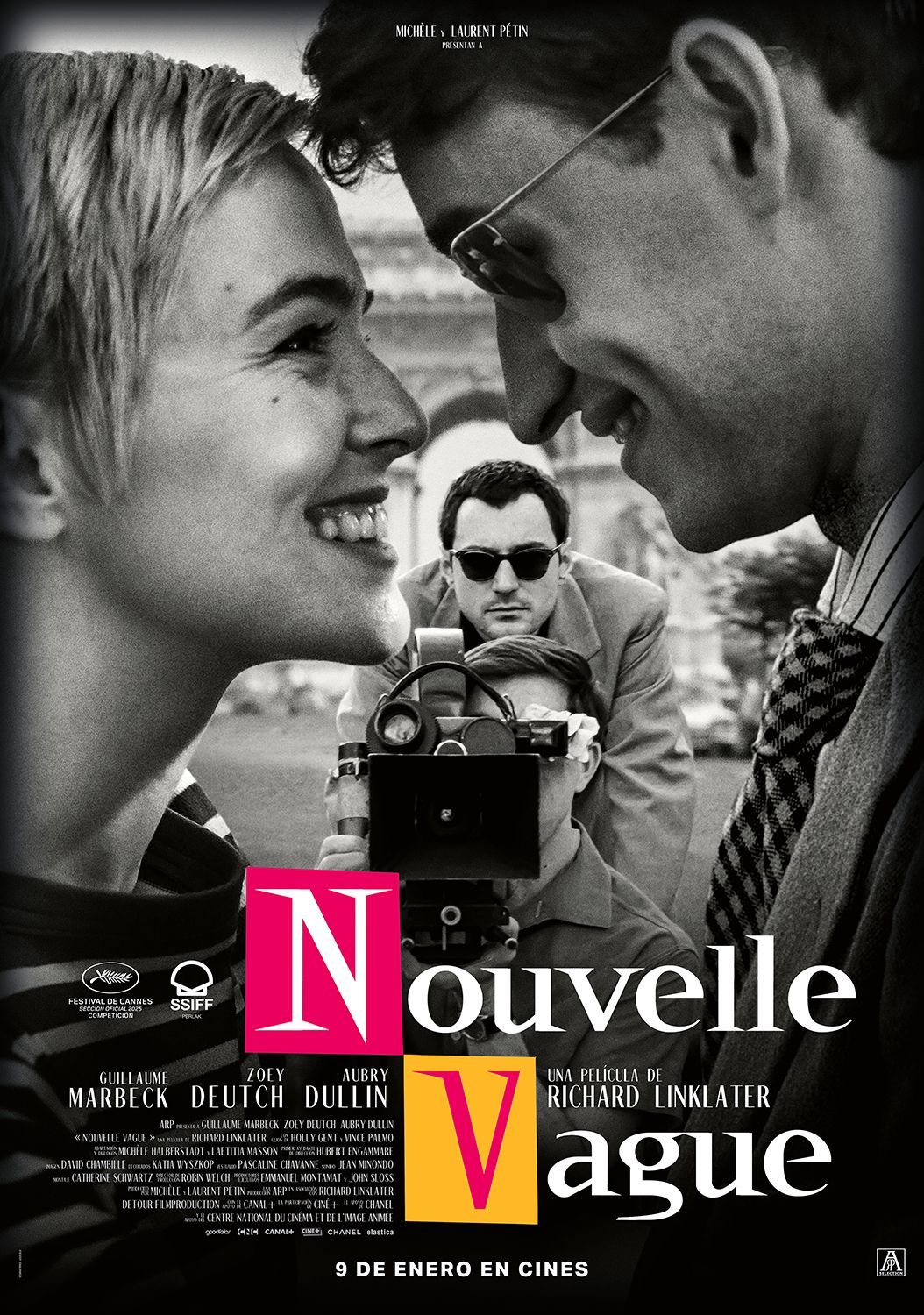
Shot in elegant black and white, in 4:3 format, with a grainy texture that evokes celluloid (without descending into visual fetishism), the result is a beautiful, stirring film that breathes authenticity, rhythm and love for cinema in every frame.
Nouvelle Vague: a film that is at once history, tribute and mirror
“Nouvelle Vague” presents itself as a fictionalised behind-the-scenes of “À bout de souffle”, but it is much more than that: it’s a sensorial and emotional immersion into a foundational moment of contemporary art.
Linklater transforms his film into a kind of fictionalised production diary, where the viewer becomes a privileged witness to the creative chaos surrounding a project born without certainty, without a clear script, and without official permits — but with an unshakeable desire to do something different.
What could have been a self-conscious stylistic exercise becomes instead a sincere and playful tribute, in which film history is simultaneously subject, context, and living material. Cinephilic references abound, but they’re never gratuitous or elitist; Linklater is not trying to impress, but to share his love for a way of understanding cinema as free, vital and urgent expression.
A brilliantly cast ensemble
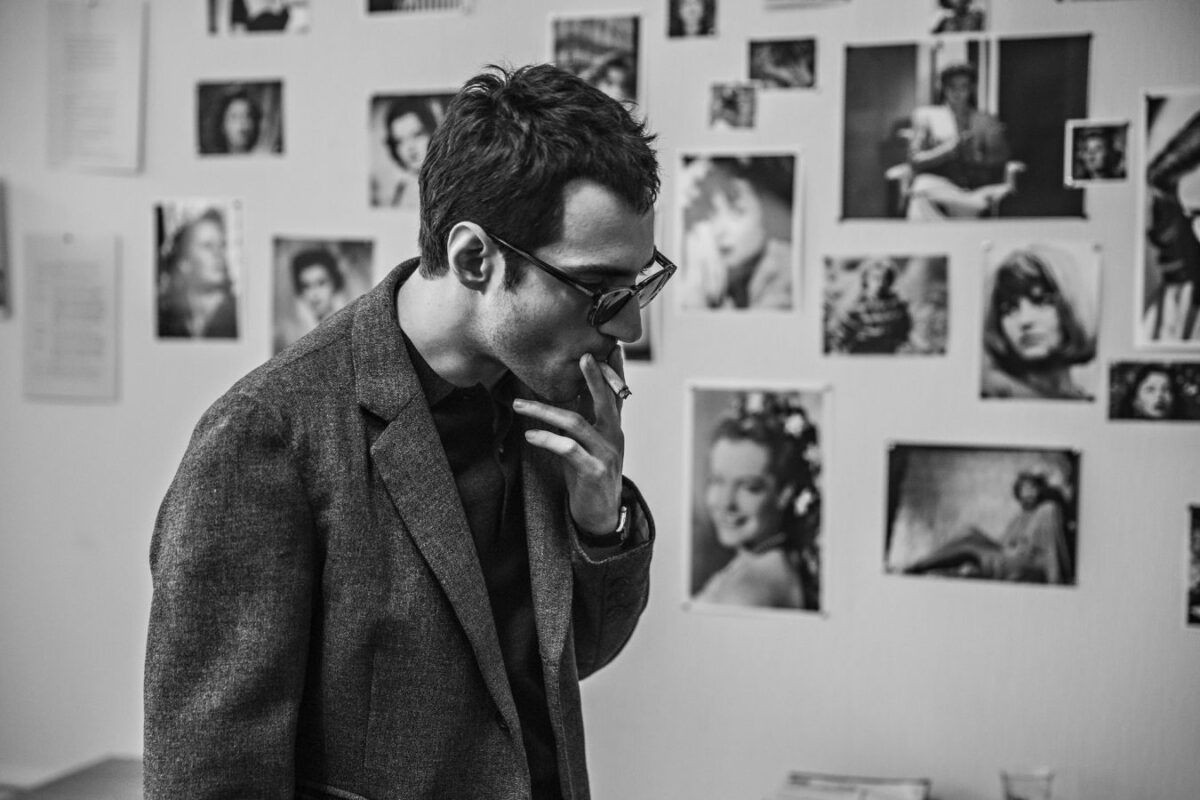
One of “Nouvelle Vague”’s great triumphs is its casting. Guillaume Marbeck plays a young Jean-Luc Godard, moving between the arrogance of genius and the vulnerability of an insecure creator. Far from idealising him, Linklater crafts a contradictory character — at times brilliant, at others childish — who embodies the tension between the urge to break boundaries and the need for control. Marbeck finds a subtle balance between impersonation and original creation, portraying Godard as recognisable, fascinating and deeply human.
“One of Nouvelle Vague’s great triumphs is its casting.”
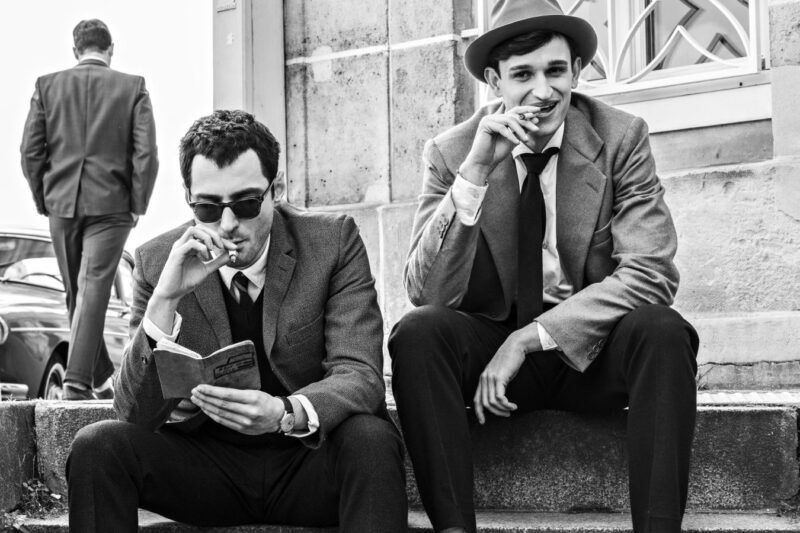
Alongside him, Zoey Deutch shines as Jean Seberg, caught between the confusion of filming without a safety net and the magnetism of such a raw, authentic project. Her chemistry with Godard is charged with tension, desire, frustration and playfulness. Aubry Dullin, meanwhile, brings a vibrant, rebellious charm to his portrayal of Jean-Paul Belmondo, completing a trio that perfectly captures the spirit of a generation who made cinema their way of life.
Between legend and melancholy: a contemporary look at a revolutionary gesture
Linklater doesn’t merely reconstruct the past — he places it in dialogue with the present. In “Nouvelle Vague”, there is a clear intention to reflect on what it means to make films today, in a world where creativity seems increasingly domesticated.
The film is not just a nostalgic celebration, but an invitation to reclaim that free, imperfect and courageous spirit with which Godard and his peers set out to make cinema — without permits and without fear.
“What in Godard was rage and risk, in Nouvelle Vague becomes melancholy, the echo of an originality that now feels at risk of extinction.”
The tension between spontaneity and system, between creative impulse and industrial structure, runs throughout the entire film. Linklater plays with it, but also allows us to glimpse the fragility of that revolutionary act.
What in Godard was rage and risk, in “Nouvelle Vague” becomes melancholy, the echo of an originality that now feels at risk of extinction.
Cinema as a vital need, not a consumer product
One of the great achievements of “Nouvelle Vague” is that, despite its evident love for the original material, it never becomes a frozen tribute or museum piece.
Linklater films from the present, with the clarity of someone who knows that this kind of filmmaking may no longer be possible — but still needs to be remembered.
The film is full of memorable lines, many drawn from Godard himself, that serve as aphorisms or mantras for a generation in need of relearning how to see.
In a key scene, Godard quotes Gauguin: “All true art is either plagiarism or revolution”. And perhaps that is the heart of Linklater’s proposition: in a world oversaturated with references, plagiarism is no longer enough — we must once again dare to break the mould.
A deeply Linklaterian film — from Paris, with love
True to his style, Linklater confines the action to a limited time frame — the 17 days of Godard’s shoot — deliberately choosing not to narrate what came afterwards. There is no suspense, no intrigue — only a succession of moments, anecdotes and emblematic scenes that together build the creative process.
As in “Boyhood” or his Before trilogy (“Before Sunrise”, “Before Sunset”, “Before Midnight”), the director focuses on the everyday, the detail, the fleeting instant.
The Paris he recreates is neither postcard-perfect nor artificially romanticised. It is a vivid space, rich with historical and cultural references, where Truffaut, Chabrol, Rivette, Melville, Rossellini and even Bresson co-exist. Linklater doesn’t mythologise them, but films them with respect and camaraderie. They are young, hungry for cinema, determined to tie it to life. And in that — Linklater sees himself.
Nouvelle Vague: a celebration of cinephilia, a lesson in freedom
“Nouvelle Vague” is a film that speaks directly to the heart of the cinephile — but also to the spirit of any creator who believes that art is both a rebellious act and a vital necessity. It is a film that entertains, moves, makes you smile and think. A carefully crafted artefact — but one with soul. A history lesson without preaching. A tribute without solemnity. A gift to those who still believe cinema can be an act of resistance.
And while its tone may appear light, even playful, beneath the surface lies a quiet complexity, a critical gaze, and above all, a contagious passion. Because “Nouvelle Vague” doesn’t seek to reinvent cinema — but it does remind us why we fell in love with it in the first place.
An essential work for the 21st Century: when nostalgia is also the future
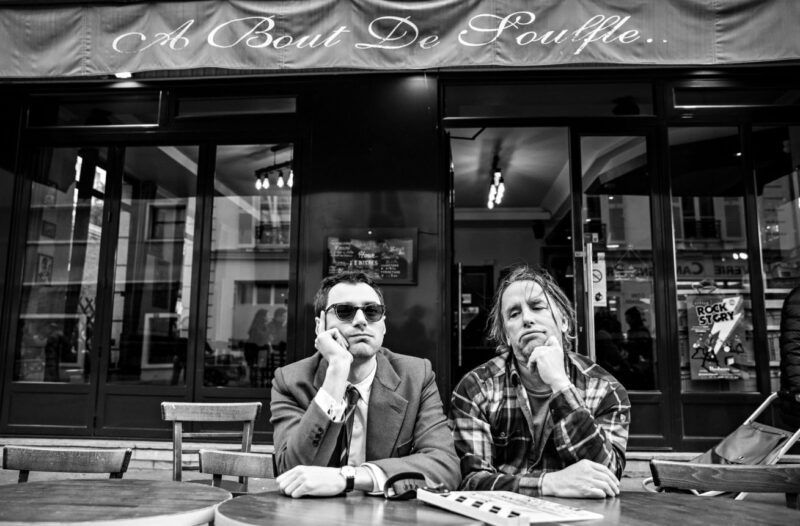
In a present where cultural reference points seem to be fading and creativity is measured in likes, “Nouvelle Vague” reminds us that there was once a time when making a film was an act of faith, of boldness, and of vital necessity. That there was once a bar called “À bout de souffle” on Campagne Première Street in Paris, where an iconic scene was filmed — and which no longer exists. That cultural revolutions don’t always begin with manifestos, but with a camera, an idea, and the decision to jump without a safety net.
“This film reminds us that there was once a time when making a film was an act of faith, of boldness, and of vital necessity.”
Linklater has achieved what few can: to look at the past without falling into empty nostalgia, and to make a film about creative freedom that breathes that very freedom. In a time of repetition and aesthetic fatigue, his “Nouvelle Vague” is a breath of fresh air. A wake-up call. An unintentional manifesto.
It’s not just cinema about cinema. It’s cinema about life. About desire. About art. About who we were — and who, if we dare, we can still become.