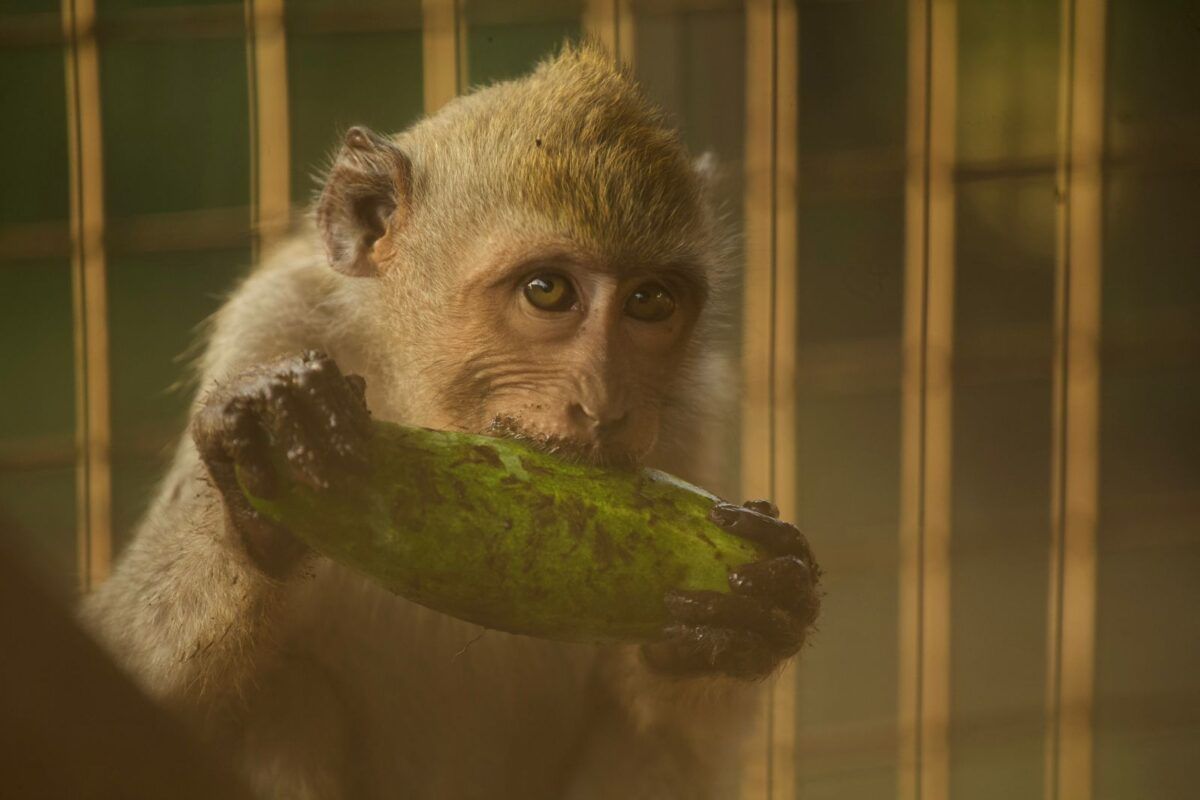
We don’t deserve animals
By Cecilia Camacho, founder and editor of CC/magazine
There are subjects that touch us with an inexplicable intensity — things that stir something so intimate and visceral that even forming a rational response feels almost impossible. For me, one of those subjects is animals. Not as a general category or as an abstract idea of “nature”, but as individuals with emotions, sensitivity, and a disarming innocence that makes them silent victims of an increasingly dehumanised humanity.
A few days ago, I watched “Ellis Park”, a documentary that — despite not being perfect or entirely cohesive — shook me to the core. Directed by Justin Kurzel, “Ellis Park” follows, on one side, Warren Ellis, musician and lifelong creative companion of the incomparable Nick Cave, whose sensitivity has always bordered on the sublime, drawing us into his private universe. On the other side, it follows the tireless work of Femke den Haas and her fight against the illegal wildlife trade at Ellis Park*, a rescue centre for endangered animals in Sumatra, supported by the charismatic composer. And although the documentary’s rhythm can feel uneven and its narrative sometimes fragmented, its emotional impact is undeniable.
What “Ellis Park” shows is not new — but it is urgent. Beyond glimpses into Ellis’s intimate life, visiting his ill parents and composing with his inseparable violin, the documentary exposes the cruelty behind the trafficking of wild animals, the systematic way their freedom, their bodies, their lives are taken from them. Tragically, all of this is real. And it happens with the complicity of a rotten system that puts a price on suffering and turns torture into commerce.
The scene in which Femke explains what is done to mothers to take their babies away is simply unbearable. You must have a very hardened heart — or a truly rotten one — not to be shaken by it. Because an animal’s suffering is neither lesser nor less valid than a human’s. Because a baby torn from its mother suffers just the same. Because a living being that cries, trembles, bleeds or dies does not deserve to be treated as exotic merchandise or entertainment.
And yet, this happens. Constantly. With total impunity. Because there are those prepared to pay obscene amounts of money to possess wild animals as though they were trophies or luxury toys. And because there are those willing to do whatever it takes to profit from this black market: from killing to mutilating, drugging, or condemning creatures to lifelong imprisonment in miserable cages.
We don’t deserve animals. We don’t deserve their loyalty, their nobility, their clear uncorrupted gaze. Our species is capable of greatness — but also of the most vile acts. And we see it every day: in the destruction of the planet, in the rise of hate-driven discourse, in our growing indifference to the suffering of others. Cruelty towards animals isn’t an isolated issue: it reflects a deeper moral collapse running through our society.
And it’s hard not to draw parallels. Because the abuse of animals is not so different from the abuse of humans. Those capable of torturing an innocent being for entertainment, money, or power are not far removed from those who promote wars, discriminate, exploit, or exclude. It all stems from the same disdain for life.
Watching “Ellis Park” is a slap in the face. Another one. A necessary jolt. Not because of its cinematic quality, but because of what it denounces. What it demands. And because it reminds us that people like Femke choose not to look away. People who sacrifice their time, their health, and often their peace of mind to protect what others destroy without blinking.
Meanwhile, what grows is impunity. Misinformation. The trivialisation of horror. A collective desensitisation. We have become accustomed to seeing animals caged, drugged, dressed as humans, displayed as objects on social media. We have turned someone else’s pain into digestible content. And that, too, defines us.
I don’t want to leave this reflection in a dark place. Because while I am angry, saddened and shaken, I also believe in the possibility of change. But to change, we must stop, look, feel and ask uncomfortable questions. Is this model of living — one that celebrates selfishness, violence and disconnection — truly worth it? Do we really want to inhabit a world where suffering is normalised and empathy ridiculed?
Recently, I watched and wrote about “Bugonia”, the latest film by Yorgos Lanthimos, and I couldn’t help connecting its vision with all of this. Lanthimos imagines a distorted future in which humanity, through its own cruelty, selfishness and moral blindness, is classified as a species so self-destructive that it deserves extinction. And yes — it may sound like an exaggeration, but it isn’t. Because when cruelty stops shocking us, when it becomes naturalised, justified, or minimised, we open the door to something very dangerous: the end of everything.
I’d like to believe we are still in time. That we can teach tenderness, compassion and deep respect for others — animals included. That we can choose brands, policies, ways of travelling and consuming that do not involve animal suffering. And above all, that we can recognise that the value of a species is not measured by its usefulness, its beauty, or its obedience, but by its right simply to exist.
(*) Ellis Park is home to rescued wild animals who are cared for with the aim of returning them to nature. Others — mutilated, ill or unable to survive in the wild — remain at the sanctuary, where they receive the best possible care. The organisation behind this work is JAAN, an NGO dedicated to wildlife protection and animal rescue in Indonesia.
(**) Cover image by JAAN Indonesia.