Limburg: a fascinating road trip through mines, art and architecture (Part 1)
Just over an hour from Brussels, Limburg remains one of those places in Belgium that can be difficult to place on the map before you have actually been there. Located in the north-east of Flanders, close to the Dutch border, this province has little in common with the country’s more familiar image. Here, former mining landscapes have been reclaimed by vegetation, small cities reveal surprisingly rich cultural scenes, contemporary architecture sits alongside art in the middle of nature, and an extensive cycling network makes it possible to explore much of the region on two wheels.
For a week, we travelled through Limburg on a road trip to discover some of the projects currently transforming the region.
This first part takes us through Maasmechelen, Genk and Hasselt: three very different places that share a history shaped by mining and a remarkable ability to reinterpret that past from a contemporary perspective.
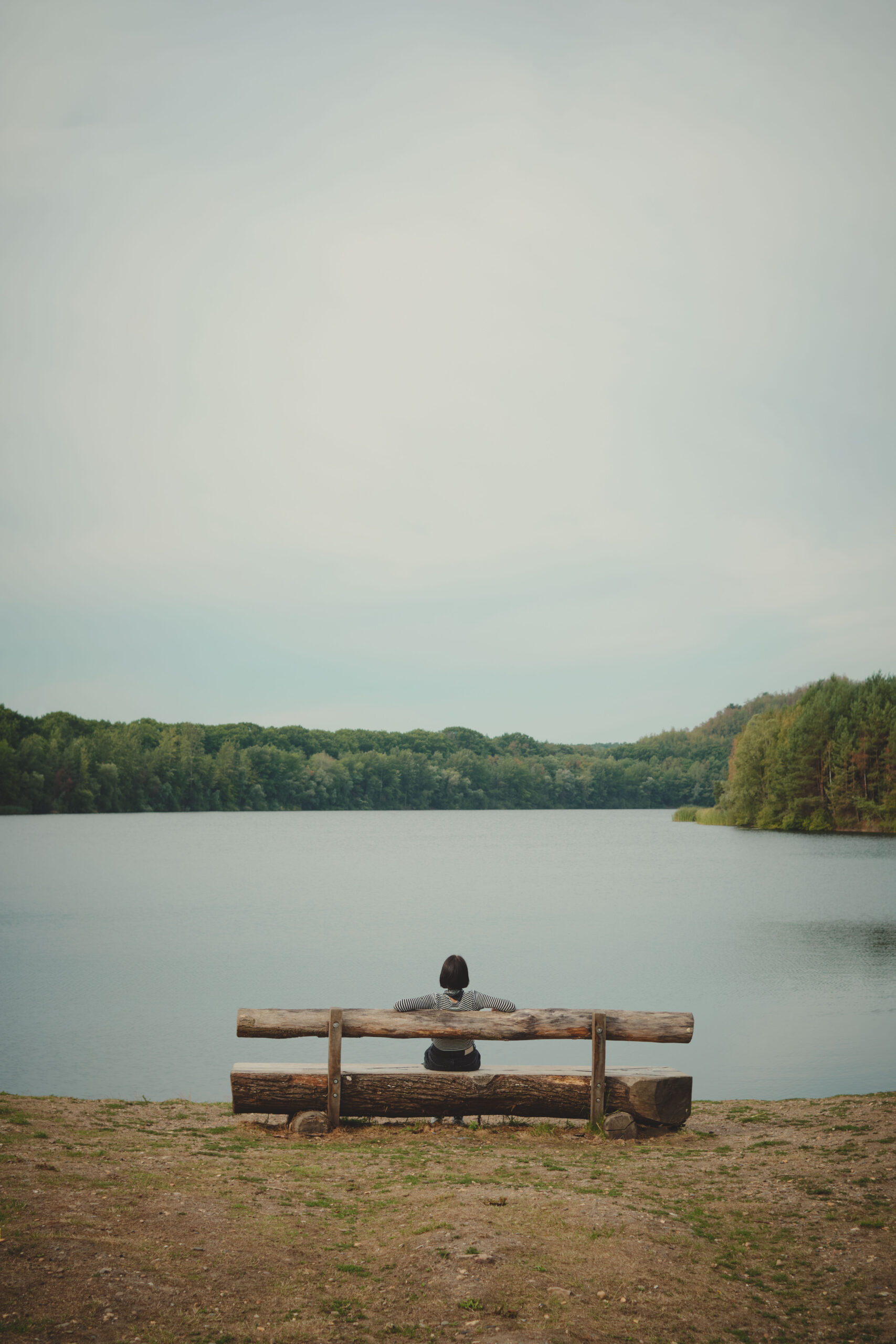
The first thing that surprises you when travelling through Limburg is precisely its landscape. Many of the hills that today appear entirely natural are anything but. They are terrils — enormous spoil heaps created from waste generated by the former coal mines, which over the years have gradually been reclaimed by vegetation.
Where there were once mine shafts, industrial facilities and workers making their way in and out of the mines, today there are forests, lakes, walking and cycling routes, cultural centres, architecture and artistic projects.
And that is where our journey begins.
Maasmechelen: cycling through former mining landscapes
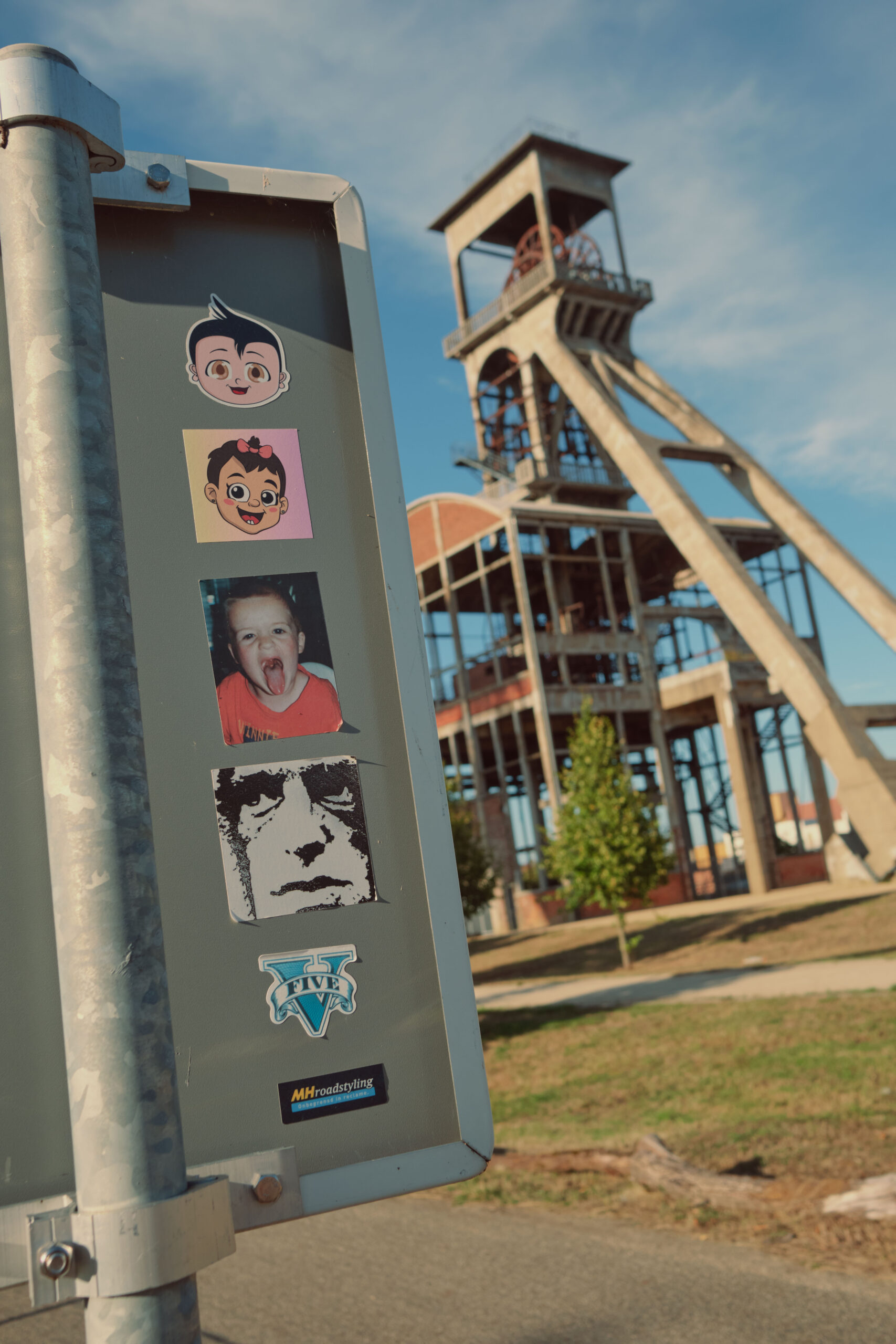
Our first stop was Maasmechelen, next to Hoge Kempen National Park. We stayed at Terhills Hotel, and you don’t need to venture very far to begin understanding the history of this part of Limburg.
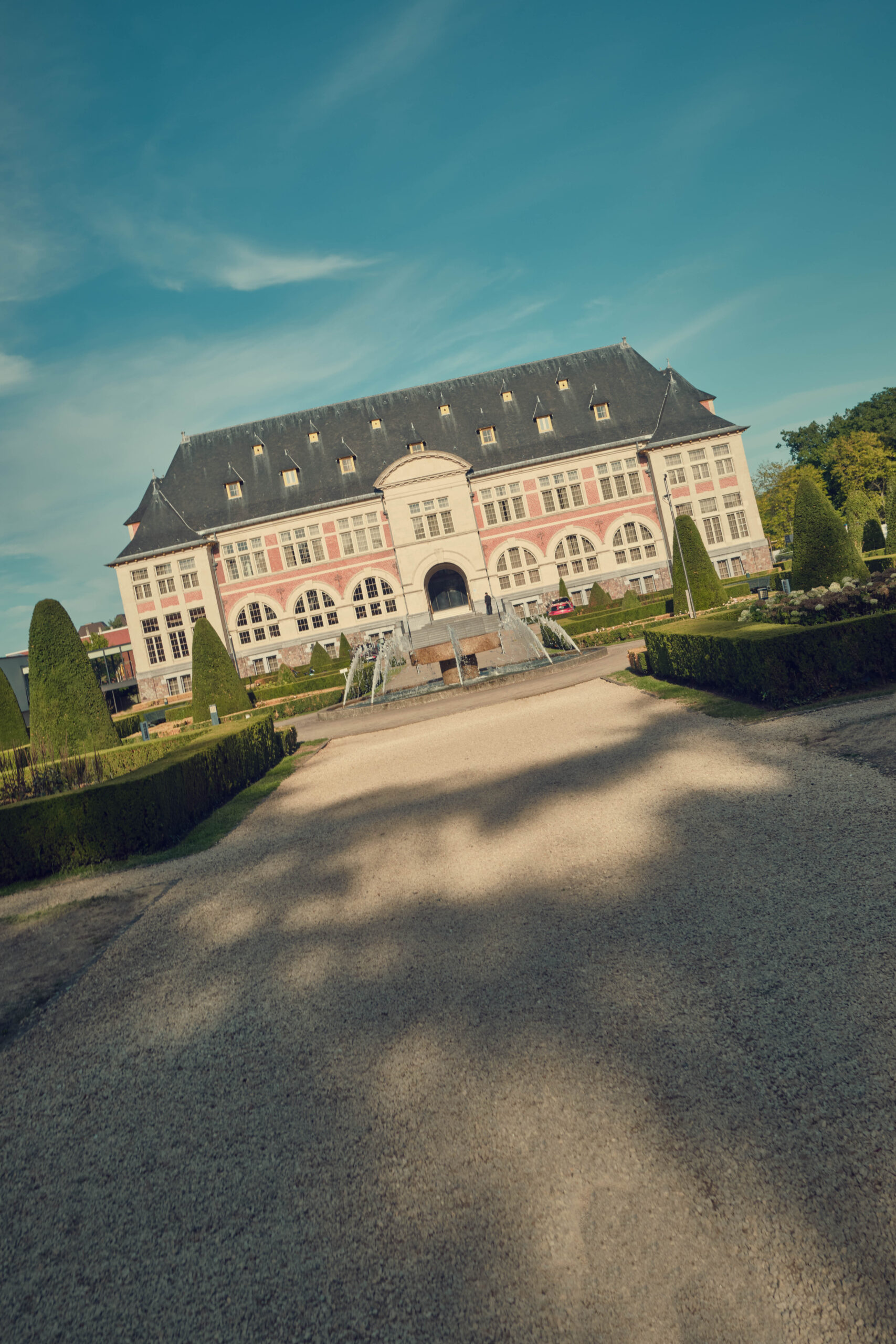
The hotel occupies the former main building of the Eisden mine. Its architecture, symmetrical gardens and the enormous structures of the former mine shafts that still stand outside immediately evoke the site’s industrial past.
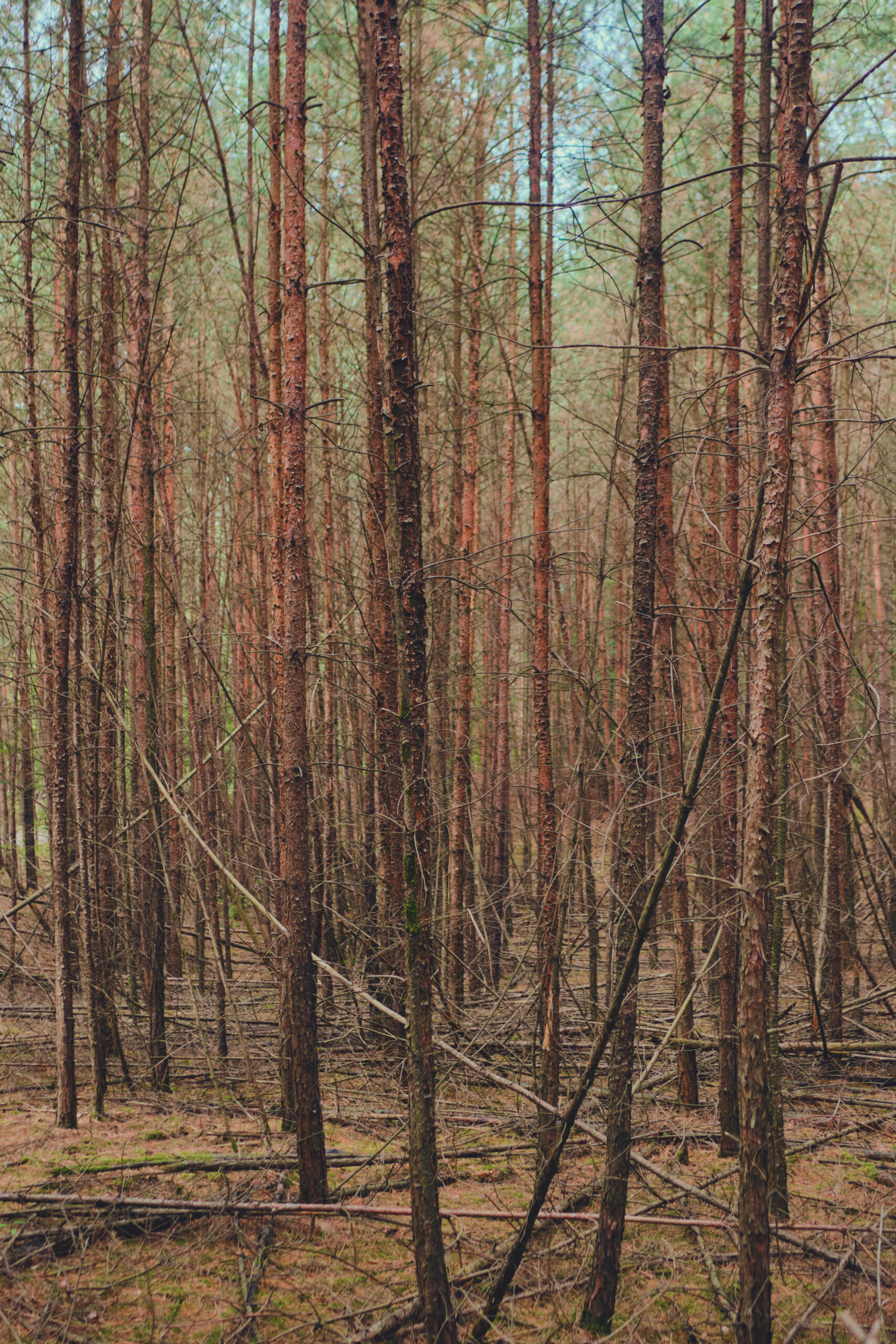
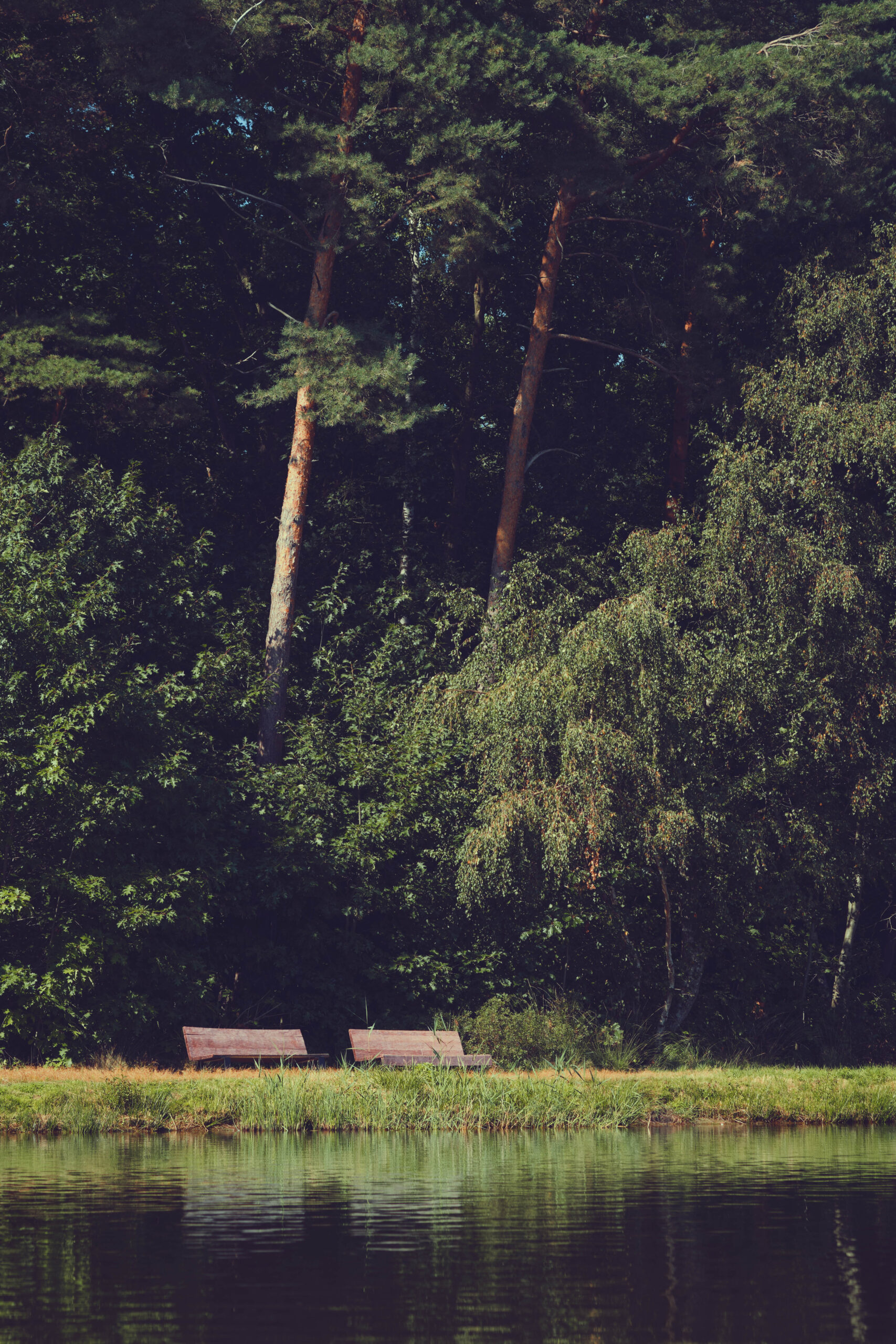
Terhills now extends across some 356 hectares between Maasmechelen and Dilsen-Stokkem. Coal mining, followed later by gravel extraction, profoundly altered this geography. After the mines closed, nature began to reclaim the land and the landscape gradually took on an entirely different appearance. Former mining spoil heaps became green hills, while gravel excavations left behind vast expanses of water. The result is one of Limburg’s most distinctive landscapes.
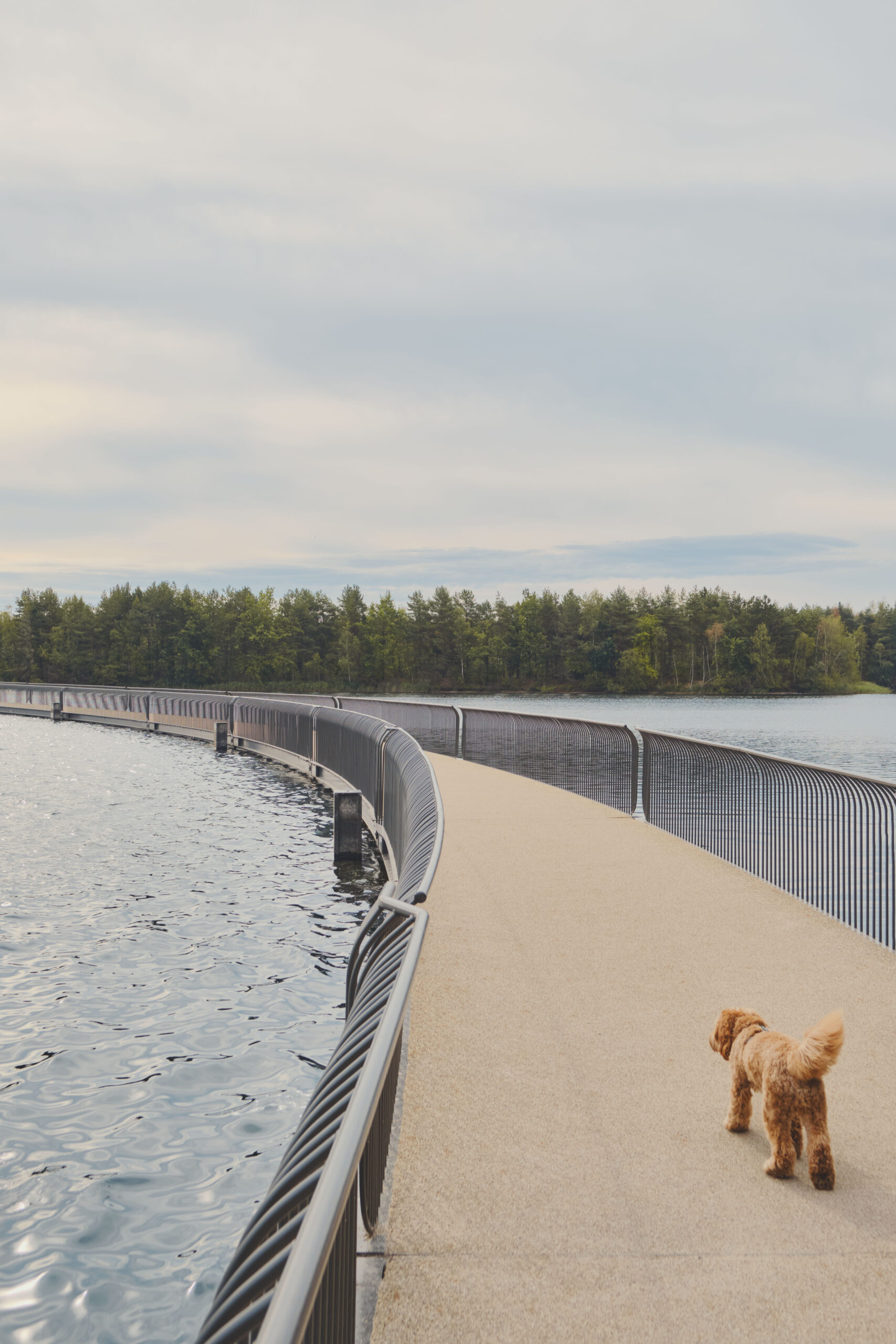
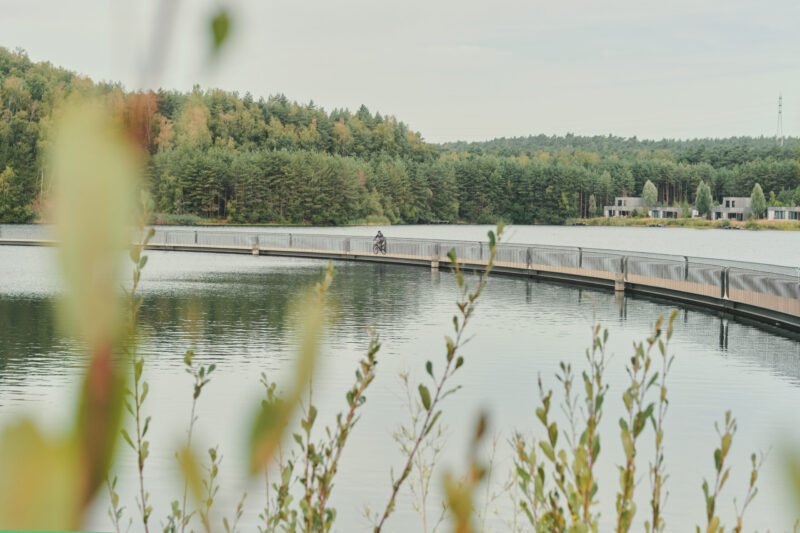
The following morning, we explored it by bicycle. The Cycling Between Terrils experience allows you to ride between these former man-made mountains and cross the water along a floating cycle bridge offering 360-degree views.
It was on our bikes that we began to understand one of Limburg’s most interesting characteristics: here, mobility is part of the experience of the landscape itself.
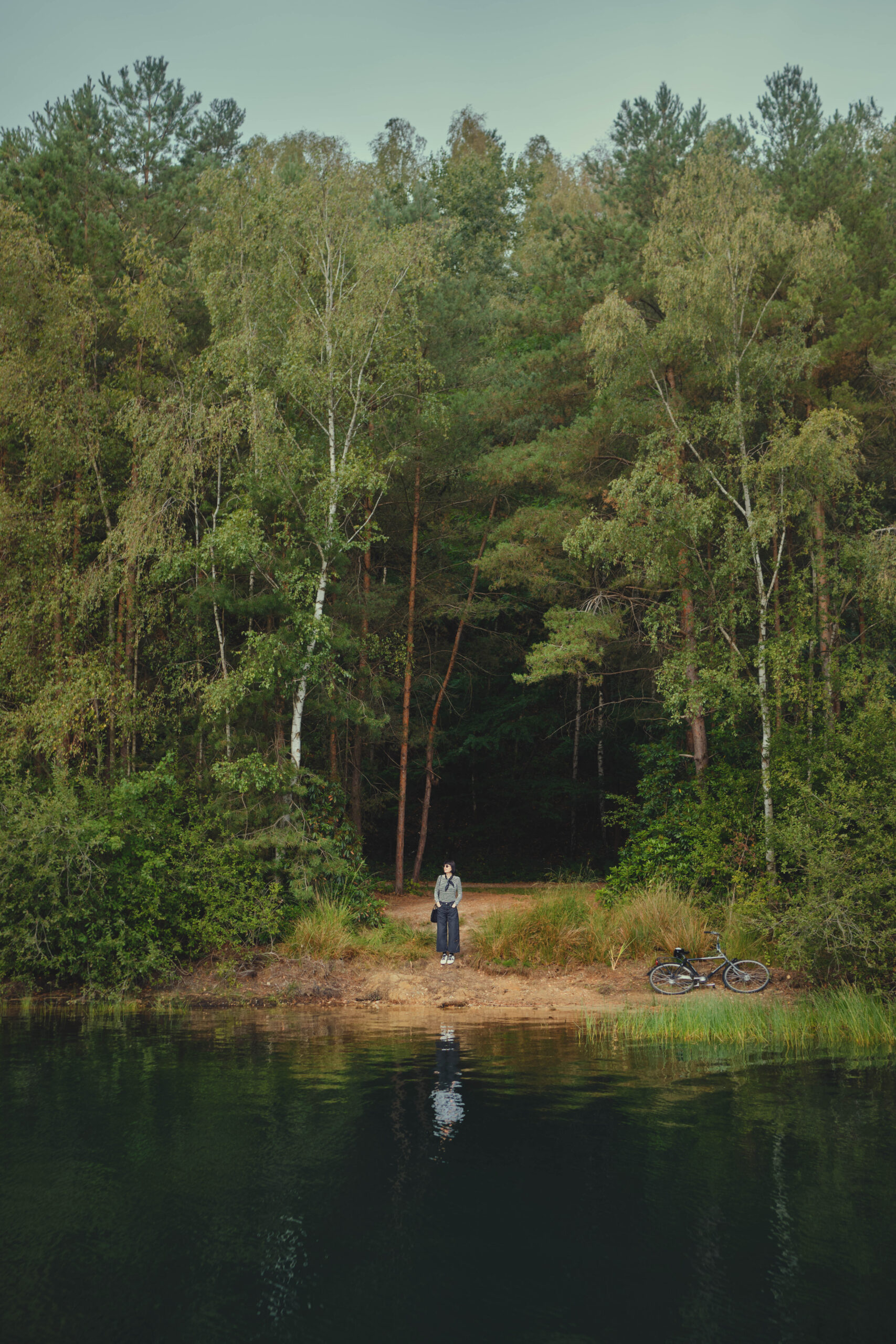
In fact, the province has spent years developing a cycling infrastructure that does more than simply connect places; it seeks to create entirely new ways of observing them. Throughout the trip, we would encounter several examples — some of them genuinely surprising.
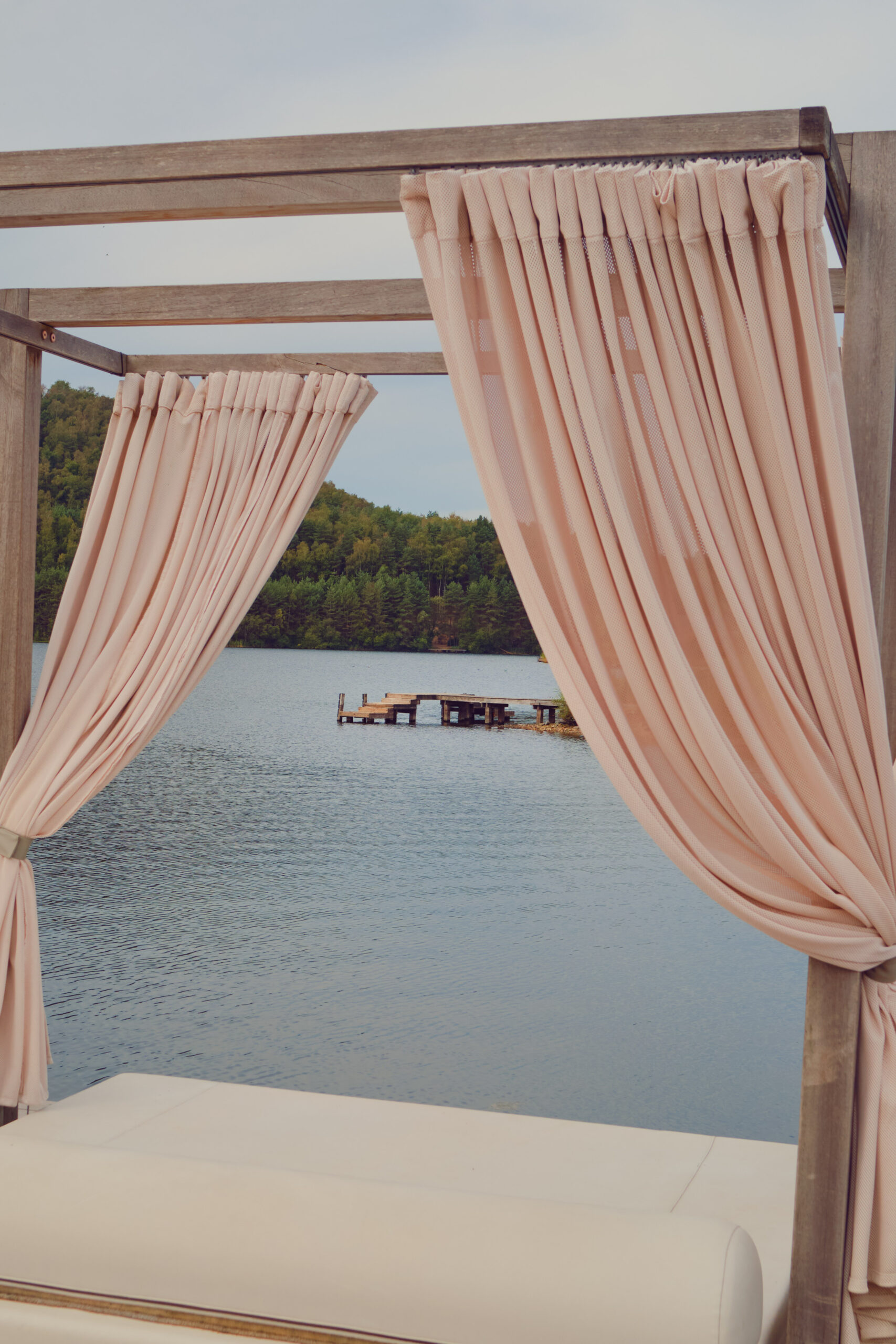
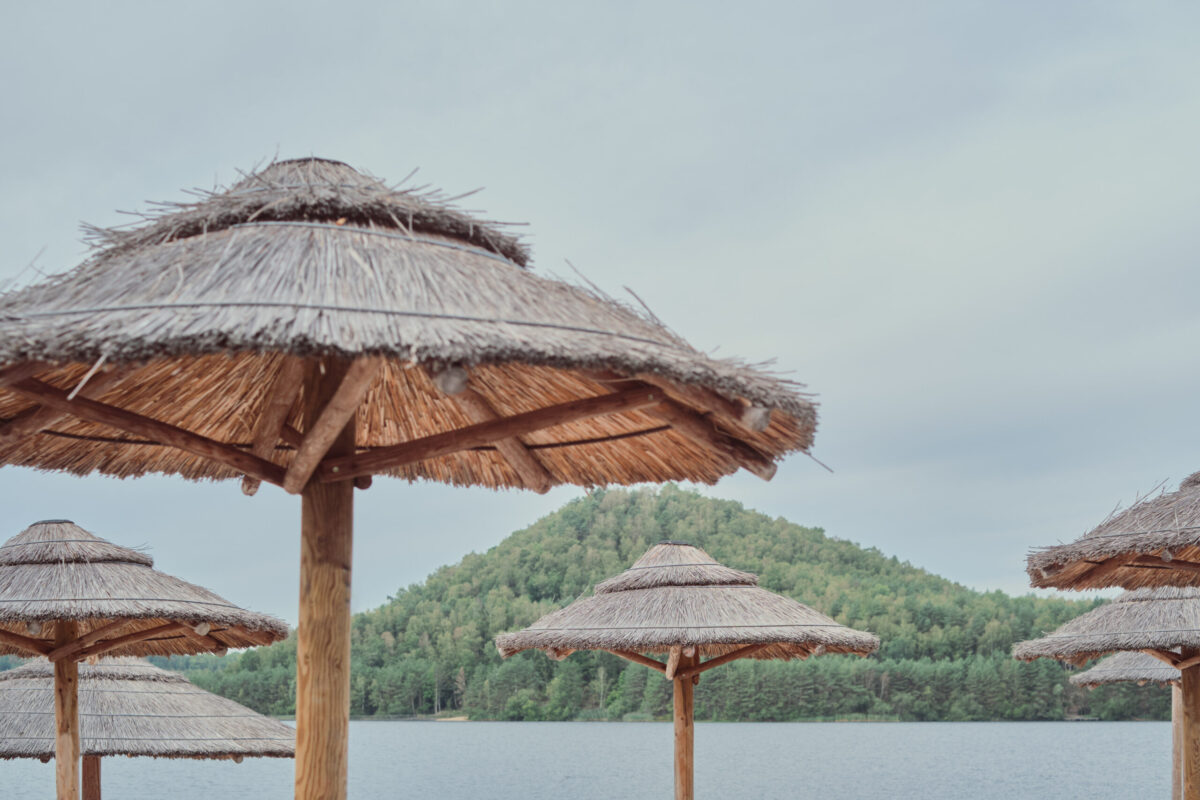
After cycling between the terrils, we stopped at Terland, beside the lake. Part restaurant, part beach and part outdoor space, it is one of those places that reveals just how dramatically the former industrial landscape has changed its purpose. Where resources were once extracted from the land, people now come to walk, swim, cycle or simply spend a few hours beside the water.
Genk: a city built around coal
From Maasmechelen, we continued to Genk.
To understand the city, you have to go back to 1901, when coal was discovered in Limburg. Seven mining sites were subsequently developed across the Kempen coalfield, three of them in Genk: Winterslag, Waterschei and Zwartberg.
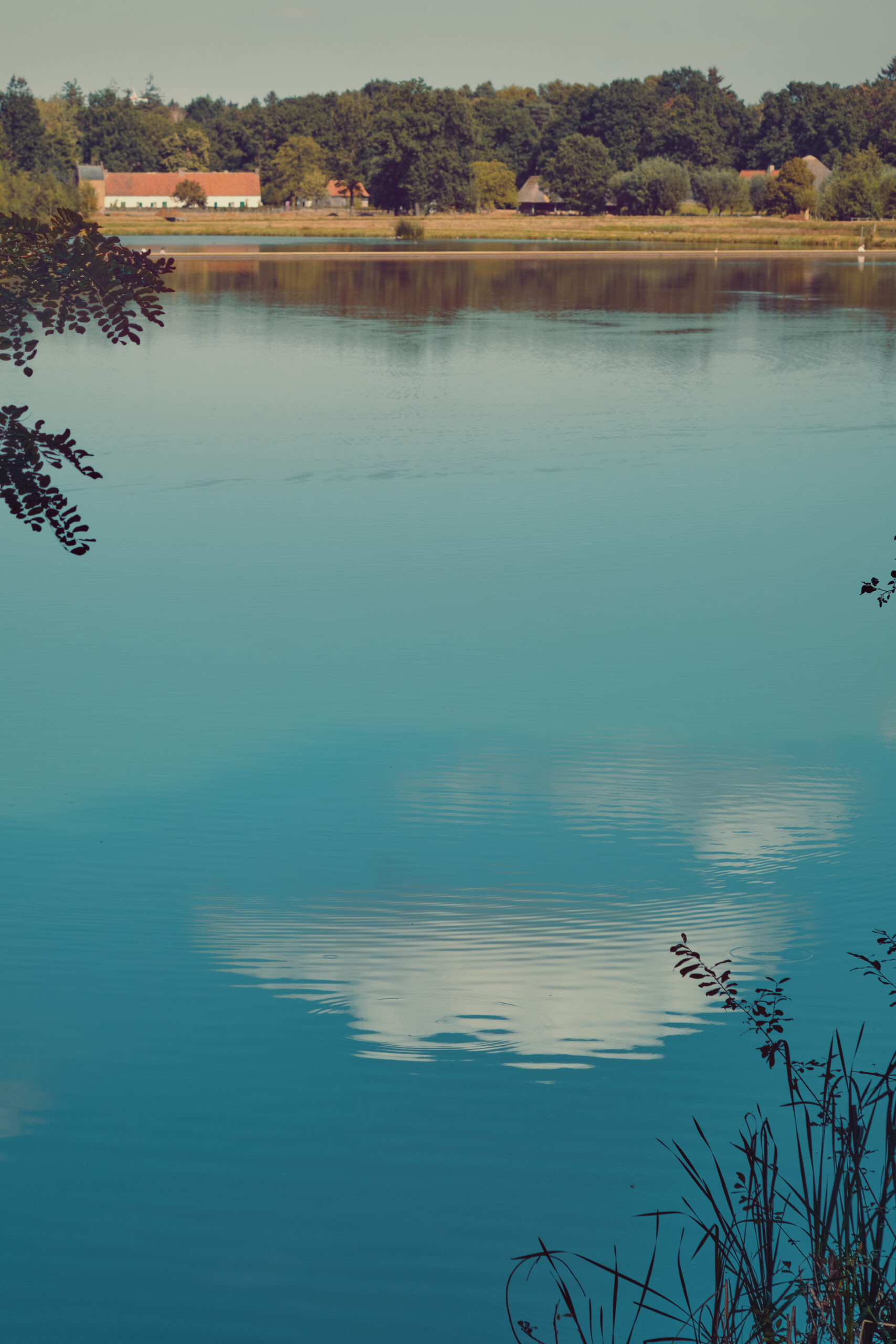
The industry needed workers, and for decades people arrived from different parts of Europe and, later, the Mediterranean. First from Italy, followed by Spain, Greece, Turkey and Morocco, among other countries.
Those waves of migration transformed Genk and explain much of its identity today. It is now an extraordinarily multicultural city, something that can be felt in its neighbourhoods, restaurants and everyday life.
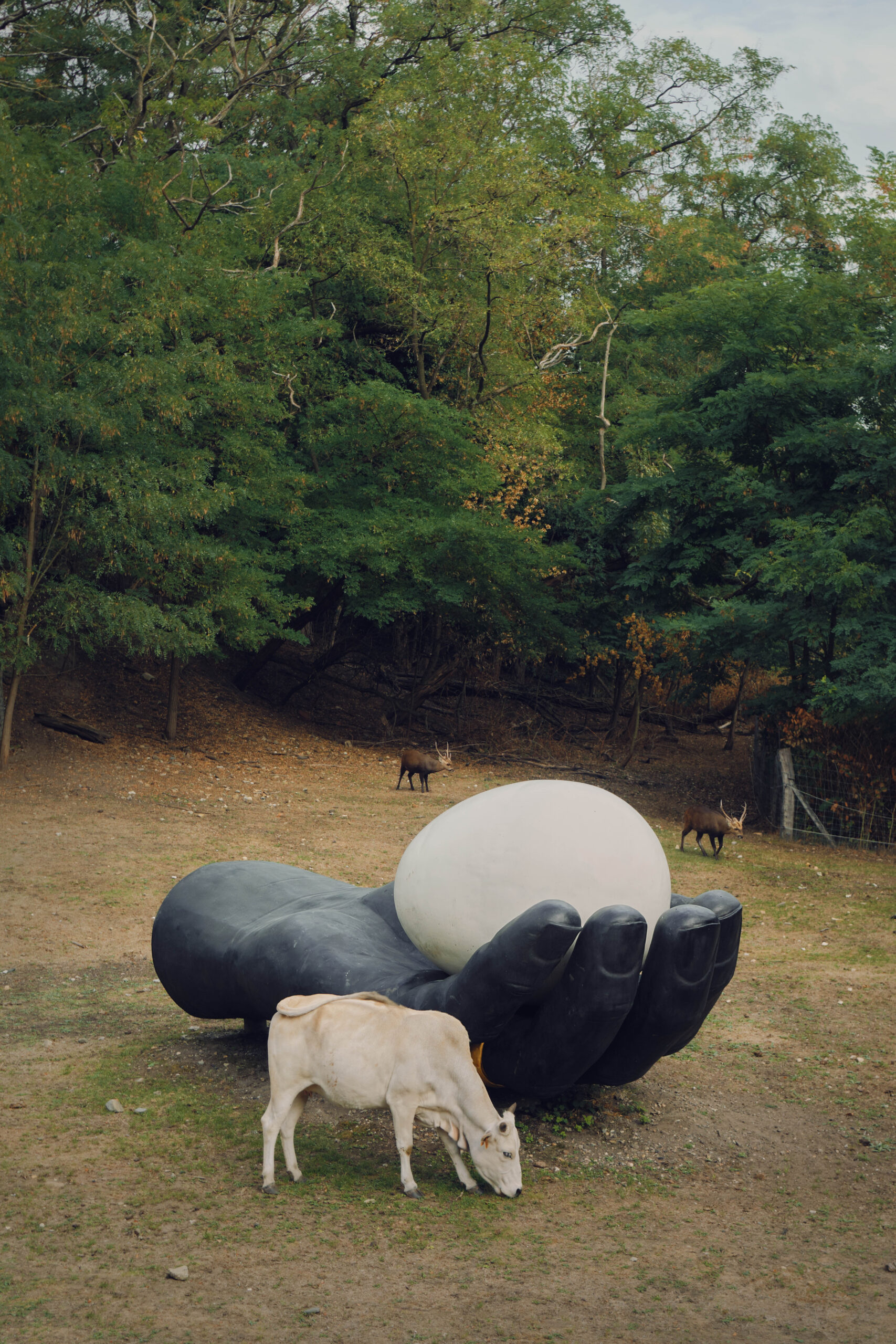
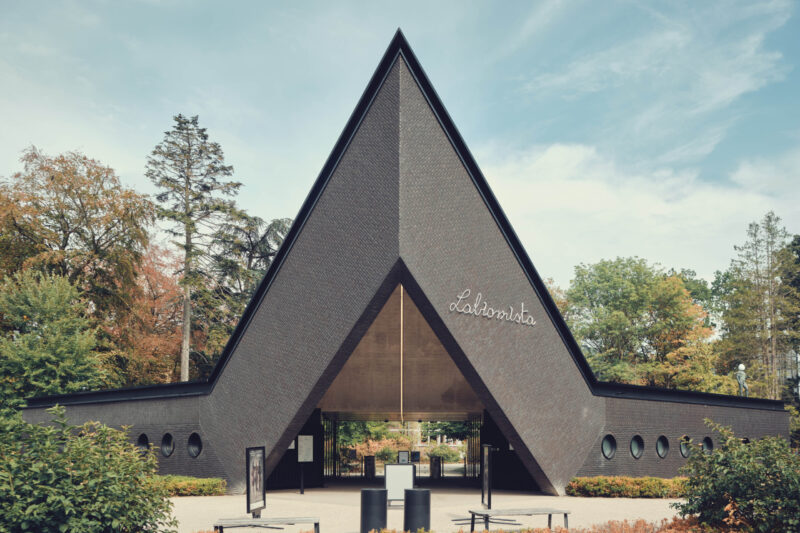
Our first stop was LABIOMISTA, one of the most unusual and impressive cultural projects we visited during the trip. We absolutely loved it.
Created by Belgian artist Koen Vanmechelen, LABIOMISTA occupies 24 hectares on the site of the former Zwartberg mine and the zoo that later operated on the same land. Its name already offers a clue: life, mixture, diversity.
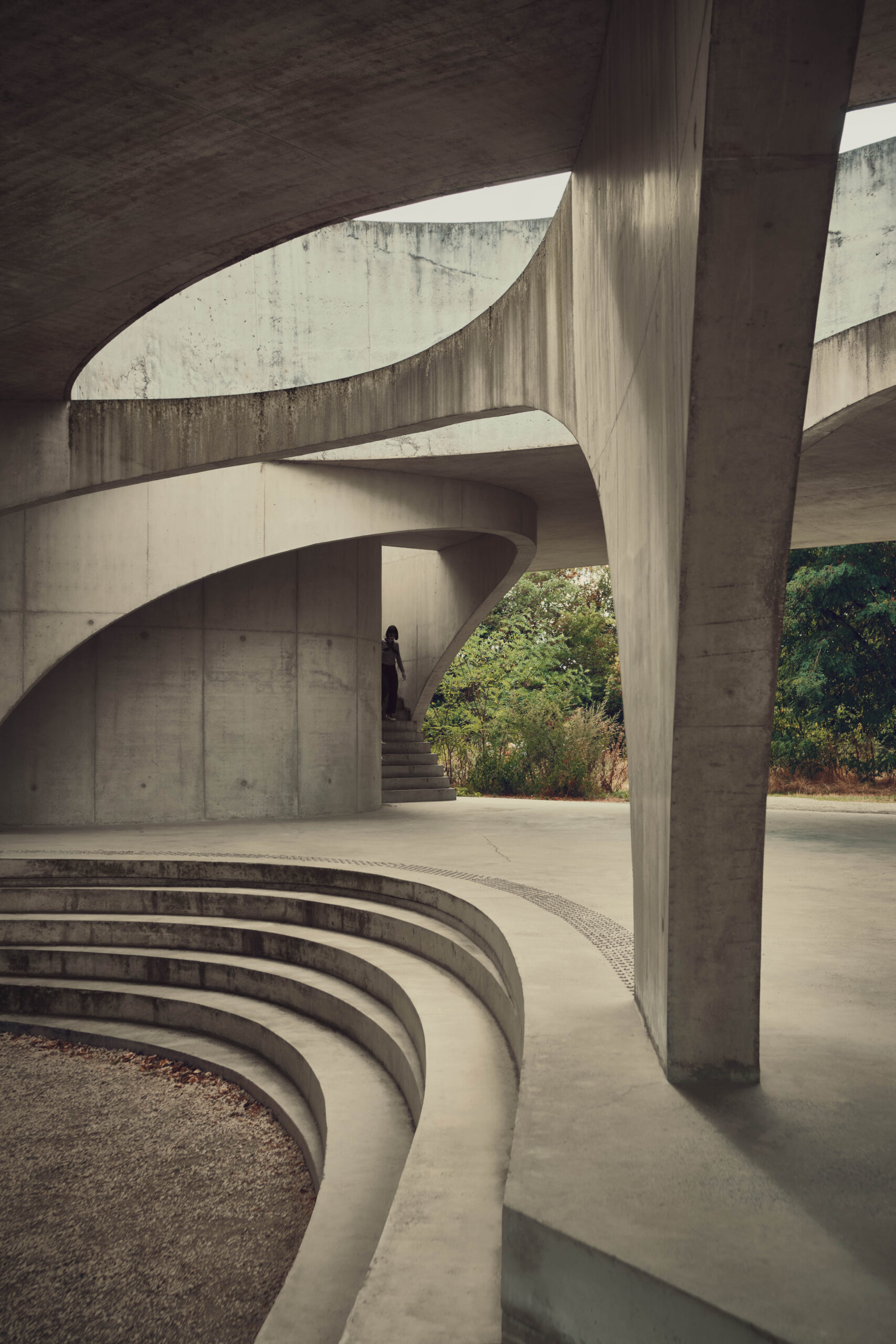
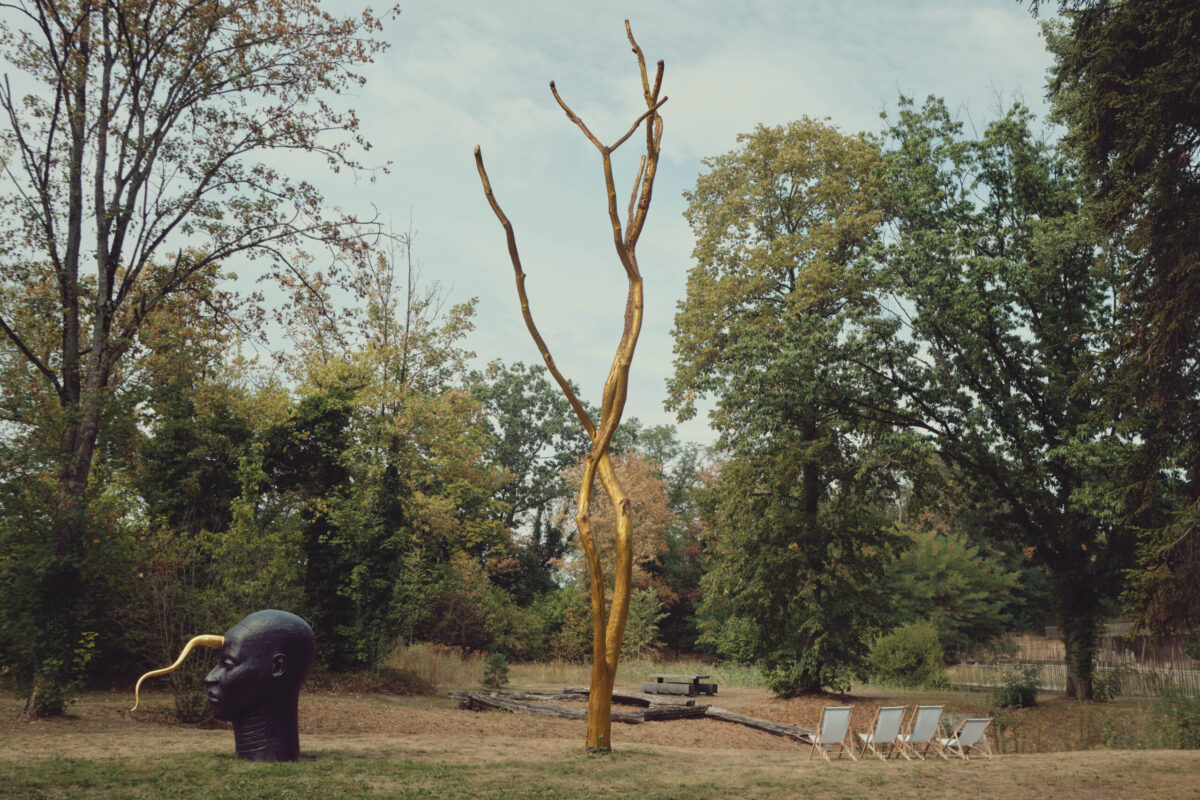
Here, art, science, nature and society coexist in a project that is difficult to classify. It isn’t exactly a museum, but neither is it a sculpture park or a research centre. Rather, it is a constantly evolving space built around some of the questions that run through Vanmechelen‘s work: identity, biocultural diversity, fertility and the relationship between humans, animals and nature.
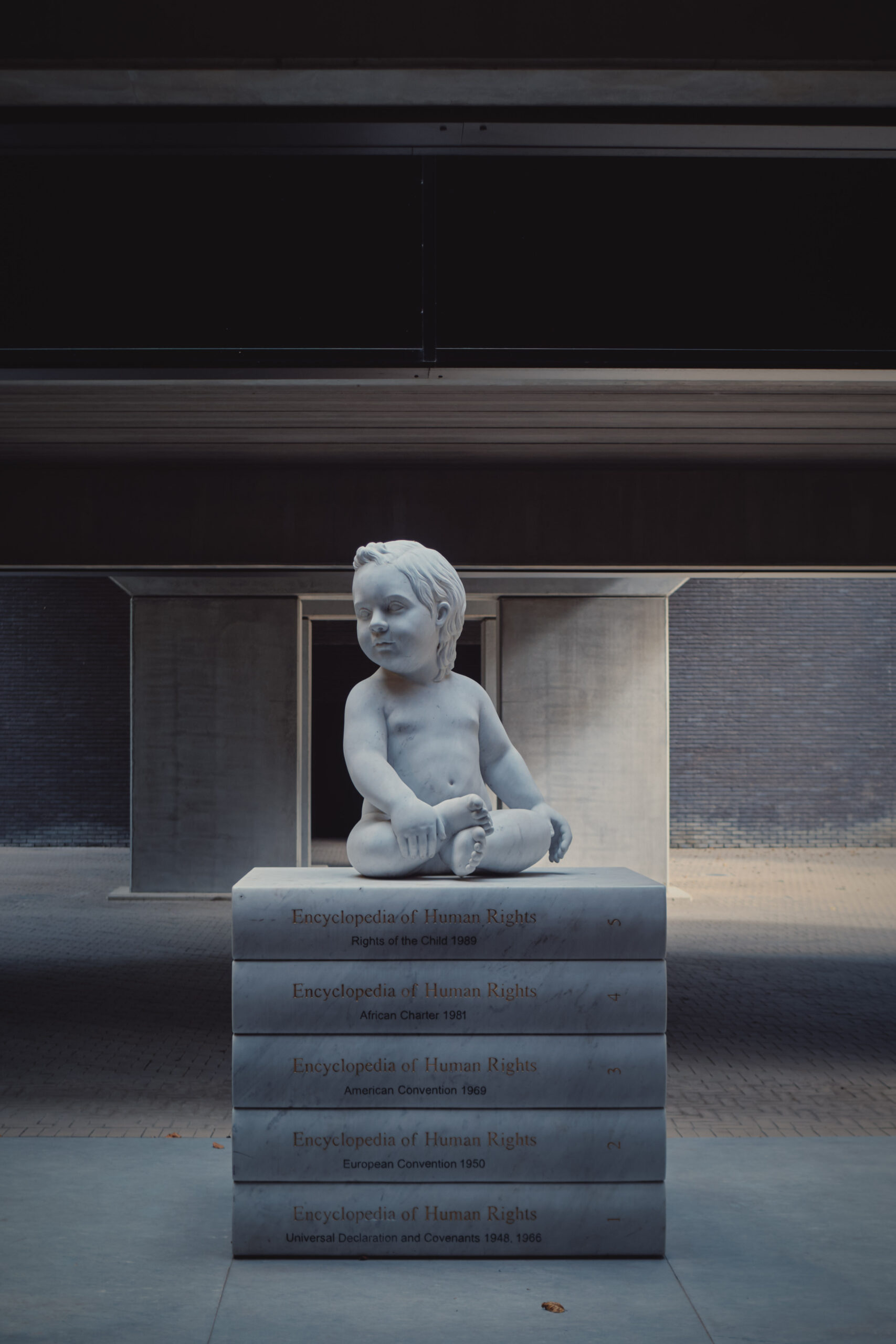
The history of the site itself gives those questions another dimension. The Zwartberg mine closed in 1966. From 1970 onwards, the mine director’s former residence and the surrounding grounds became a private zoo, which housed animals from, among other places, circuses and zoos that had closed down.
The park disappeared in 1997, and two decades later, LABIOMISTA opened a new chapter on the site.
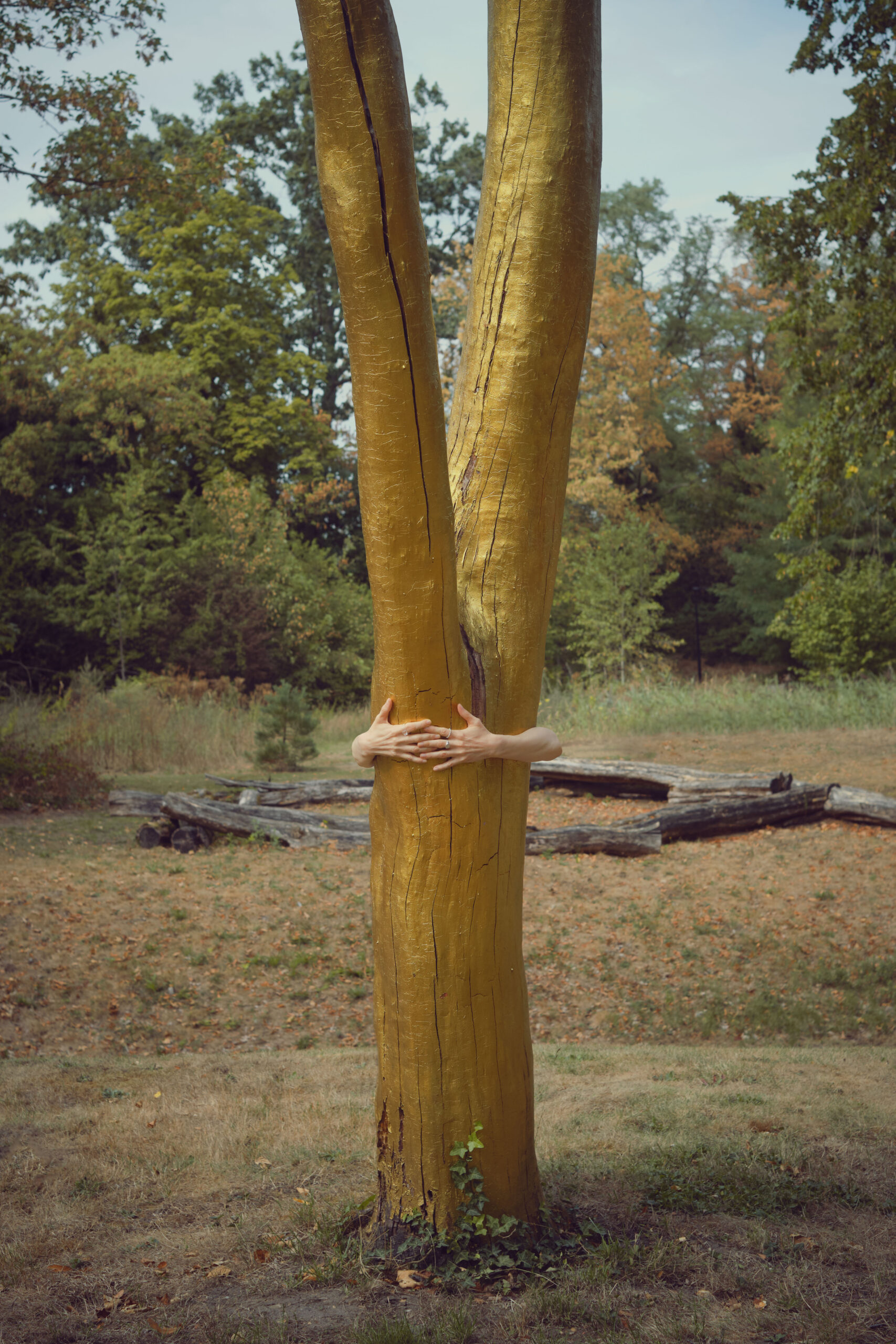
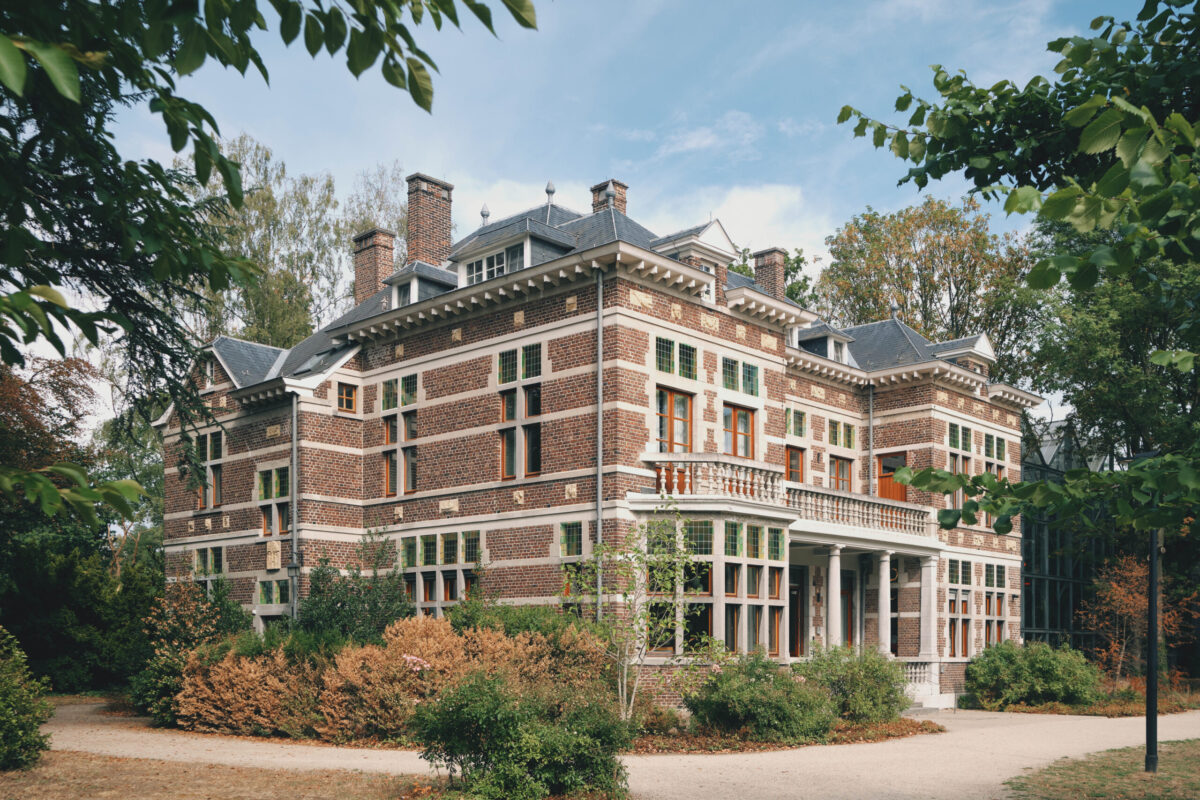
As you move through the grounds, animals, installations and works of art emerge among the vegetation. There is also The Ark, the spectacular entrance building, and the former mine director’s villa, built in 1925 and now incorporated into the project.
All of this turns LABIOMISTA into a kind of laboratory on a territorial scale. A place that uses art to explore coexistence and diversity in a city whose contemporary identity was shaped, to a large extent, by the encounter between people from different cultures.
Here, nature, architecture and creativity become different layers of the same narrative, imagining new ways of inhabiting and relating to our surroundings.
C-mine: when a mine becomes a place for creativity
The following day, we continued exploring Genk’s mining past from another perspective.
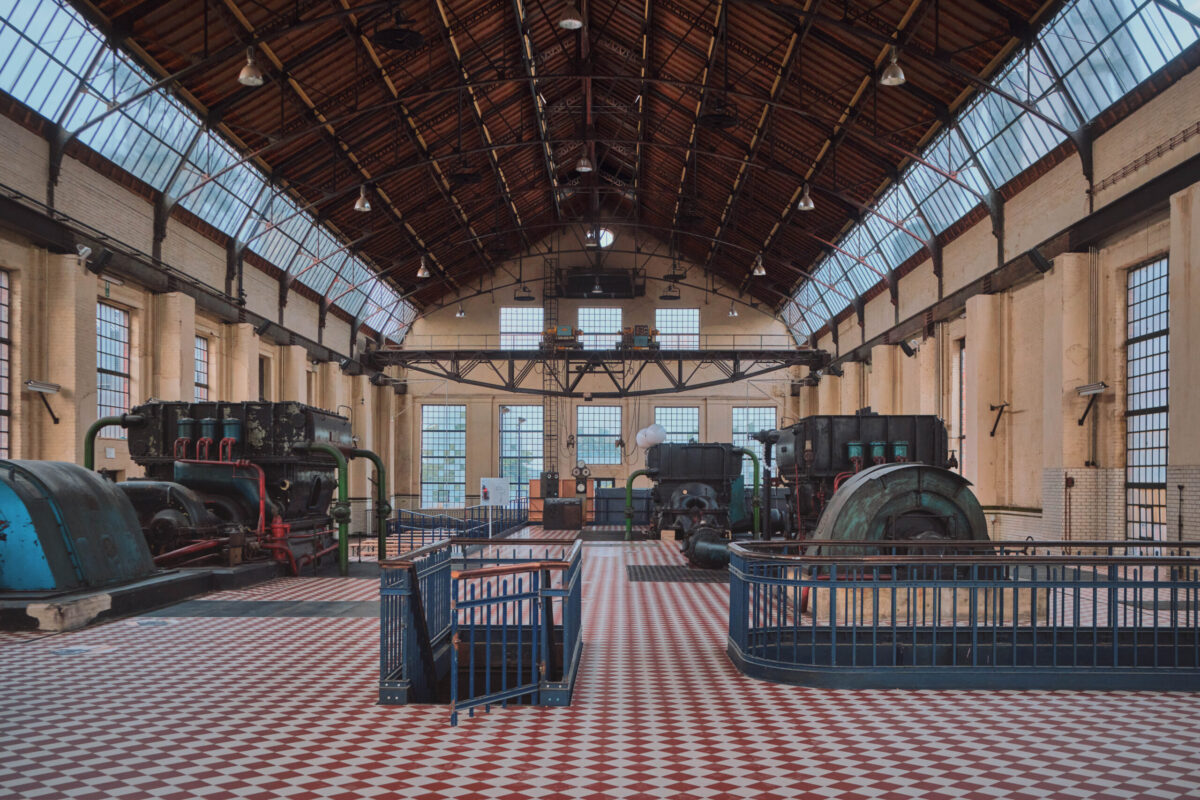
C-mine occupies the former Winterslag mine and is probably one of the clearest examples of the transformation Limburg has undergone.
The enormous industrial structures remain, as do the brick buildings, towers and much of the architecture that once defined the mining complex. Their purpose, however, has changed radically. Today, C-mine is a major creative hub dedicated to art, design, culture and the creative industries. Exhibition spaces, cultural activities, cinema, educational projects and a range of initiatives connected to creativity now coexist across the site.
C-mine is a major creative hub dedicated to art, design, culture and the creative industries.
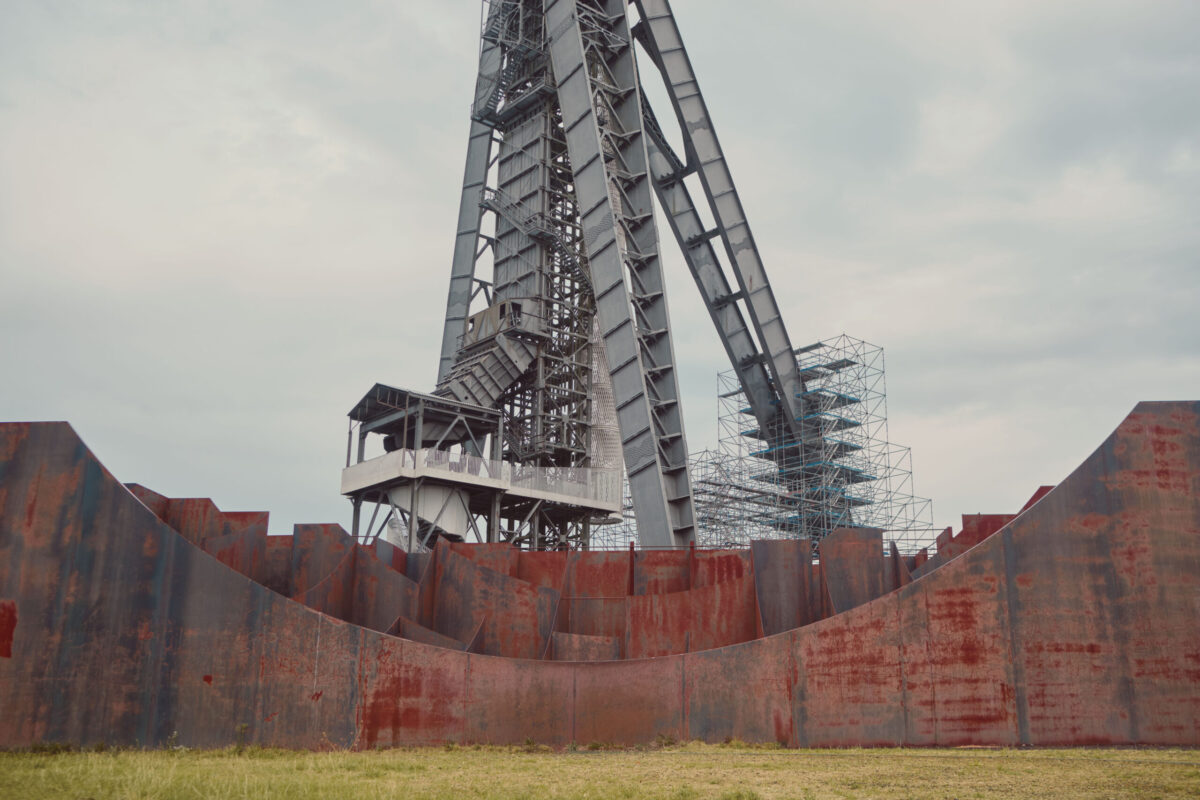
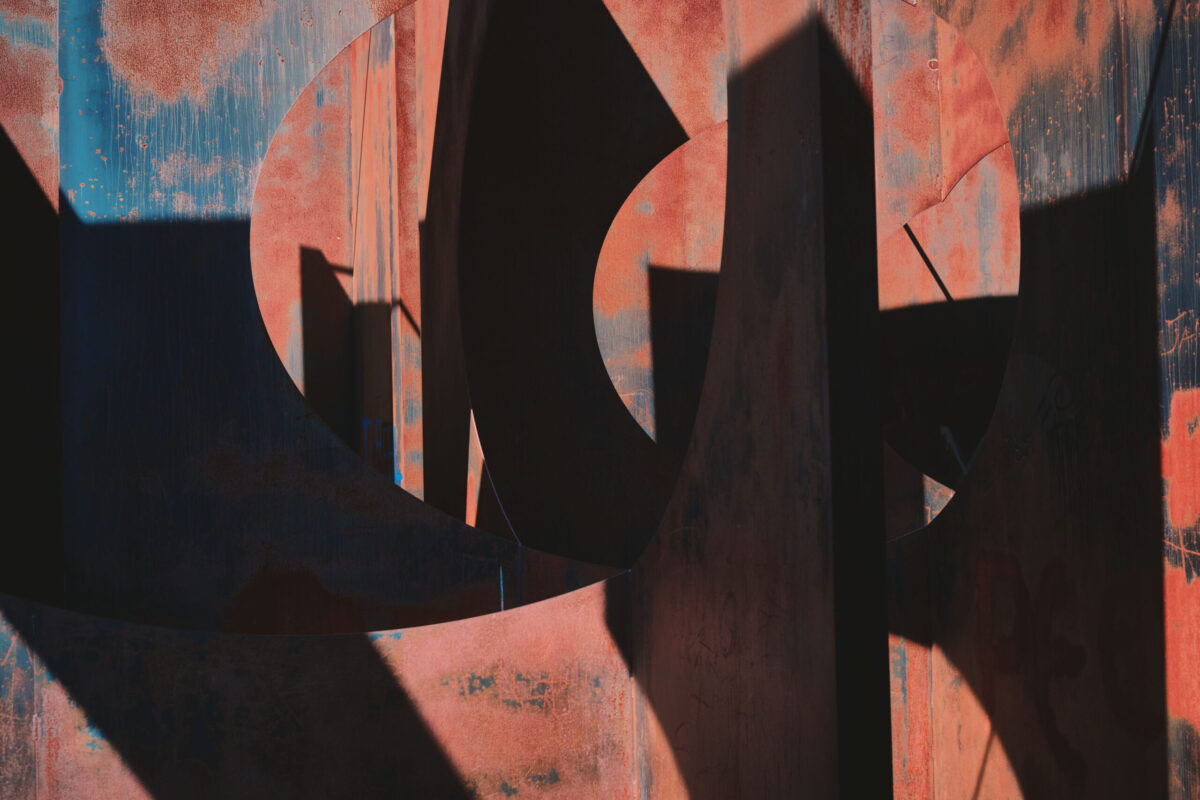
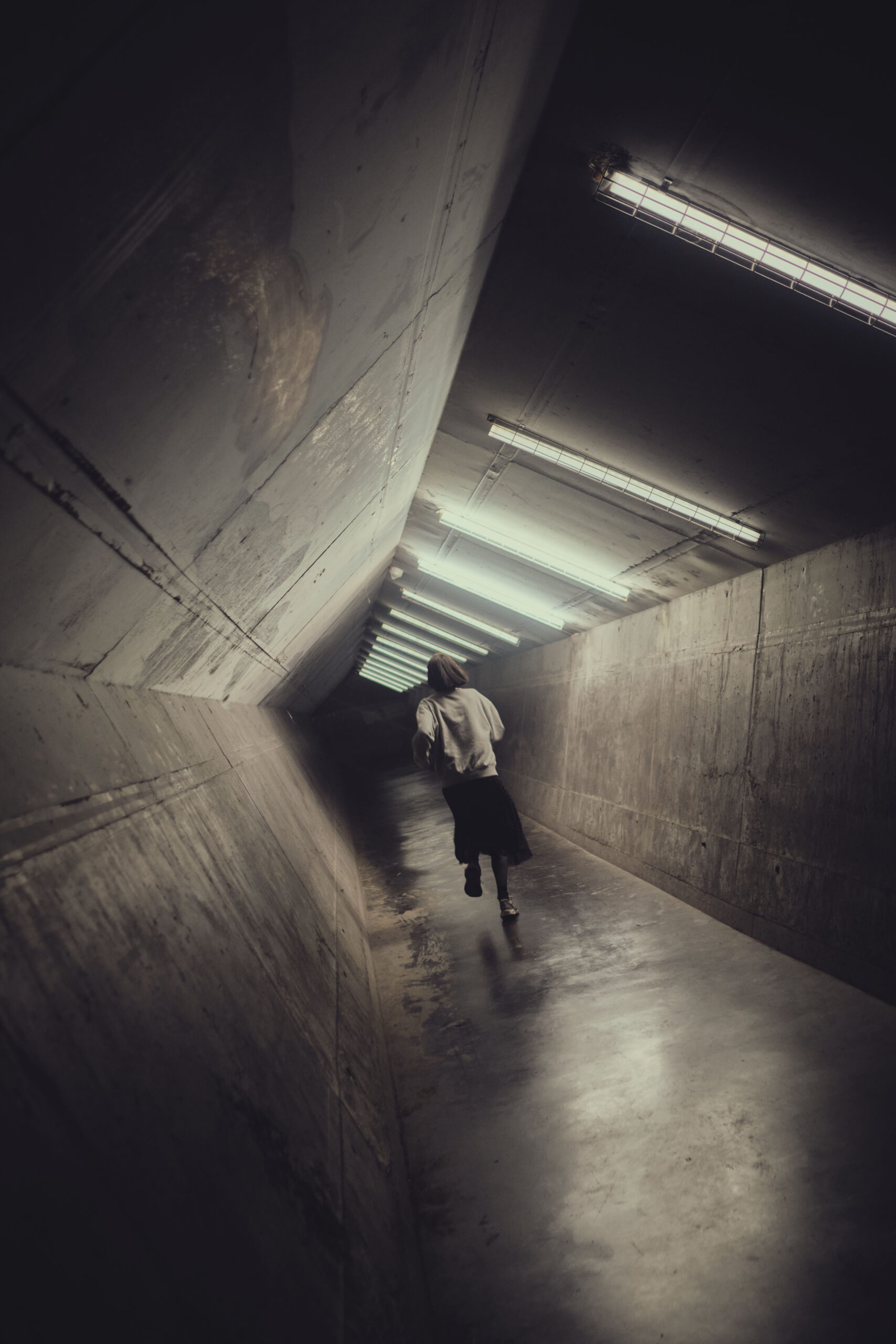
Between the two enormous headframes stands Labyrint, an impressive steel structure designed by Belgian art and architecture duo Gijs Van Vaerenbergh in 2015 to mark C-mine‘s tenth anniversary.
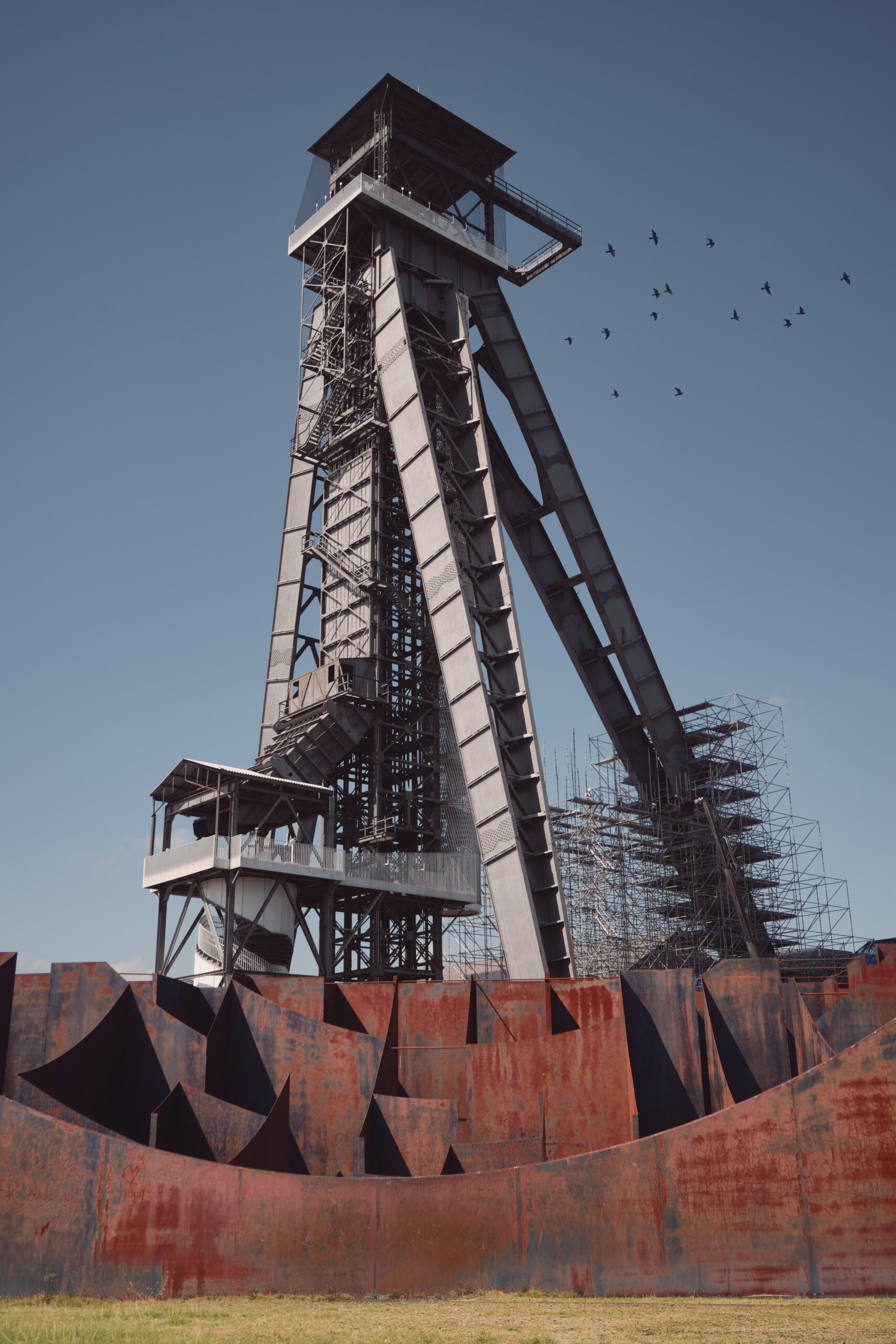
The labyrinth consists of around one kilometre of steel corridors that create shifting spaces, openings and perspectives across the square and the former mining facilities. Walking through it allows you to observe the two towers from completely different angles and experience the scale of the complex in an entirely new way.
Gijs Van Vaerenbergh — the collaborative practice of architects Pieterjan Gijs and Arnout Van Vaerenbergh — would appear again a few days later on our road trip. They are also the authors of Reading Between the Lines, the extraordinary transparent church standing in the middle of the landscape near Borgloon, and one of the works we had been most eager to see during this journey.
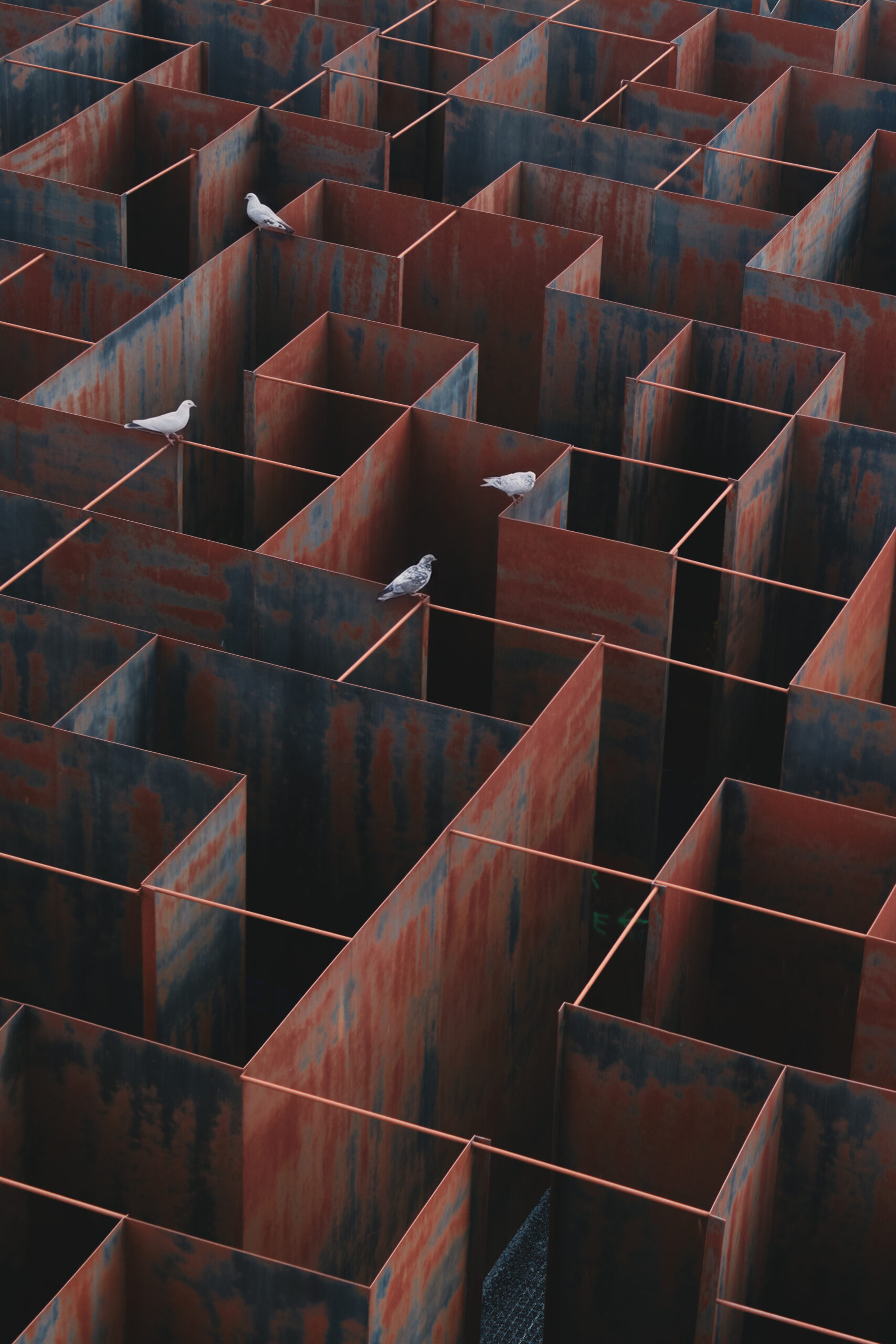
From above, the experience changes once again, and the perspective is astonishing. The C-mine Expedition takes you up to the highest headframe, from where you can see the complete geometry of Labyrint below, as well as panoramic views across the former mining complex and Genk.
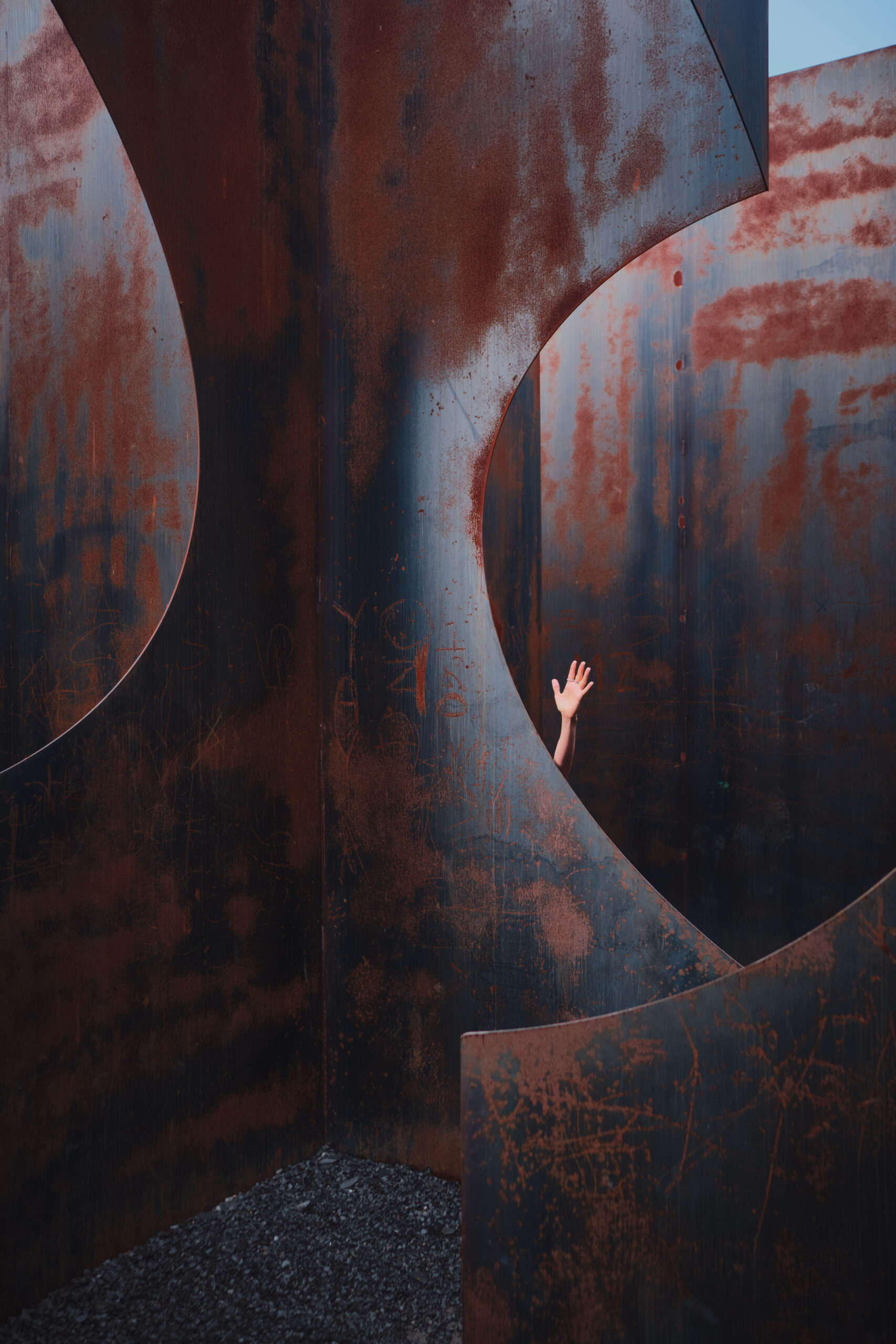
On the other hand, the C-mine Expedition allows visitors to delve into that history through a route that begins inside the former industrial buildings and descends underground. Tunnels, dark spaces and different installations help you imagine the conditions in which the miners worked and the scale of an industry that completely transformed the region. We highly recommend the experience.
After visiting C-mine, we had lunch at Norma, an Italian restaurant next to the complex serving excellent pasta, before continuing towards Hasselt.
We had spent barely two days in Limburg and a recurring theme was already beginning to emerge: here, industrial heritage is not preserved simply to explain what happened in the past, but used to create new purposes. LABIOMISTA transforms it into art and reflection; C-mine into creativity and culture; and Terhills into landscape and nature. Three different ways of working with the same inheritance.
Hasselt: a small city with a rich cultural scene
The next stage of our journey took us to Hasselt, the capital of the province of Limburg.
The change in scale is immediately apparent. Hasselt is compact and easy to explore on foot, with shopping streets, cafés, restaurants and a remarkably active cultural scene for a city of its size.
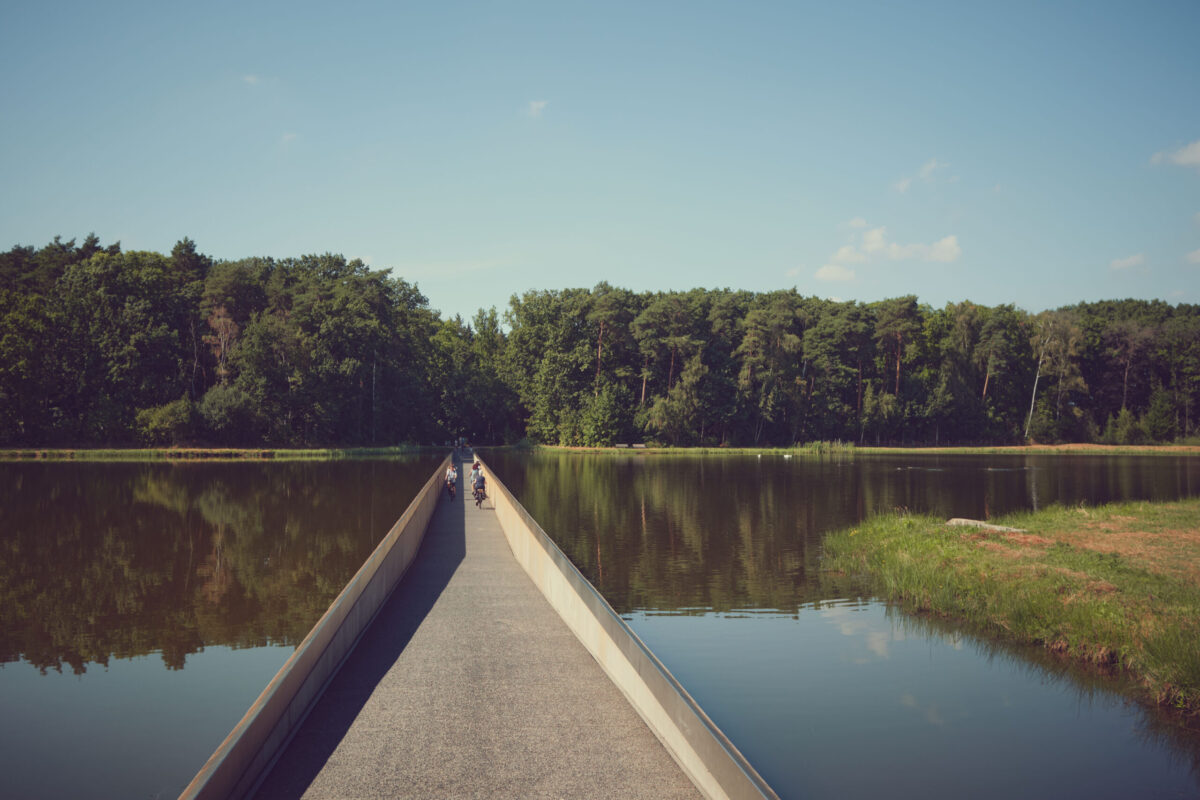
But before heading into the city itself, we tried one of Limburg’s best-known experiences: Cycling Through Water, in Bokrijk.
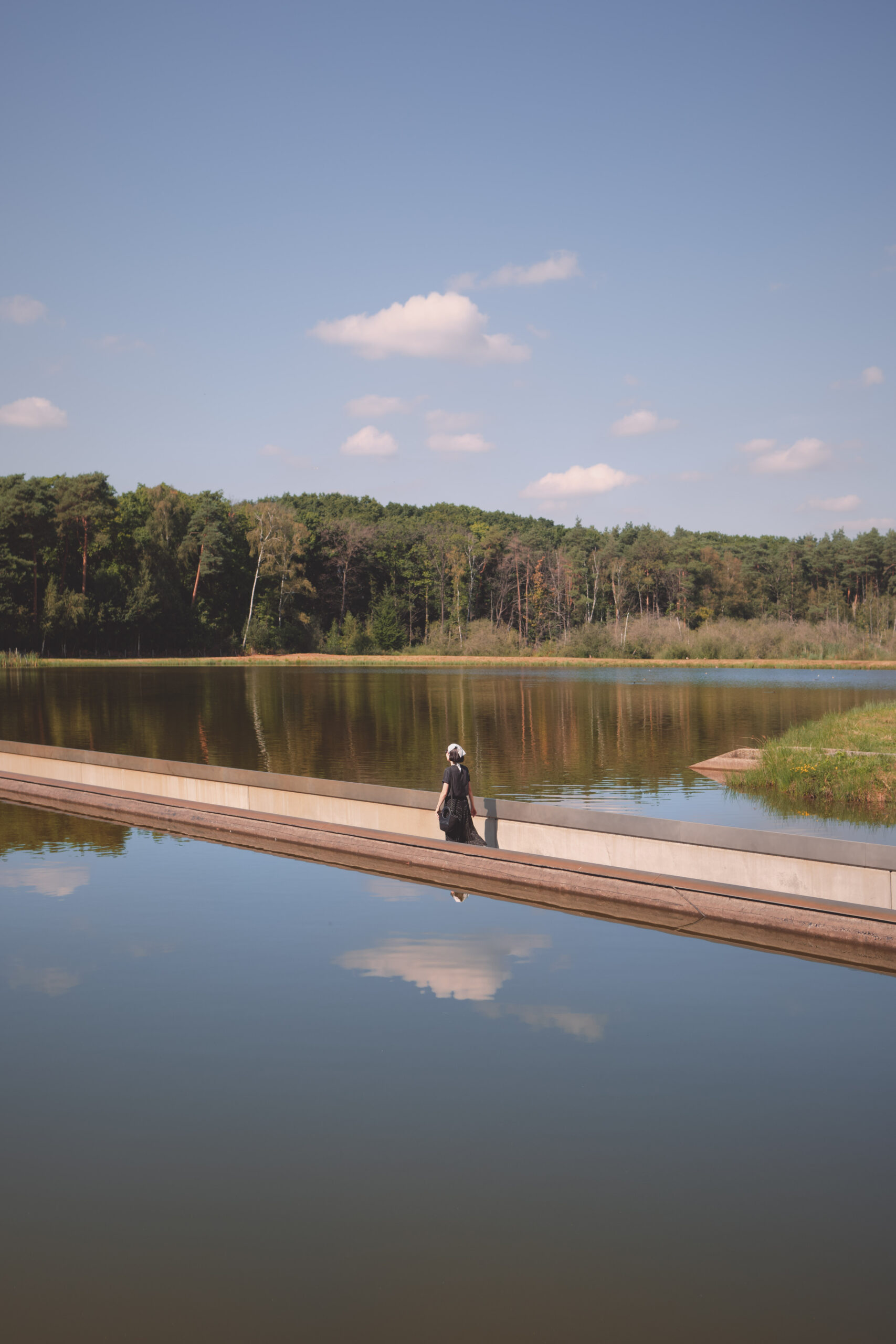
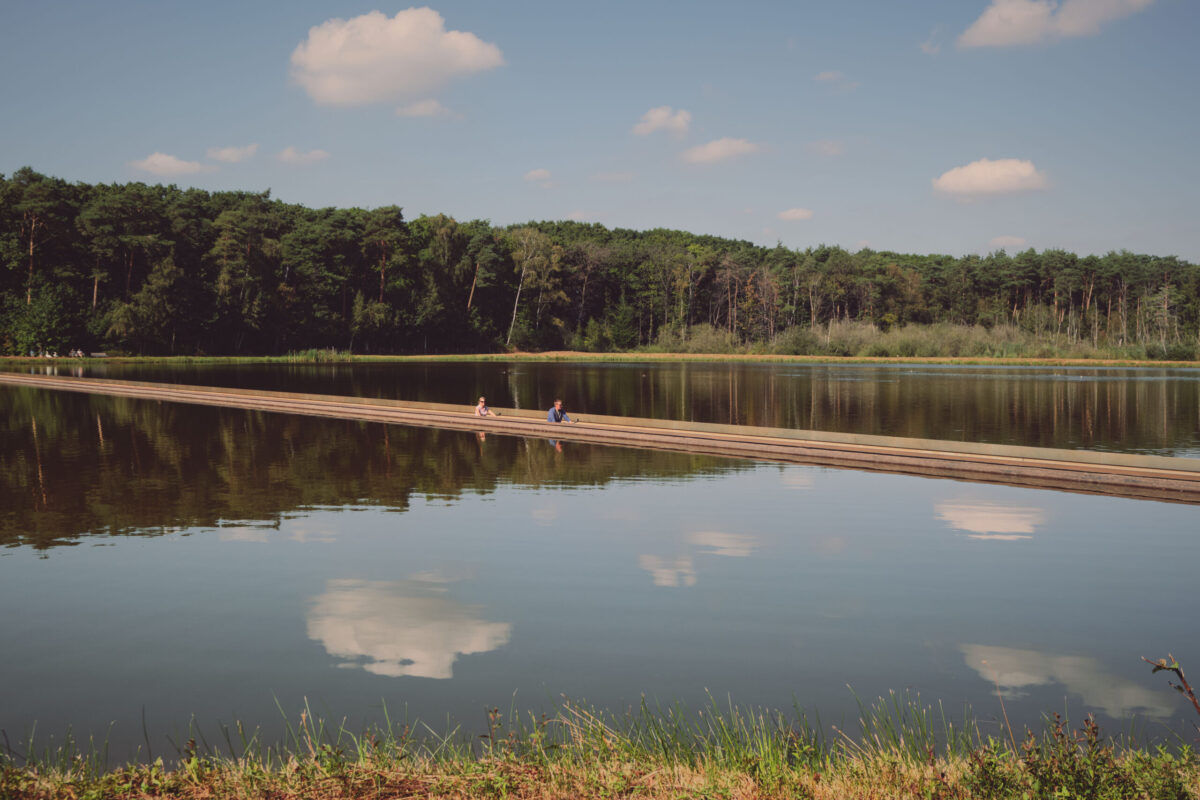
The idea is as simple as it is effective: a path more than 200 metres long runs literally through one of the ponds in the De Wijers landscape. The path descends until the surface of the water is almost at eye level. Fish, birds and vegetation appear on either side as cyclists and walkers move between two bodies of water.
From a distance, the sight is even stranger and more captivating: all you can see are people’s heads moving across the surface.
The route opened in 2016 and forms part of a much broader strategy to turn cycling into a different way of experiencing Limburg’s landscapes. Elsewhere in the province, you can cycle among the treetops, cross heathland along a vast wooden structure or, as we had done in Maasmechelen, ride between former terrils.
Cycling Through Water is a path stretching for more than 200 metres, gradually descending until the water is almost at eye level.
We then explored the beautiful Kiewit area on foot before heading into the centre of Hasselt.
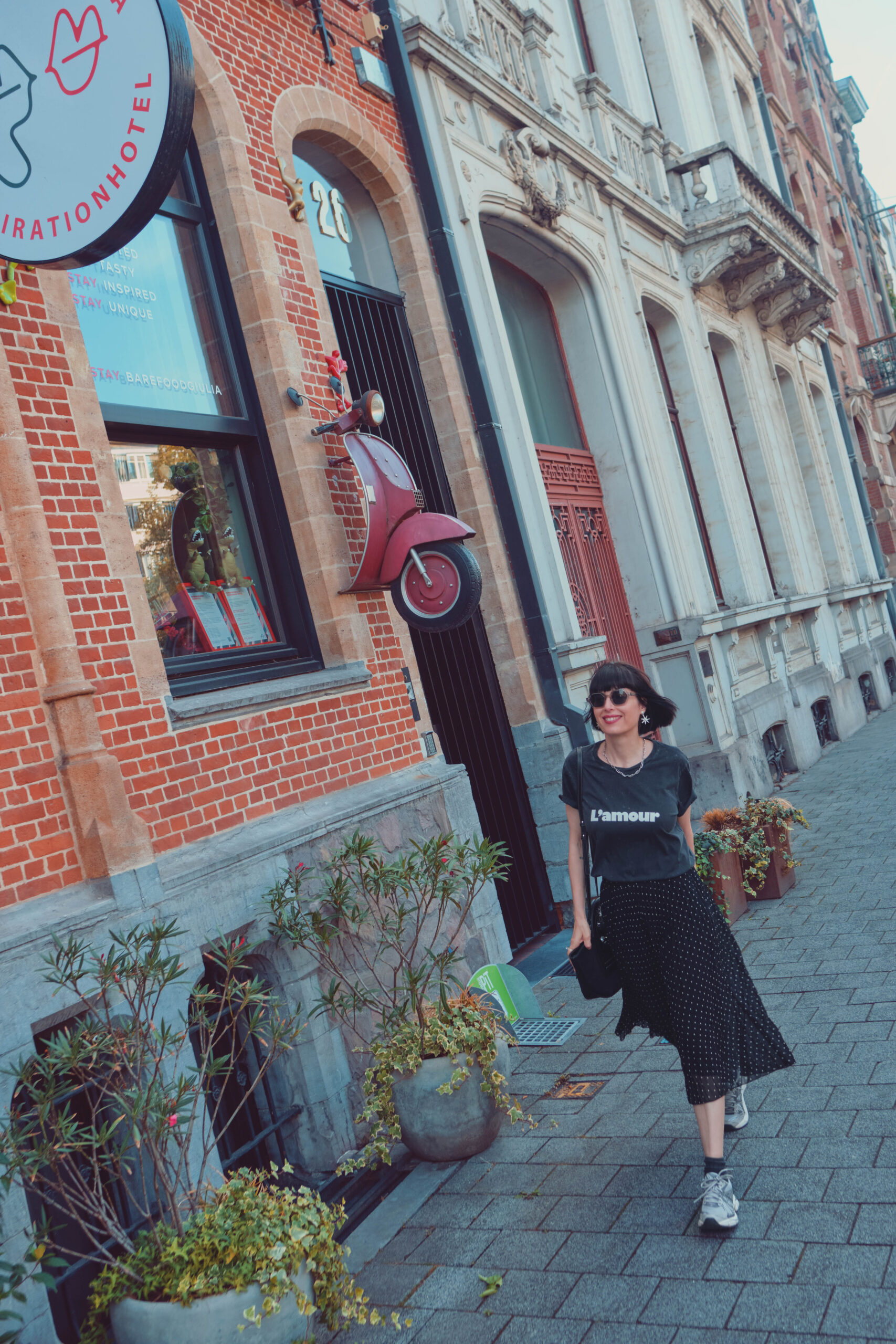
Our base for those days was BareFood Giulia, a small seven-room hotel housed in a former townhouse on Leopoldplein. Behind its eclectic and particularly welcoming interiors is its owner, Marleen, who has created spaces where art, design, found objects and original elements of the building coexist. Every room is different, and everything feels personally chosen, far removed from any notion of standardisation.
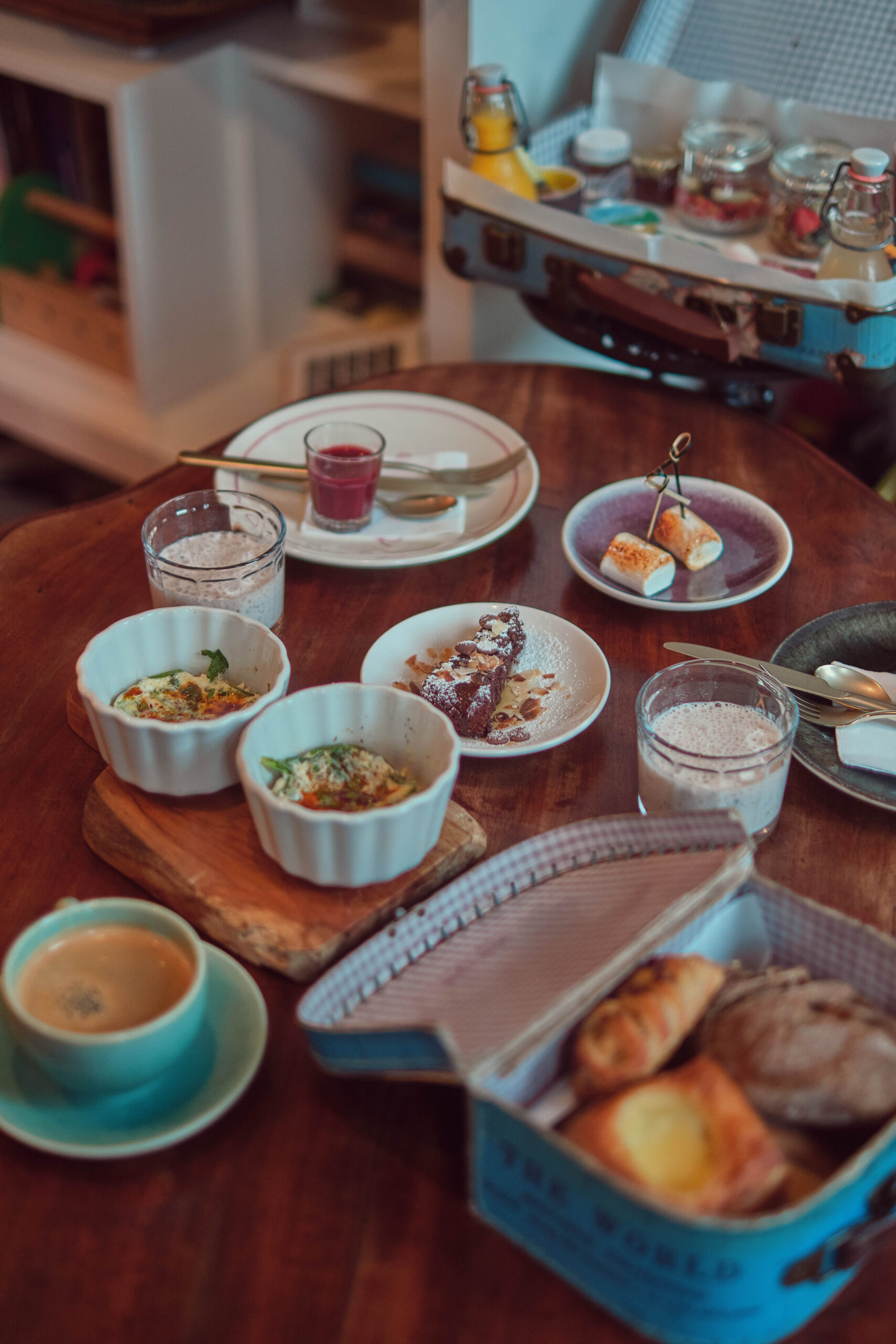
That sense of family continues in the morning. Marleen‘s son prepares breakfast, which is served in a rather unusual way: inside small cardboard suitcases decorated with maps of the world. Open them and you discover a generous, carefully prepared breakfast made with delicious local products.
It is one of those details that becomes part of your memory of a hotel and makes BareFood Giulia a particularly appealing base from which to discover Hasselt on foot.
Z33: art and architecture inside the former beguinage
One of the main reasons to visit Hasselt is the Z33 House for Contemporary Art, Design and Architecture.
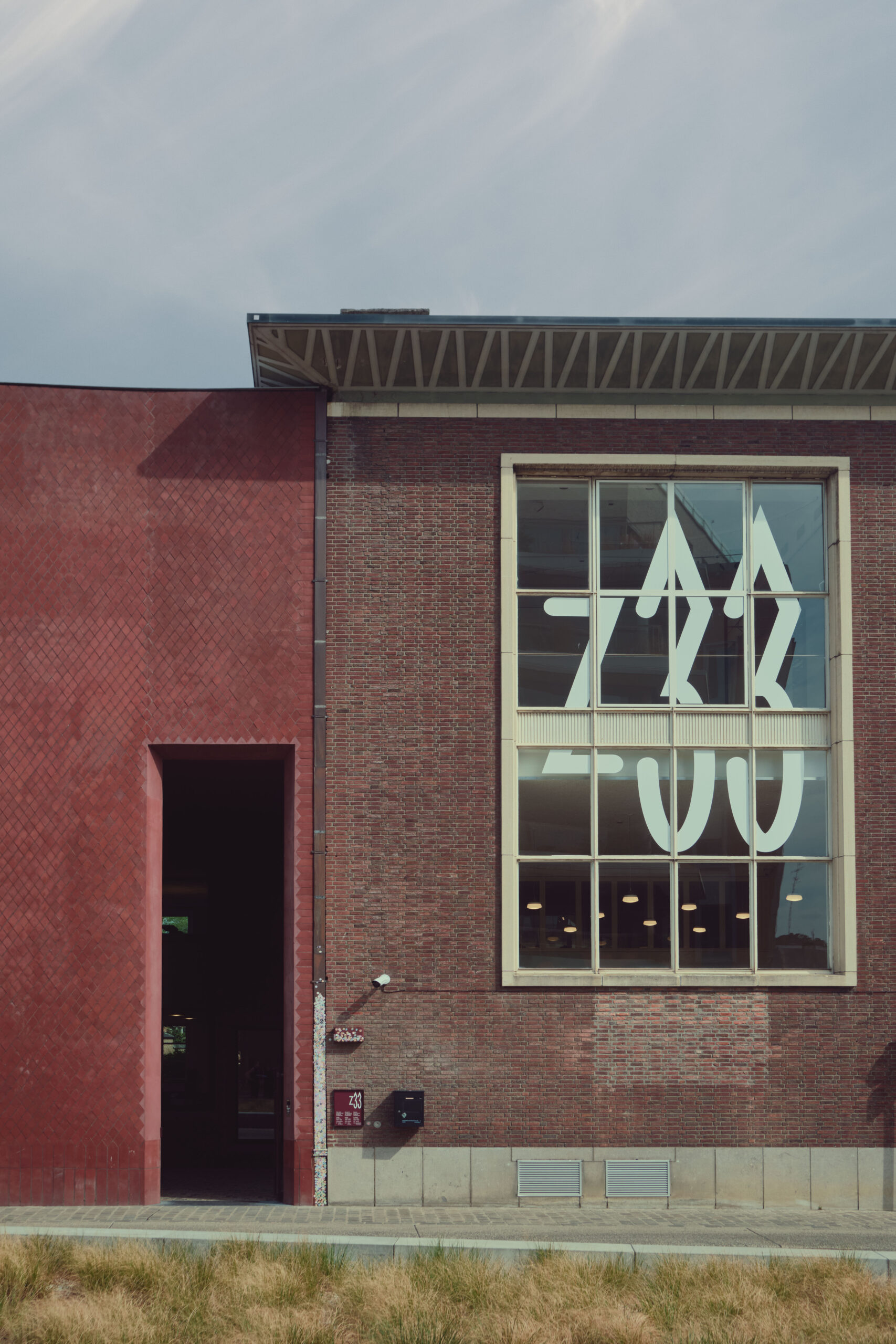
Its location alone deserves attention. Z33 stands within Hasselt’s former beguinage, a historic complex that has been associated with cultural uses since 1938. The centre’s name itself comes from its former address: Zuivelmarkt 33.
Our visit began with the exhibition Kunst aan de Maas: een reisverslag, accompanied by its curator, Tim Roerig, and continued with an architectural tour of Z33 and the beguinage with Liza, an architect and our guide for the visit.
Here, the building is almost as important as the exhibitions themselves. Italian architect Francesca Torzo was responsible for designing Vleugel 19, Z33‘s new wing, which joins Gustaaf Daniëls‘s 1958 exhibition building and enters into dialogue with the historic architecture of the beguinage.
From the street, the building feels enigmatic. A vast, almost entirely closed façade built from diamond-shaped bricks gives little indication of what lies inside. Torzo conceived the architecture as a small city organised around a central courtyard. A succession of thresholds, shifts in scale, changing heights, materials and sightlines gradually defines the journey through the building.
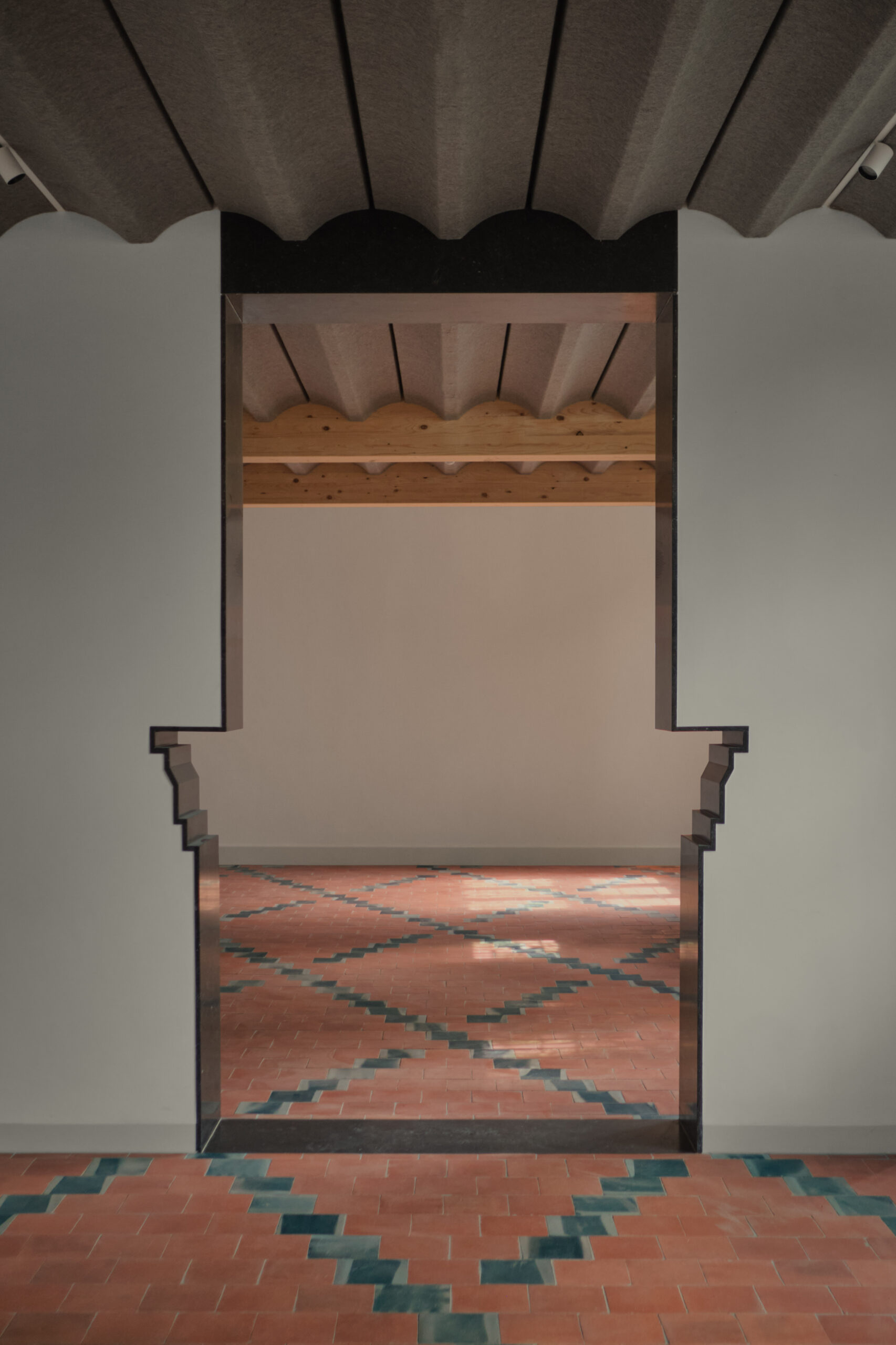
As you move through the complex, the relationship between contemporary architecture and historic heritage becomes particularly interesting. Torzo didn’t attempt to imitate the beguinage — a complex of houses and communal buildings once inhabited by beguines, women who, from the Middle Ages onwards, formed independent religious communities — nor did she create an object designed to compete with it. The distinctive diamond-shaped brickwork establishes a material relationship with the existing buildings, while the geometry and interior organisation belong unmistakably to the present.
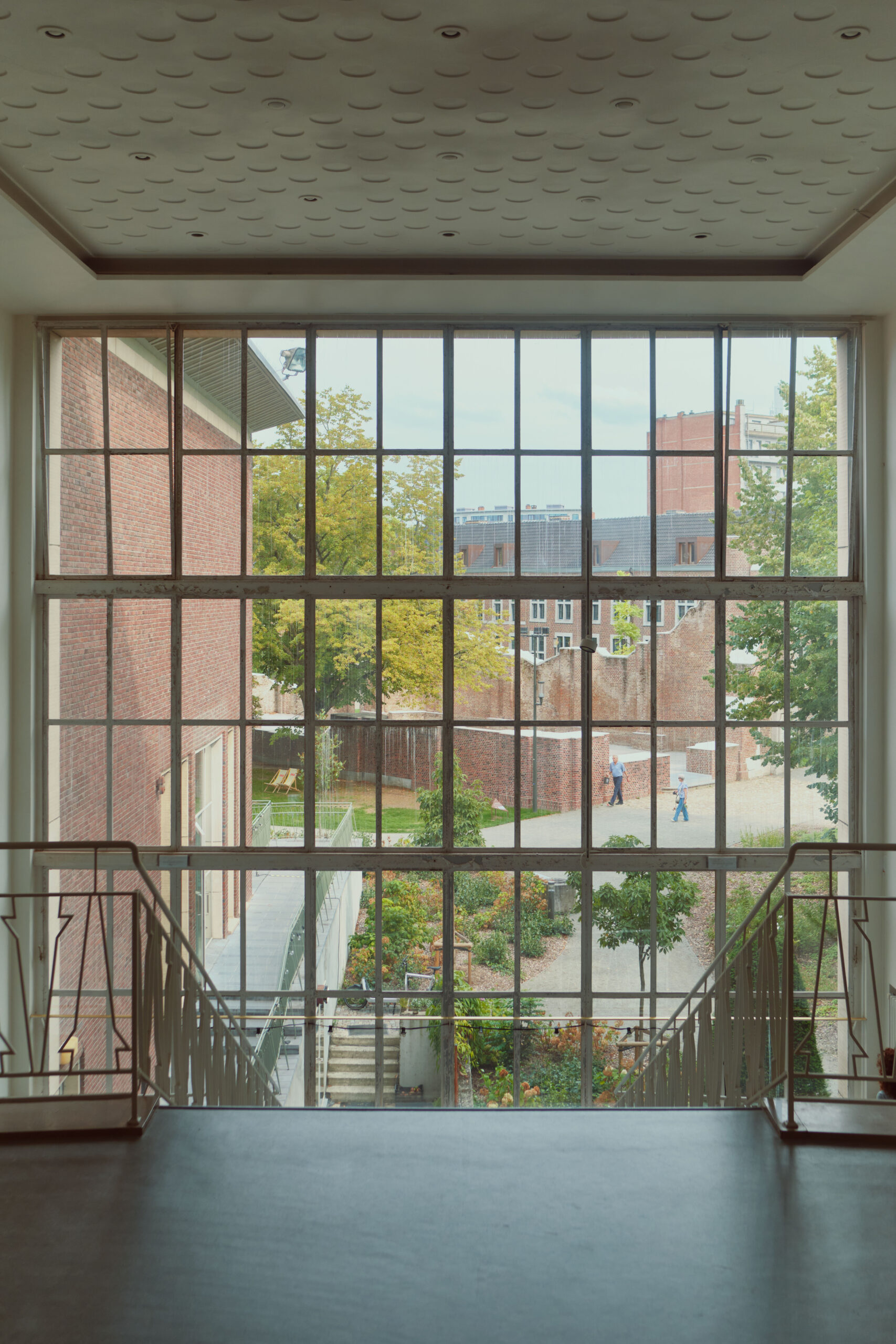
The beguinage itself deserves a closer look. When we visited, a major intervention by Bovenbouw Architectuur and David Kohn Architects had just been completed, transforming the historic complex into a new public space and the home of Hasselt University’s Faculty of Architecture. The project restores the former houses, reorganises the gardens and works in a particularly interesting way with the ruins of the church, which was destroyed during an air raid in 1944.
Z33 stands within Hasselt’s former beguinage, a historic complex that has been associated with cultural uses since 1938.
Where the church once stood, there is now a reflecting pool tracing the footprint of the missing part of the building across the ground. The water transforms the ruins into an almost contemplative place, although the pool can be drained to turn the former church interior into a space for gatherings and events.
Just a few metres away stands the complex’s other major contemporary intervention: a new 30-metre-high brick viewing tower. Conceived as a lookout over Hasselt, its presence restores to the city’s skyline the verticality that disappeared with the former church. From the top, you can see the beguinage, its gardens and much of the city, while also gaining a much clearer understanding of the relationship between the different architectural layers that coexist across the site.
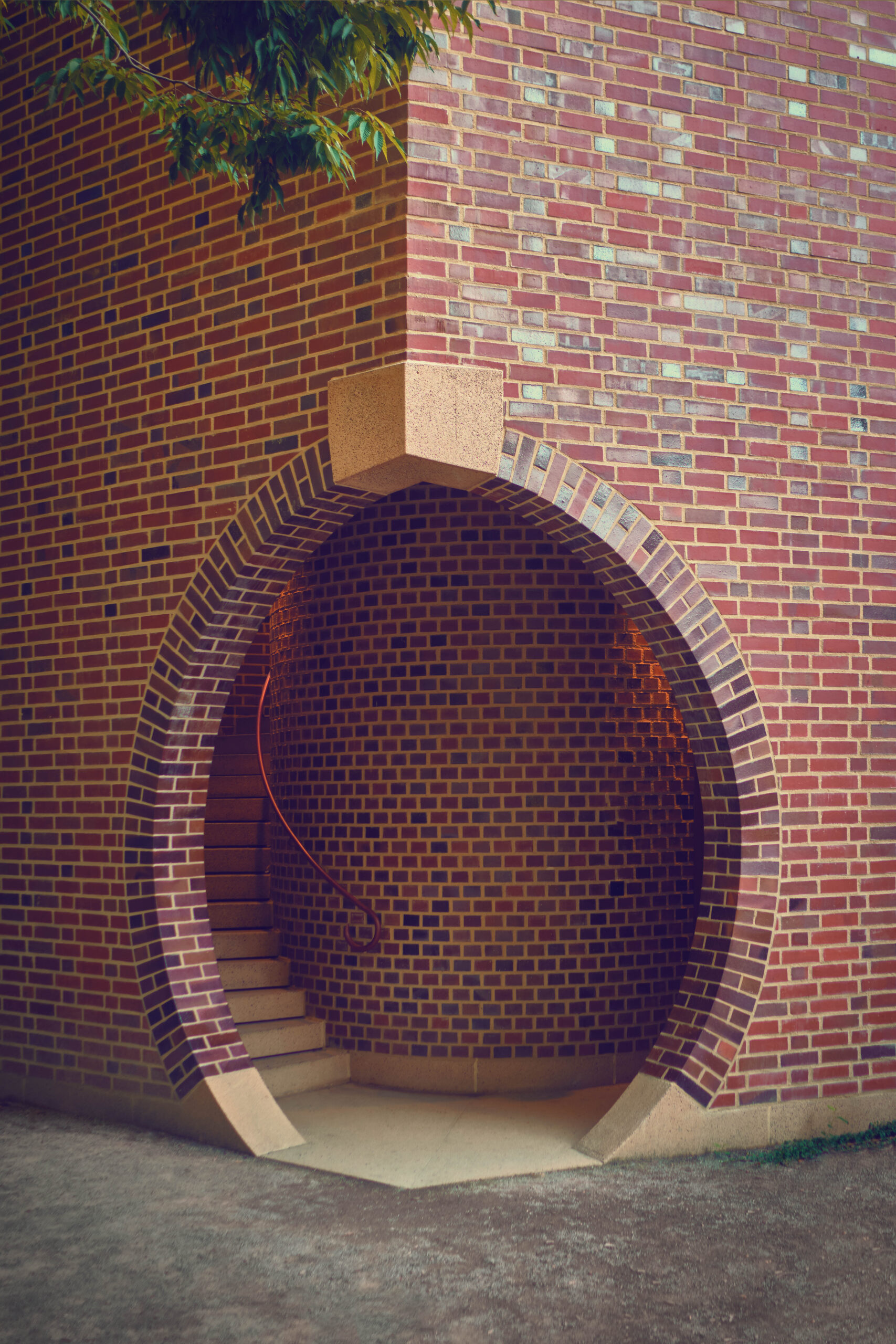
Z33 and the renewed beguinage encapsulate something we encountered repeatedly throughout our road trip across Limburg: a desire to build upon what already exists without erasing the layers that came before.
A first glimpse of Limburg
Maasmechelen, Genk and Hasselt were our introduction to a province we had previously known very little about — and one that proved considerably more complex than we had expected.
During these first few days, we cycled through former mining landscapes reclaimed by nature, walked through an art project built across the site of a former mine and zoo, descended underground to understand Genk’s industrial history and explored one of Belgium’s most interesting contemporary art buildings.
Coal explains Limburg’s past, but so do its landscape, its cultural diversity and part of its architecture.
We also began to understand that coal not only explains Limburg’s past, but also its landscape, its cultural diversity, part of its architecture and even some of the contemporary projects that are now defining a new identity for the region.
Our road trip continued towards Borgloon, Haspengouw and Bilzen-Hoeselt. And there, the landscape would change completely once again: vineyards, fields, small villages, castles and several works of contemporary architecture and art hidden in utterly unexpected places.
But that will be in Part 2… We’ll be sharing the next instalment next week!
Where to stay
Terhills Hotel (Maasmechelen)
A four-star hotel housed in the former main building of the Eisden mine. Its location allows you to explore Terhills and Hoge Kempen National Park directly from the hotel.
Carbon Hotel (Genk)
Located opposite Genk railway station, the hotel has 60 rooms and a design that references the city’s mining past. The same building is also home to Gusto, one of Genk’s standout restaurants, serving contemporary cuisine with international influences under chef Davide Scarpinato and awarded 13.5 points out of 20 by Gault&Millau. We had dinner there and it was, without question, one of the best gastronomic experiences of the trip.
BareFood Giulia (Hasselt)
A very special and distinctive small boutique hotel with just seven rooms, each one different, housed in a former townhouse on Leopoldplein. A particularly good choice for anyone looking for hotels with personality, art and design.
Where to eat
In Maasmechelen, Bistro Bureau Bouveau, at the Terhills Hotel, was our first dinner of the trip. Its concept also draws on the area’s mining heritage: the name contrasts the former bureaux of the engineers above ground with the bouveaux, the underground coal galleries, a duality between light and darkness that is reflected in the interior design. Terland, beside the lake at Terhills, offered a more informal stop after cycling through the terrils, with views across the water.
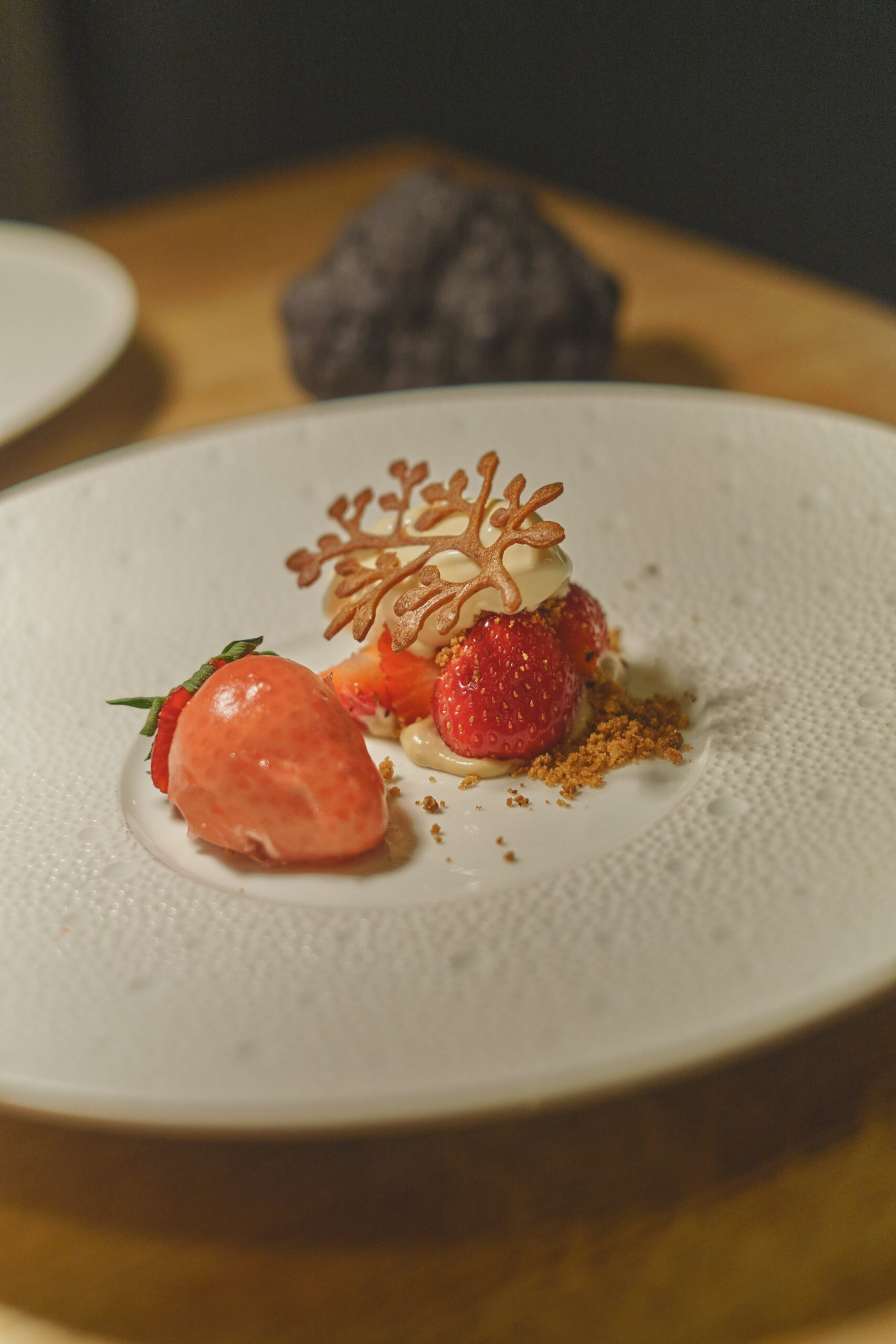
In Genk, we had dinner at Gusto, the restaurant at Carbon Hotel, where chef Davide Scarpinato serves contemporary cuisine with international influences, carefully executed and with a clear desire to give each dish its own identity. We also had lunch at Norma, next to C-mine, a much more informal Italian restaurant that made for the perfect stop during our visit to the former mining complex.
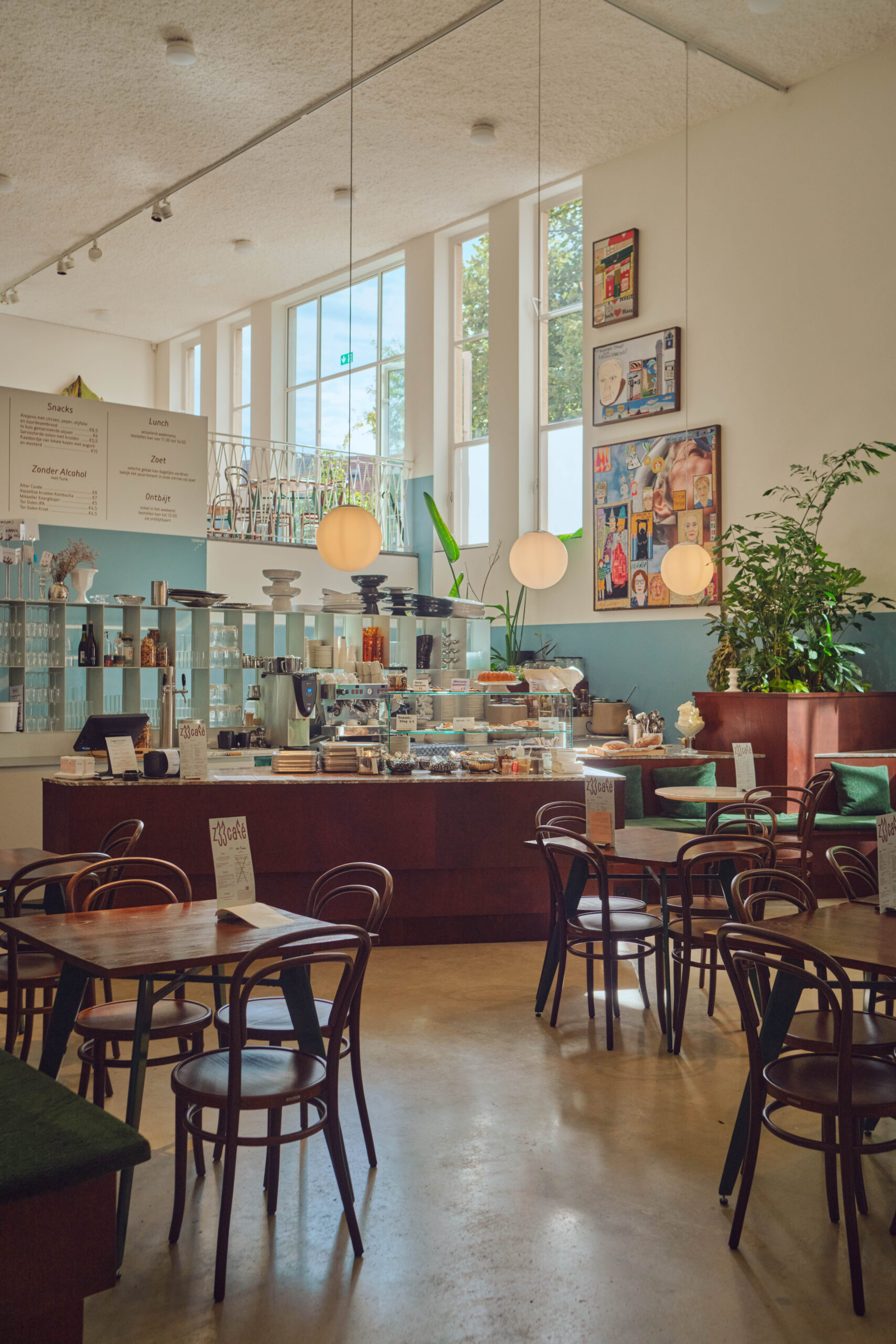
In Hasselt, we stopped at Maison Mathis, Gigi, Bocca Nera and Z33 Café. The latter is integrated into Z33 and combines local, seasonal food with a thoughtfully designed interior by Sarah Poot and Dries Otten.
(*) Photography: Ely Sánchez (CC/studio · CC/magazine).

&p[summary]=&p[url]=https://ccmagazine.es/en/road-trip-limburg-belgium-maasmechelen-genk-hasselt&p[images[0]=https://ccmagazine.es/wp-content/uploads/2026/09/CCmagazine_Limburg_Roadtrip1_portada-scaled.jpg)
)