INAPSQUARE: the power of making what you love
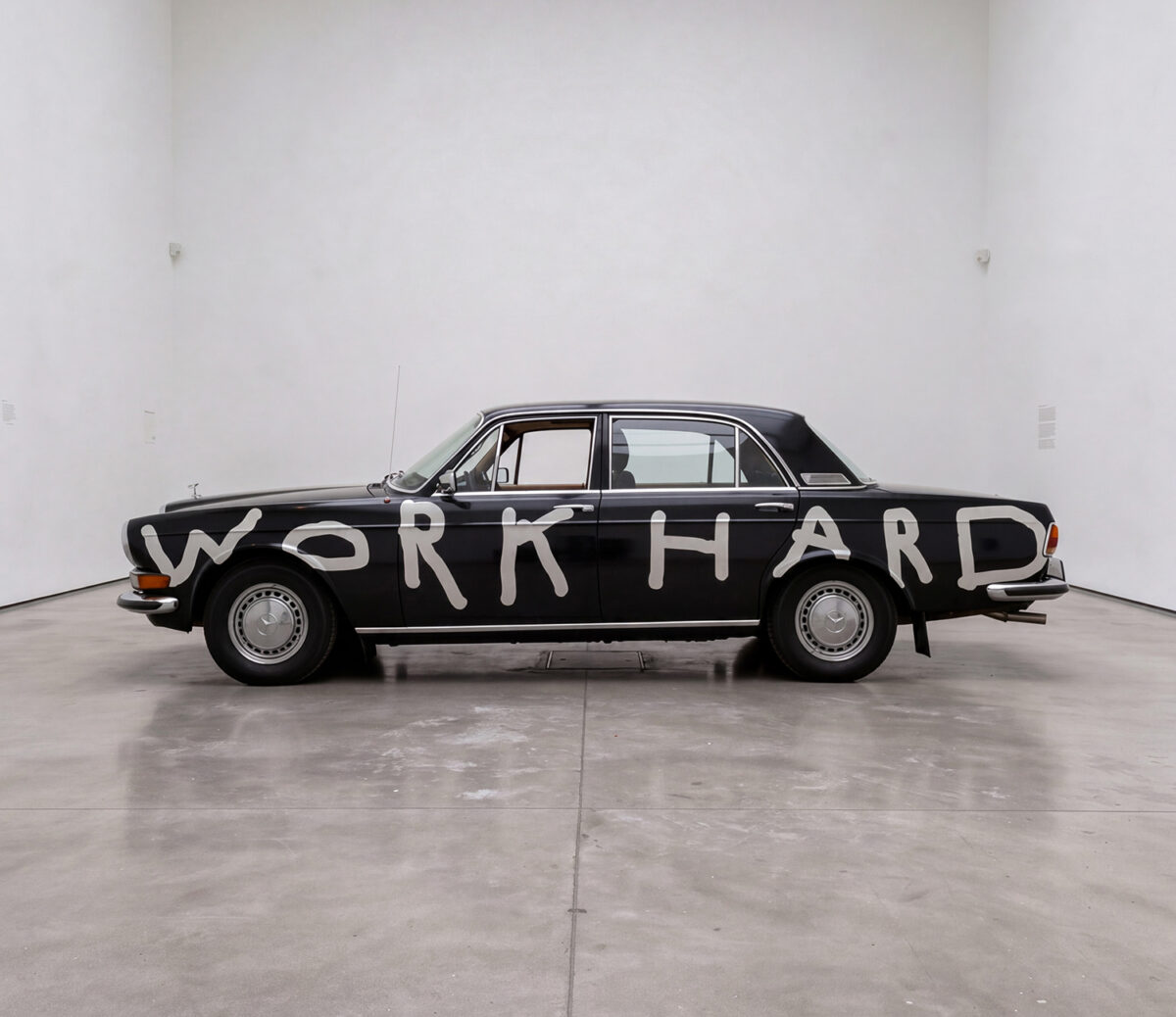
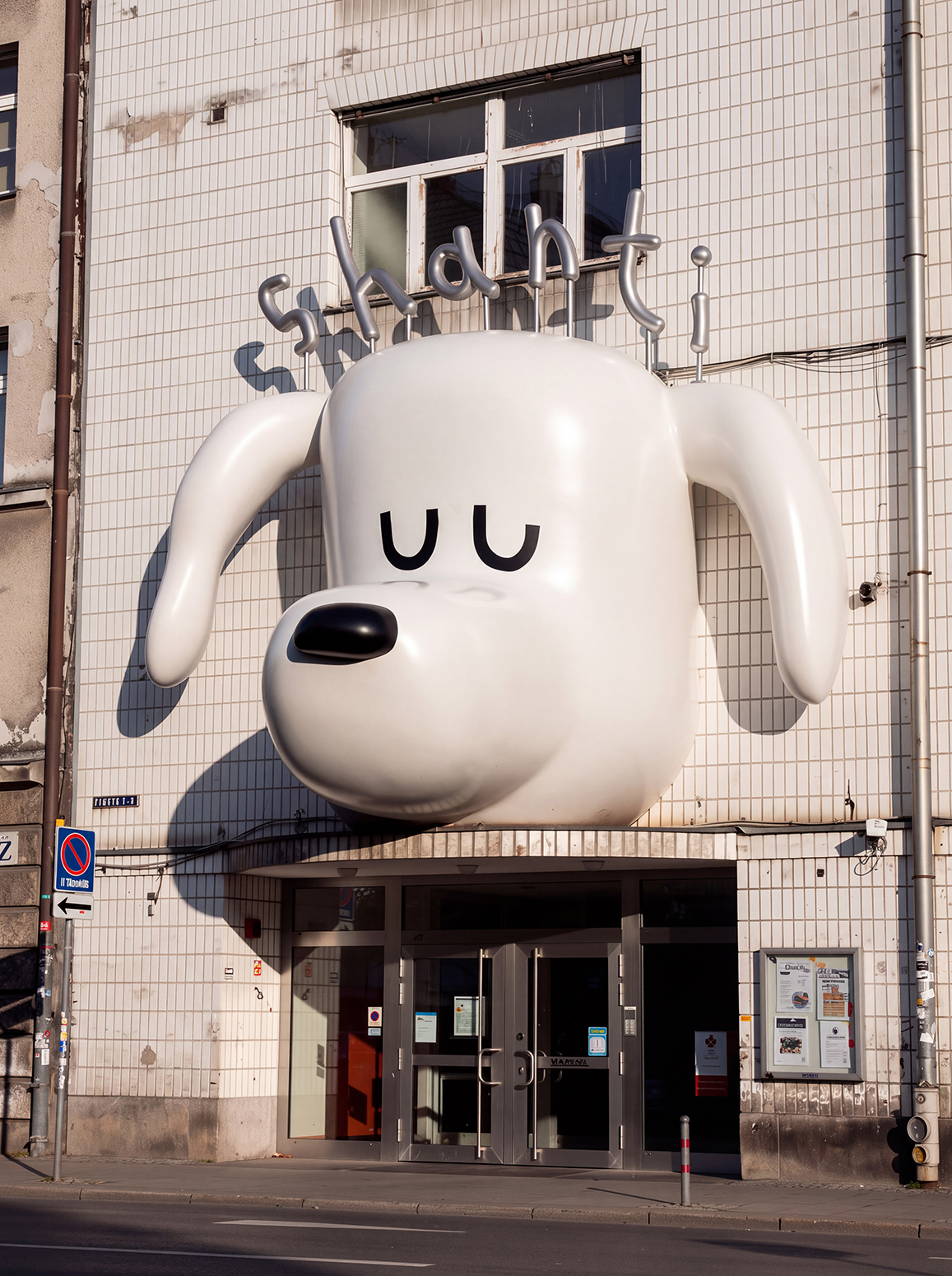
INAPSQUARE began with an almost casual question: “Why don’t we make something fun together?” From there, the South Korean duo built an instantly recognisable universe: black-and-white drawings, everyday characters and a simplicity rooted, above all, in a deeply personal way of understanding creativity. Over time, that visual world has moved beyond paper into sculpture, installations, fashion, product design and immersive environments, while also leading to collaborations with brands such as Chanel, Valentino, Adidas and CASETiFY, as well as numerous cultural institutions. Today, artificial intelligence is opening up new possibilities for bringing their imagined exhibitions to life, but technology has not changed what matters most. Their creative compass remains the same as it was at the beginning: “Let’s draw and make what we like.”
We recently spoke with Philsun Choi, co-founder of INAPSQUARE, to discover what lies behind this distinctive creative universe, how it has evolved over the years and why, even with the arrival of artificial intelligence, continuing to make what they genuinely enjoy remains their most reliable guide.
INAPSQUARE is much more than an artist name; it is the result of a creative partnership between two people with different roles. How did the project begin, and what does each of you bring to the creative process that would not exist if you worked independently?
The beginning of INAPSQUARE was extremely simple. I was deeply impressed by Ina’s drawings and paintings, which I discovered by chance, and our work together began with an informal question I asked her: “Why don’t we make something fun together?” Interestingly, that simple question still sits at the heart of our work today.
We continue to create according to one very clear principle: “Let’s draw and make what we like.” By working together, we are constantly discovering each other’s strengths and potential. Through those discoveries, we keep redefining our respective roles within INAPSQUARE, supporting one another so that each of us can focus on what we do best.
I am responsible for the overall planning and broader vision of our projects and works, while Ina begins the creative process by reinterpreting those ideas through INAPSQUARE’s own visual language. Once the general concept and sketches have been established, we work side by side to develop and complete the final piece.
“Our work together began with an informal question I asked her: ‘Why don’t we make something fun together?’”
You have developed a visual language that is immediately recognisable for its simplicity, monochrome palette and distinctive characters. How did you find such a singular voice in a world increasingly dominated by visual overload?
Our work comes entirely from what we like. Everything — from the subjects we choose and the way we compose to the tools we use — begins with asking ourselves what we genuinely enjoy.
That is why, whenever we find ourselves being influenced too heavily by external factors, we return to the beginning, ask ourselves the same question again and start over: Is this really what we like?
It may seem like a very obvious and simple question, but for us nothing is more decisive. Whenever we feel we may be drifting away from our own path, asking that question helps us find our direction again.
At a time saturated with images, your work conveys calm, optimism and a sense of humour. Do you think simplicity has become a powerful way of creating deeper emotional connections?
People often assume that complex things contain more stories and encourage deeper connections and reflection. We believe, however, that the deepest emotional connection comes from “emptiness”.
An emotional connection is not created when one person pours too much into another; it comes from a kind of mutual resonance. And that resonance begins in a relaxed, open space where both sides have room to reflect. Simplicity naturally creates that kind of unfilled space, allowing genuine points of connection to emerge within it.
Our works, with their simple compositions, function as small spaces in which people can see and feel things for themselves. We believe the works are ultimately completed by the different thoughts and emotions that gradually accumulate around them over time.
Many of your works are inspired by everyday objects, animals, plants and ordinary moments. What draws you to these seemingly simple subjects, and how do they become universal stories through your art?
Before our work is for anyone else, it is our work: work that we love. Put another way, we could think of what we make as a long-term archive of “our lives”, expressed through different media.
If, many years from now, we brought all our works together in one place, they would represent our lives in chronological order. The things we liked, what we were thinking about and everything we reflected on… all of it is naturally archived in our own way.
Rather than trying to make grand art, we believe we are creating our own kind of art: one that tells our story.
“We believe the deepest emotional connection comes from emptiness.”
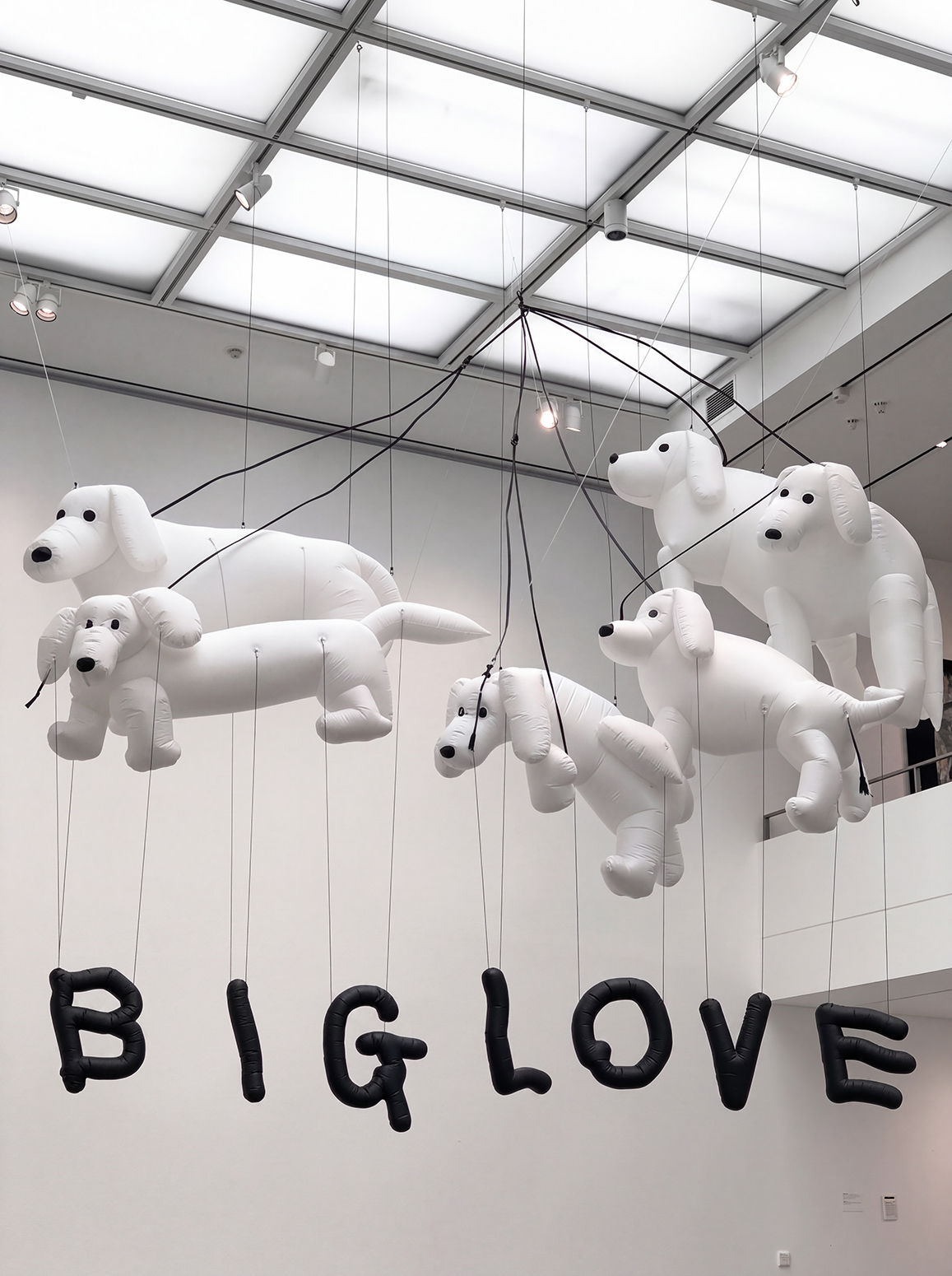
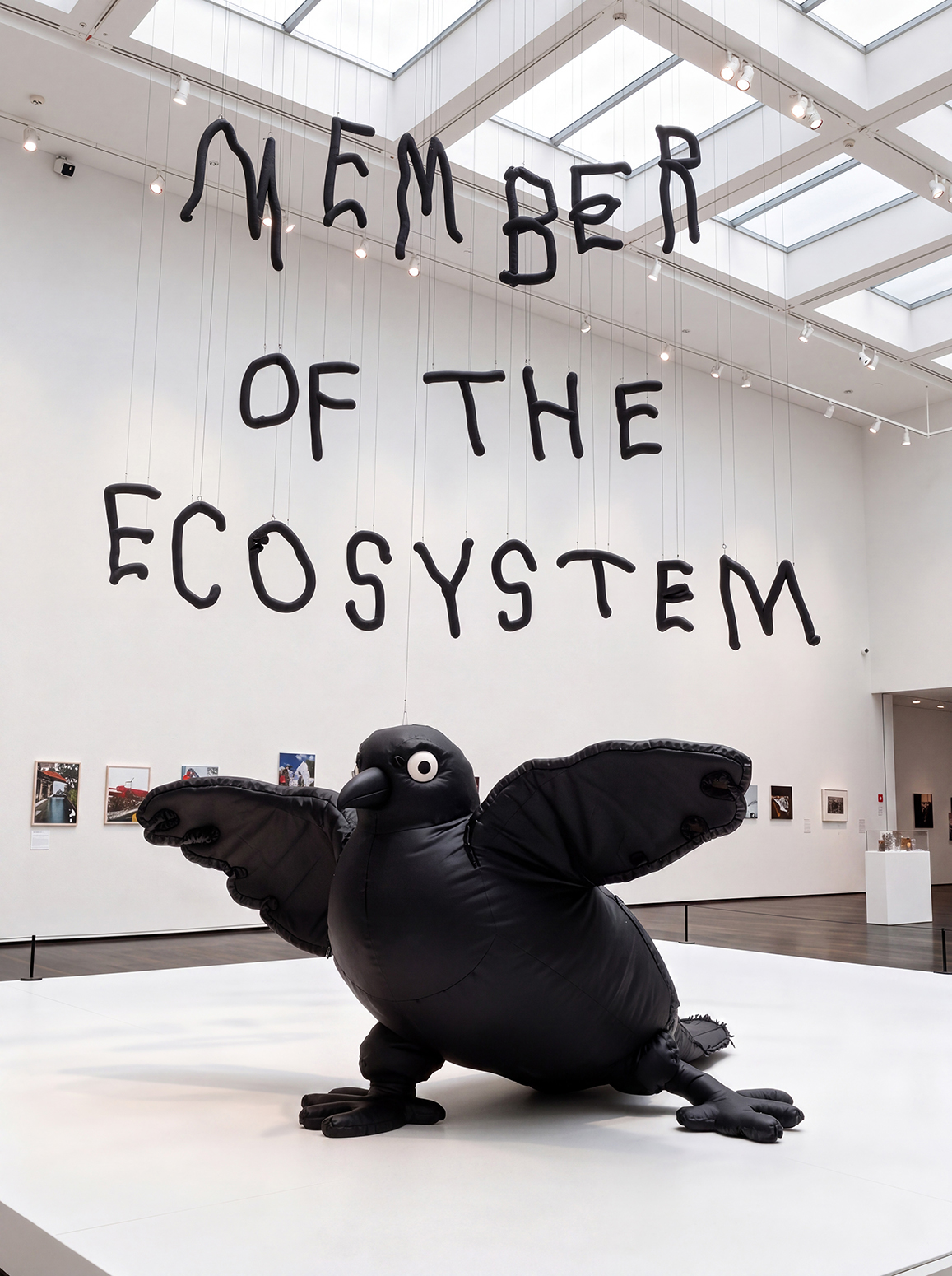
Over the years, your practice has expanded beyond illustration into inflatable sculptures, installations and spatial interventions. How does your creative process change when the audience is no longer simply looking at your work but physically experiencing it?
Even as our work expands into different areas, the starting point remains the same. The fundamental stage — reinterpreting a new subject through our own drawing style — is always where we begin.
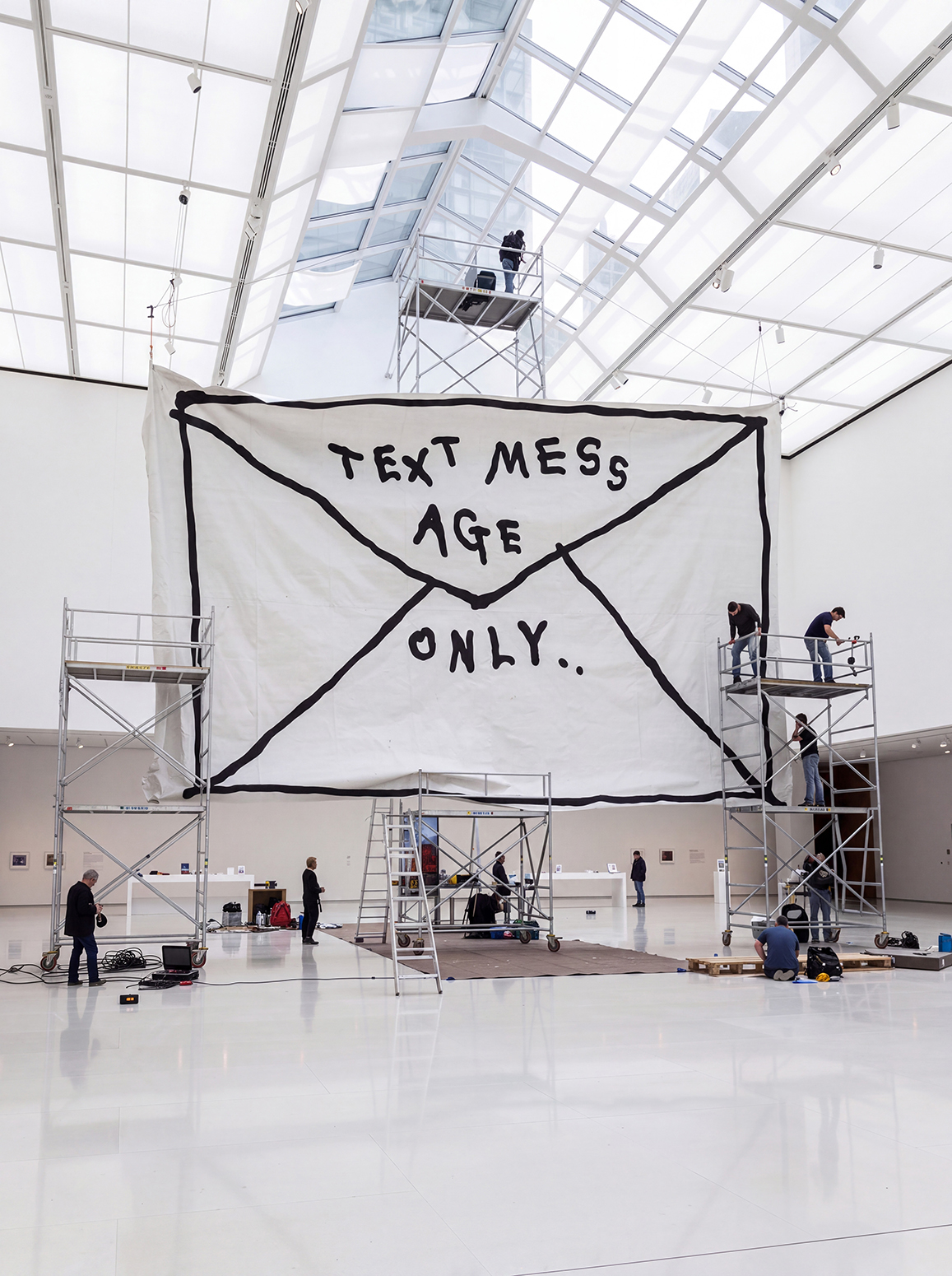
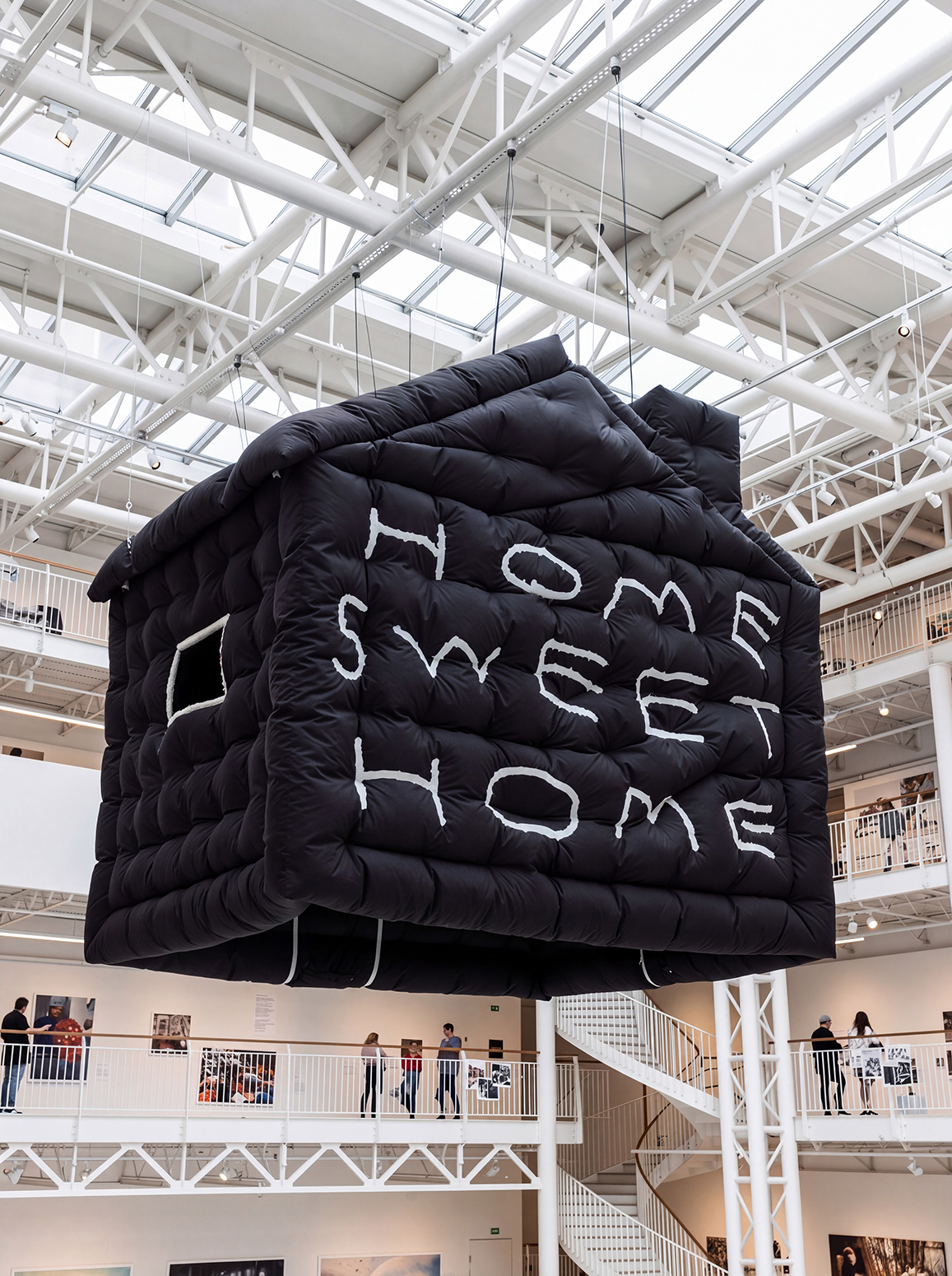
A drawing can become a finished work in itself, or it can serve as the starting point for an inflatable sculpture or an art installation. When we conceive exhibitions or sculptures that audiences will experience directly, we also prioritise harmony with the space and the way people move through it.
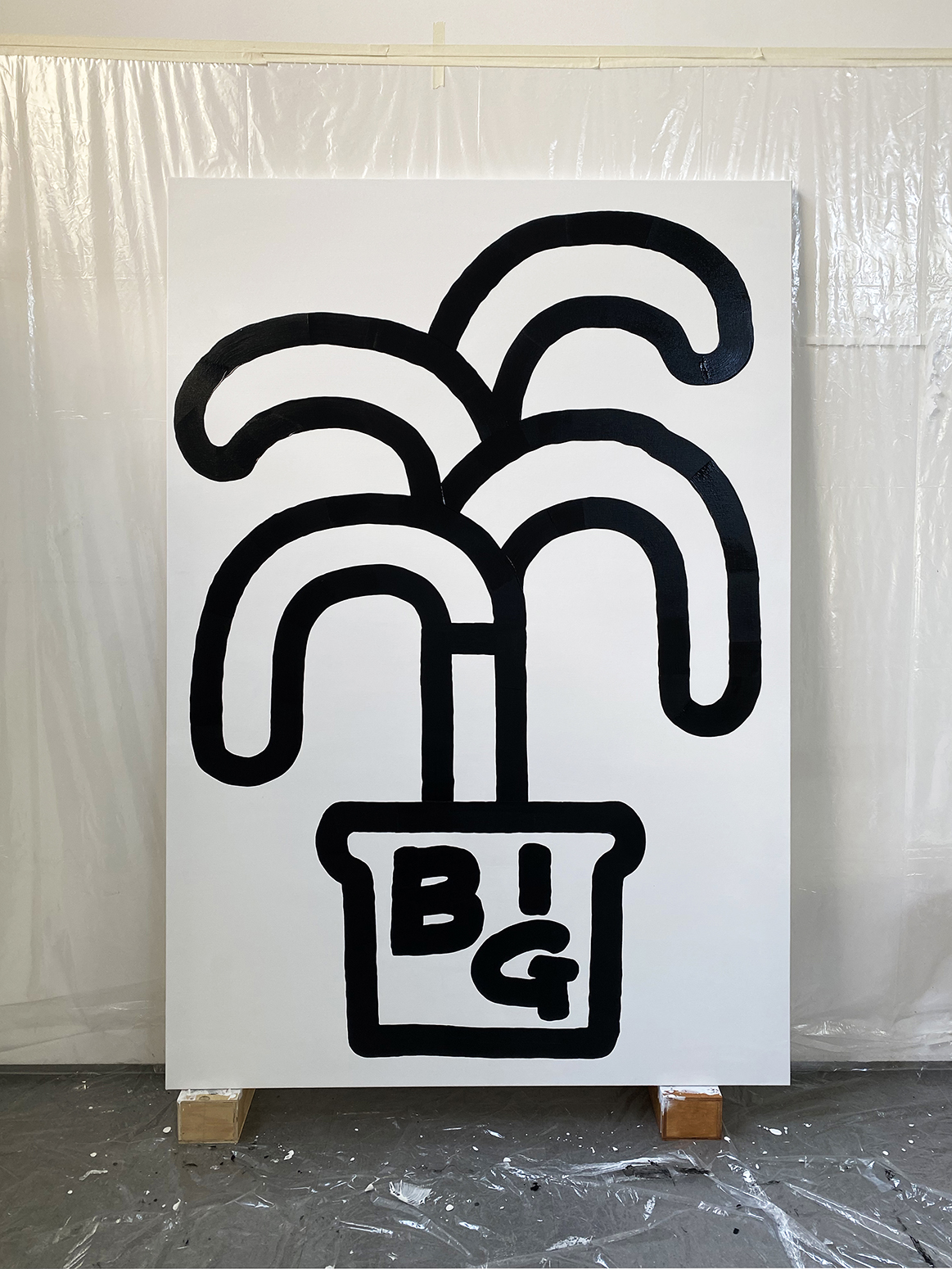
Because communication with the audience is the final stage in completing a work, the entire sequence — entering the space where the work is installed, experiencing the piece and then leaving — becomes part of a single exhibition experience. Designing that journey becomes another creative process in itself.
“We believe we are creating our own kind of art: one that tells our story.”
Although your visual identity remains remarkably consistent, it now appears across exhibitions, fashion, product design and immersive spaces. How do you adapt your artistic language to such different disciplines without losing its authenticity?
This takes us back to the reason we started working together. As I mentioned, the reason we began creating under the name INAPSQUARE was very simple: “Let’s draw and make what we like.”
That is why, whenever we consider one of our own works, a collaboration or an exhibition, the first question we ask is: Is this something we really want to do?
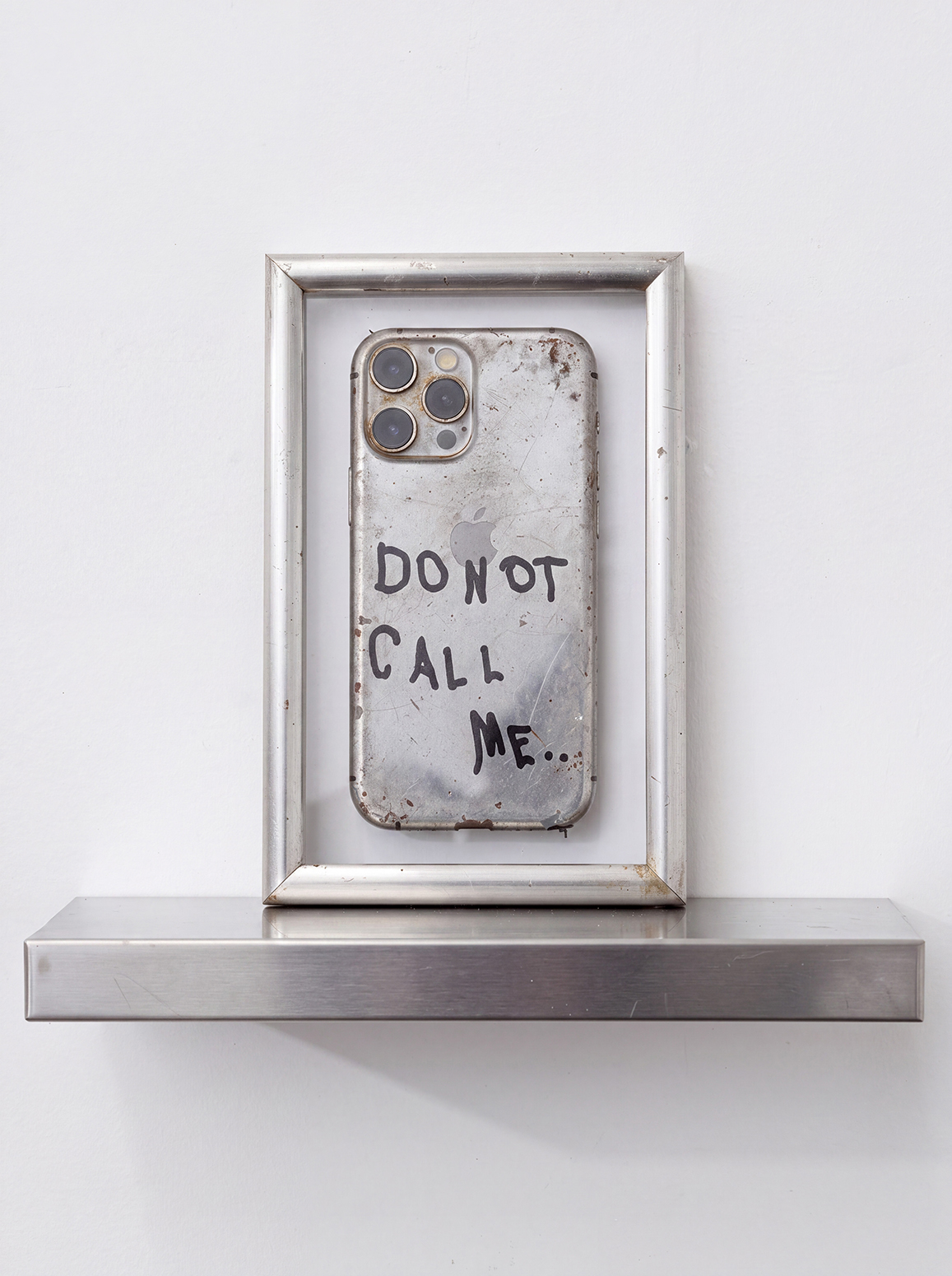
Many projects tend to be shaped by external perspectives rather than emerging from within.
So I think the reason people perceive authenticity and consistency in our work is precisely because everything we do comes from us.
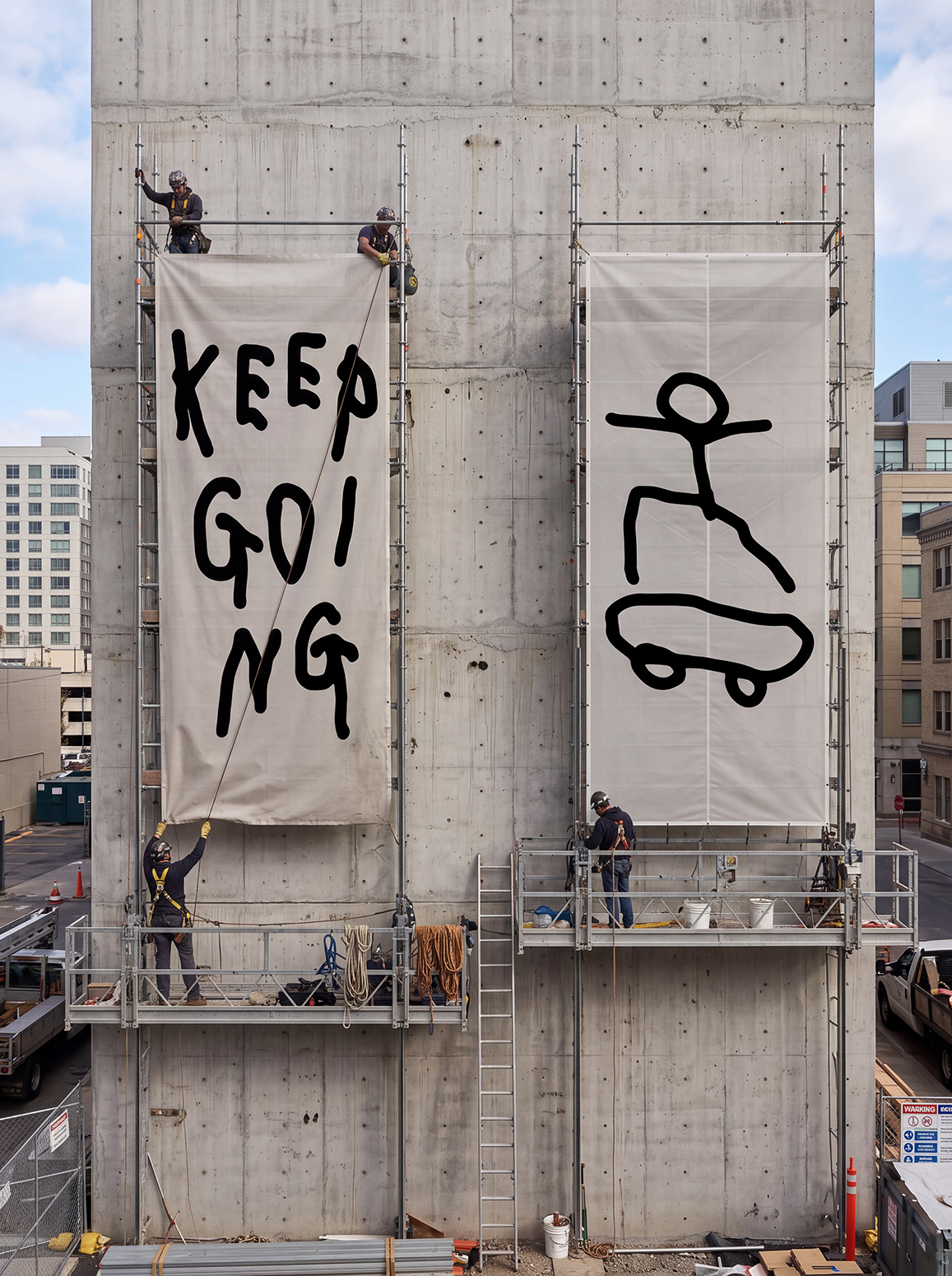
On your Instagram, almost every post includes the phrase “INAP original 2D art meets AI”. Could you explain what that meeting between your original work and artificial intelligence means? How does AI fit into your creative process?
For a long time, we have been experimenting with different ways of taking INAPSQUARE’s drawings and paintings into broader territories. In my mind, there are also many different forms of artwork that I would love to be able to materialise. However, because of practical limitations, it is difficult to bring every single piece I imagine into reality.
Artificial intelligence has become a very valuable tool for visualising the gallery that exists in my mind. We use AI at the stage where we want to give physical form to the infinite exhibition that constantly unfolds in my imagination, allowing audiences to experience it too.
“AI has become a very valuable tool for visualising the gallery that exists in my mind.”
I hope that one day those imagined exhibitions can become real physical exhibitions.
Artificial intelligence is rapidly transforming the creative landscape. For you, is it primarily a tool for expanding your artistic universe, or do you see it as a new creative language? Where do you draw the line between technology and authorship?
For me, artificial intelligence is a tool for expanding our artistic universe. I enjoy experimenting with new tools without losing the essence of our work.
Although our work is monochrome, for example, we use a wide variety of tools and materials within that black-and-white universe: pencils, pens, acrylic paint, spray paint, clay, ceramics and many others. We also continue to experiment beyond canvas and paper, moving into sculpture, spatial design and collaborations.
In that sense, AI is simply another tool we use in our work. Technology will continue to advance, and ultimately the fundamental questions are who uses that technology and how they use it.
Some people use technology to create new pieces that grow out of their own work, while others use it to mass-produce things without meaning. In the end, what really matters are the ideas, intentions and reflections of the people using that technology.
You have collaborated with brands such as Valentino, Chanel, Adidas and CASETiFY, as well as numerous cultural institutions. What makes a collaboration meaningful for INAPSQUARE, and what do you look for before accepting a project?
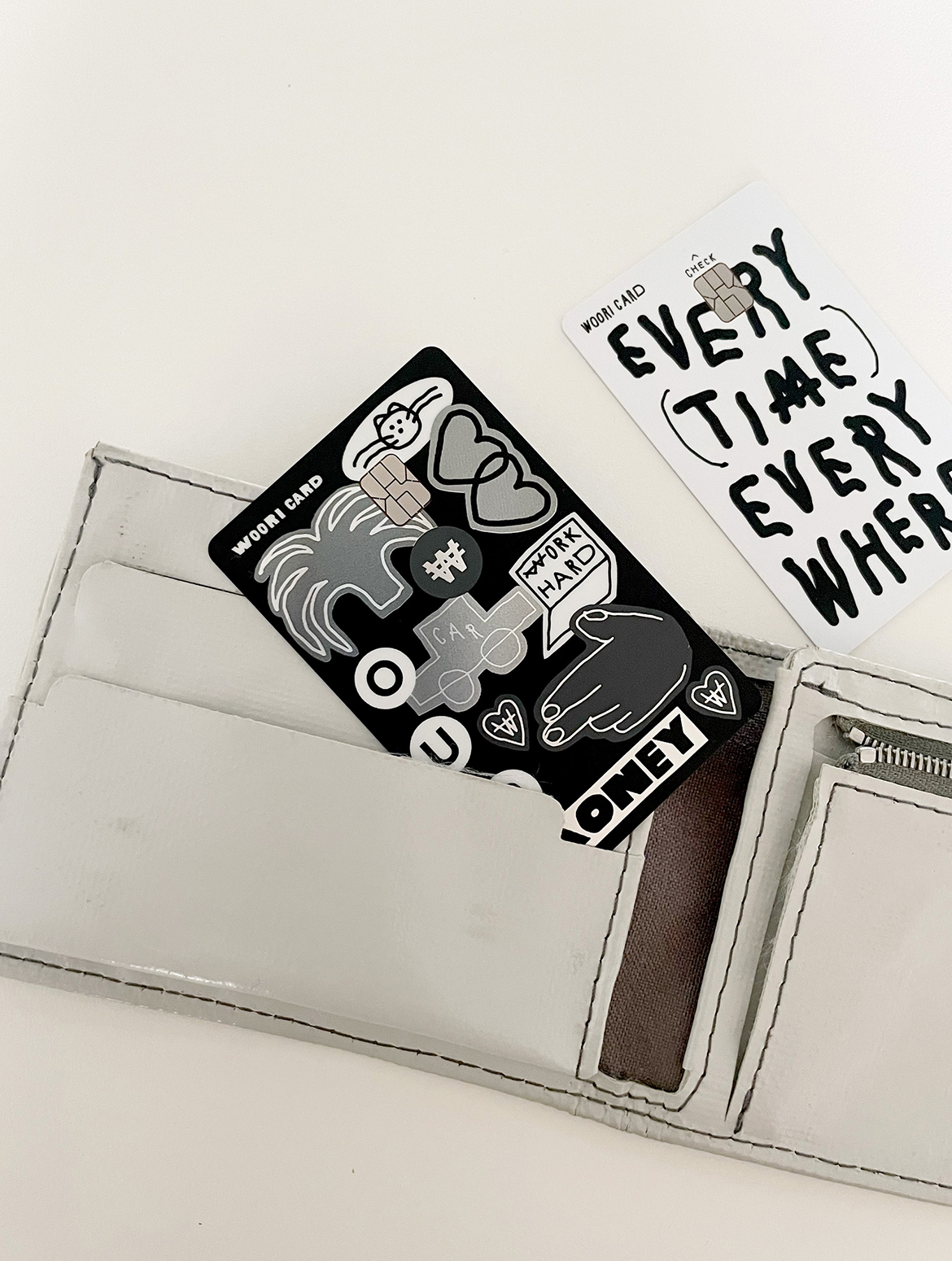
For us, collaboration means “a new challenge and infinite expansion”. From the very beginning, we dreamed of creating pieces that could become part of people’s everyday lives, rather than existing only on a canvas or inside an exhibition space.
We believe our work can evolve to another level by becoming part of the daily lives of very different people. With that in mind, we continually explore collaborations in areas we have not yet entered.
“From the beginning, we dreamed of creating pieces that could become part of people’s everyday lives.”
The process of taking an apparently simple black-and-white work, introducing it into a new field, seeing it reinterpreted in a different way and, finally, watching it become something new is enormously exciting and meaningful to us.
That is why the most important factor when considering a collaboration is whether the project excites us and whether it offers an opportunity for our work to be reinterpreted in a new way. We also consider whether we can preserve the direction and identity of our work within that project.
For us, every collaboration is a new canvas.
Your exhibitions, books, artworks, products and installations seem to belong to the same universe rather than existing as independent projects. Do you see INAPSQUARE as a body of work or as a world that is constantly evolving?
INAPSQUARE’s work comes entirely from us and is created by us. That is why the works, collaborations and exhibitions we make feel like extensions of our own lives.
Naturally, the forms our work takes continue to diversify, and the time spent accumulating all of these pieces eventually becomes a work of art in itself.
If, many years from now, we brought together all the works, collaborations and exhibitions we have created, I think that collection would become another work of art: one that would span our lives and, ultimately, our universe.
South Korea is currently enjoying extraordinary international recognition across art, design, fashion and architecture. From your perspective, what makes the Korean creative scene today so dynamic and inspiring?
I think the element that makes Korea’s creative atmosphere so dynamic and inspiring is its people.
The particular sensibilities and perspectives of Koreans naturally inspire one another and, as those ideas are transformed into creative outcomes, they generate an organic chain reaction that gives rise to new sources of inspiration.
At a time when images are consumed in a matter of seconds, what do you hope someone experiences when they stop and spend time with one of your works?
In a world filled with increasingly complex and varied stimuli, I hope people can experience the sense of wellbeing that comes from simplicity and clarity.
That is why, rather than expressing things in a complicated or difficult way, we draw and create what we like in a more intuitive way. I hope the time someone spends looking at our work can offer them a small moment of happiness.
Looking ahead, if someone discovered INAPSQUARE twenty years from now, what would you like them to understand about your work and the way you see the world?
Just as we have done until now, our intention is to keep drawing and making what we like.
If we continue like this for another twenty years, I think the world we love will gradually grow into something richer. I hope people simply enjoy the works, experiences and time we have naturally accumulated over the years.
Creating a world of your own
Perhaps the greatest lesson to emerge from INAPSQUARE’s universe has less to do with drawing, technology or even art than with something much more fundamental: the importance of not losing sight of what genuinely drives us.
Against a culture that seems to demand constant novelty, speed and visibility, they keep returning to one apparently simple question: “Is this really what we like?” That consistency has allowed minimalist black-and-white drawings to evolve into sculptures, exhibitions, objects, collaborations and imaginary worlds created with artificial intelligence without losing their identity along the way.
And that is precisely the real strength of INAPSQUARE: reminding us that building a voice of our own does not necessarily mean adding more, but knowing what to keep, what to remove and, above all, why we continue to create.
(*) Images courtesy of INAPSQUARE.