Why creativity is becoming the most valuable skill in business
Ekaterina Solomeina, co-founder of Future London Academy, reflects on AI, creative leadership and the skills professionals will need to navigate an increasingly nonlinear world.
Creativity was once treated as a specialist discipline: a skill reserved for designers, artists, writers and the departments expected to make things look, sound or feel compelling. Today, as technology accelerates and traditional professional boundaries dissolve, creative thinking is becoming something else entirely—a strategic capability with consequences for every part of a business.
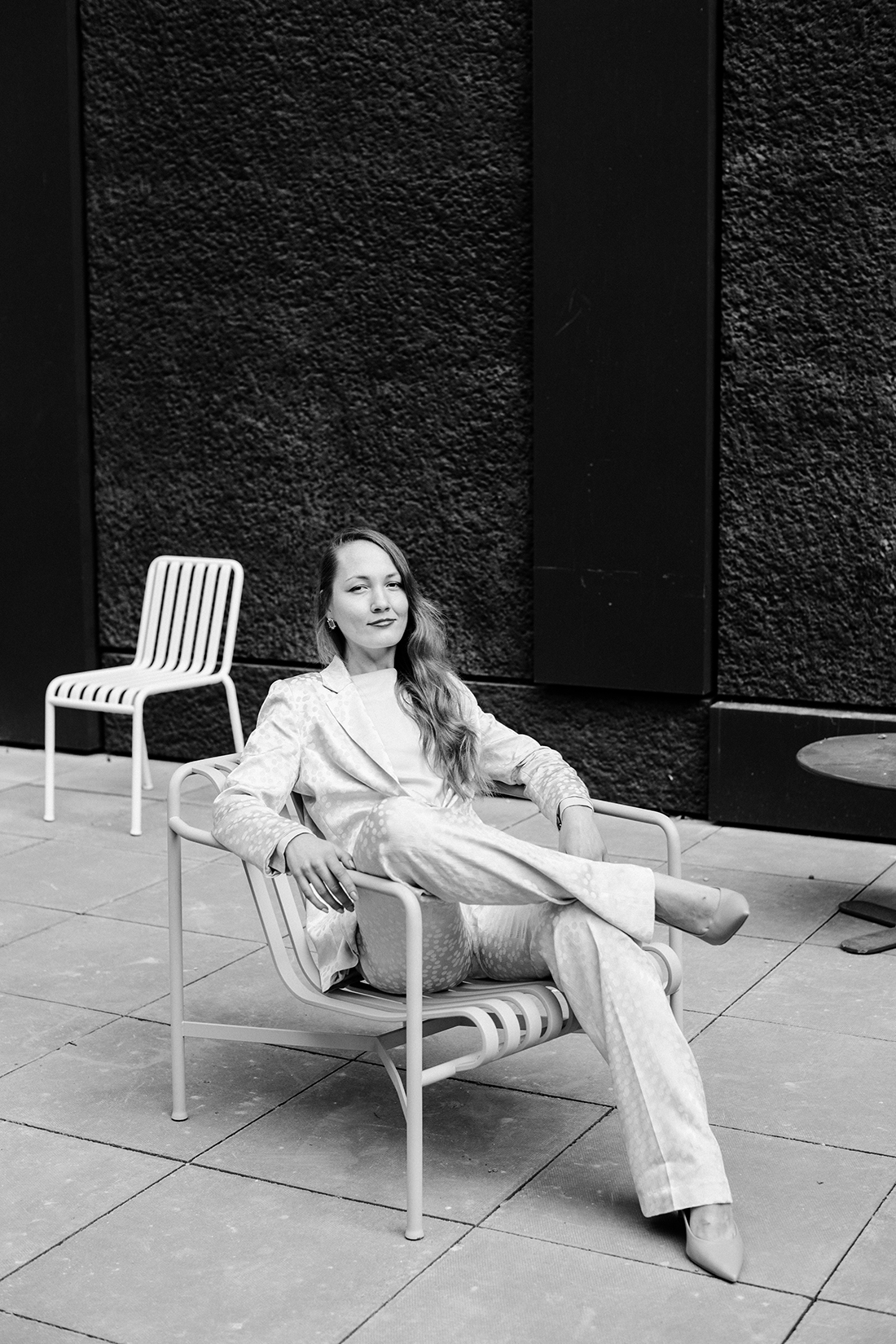
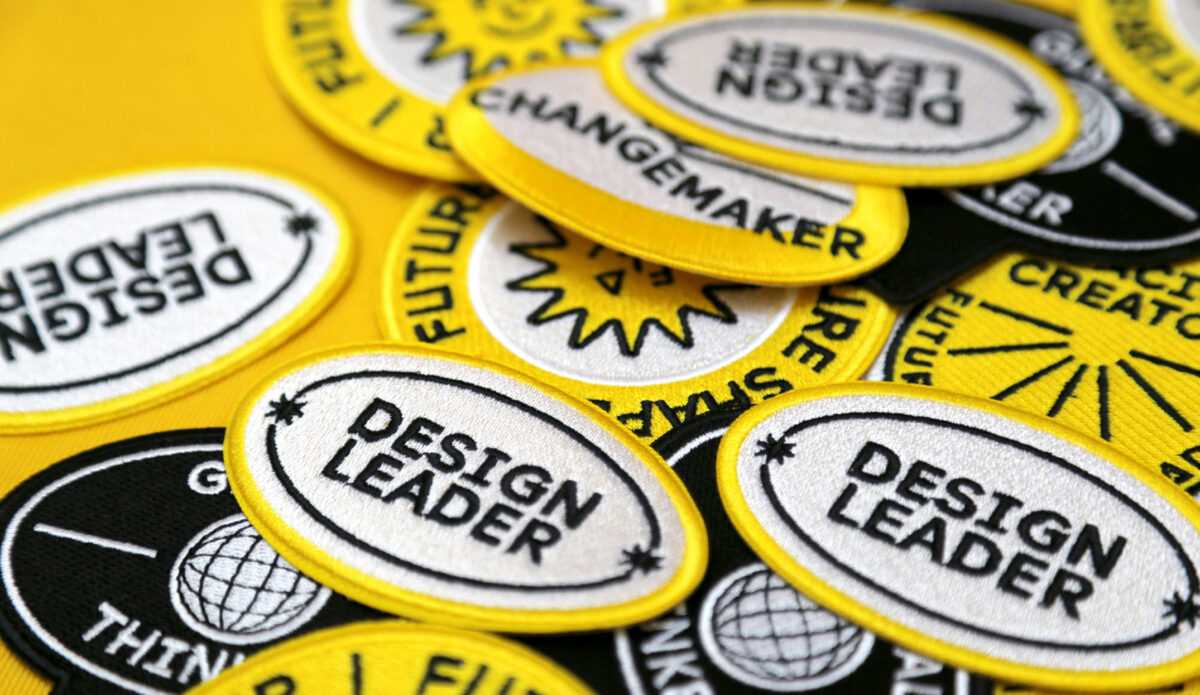
Few people have observed this shift as closely as Ekaterina Solomeina, designer, entrepreneur, educator and co-founder of Future London Academy. Based in London but international in scope, the academy creates practical learning experiences for creative professionals, combining courses with access to leading designers, innovators, studios and businesses. Its programmes span creative leadership, branding, product design, operations and business education for design leaders—territory that reflects Ekaterina’s central conviction: creativity can no longer exist in isolation from the organisations and systems it has the power to transform.
When we spoke with her, our conversation moved far beyond the future of one school. We discussed artificial intelligence, leadership, the value of design in the boardroom, the limitations of traditional education and the qualities creative professionals will need in the coming decade. Running through it all was a compelling idea: at precisely the moment when machines appear capable of doing almost anything, human imagination may become more valuable, not less.
Creativity in an age of nonlinear problems
“The world has changed. The problems we face are no longer linear”, Ekaterina says. Previous eras of industrial transformation were defined by scale: making more, moving faster and using technology to grow. The challenges now emerging are different. Many don’t have a single correct or algorithmic answer; they require imagination, empathy and the ability to connect seemingly unrelated ideas.
For Ekaterina, the arrival of AI recalls the anxieties that accompanied industrialisation. She points to the Bauhaus, founded in 1919 as manufacturing transformed not only how objects were produced, but how people understood the role of design. As craftsmanship gave way to mass production, creatives feared that machines would make their knowledge obsolete. Instead, the opposite occurred.
“The more manufacturing expanded, the greater the need became for creativity, design, beauty and vision—and for people capable of understanding how humans, societies and cities work.”
Today’s tools may be radically different, but the parallel is clear. AI is already accelerating production across the creative industries, yet speed alone does not generate meaning. Ekaterina describes contemporary AI as highly effective at connecting historical dots because it is largely grounded in existing data. Human creativity can do something more elusive: imagine what has never existed, connect ideas that have never previously met and, in her words, “create entirely new dots to connect in the first place.”
She resists making definitive claims about which parts of creativity will remain exclusively human. “The honest answer is that I don’t know—and nobody does,” she says. The more interesting question is not what AI will take from us, but what its evolution will oblige us to discover about ourselves. “It will be our responsibility to keep discovering what makes us uniquely human.”
Why creative leadership belongs in the boardroom
If creativity is becoming a strategic capability, creative leaders must also learn to make its value legible. Too many organisations still confuse creativity with aesthetics, treating design as the finishing layer rather than an instrument for changing how a business works.
“The most important thing for any designer or creative is to understand which metrics matter to the business at that particular moment.” E. Solomeina
Ekaterina reduces the equation to two priorities every company understands: increasing revenue and reducing costs. Branding and design can open markets, reposition a company, broaden its audience and reduce customer-acquisition costs. Service and UX design can improve journeys, remove friction and increase customer lifetime value. Creativity is not adjacent to business performance; when applied intelligently, it directly shapes it.
The difficulty is often one of translation. “The most important thing for any designer or creative is to understand which metrics matter to the business at that particular moment”, she explains. A company focused on efficiency needs to understand creative work through the language of savings and optimisation. One pursuing rapid growth needs to see how design can unlock a new market or attract a different customer profile.
This fluency becomes especially important when designers move into management. Most enter the profession because they love making things, only to discover that seniority gradually takes them further away from hands-on creative work. The transition can feel, Ekaterina admits, “strange—and even soul-crushing.” But it doesn’t require abandoning creativity; it requires applying it differently.
Once creatives enter the C-suite, they are expected to understand P&L statements, budgets, finance and operations, and to communicate with CEOs and CFOs on common ground. Traditional design education has rarely prepared them for this. Ekaterina’s advice is direct: learn the language of business—not to dilute a creative idea, but to make ambitious work possible.
“You don’t have to compromise your creativity. You simply need to explain your creative thinking and the value of your work through a lens the business understands.”
She would like to see far more creative leaders in positions of real organisational influence. Financial and linear thinking remain essential, but they are insufficient on their own. Designers bring empathy, ethics, imagination and systems thinking to complex decisions. With more Chief Design Officers in the C-suite, she argues, companies could develop solutions that work not only for the business, but also for society and the planet. It is precisely this gap between creative leadership and the boardroom that Future London Academy addresses through its Executive Programme, designed to help creative and design leaders develop the business knowledge and leadership skills needed to operate at executive level.
From managing people to giving them a reason to care
Leadership itself is also changing. Ekaterina sees little future in a management culture based purely on instruction and compliance, particularly as younger generations become a larger proportion of the workforce. It is no longer enough to dictate where, when and how people should work. Leaders need to create belief.
“People are drawn to purpose-led companies, businesses and leaders”, she says. That purpose doesn’t need to be grandiose. A product might make work easier, remove a tedious task, improve efficiency or introduce something genuinely beautiful into the world. What matters is that the organisation understands why its work deserves to exist—and that its leaders genuinely share that conviction.
Vision, however, is only half the task. The best creative leaders can inspire people while also providing certainty, goals and processes. Without those signposts, teams can become lost inside an abstract ambition. Conversely, highly operational managers must learn to connect deadlines and daily performance to a larger purpose. Leadership lies in holding both conditions at once: imagination and execution, direction and possibility.
Younger creatives, Ekaterina observes, tend to be bolder, more radical and less willing to accept received wisdom. Whether this belongs specifically to the present generation or is simply a quality of youth matters less than what happens next. “My hope is that they do not lose that quality as they grow older”, she says. Their willingness to question inherited assumptions could be one of the industry’s most valuable assets.
“People are drawn to purpose-led companies, businesses and leaders.” E. Solomeina
The skills creatives will need next
Asked which capabilities creative professionals should cultivate over the coming decade, Ekaterina begins not with what they must acquire, but with what they must protect.
The first is playfulness. She cites Ivy Ross, part of the faculty at Future London Academy, who describes play as trying something without demanding a predetermined result. Play gives us permission to experiment, fail and explore. Adults gradually learn to resist it, yet creative work depends on precisely that willingness to enter an uncertain process.
The second is empathy, long embedded in practices such as user research but increasingly important as technology mediates more of our lives. For Ekaterina, empathy is inseparable from ethics: the capacity to consider consequences, sustainability and the wider impact of what we make.
The third is resilience—the ability to learn, unlearn and begin again. Job titles that currently organise the creative industries may disappear; a UX designer or creative director could need to adopt an entirely new professional identity. “Focus less on what your job is and more on the value you can bring to the world and to the organisations you work with”, she advises.
These qualities will need to coexist with systems thinking and broader commercial knowledge. As technology enables smaller teams to achieve more, individual roles may widen. Creatives could be expected to understand not only design, but also product, marketing, operations, logistics, finance and supply chains. Greater influence will inevitably bring greater responsibility.
Curiosity underpins all of these abilities. Ekaterina rejects the idea that it is an innate gift possessed by a fortunate few. Drawing on Carol Dweck’s distinction between fixed and growth mindsets, she describes curiosity as a muscle that can be trained through attention.
“When we meet exceptionally curious people, we assume curiosity comes naturally to them. In reality, they may have practised it throughout their lives.”
The exercise can be disarmingly simple: notice an unfamiliar detail on the way to work, look for shapes in the landscape or deliberately observe a familiar street as though seeing it for the first time. Then creativity does not have to begin on command in front of a blank page; the mind is already alert and making connections.
Rethinking creative education as a lifelong practice
This growth mindset also challenges the conventional architecture of education. Ekaterina questions a model that asks people at nineteen to choose a lifelong direction, study for four years—often with limited contact with professional reality—and then navigate several decades of change largely alone.
She expects learning to become more fragmented, continuous and closely connected to practice: learn something, use it, discover the next gap and return to education. Future London Academy was created partly in response to the void experienced by senior professionals who have accumulated fifteen years of experience and suddenly ask what they need to learn for the next twenty.
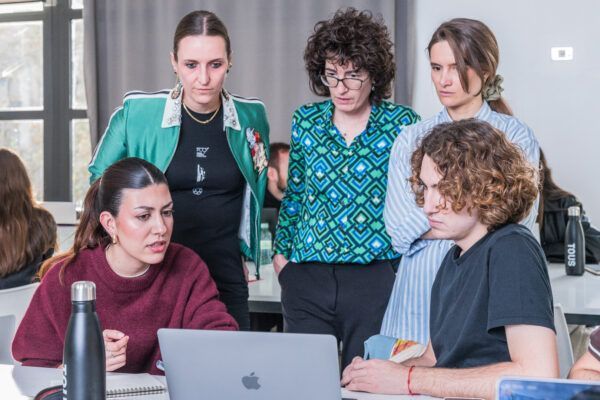
Online education makes this more flexible and accessible, but Ekaterina is adamant that physical learning must survive. “We learn from other people, with other people and simply by being around them.” As life becomes more technologically mediated, spaces in which people can gather, make things and exchange ideas may become more—not less—important.
Her own career has also taught her to see education as an ecosystem of relationships. The people we meet at university or in our earliest jobs may remain part of our lives for decades. She regrets treating university primarily as a place to perform academically rather than an opportunity to form connections. Her advice now is to choose environments not only for salary, prestige or curriculum, but for the people they place around you.
“Where will I meet the best people, and where will I learn from them? Those relationships may shape the next twenty years of your career.”
The most creative moment may be now
For all the uncertainty surrounding AI, work and education, Ekaterina is emphatically optimistic. Professions once regarded as stable may be transformed or commoditised, while creativity becomes relevant to almost every company and individual.
This doesn’t guarantee creatives a comfortable future. They will need to speak the language of business, expand their knowledge and repeatedly reimagine their roles. But the capacity to produce meaningful ideas where no obvious answer exists will only become more important.
“We can now ask AI systems to handle things we do not know, while using what remains uniquely valuable in us—our imagination and our ability to invent things that have never existed—to their fullest potential”, she says. “Life is a canvas. Imagine what we can do with it.”
Creative Snapshot: Ekaterina Solomeina
Three books for creative leaders: Mindset by Carol Dweck; Creativity, Inc. by Pixar co-founder Ed Catmull; and Leap Before You Look: The Heart and Soul of Branding by Michael Wolff, co-founder of Wolff Olins. Ekaterina describes Wolff—a longstanding friend and mentor—as the person who most profoundly shaped her understanding of design and curiosity.
A city that continually inspires her: London, for its architecture, museums, nature, food and art—and for the creativity embedded in its streets.
A cultural place she never tires of visiting: The Barbican, whose combination of homes, concert hall, galleries and gardens embodies a utopian idea of culture as part of everyday life.
A lesson every creative leader should learn early: Don’t be afraid of failure. Love your ideas enough to defend them, but be prepared to let them go—and learn to find the truth inside criticism before reacting emotionally.
A daily creative habit: Sport. Ekaterina trains six days a week, primarily in Muay Thai. The need to react, adapt and think on her feet makes martial arts a creative practice as well as a physical one.
What is inspiring her now: Nature—and, more specifically, apples. Learning about varieties, farms and cultivation has become a way of observing the endless creativity, intelligence and diversity of the natural world.
“Life is a canvas. Imagine what we can do with it.” E. Solomeina
(*) Images provided by Future London Academy.