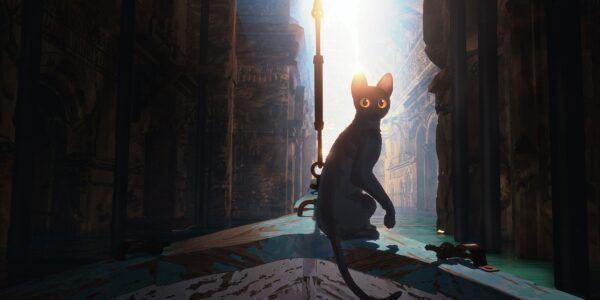
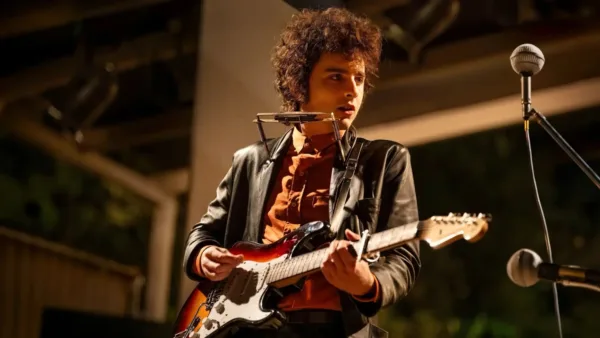
The Phoenician Scheme: Wes Anderson in epic mode

With “The Phoenician Scheme”, Wes Anderson once again demonstrates that his visual and narrative style remains a living cinematic laboratory – capable of hybridising genres, exploring new forms, and offering, this time, a geopolitical satire dressed as a family fable. Premiering at the 2025 Cannes Film Festival, this new film marks an evolution within the Andersonian universe: darker, more complex, more political, and yet profoundly human.

Anatole “Zsa-zsa” Korda’s story
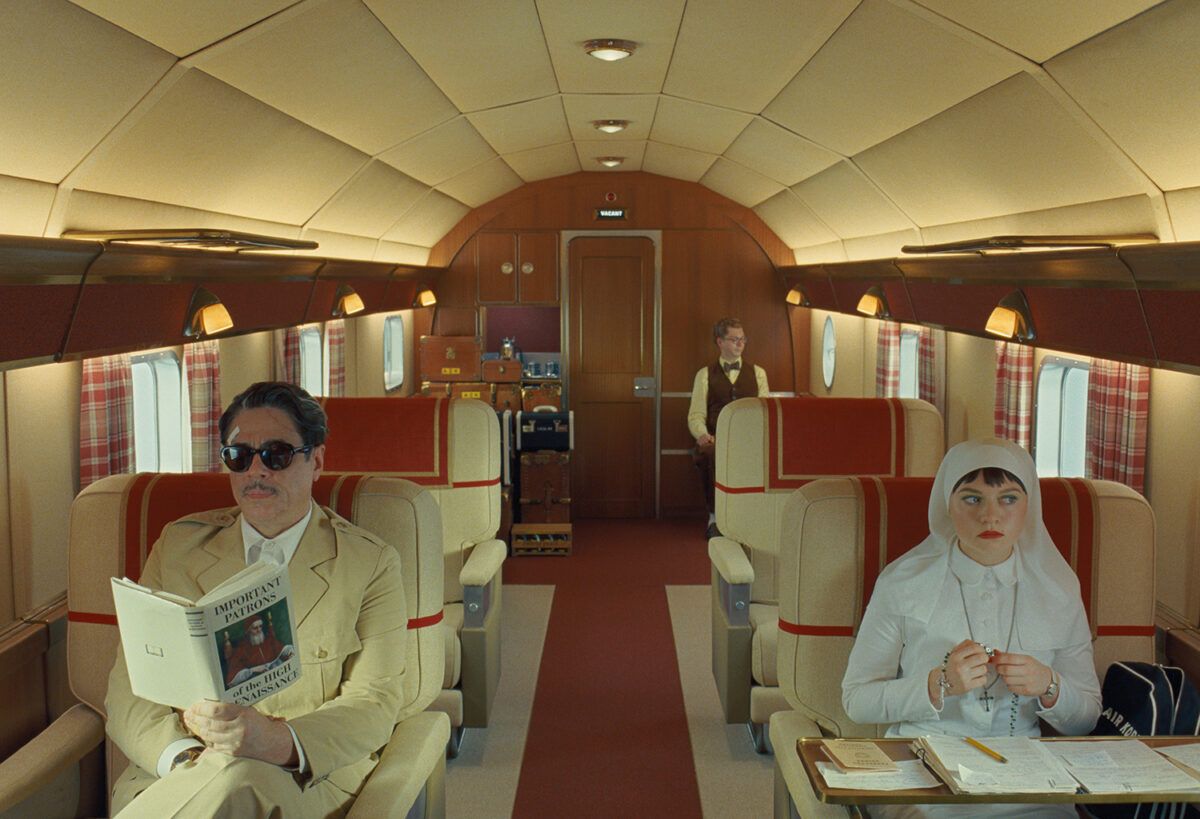
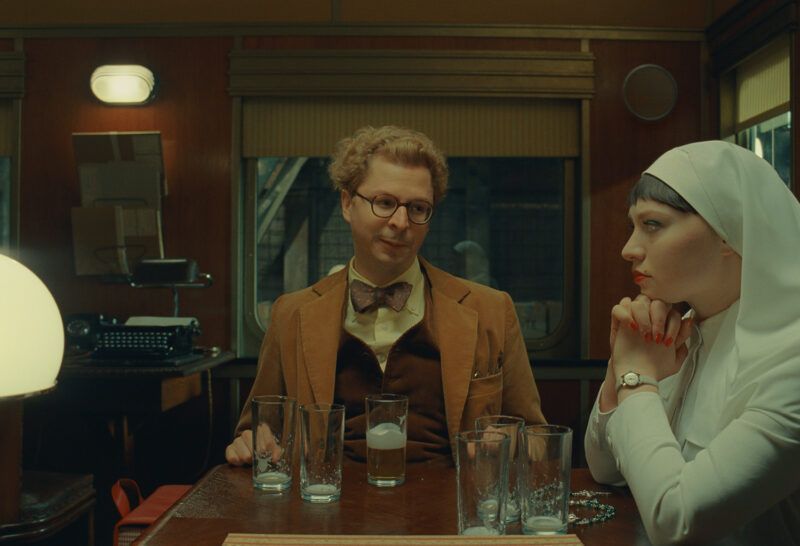
The story revolves around Anatole “Zsa-zsa” Korda (exquisitely performed by Benicio del Toro), a European tycoon in the 1950s who has survived six assassination attempts and is determined to complete an ambitious infrastructure project: the “Phoenician Land and Sea Scheme”. To achieve it, he must close a staggering financial gap —“everything we’ve got… plus a little more”— while reconnecting with his estranged daughter Liesl (Mia Threapleton), a novice nun he hasn’t seen in six years.
“The story revolves around Anatole ‘Zsa-zsa’ Korda, a European tycoon in the 1950s who has survived six assassination attempts.”
What begins as an industrial and financial odyssey becomes a spiritual, emotional and aesthetic journey, in which father and daughter traverse a fictional map evoking the Balkans, the Middle East, and any liminal territory between power, commerce and collapse.
A character for the ages: Zsa-zsa Korda
Anderson has said he had Benicio del Toro in mind from the beginning. The Puerto Rican actor owns the character with a hypnotic blend of sophistication, sarcasm and melancholy. Zsa-zsa is like Charles Foster Kane rewritten by Italo Calvino: excessive, inscrutable, refined and brutal, collecting art, encyclopaedias, hand grenades and enemies with equal fervour.
His performance anchors the film like a gravitational axis. Del Toro never leaves the frame, and his interaction with each character reveals layers of irony, repressed affection, paranoia and even redemption. Rarely has an Andersonian character felt so three-dimensional.
Mia Threapleton and Michael Cera: Perfect foils
Threapleton, in her first leading role, dazzles with restrained nuance.
Her Liesl is both victim and judge of her father, channelling an ambiguous, pragmatic spirituality shaped by doubt and compassion. She creates a memorable character who forms the emotional backbone of the film.
Cera, meanwhile, plays brightly Bjorn, a “Norwegian tutor and insect expert”, who is Liesl’s loyal companion. His portrayal brings lightness and a blend of physical and verbal humour reminiscent of Peter Sellers. His accent, gestures and tenderness strike a delicate balance between the absurd and the endearing.
A Screenplay as geopolitical puzzle
Co-written with Roman Coppola, the narrative unfolds like a corporate road movie interwoven with international conspiracies, family betrayals and colonial echoes. Korda and Liesl travel through a fictional region that might be a distorted echo of Lebanon, Yugoslavia and the Caucasus, seeking allies, investors and redemption.
Each stop is a world unto itself: from a jazz club in Marseille overtaken by anarchists (led by Sergio, the humanist revolutionary) to a desert utopia run by an eccentric cousin. The story expands without losing coherence: collisions between the macro and the intimate, the sacred and the speculative, legacy and imposture.
The film is dense but fluid. Its episodic structure allows Anderson to unleash his full arsenal of dioramas, models, symmetrical choreography, overlaid text, and analogue effects. Every sequence is a showcase of visual invention.
Art Direction: Controlled baroque
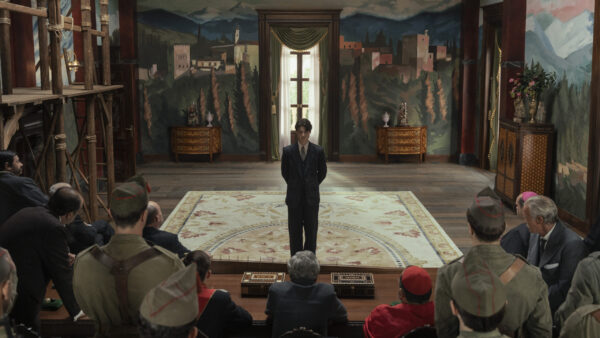
Shot mostly at the legendary Babelsberg Studios, “The Phoenician Scheme” is a love letter to handcrafted set design. Adam Stockhausen outdoes himself with palatial interiors, subterranean offices, cardboard deserts and a colossal dam that bursts in a climactic miniature sequence.
Bruno Delbonnel’s cinematography brings a darker palette than previous Anderson films, perfect for a narrative about power, death and faith. The lighting is dramatic, almost expressionist, without abandoning Anderson’s signature colourism.
Milena Canonero’s costume design weaves references from Byzantine to industrial modernism, with ecclesiastical touches. Every outfit tells a story.
References, music and metafiction
The film is steeped in references, homages and resonances. Orson Welles and Luis Buñuel are ghostly presences. The protagonist echoes Kane, but also Mr. Arkadin. Dreamlike sequences with angels and celestial trials recall “The Milky Wayor The Discreet Charm of the Bourgeoisie”. The Catholic elements are both parodic and reverent.
Alexandre Desplat’s music, with nods to Stravinsky, Glenn Miller and Gene Krupa, drives the rhythm with symphonic-jazz propulsion. It’s the most complex and enveloping score in the Anderson canon.
“The film is steeped in references, homages and resonances.”
A fable on power, guilt and legacy
At its core, “The Phoenician Scheme” is the story of a father who, faced with imminent death, tries to leave more than capital behind. He tries to leave a connection. Anderson explores the limits of success, regret and belated love. He does so in his signature style— theatrical, miniature, playful— but with a newfound maturity that resonates.
We don’t want to reveal anything else to you, only that there’s no moral, but there is redemption.
“Anderson explores the limits of success, regret and belated love.”
Conclusion: One of Wes Anderson’s great works
“The Phoenician Scheme” is an overflowing, exuberant, sardonic and tender film. A political satire unafraid of surrealism or melodrama. A stylistic exercise that dares to speak of what matters: family, guilt, forgiveness.
Benicio del Toro builds a mythical character. Mia Threapleton heralds a fascinating career. And Anderson, without abandoning his codes, ensures that every frame is a funhouse mirror reflecting our times. The result is a cinematic feast – an eccentric, essential masterpiece.
Highly recommended.
*We went to see it at Cine Yelmo Luxury Palafox (Madrid) in the original version with subtitles, as the visual and sound experience is truly impressive — and it’s incredibly comfortable, which is something you really appreciate in a feature film like this one.
(*) Photos: Courtesy of TPS Productions/Focus Features © 2025 All Rights Reserved. Copyright © 2025 Date Added.