Sergio Gómez: painting from impermanence
On the occasion of the upcoming edition of CAN Madrid — the fair celebrating its tenth anniversary in 2026, consolidating its evolution from Urvanity into an international contemporary art platform — we speak with one of the artists who most clearly embodies this transition between languages and generations: Sergio Gómez.
The fair, which will bring together more than 50 galleries at Matadero Madrid — and of which CC/magazine is a media partner — has become a space where proposals blur the boundaries between the urban and the institutional, the emerging and the established. Within this hybrid territory, Gómez’s work finds a natural resonance.
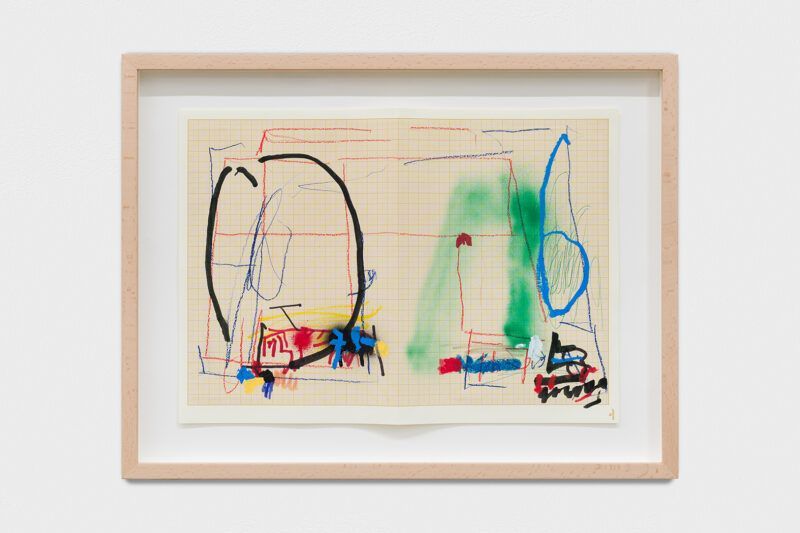
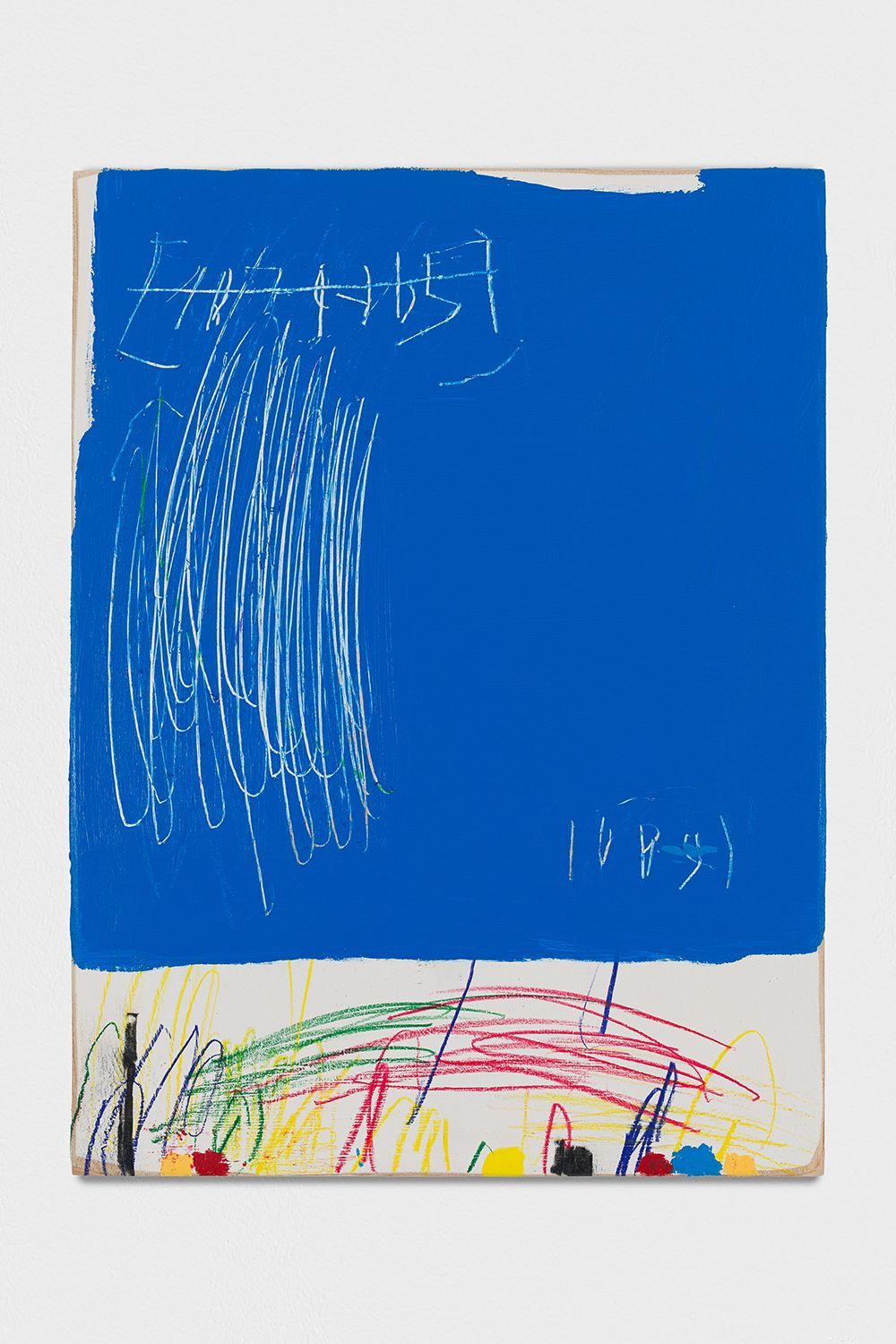
Far from offering closed answers, his practice operates within the terrain of contradiction and inquiry. Through the subtle combination of recognisable elements with purely abstract forms, his painting questions the notion of the finished work and places concepts such as error, correction and permanence under tension. There is, within his process, an almost structural attention to failure as a driver of progress — an acceptance of imperfection as a necessary condition of both painterly practice and lived experience.
In this conversation, we discuss time, observation, accident, the body and impermanence; how to look without forcing, and how to allow a painting to construct itself through layers that speak to one another. We also speak about his participation in CAN Madrid with the gallery Herrero de Tejada and the projects that will shape his coming year.
Your work proposes a form of observation that distances itself from immediate consumption and moves closer to waiting — to being present without forcing. Where does this relationship with time and gaze originate? What role does it play in your pictorial process?
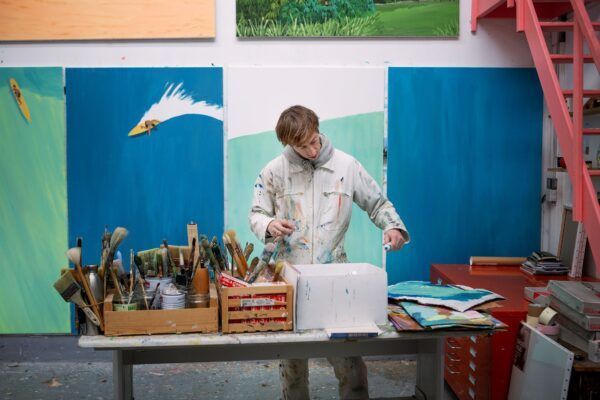
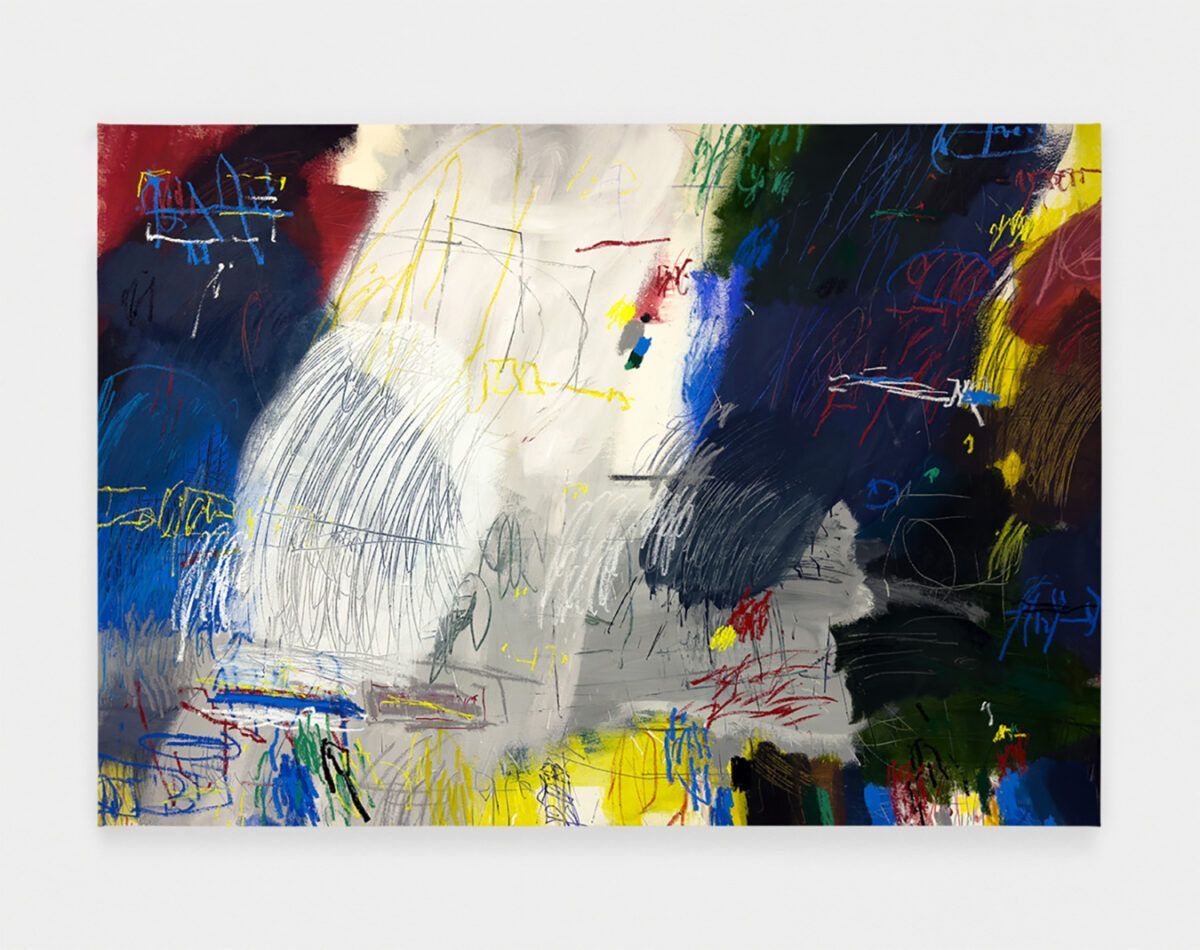
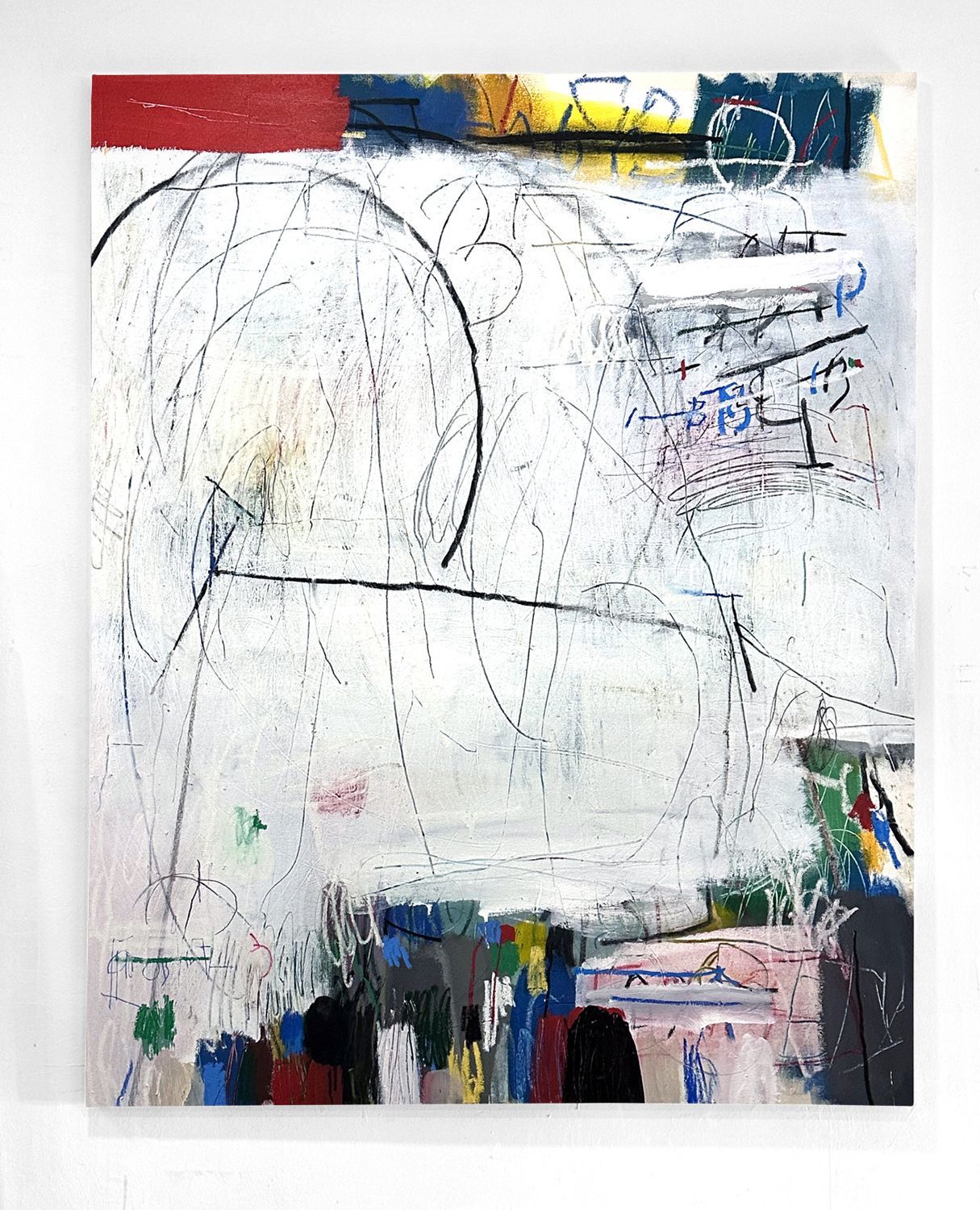
It stems from the way I relate to the world. I am interested in looking without searching for anything specific, in trying to remain present and allowing things to appear by themselves. A piece does not begin at the moment it materialises; it is an ongoing thought that crystallises into a physical action. Because it is recurrent, it is natural that any stimulus can become incorporated and nourish it. I work in layers: often, after completing an entire layer, I keep only a small fragment, and from there I construct what follows, allowing each part to converse with what came before.
Your work pays particular attention to what appears in urban space in a casual or residual manner: marks on pavements, remnants of paint, scratches… How do you transform those visual stimuli into pictorial language? What interests you about those fragments that often go unnoticed?
I am fascinated by what emerges accidentally. I register those fragments through photographs or visual memory and use them as triggers. I do not copy them literally; rather, they serve to generate relationships of form, rhythm and composition. I am drawn to their ability to exist between the casual and the compositional, and to how they convey information about time and human action.
Your colour palette feels organic yet restrained, as though it seeks to dialogue with something primary rather than impose emotion upon it. How do you construct your palette?
My works always move within the same range; I am not interested in inventing new palettes, but in exploring how these colours interact within each painting. In my understanding, colour gains importance through composition, and composition is, in turn, defined by colour.
What place do error, accident or the unexpected occupy in your working process?
Facing a piece is like playing a game.
There is no defined time or sequence of moves, and each action involves reflection on whether it is valid or not, leading to the next move. Trial and error is fundamental; often subsequent decisions arise from these unforeseen gestures.
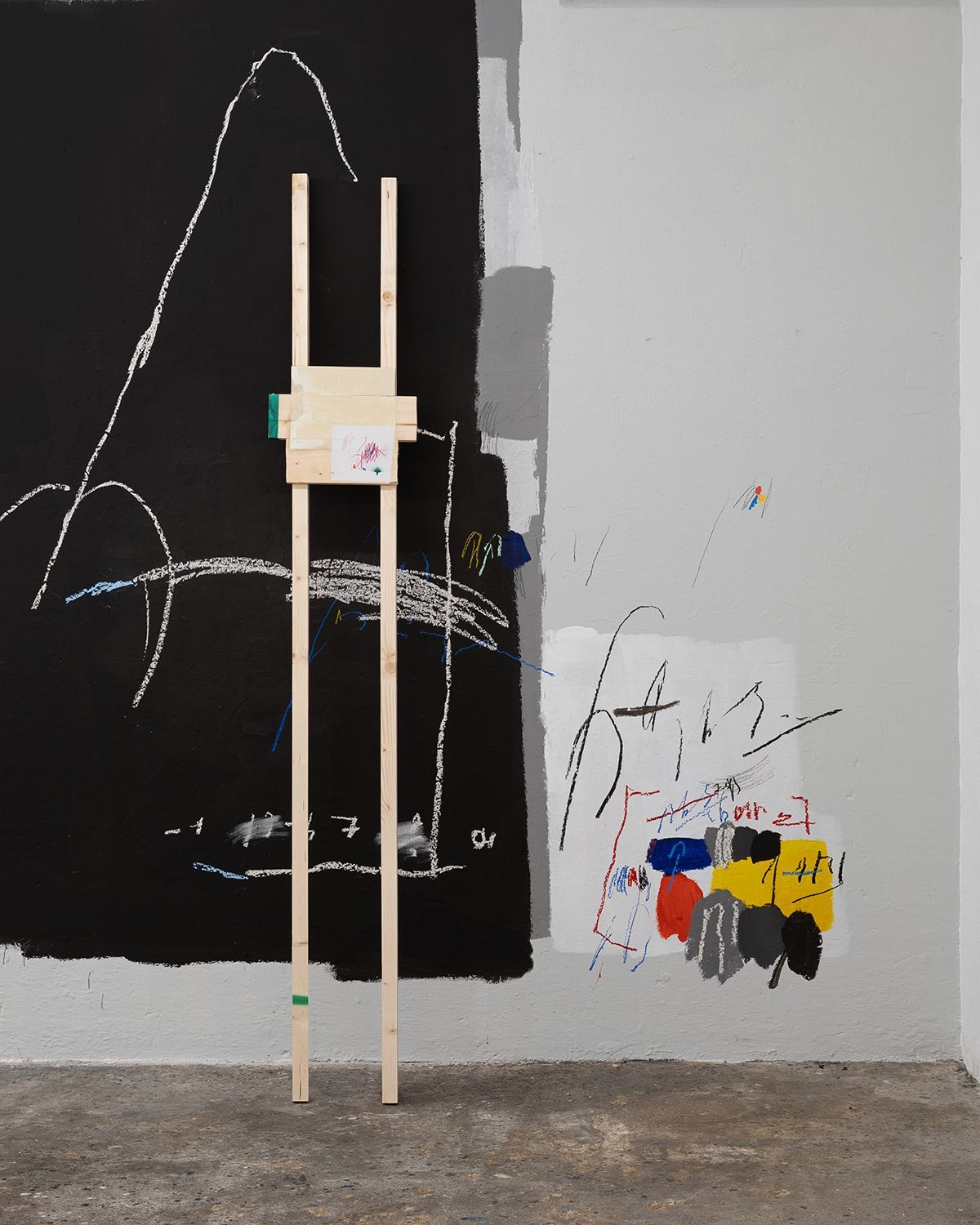
Each mark opens new possibilities and can alter the course of the piece, expanding its potential without there being a fixed result from the outset.
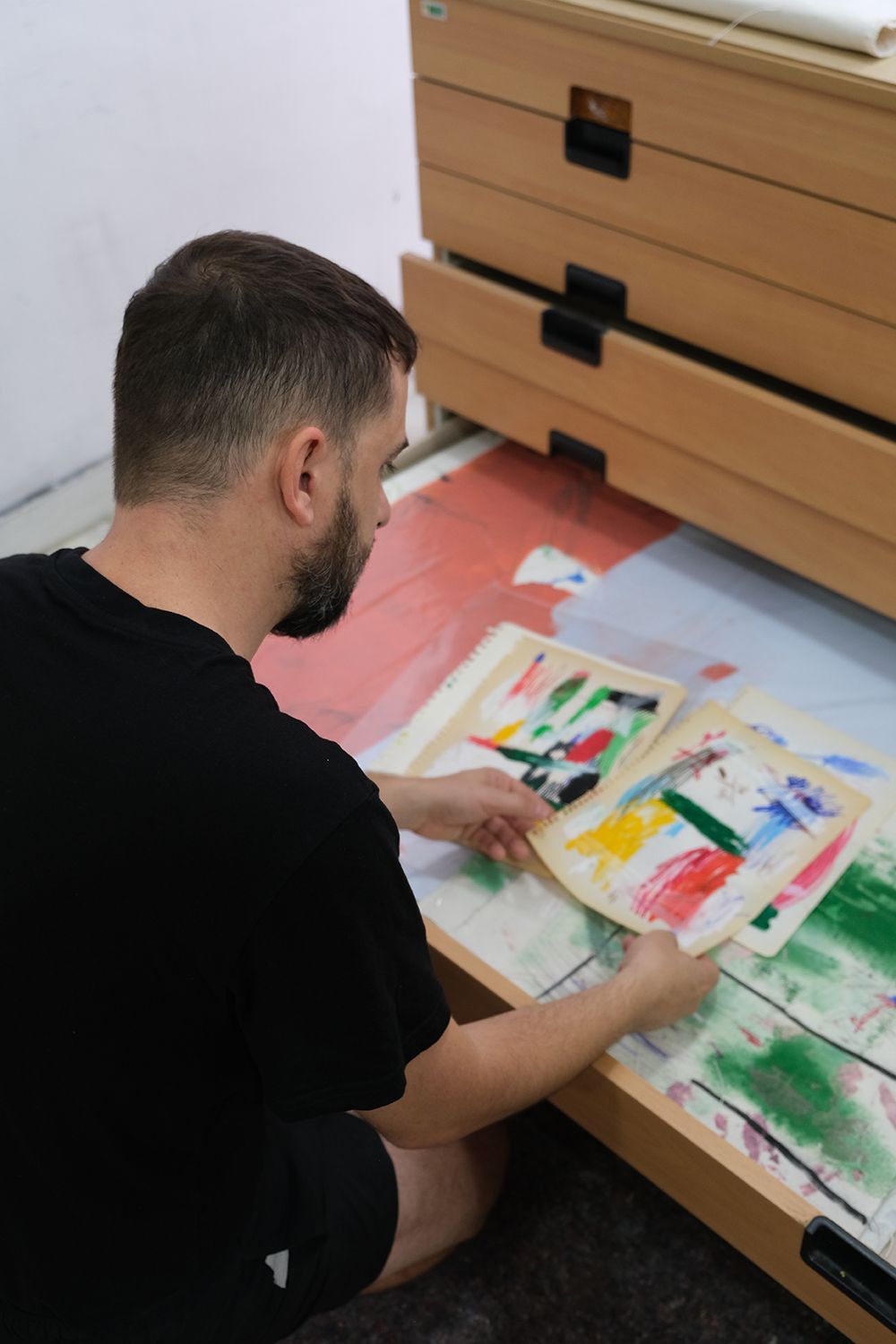
I try to document the entire process so that I can take it outside the studio and reflect on whether it has progressed in the right direction.
How does your body influence your way of painting, particularly in mural formats or public environments? Is there something choreographic or rhythmic in your production?
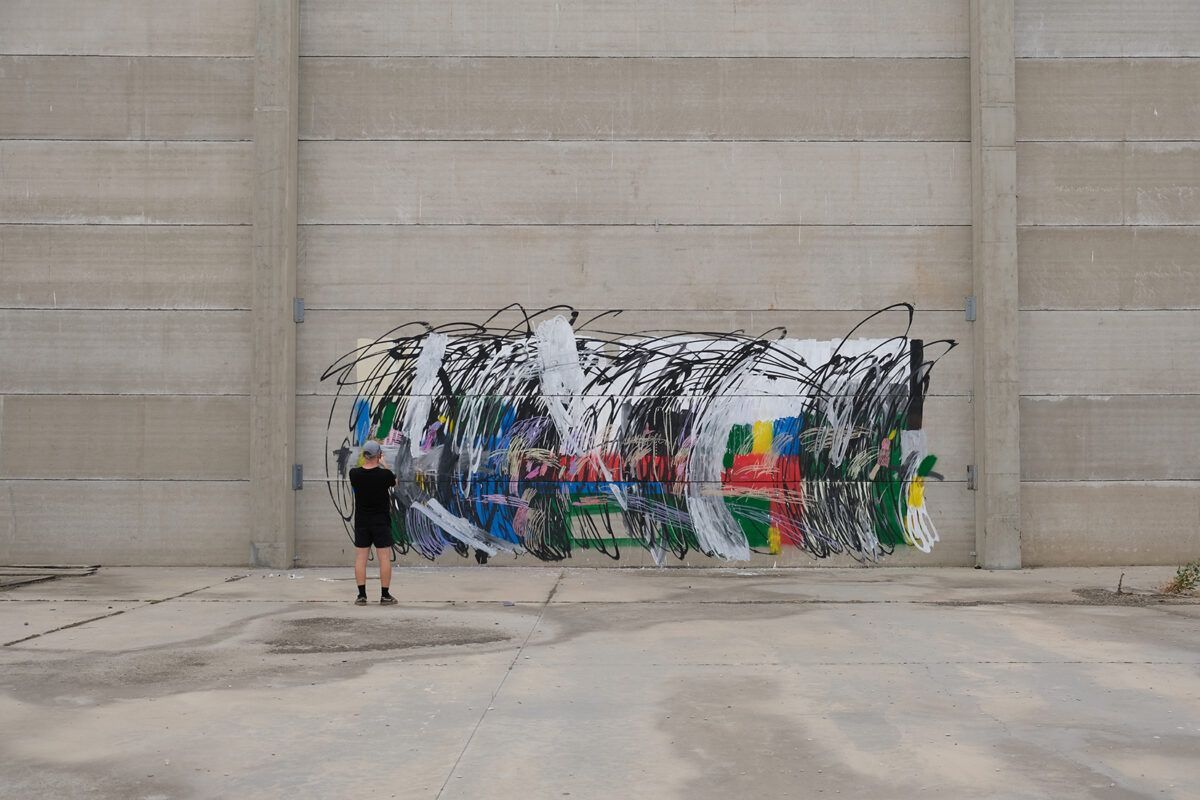
My work emerges from physical engagement with space and surface. In murals and public settings, every movement, extension of the body or gesture has its own rhythm, shaped by the scale and the conditions of the space.
Even in the studio, although more contained, there is a physical dimension to painting: posture, repetition of movements and adaptation to gesture determine how the piece is constructed and transformed throughout the process.
“I am interested in looking without searching for anything specific, in trying to remain present and allowing things to appear by themselves.”
Jordi Pallarès, curator of your exhibition Birding at La Bibi + Reus, speaks of impermanence as an essential condition of your work. How do you understand this concept? Is it also a position towards the world?
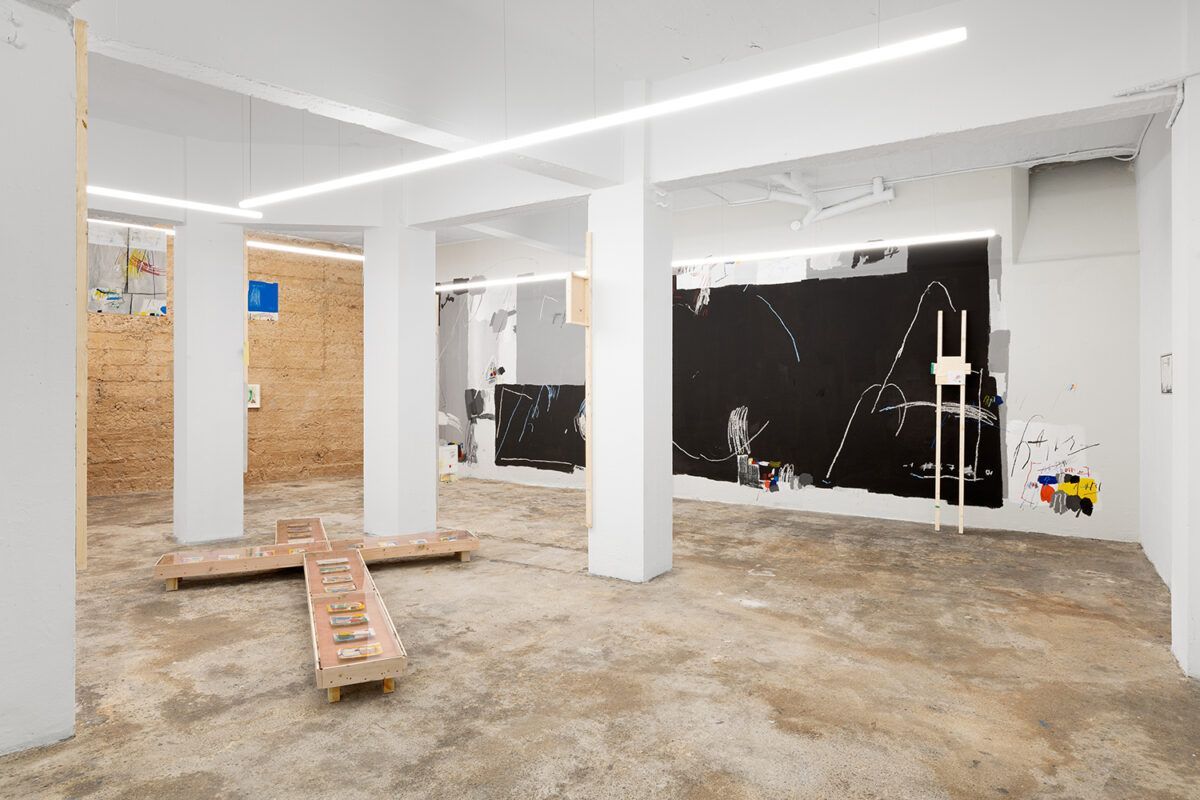
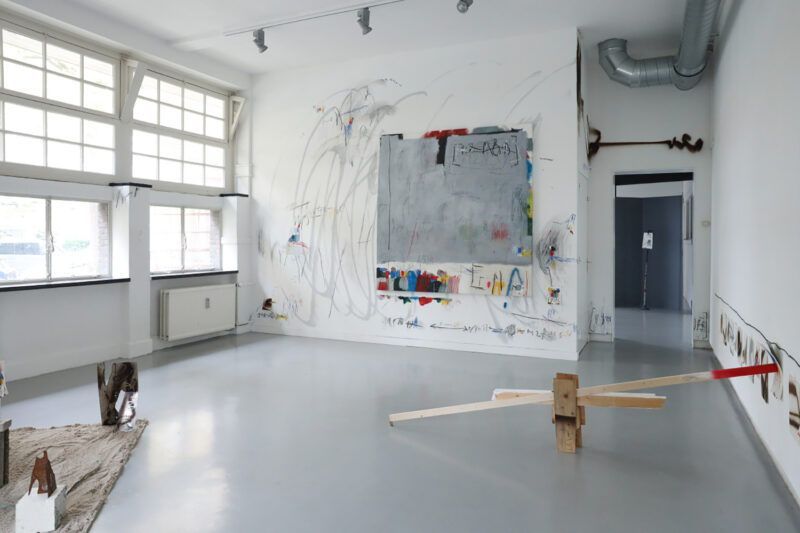
As Jordi Pallarès suggests, change — and knowing how to confront it — is very present in my work. In Birding it is felt more than ever. The exhibition emphasises our connection both inside and outside the gallery space. That alignment made the result very sincere; we worked as a team throughout the entire process, from the first notes to the final decisions.
Layers, erasures, corrections and shifts reflect that nothing remains the same, even in the way the space is experienced. There is no single path; the viewer may choose how to observe, even from different heights.
Understanding this is also a stance towards the world: accepting that everything changes, that stability coexists with the ephemeral, and that to observe means recognising constant transformation without attempting to fix it entirely.
“Layers, erasures, corrections and shifts reflect that nothing remains the same.”
What does it mean for you to participate in CAN Madrid alongside the gallery Herrero de Tejada? How did that collaboration emerge and what interests you about their approach?
I work alongside Herrero de Tejada as a result of our shared way of seeing and feeling. I am particularly interested in their close relationship with artists and their commitment to processes that allow projects to develop with depth.
Participating in CAN Madrid represents an opportunity to present my work within a context where different lines of research in contemporary art coexist, and also to generate new readings of my practice.
What inspires you today, beyond art? What images, sounds, spaces or texts are present in your daily life?
As I mentioned earlier, what captivates me most are those “accidents” that occur randomly, without anyone having constructed them with a final intention.
Behind those episodes there is a layer that leads me to understand other aspects of life.
Is there something you have been observing recently that has not yet entered your painting?
I continue to observe in the same way, perhaps more selectively now — it has become part of my way of being. Rather than focusing on something specific, I tend to transfer that gaze to other places or environments, which become heightened when I travel and everything feels new. When I want to develop an idea, I do not force it to become painting; I look for the channel that best conveys it.
“When I want to develop an idea, I do not force it to become painting; I look for the channel that best conveys it.”
What projects are you currently working on? Are you interested in exploring new formats, materials or modes of exhibition in the future?
We have just completed the publication of Del grano a la montaña, for which I designed each page of the book alongside Swinton and Jordi Pallarès. It is the third and final part of the project, bringing together a carefully curated selection of images and texts. It will be published shortly and presented in order to share everything that this experiment generated, both inside and beyond exhibition spaces.
At the moment I am also developing How Many Times Is the Sky Blue? with Herrero de Tejada. The project explores how we tend to say that something is a certain way because it occurs more frequently according to statistics, though never in absolute terms. It will unfold in two parts: a residency and an exhibition. I will develop a large-scale work conceived to be later fragmented in its display.
You can follow his artistic practice on his Instagram account.
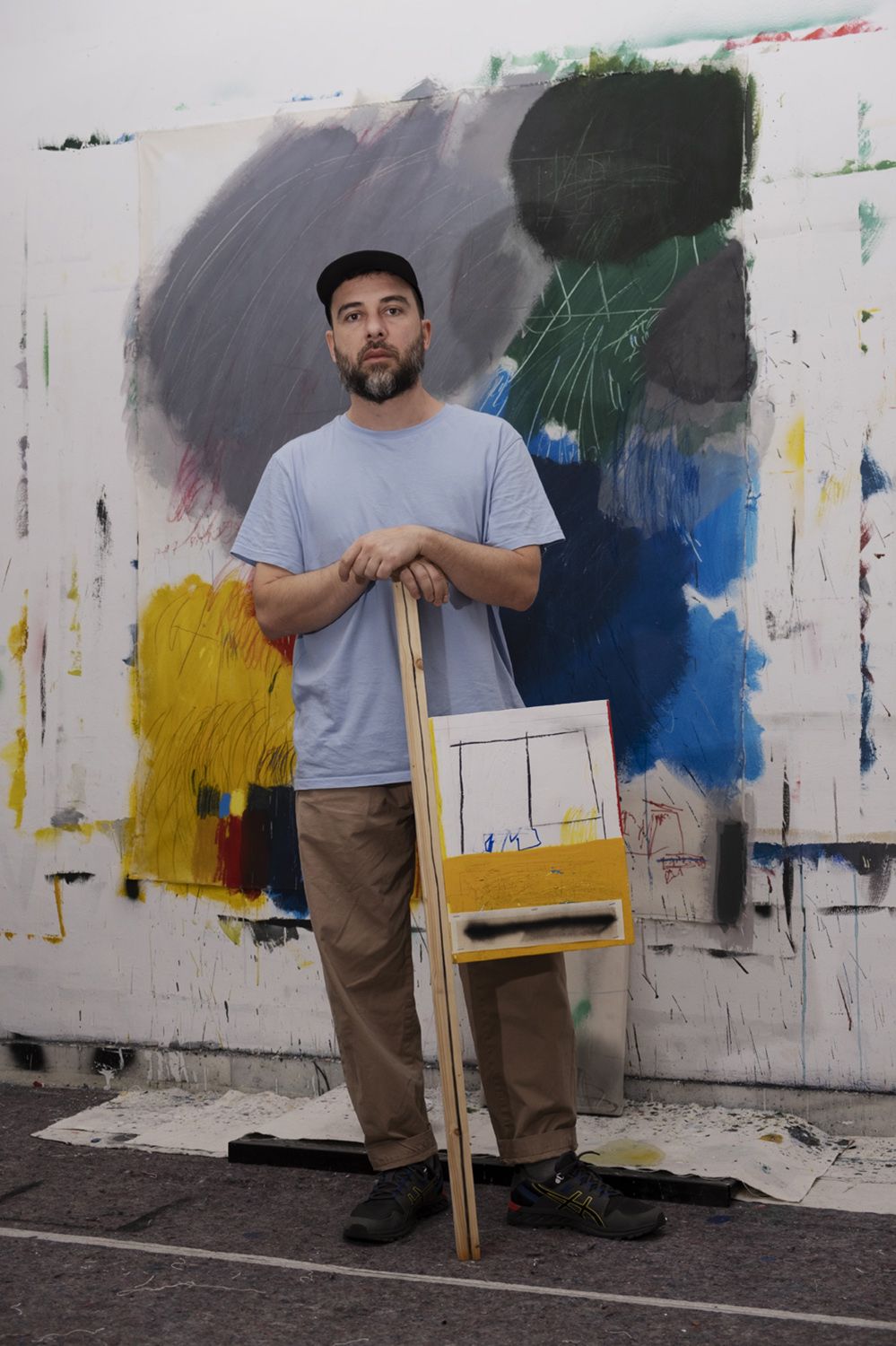
(*) Images courtesy of Sergio Gómez. The portraits are by Lhaura Rain.