Le Grand Bouquet: joy takes over the Grand Palais
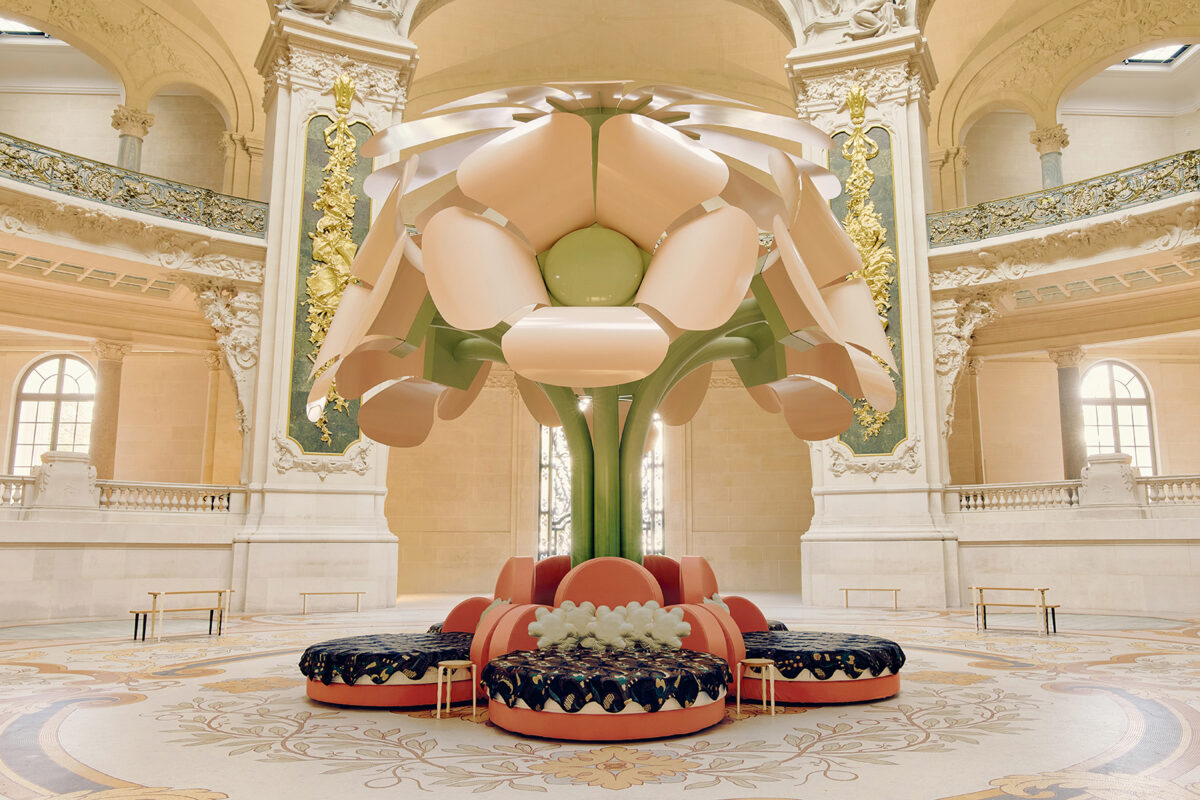
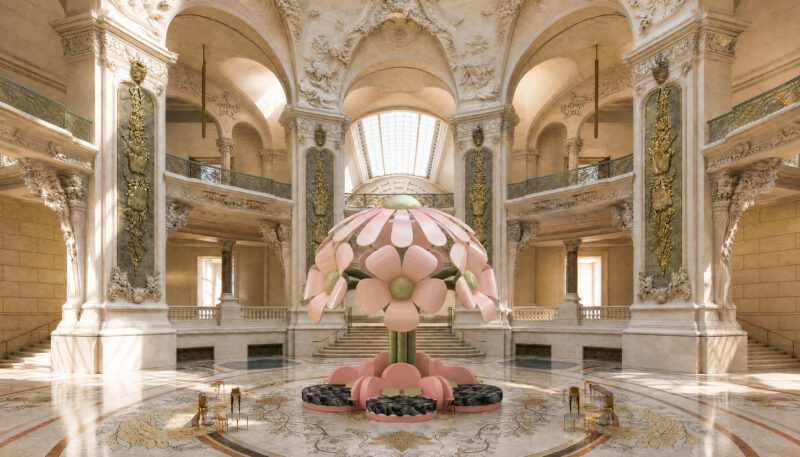
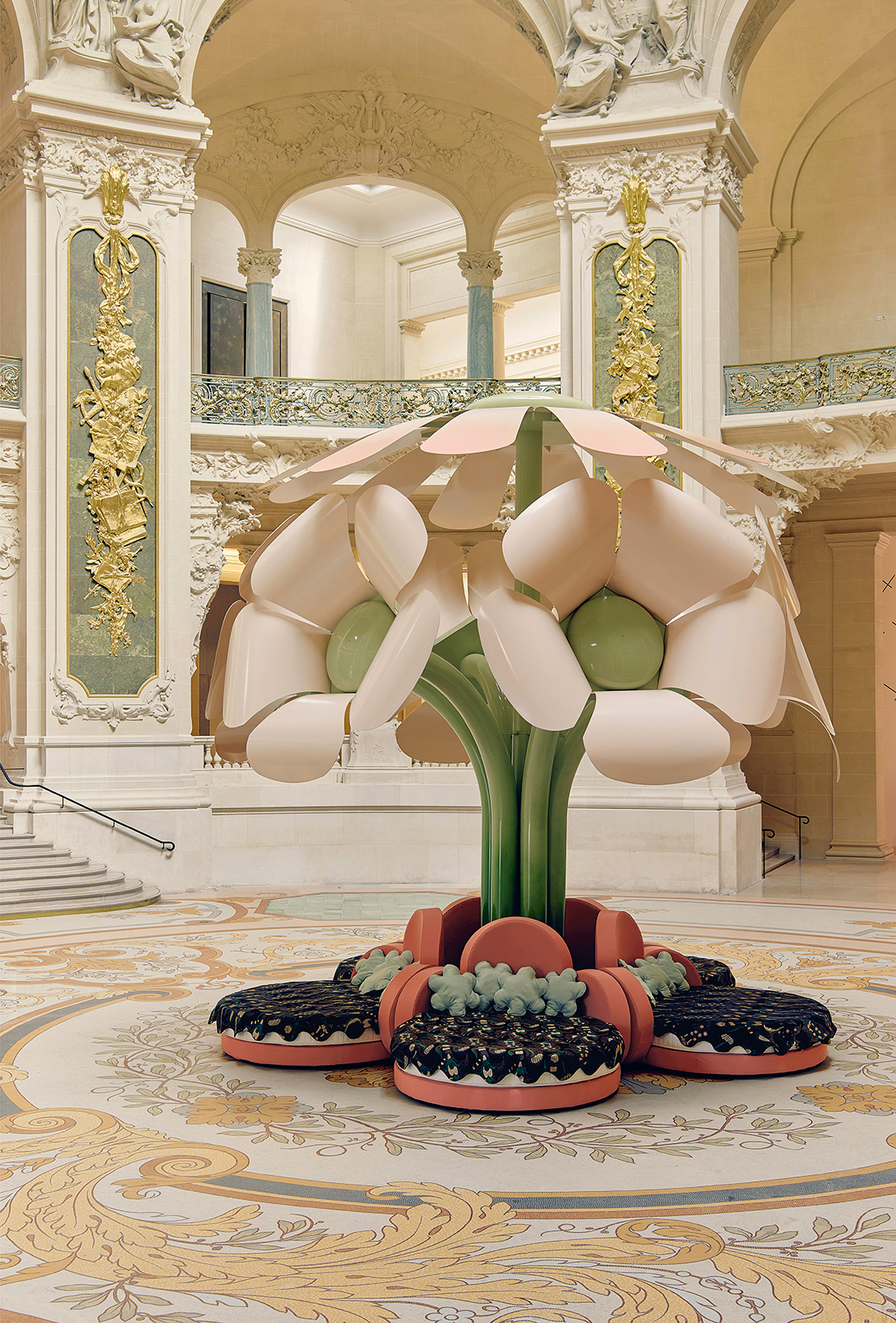
From 11 to 20 September, Uchronia takes over the Rotonde d’Antin at the Grand Palais with Le Grand Bouquet, a monumental installation created for Paris Design Week 2026 that transforms the botanical motifs of the historic architecture into a vast luminous flower. Conceived by the Parisian studio led by Julien Sebban, the project brings the building’s ornamentation into the present, championing joy, imagination and colour as tools capable of creating shared experiences.
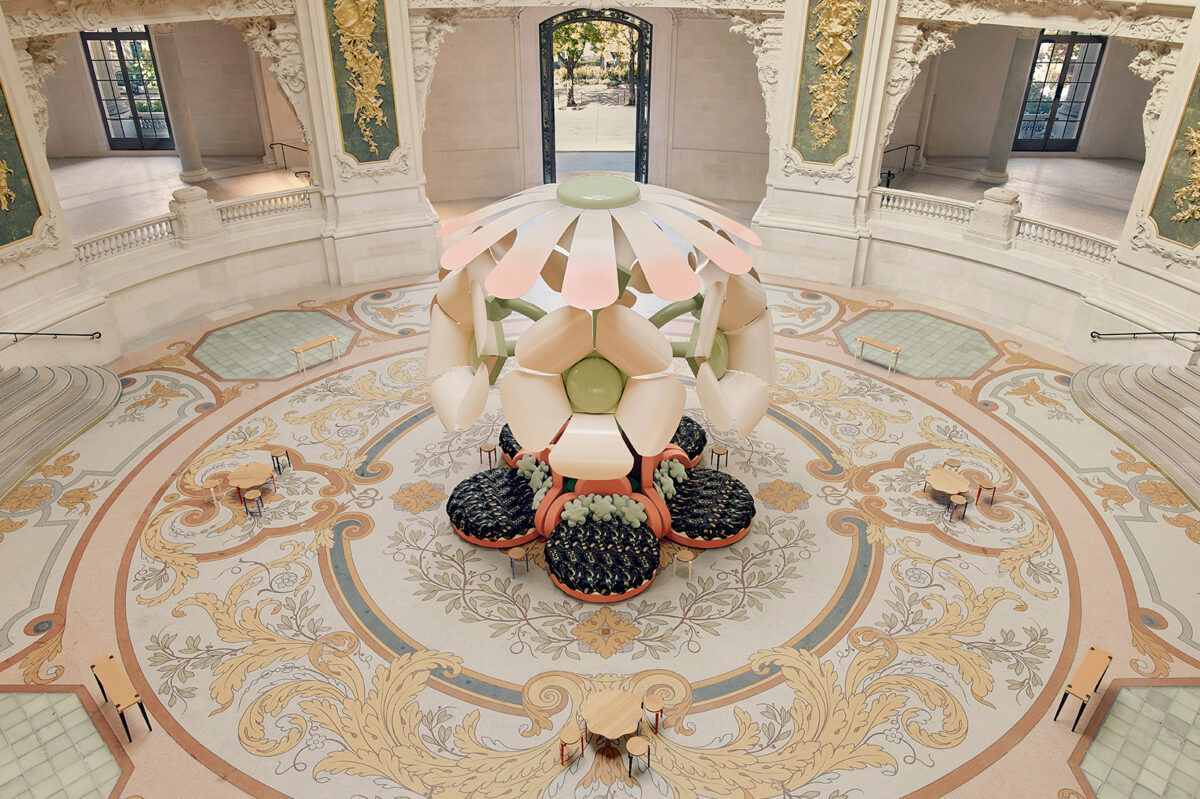
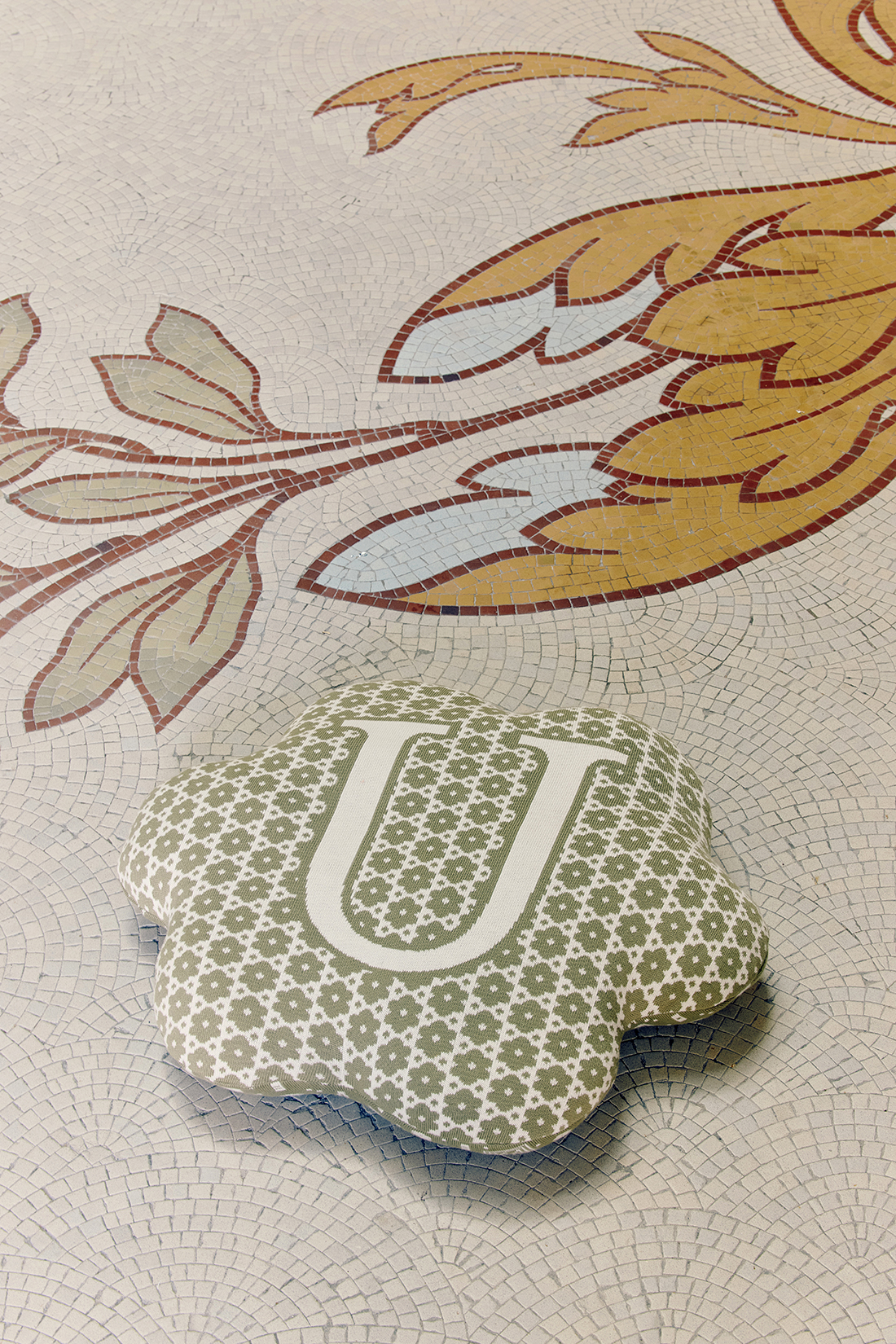
Le Grand Bouquet takes the Grand Palais itself as its starting point. Uchronia focuses on two elements already present in the Rotonde d’Antin: the floral motif depicted in the floor mosaic and the botanical mouldings running along its arches. From these, the studio develops a contemporary piece that amplifies this ornamental vocabulary until it appears to germinate from within the architecture itself.
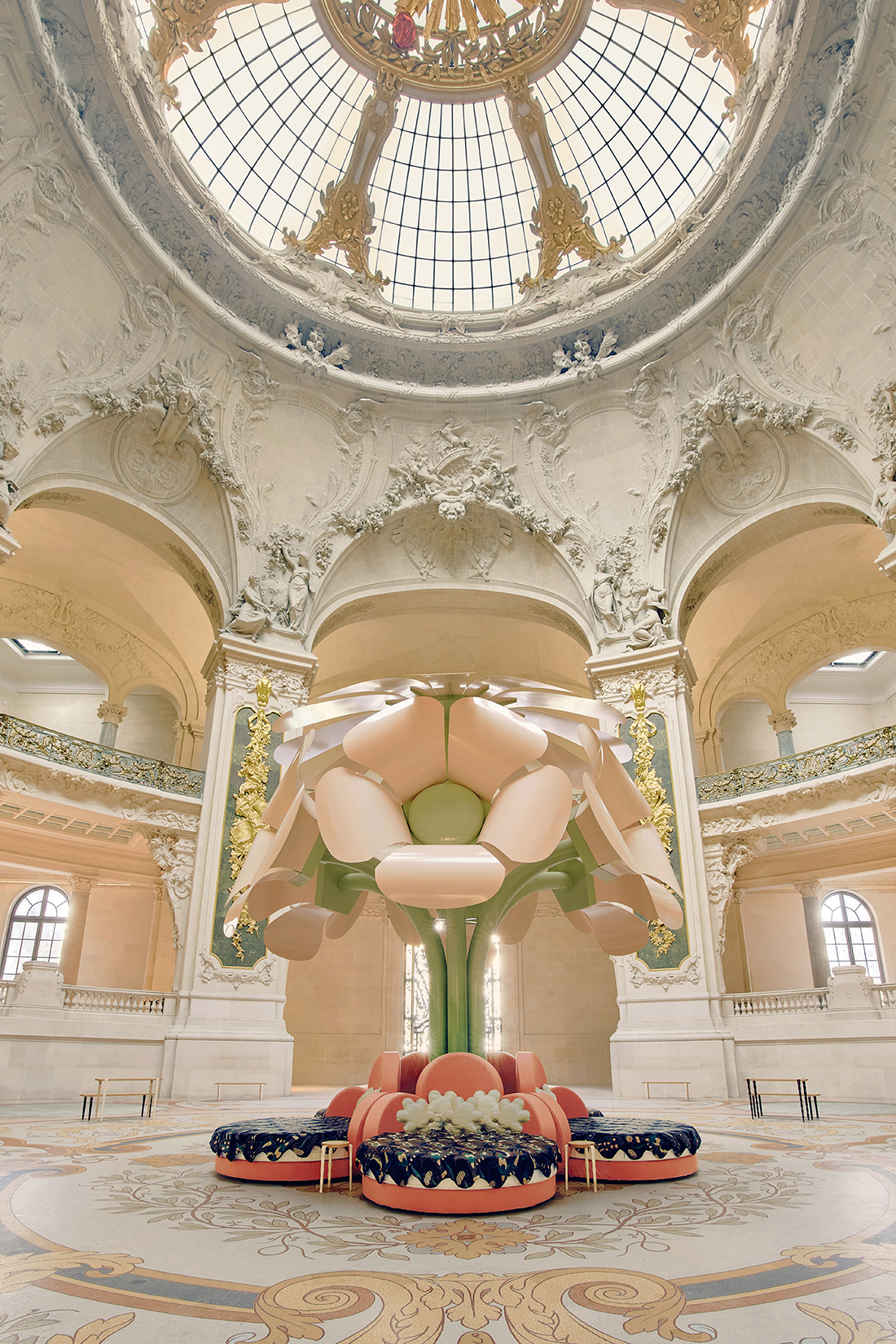
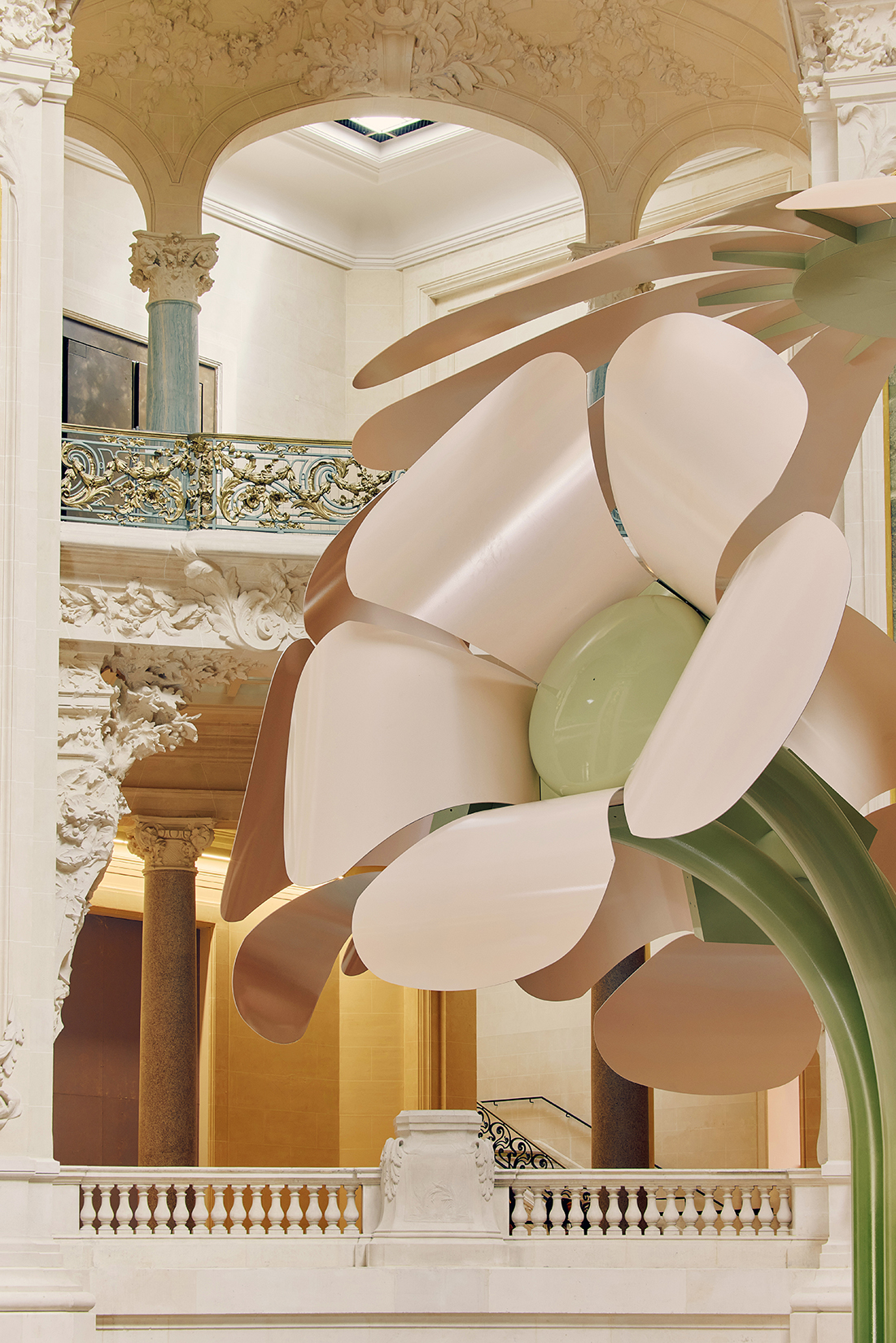
From the centre of the rotunda emerge large, stylised, luminous petals, arranged to follow the circular movement of the space. The installation grows upwards from the floor, gradually drawing the eye towards the ceiling and establishing a vertical dialogue with the monumentality of the room.
The installation focuses on two elements already present in the Rotonde d’Antin: the floral motif depicted in the floor mosaic and the botanical mouldings running along its arches.
What had remained contained within mosaics and reliefs for more than a century now acquires volume, colour and a scale capable of temporarily transforming the perception of the space.
The intervention is closely connected to the practice of Uchronia, founded in Paris in 2019 by Julien Sebban and deliberately positioned at the intersection of architecture, interior design, scenography and furniture design. Colour, expressive forms and the creation of sensory experiences run throughout a body of work that encompasses restaurants, boutiques, private residences, installations and projects such as the renovation of the restaurant and bookshop at the Musée d’Art Moderne in Paris.
Crossing the threshold
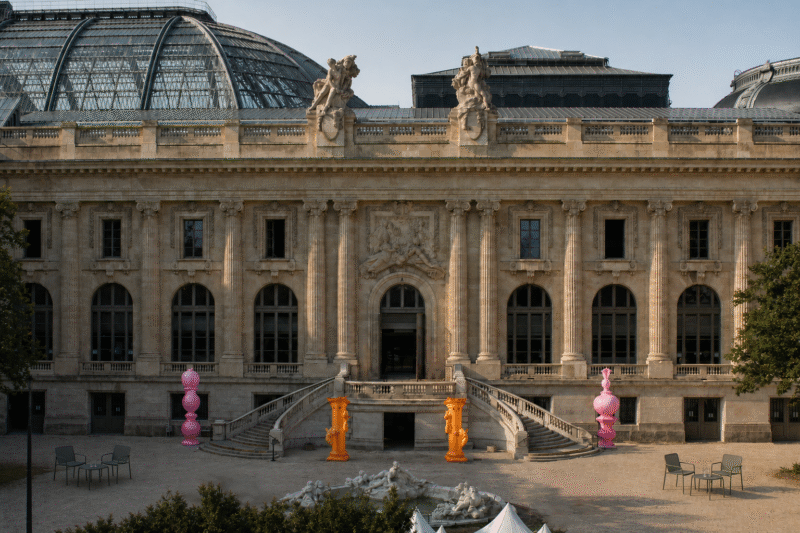
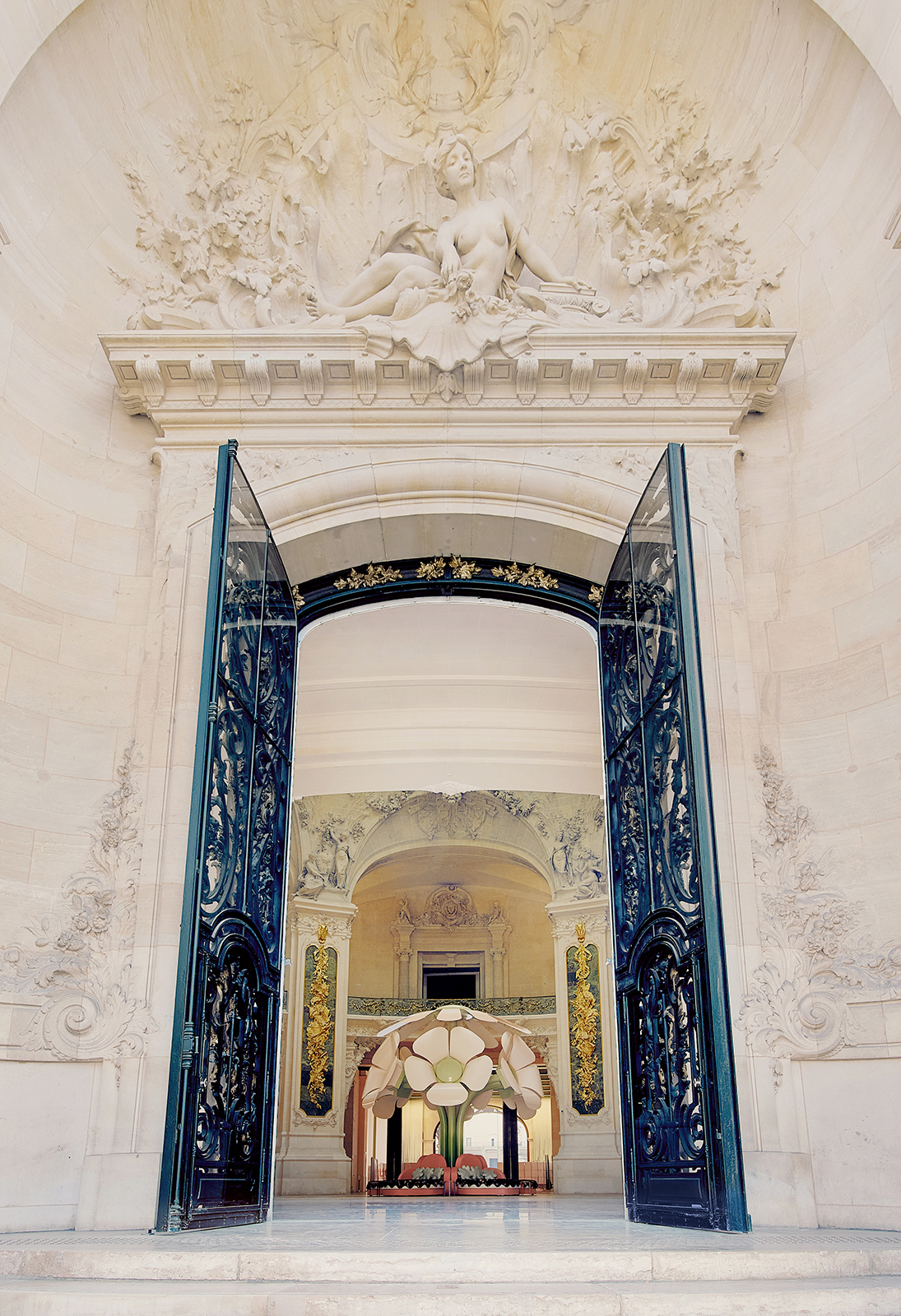
The experience begins before visitors even reach the Rotonde d’Antin. On the forecourt of the Grand Palais, a large inflatable structure serves as both an entrance and the first element of the intervention. Its generous, colourful forms stand in front of the building’s classical façade, marking the transition between the city and the world imagined by Uchronia.
Visitors therefore pass through a soft, ephemeral architecture before encountering the monumental structure inside. This short journey forms part of a spatial narrative in which Sebban understands design as a tool capable of arousing curiosity, temporarily altering our perception of a place and creating atmospheres that reveal themselves through movement.
The same approach extends to Univers Uchronia, the studio’s self-produced furniture collection, made entirely in France, where formal experimentation meets traditional techniques and artisanal expertise.
Designing also means making
The spectacular nature of Le Grand Bouquet depends on a network of manufacturers and craftspeople whose involvement allows the installation to be understood beyond its visual impact.
Its construction brings together artistic metalwork, paint, textiles, furniture and contemporary surfaces in a project where technical expertise ultimately becomes part of the creative language.
Atelier François Pouenat developed the monumental structure supporting the piece. Specialising in artistic ironwork and decorative metalwork, the workshop combines historic techniques with contemporary digital processes and works with materials including iron, aluminium and brass. In Le Grand Bouquet, this structure acts as a lightweight skeleton capable of providing both stability and a sense of movement.
The colour palette was developed with Chromatic and Seigneurie, drawing on tones associated with the Grand Palais itself. Glossy finishes allow light to travel across the surfaces and enhance the depth of petals designed to change according to the viewpoint from which they are observed.
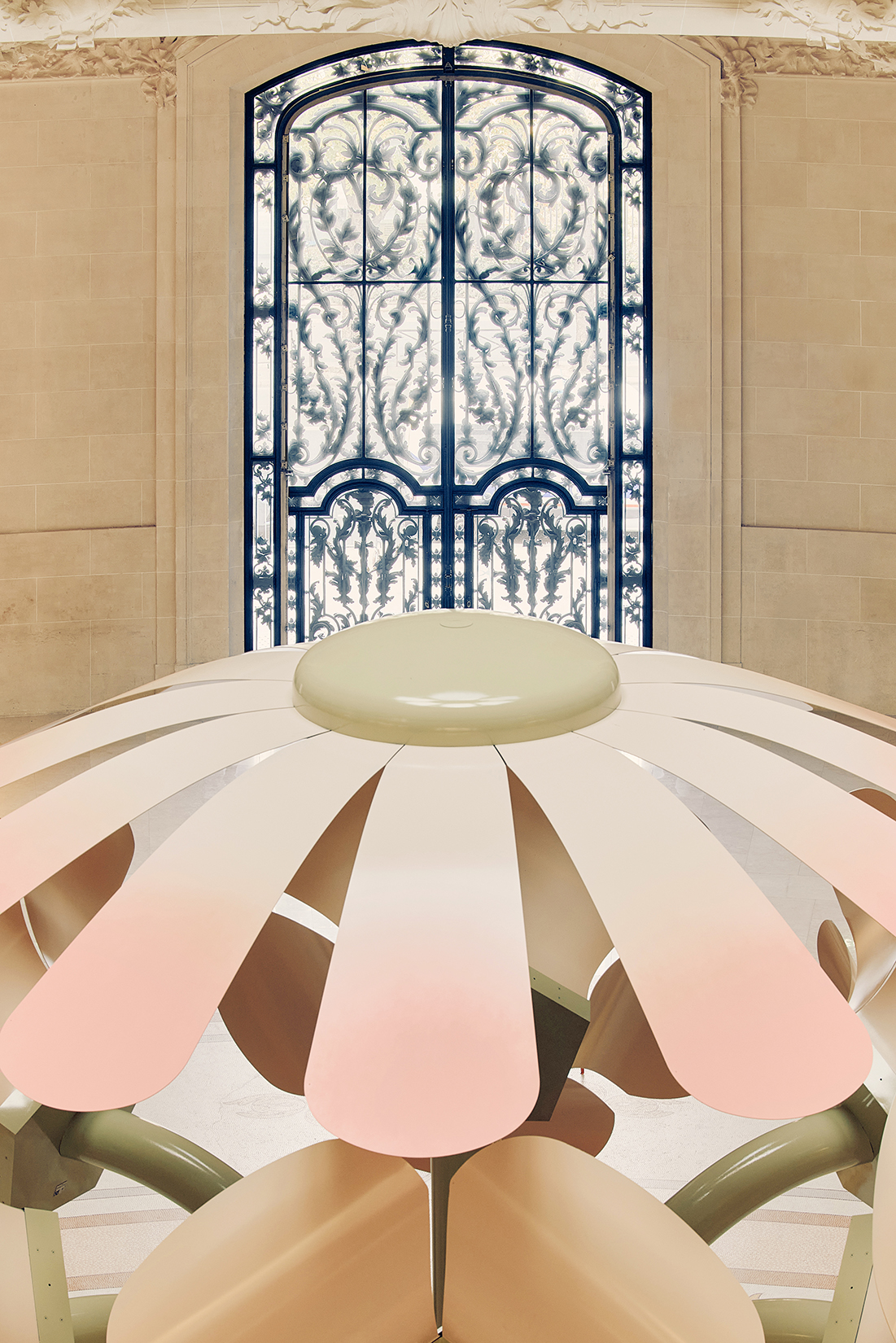
At the base of the enormous flower, Tréca Paris introduces generous circular surfaces designed for sitting, reclining and spending time within the installation. The French maison, specialising in beds handcrafted in its workshops in Alsace and Centre-Val de Loire, thus turns rest into part of the experience.
These areas incorporate fabrics by Manufacture Prelle, founded in Lyon in 1752 and one of the great custodians of the French silk-making tradition.
The manufacturer continues to work with handlooms alongside contemporary electronic weaving technologies, preserving an extraordinary historical archive that enables it to reproduce fabrics originally created for places such as the Palais Garnier in Paris and the Frick Collection in New York.
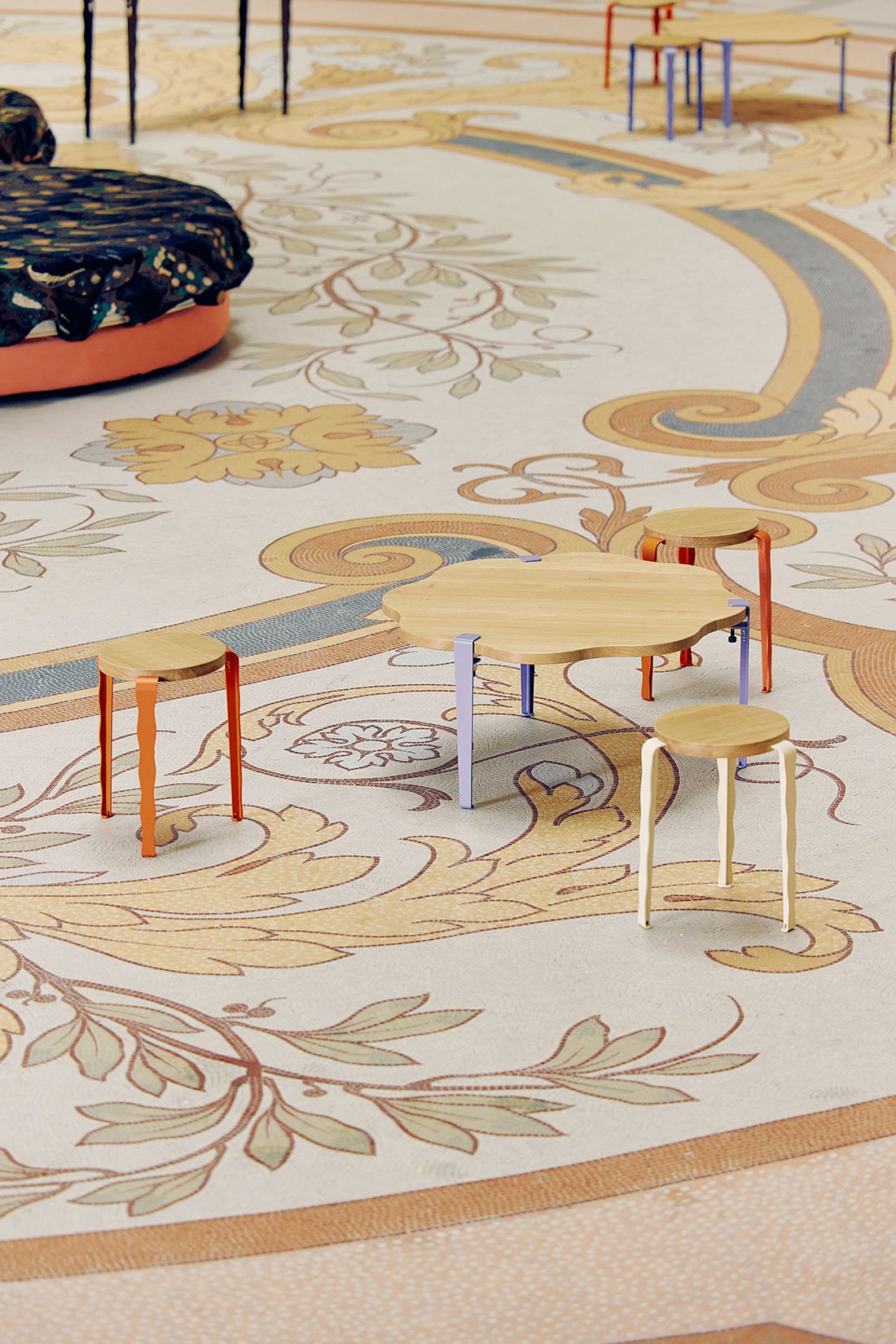
The installation also incorporates pieces resulting from the collaboration between Tiptoe and Uchronia, inviting visitors to linger in the space and contemplate it from different perspectives, while FENIX surfaces feature on the tabletops.
This succession of materials, techniques and scales makes fabrication an inseparable dimension of the work, connecting the project to a French tradition in which design and savoir-faire continue to enrich one another.
At the base of the enormous flower, Tréca Paris introduces generous circular surfaces designed for sitting, reclining and spending time within the installation.
Joy as resistance
Uchronia builds Le Grand Bouquet around an idea that goes beyond its visual exuberance: joy understood as a force of resistance and togetherness. At a time marked by uncertainty, the studio champions beauty, imagination and optimism as tools capable of creating connections and shared experiences.
The choice of a flower thus takes on another dimension. Its growth from the heart of the Grand Palais turns the act of blossoming into a collective image and, for a few days, transforms the rotunda into a place in which to pause, look upwards and share the space.
Colour, so central to Sebban’s work, functions here as a genuine architectural material. It alters the perception of the building, activates its historic details and establishes a continuity between the installation, the objects and the bodies moving through it. The surfaces designed for rest are particularly significant in this respect: Le Grand Bouquet incorporates places from which visitors can linger and observe, making contemplation itself part of the work.
A renewed Grand Palais
The installation arrives in the wake of the extensive renovation of the Grand Palais, which enters a new chapter following four years of work. Built for the 1900 Exposition Universelle, the building is progressively reclaiming its vocation as a major public space devoted to art and culture, hosting exhibitions, performances and gatherings alongside new areas that are freely accessible to the public.
This transformation also includes the Boutique Design et Métiers d’Art, dedicated to contemporary design and artistic crafts, with a selection in which materials, innovation, durability and artisanal production take centre stage. The historic plaster-casting and intaglio printing workshops of GrandPalaisRmn coexist here with new editions and contemporary objects, carrying forward expertise passed down through generations.
Le Grand Bouquet finds particularly fertile ground in this intersection between heritage and contemporary creation. The installation begins with elements already present within the building, passes through the hands and expertise of different craftspeople and manufacturers, and ultimately returns to the Rotonde d’Antin transformed into something else entirely.
Uchronia builds Le Grand Bouquet around an idea that goes beyond its visual exuberance: joy understood as a force of resistance and togetherness.
Paris in bloom
During Paris Design Week 2026, this enormous flower transforms one of Paris’s historic interiors through an intervention that works simultaneously with architecture, design, craftsmanship and emotion. A small botanical motif hidden within the mosaic of a rotunda assumes monumental proportions, demonstrating how closely observing a building can also become a way of imagining what might be added to it.
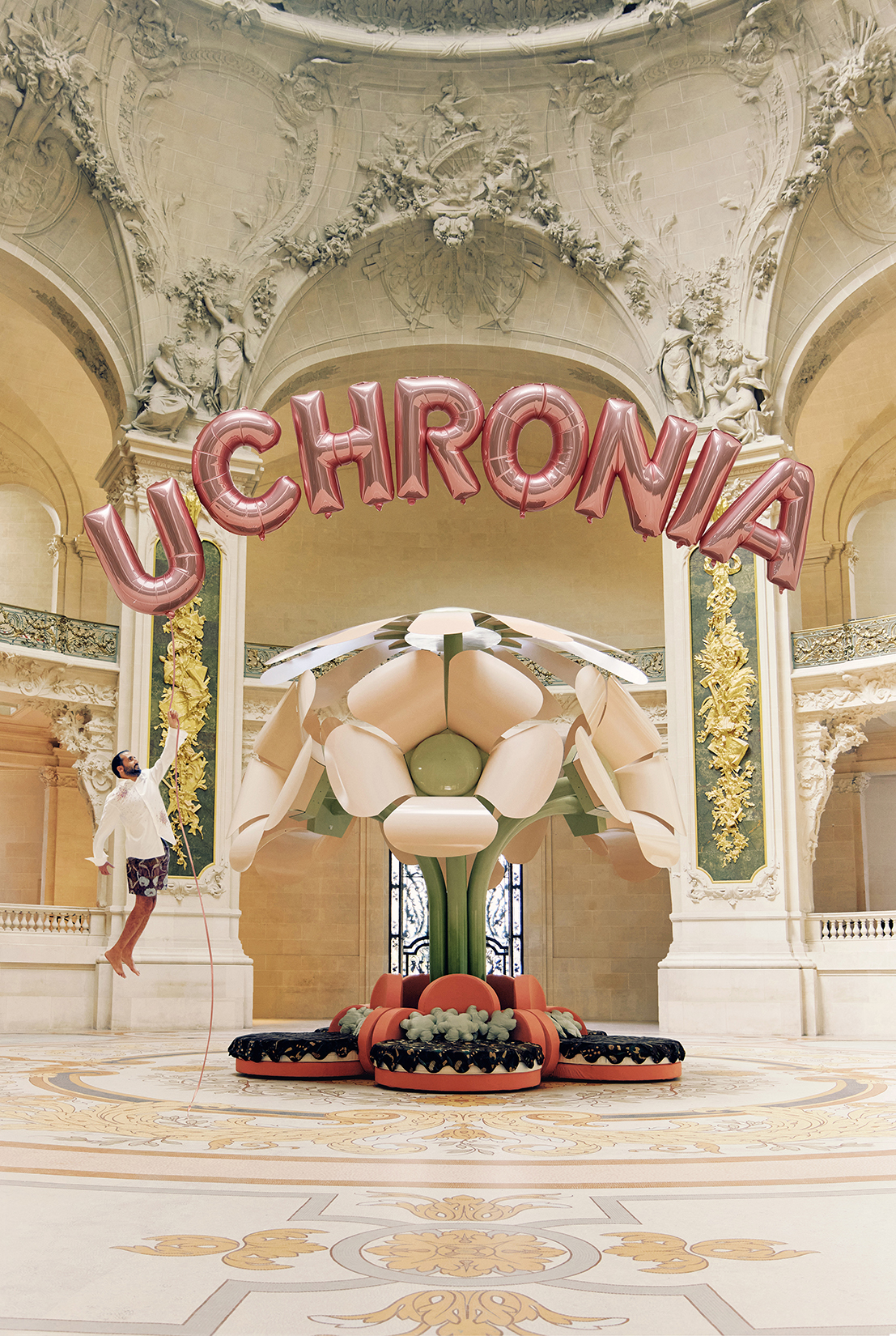
With Le Grand Bouquet, Uchronia turns the Grand Palais itself into creative material, using fantasy to activate its history. Amid metal, silk, colour and light, Julien Sebban creates an environment that invites visitors to linger within it while asserting something particularly simple: that design can also create places for wonder, encounter and joy.
(*) Photographs by by ©Romain Moriceau, provided by Le Grand Palais.