“The Contemplative Life” by Byung-Chul Han
“The Contemplative Life” by Byung-Chul Han, the most renowned contemporary philosopher today and one of the most widely read in the world, is a full-fledged praise of inactivity and a much-needed book in a world like the present one.
Despite being a short read, with only 120 pages, it is advisable to read it slowly and even reread it to internalize and solidify many of the lessons it presents. All of them are enlightening.
Therefore, this book serves as a powerful call for us to finally open our eyes and abandon hyperactivity to regain the meaning of our lives, balance, and inner richness. Quite a challenge.
Here & Now
Also, given that we perceive life only in terms of performance, we tend to understand inactivity as a deficit, a denial, or merely an absence of activity when, in fact, it is quite the opposite, an interesting independent capacity.
Byung-Chul Han delves into the benefits, splendor, and magic of idleness and designs a new way of life, including contemplative moments, to address the current crisis of our society and curb our own exploitation and the destruction of nature. Primarily, because he believes that contemplation is essential to regain a deeper connection with ourselves and the world around us.
“Breaking the tyranny of hyperactivity involves finding space for reflection and introspection.”
These are some of the most notable reflections from this book:
Considerations on Inactivity
The book begins by reflecting on the relevance of inactivity, which is what shapes humanity. That is, Han considers that without a moment of hesitation or interruption, action is reduced to blind action and reaction.
“Life only receives its brilliance from inactivity.”
Because as we move following the scheme of stimulus and reaction, need and satisfaction, problem and solution, purpose and action, we are solely destined to survive. Because, as he points out, true life begins when concern for survival ends.
However, living in a capitalist world, even leisure has become a commodity and lacks contemplative rest. Our entire time and activities are marked by consumerism.
“True happiness is due to beautiful gestures that serve no purpose.”
By the way, do you remember the last time you did something without a purpose? For example, meditating for the sake of meditating and being present, or writing for pleasure and not because we’re going to share it with anyone. Without realizing it, we always do an action with an end in mind, and Han believes that we must do for-nothing, as this freedom from purpose and utility is the fundamental formula for happiness.
“Inactivity is a spiritual fast. Hence, it has a healing effect.”
He also emphasizes boredom – the pinnacle of spiritual relaxation – and sleeping – the pinnacle of physical relaxation. Both activities are indispensable for that much-needed “doing nothing”, even though our society shuns boredom, labeling it as something negative and unproductive, constantly proposing “patches” for us to take refuge in action and escape its jaws.
“Boredom is the threshold of great deeds.”
In connection with all this, Han also reflects on listening. He considers that everyone produces themselves and wants to speak, but unfortunately, nobody listens. And this leads to impatience because we want things now, quickly, without having to wait at all.
“We have no patience. The only thing that matters is short-term effect, quick success.”
Finally, he concludes this first passage by relating the policy of inactivity to the reconciliation between human beings and nature as the ultimate purpose.
From Action to Being
This chapter is very interesting and begins with a text by Walter Benjamin about a painting by Klee. In this case, among the concepts it addresses is renunciation, which despite the meaning we may give it, from his point of view refers to anything but giving up or letting go.
“Renunciation is a passion for the unavailable.”
For Han, renunciation does not take away but gives and transforms into gratitude.
To explain these reflections, he mentions Heidegger and his “ethics of restraint,” where he emphasizes that the unexecuted is sometimes more powerful and lasting than the said and done. And that non-doing is more powerful than all that is done and produced. Food for thought.
The Absolute Lack of Being Han considers that in the digital age in which we all live, we are devoid of heart. And it’s true, we store so much data and information, but then we don’t remember it. He also points out that increasingly we distance ourselves from any form of “forever.” Hence, we renounce practices that take a long time, such as fidelity, responsibility, promise, trust, and commitment.
“Life is governed by the provisional, the brief, and the inconstant.”
This lack of presence and attention causes information to have a very narrow window of relevance and that we are hooked on the element of surprise and the frenzy of immediacy, of what’s next, what’s new…
And relating it to the title “the absolute lack of being,” Han again focuses on this great evil: “we live to survive.” He considers that we have lost all sense of intense life, and that we confuse it with more production, more performance, and consumption, even though they only constitute forms of survival.
“The neoliberal regime increases productivity by isolating people and subjecting them to brutal competition.”
The thing is, we are all so immersed in this way of life that, as we mentioned at the beginning of this article, it’s scary to step out of line and start doing things differently… Anyway, and despite the fact that the ideal is a lifestyle model opposed to the current one, we can always approach a lifestyle more connected with ourselves, where we are not automatons but conscious protagonists of our lives.
The Pathos of Action
According to Kierkegaard, “one only tires of what is new, but not of old things. Old things are the daily bread that satisfies with abundance and blessing.”
In this chapter, Han talks about pathos. In fact, he considers that the pathos of action, which is now linked to the emphasis on the new, introduces a lot of restlessness into the world and can only be inhibited by another spirit called by Nietzsche “the genius of meditation.”
“Everyone produces themselves. We are stunned by the background noise of communication.”
As if this were not enough, it’s no coincidence that today we are talking about the “society of singularities”, since everyone considers themselves unique and has their own story to tell. And we have gone from an active life to a performative life, in which mass society has transformed into a society of performance. This implies that today we exploit ourselves willingly and with the belief that we are realizing ourselves.
On the other hand, Arendt, whom he quotes numerous times, also asserts that the future of humanity depends not on the power of acting individuals, but on the reactivation of contemplative capacity, that is, on the capacity that does not act. Active life degenerates into hyperactivity and not only ends in a burnout of the psyche but also of the entire planet if it doesn’t embrace contemplative life within itself.
“One is never more active than when doing nothing; one is never less alone than when alone with oneself in solitude.”
The Society to Come
Byung-Chul Han continues to reflect on the importance of listening to be connected with nature, and quotes Novalis to emphasize that everything and everyone is interconnected. That is, everything flows and slides towards the others. Everything is interwoven with each other.
Without further ado, the book concludes by evoking that future society of Novalis which is based on an ethos of kindness that dissolves isolation, divisions, and distances. Hopefully, this idea becomes a reality, and we move towards an era of reconciliation and peace instead of continuing to fuel terrible wars, injustices, and hardships.
Highly recommended.
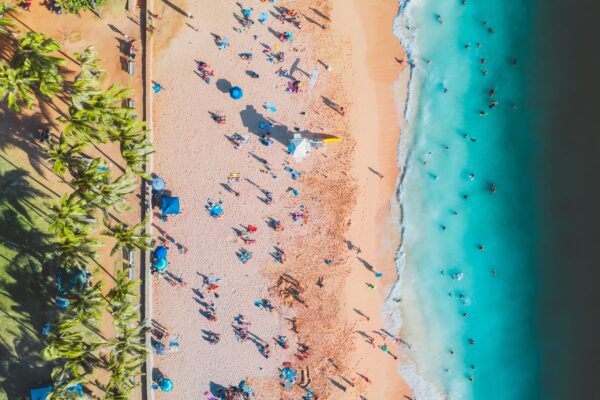
(*) Photo: Jess Loiterton (Pexels).