Hamnet: grief, motherhood and the wound that births art
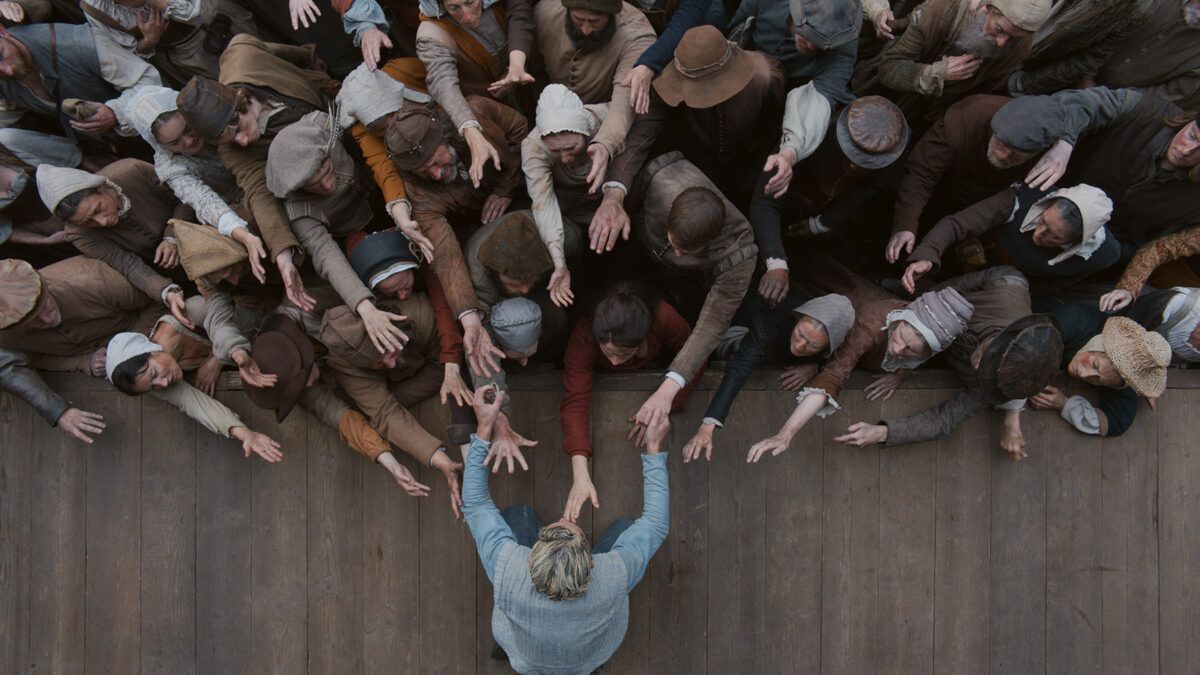
“Hamnet”, the new film directed by Chloé Zhao, sensitively and profoundly adapts Maggie O’Farrell’s novel to offer a renewed perspective on the Shakespearean universe: a story of love, loss, and the emotional origins of artistic creation.


A different Shakespeare: from literary genius to wounded father
For centuries, literary history has canonised William Shakespeare as the ultimate author — the unmatched genius who distilled the human condition into immortal works. He has been studied as a playwright, poet, and chronicler of the soul. Rarely, however, has he been portrayed as a father. Rarer still as a man undone by grief.
The film Hamnet, directed by Chloé Zhao and based on the award-winning novel by Maggie O’Farrell, boldly steps into that emotional and historical omission. It offers a radically different perspective: one shaped by love, motherhood, loss, and mourning as the true undercurrents of artistic creation. This is not a biopic, nor a history lesson. It is a sensory, emotional, and poetic experience that rewrites one of the firmest cultural myths from its most intimate margins.

A story that begins with absence
The starting point is a void: Hamnet Shakespeare, the only son of William and Agnes (the historical Anne Hathaway), died at the age of eleven, likely from the plague. A few years later, his father wrote “Hamlet”. Coincidence or catharsis? Official biographies rarely linger on this intersection. O’Farrell does.
Her 2020 novel reconstructs that biographical silence with astonishing literary sensitivity. Zhao, who won the Oscar for “Nomadland”, brings this universe to the screen with a poetic fidelity that translates prose into imagery, silences, and inner landscapes.
A film that defies the conventions of historical drama
From the outset, “Hamnet” refuses to be a conventional historical drama — in both content and form. Zhao herself puts it plainly: “Love doesn’t die, it transforms”. The film is, above all, a meditation on that transformation — on how deep emotional pain can become language, legacy, art.
Zhao and O’Farrell co-wrote the screenplay, not to reconstruct facts, but to evoke feelings. The aim is not historical accuracy but emotional truth — one that resonates with anyone who has experienced love, loss, or the creative process as an act of survival.
The real protagonist is the home
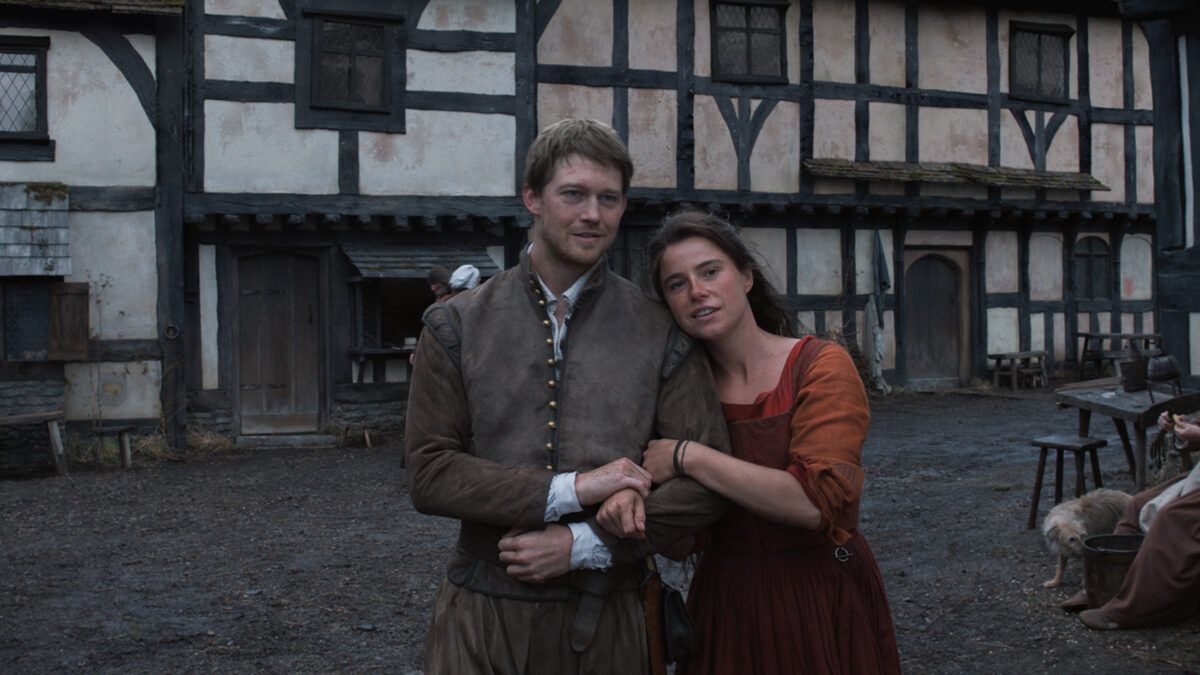
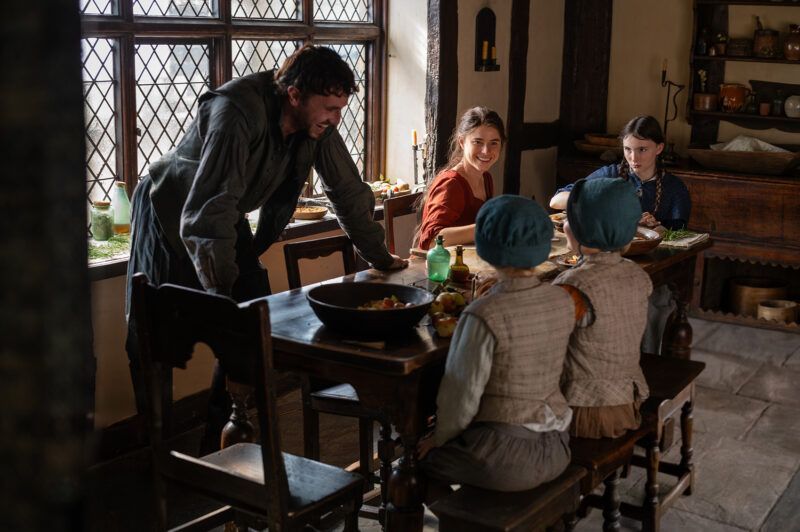
Set in Stratford-upon-Avon, the film focuses on the Shakespeare family. Agnes (a devastating Jessie Buckley, awarded the Golden Globe and Critics Choice for this role) lives in intimate communion with the natural world. She is a healer, herbalist, falconer — but above all, a mother.
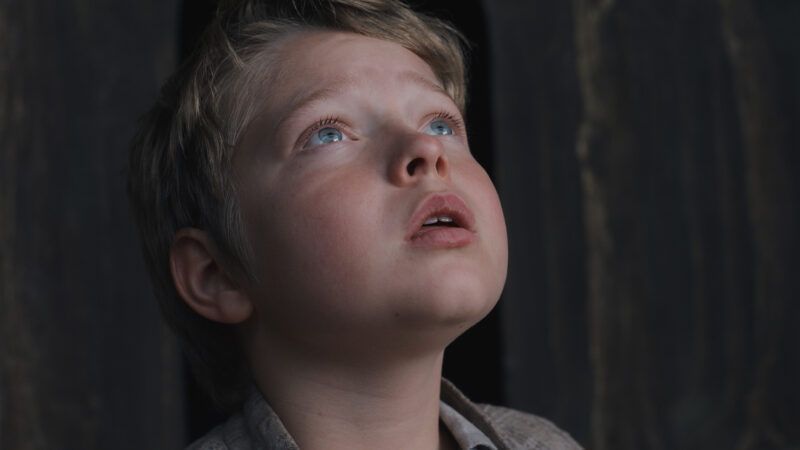
Her bond with her children, Hamnet and Judith, is portrayed with tender precision. William (Paul Mescal) appears as a remote and absent figure, torn between his theatrical vocation in London and the family he has left behind. That imbalance becomes crucial when tragedy strikes.
Rewriting the myth through the body
What sets “Hamnet” apart from typical period films is its perspective. Shakespeare is not the protagonist. Nor is his genius the narrative centre. Instead, it is Agnes, the home, and a woman’s experience of grief that anchors the story.
The camera aligns itself with the senses: the feel of earth beneath fingernails, the dampness of the woods, the crunch of herbs under hand. Zhao directs with the instinct of a filmmaker who understands that the invisible — texture, breath, scent — can express more than words. Every aesthetic decision seeks to dismantle heroism and centre the human.
A baroque emotional aesthetic
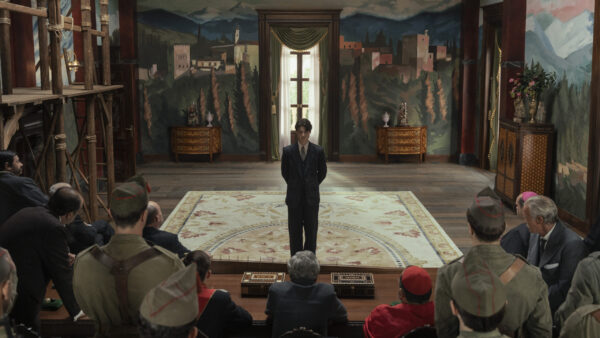
Lukasz Zal’s cinematography (Oscar-nominated for “The Zone of Interest”) cloaks the film in a chiaroscuro palette, echoing the atmosphere of Baroque painting. There’s a luminous melancholy throughout. The mise-en-scène contrasts the claustrophobia of domestic life with the symbolic vastness of nature.
Costume designer Malgosia Turzanska turns fabric into narrative: Agnes’s red dress, which evolves over time, becomes a visual metaphor for grief as metamorphosis. This isn’t just historical setting — it’s emotional language.
Agnes: motherhood as resistance
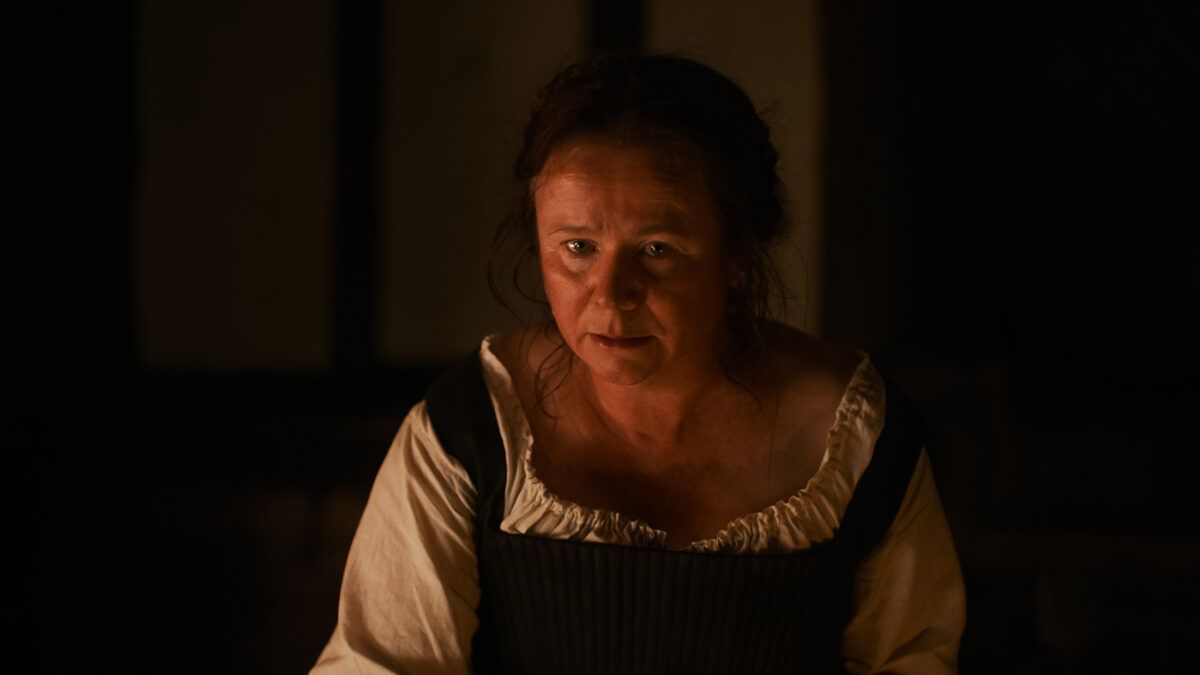
What truly carries “Hamnet”’s emotional weight is Buckley’s performance. Her Agnes is no passive victim. She is a woman who feels pain viscerally, who fights to protect what she loves with her body, her silence, and her instinct.
The film powerfully restores feminine knowledge often dismissed by history — intuitive, cyclical, grounded in nature and care. Agnes embodies this knowledge, and her motherhood becomes an act of resistance.
The plague: fear, guilt and fragility
Illness — the plague — is not depicted as spectacle, but as a diffuse threat. It evokes recent memories of global pandemic: isolation, guilt, the fear of having failed to protect loved ones. Death is not shown explicitly. It is suggested. And that suggestion is what devastates.
Zhao and Buckley manage to make the loss felt in every frame, in every absence, in every unspeakable moment.
Shakespeare, the man who couldn’t speak
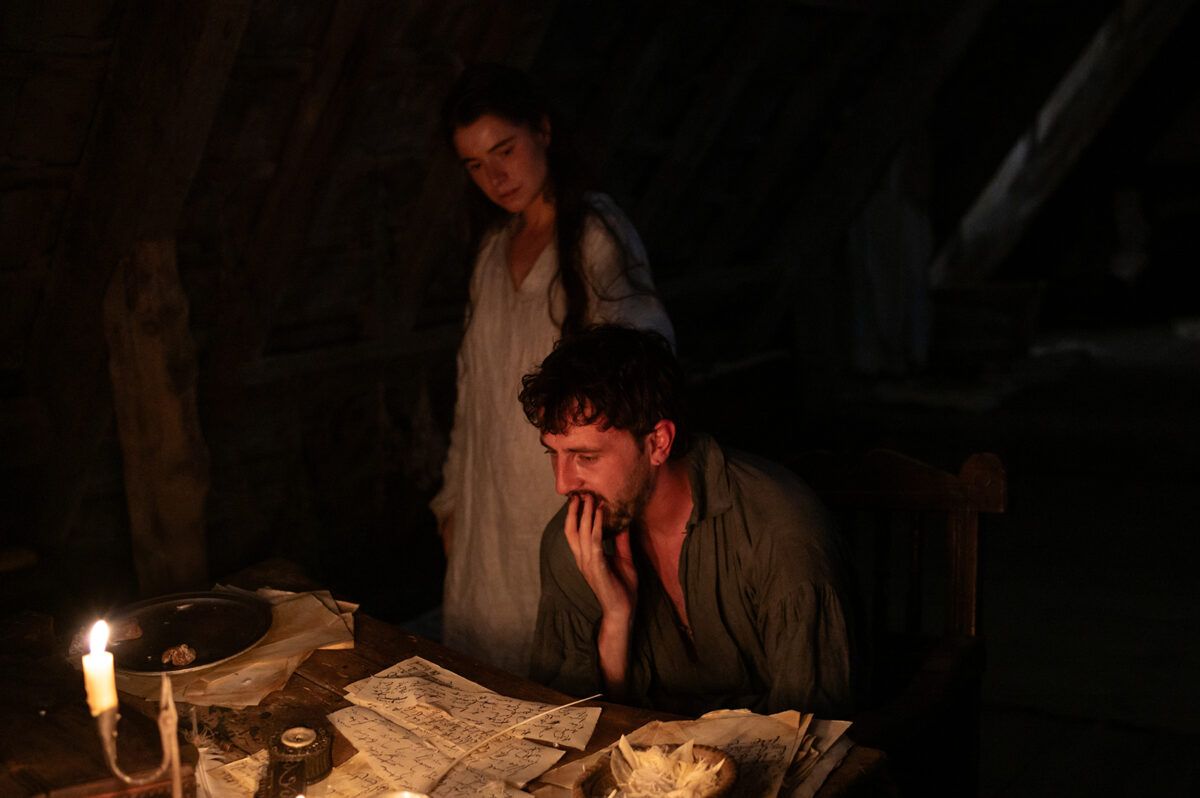
Paul Mescal’s Shakespeare avoids the solemn archetype. He is not an inspired genius, but a fragmented man. His grief is clumsy, muted. He writes because he cannot speak. He creates because he cannot console. Writing “Hamlet” is not presented as tribute, but as a necessary act of survival — turning chaos into structure.
Hamlet: from real son to symbolic one
The symbolic link between “Hamnet” and “Hamlet” has long been debated. The film neither confirms nor denies it, but rather suggests it with exquisite subtlety.
It doesn’t say, “This is what happened”. It says, “This is what it might have felt like”. That nuance opens space for empathy — and for a collective understanding of personal tragedy.
Grief as presence and absence
“Hamnet” reflects on different responses to grief. Shakespeare leaves for London. Agnes remains. He sublimates pain into art. She lives it in her body. He writes. She remembers. These are not opposing forces, but parallel responses to something unbearable.
Zhao seems to suggest: art cannot heal, but it can give form to what overwhelms us.
The Globe: a silent emotional climax
The final sequence in the Globe Theatre is quietly overwhelming. Agnes watches the first performance of “Hamlet”. Her face — fixed frame, total silence — says everything. The work her husband has written becomes a bridge, an offering, a gesture of recognition.
It is one of those rare cinematic moments where the viewer feels not only moved, but seen.
Max Richter: music as elegy
Max Richter’s music suffuses the film with a delicate emotional resonance. “On the Nature of Daylight”, heard at key moments, is not mere soundtrack. It is memory. It lingers. It mourns.
Critical acclaim and box office success
“Hamnet” has resonated with both critics and audiences. In its opening weekend in Spain alone, it grossed over one million euros with nearly 150,000 viewers. It won Best Drama and Best Actress (Jessie Buckley) at the Golden Globes, and earned eight Oscar nominations — including Best Picture, Best Director, and Best Adapted Screenplay.
A film that speaks in whispers
Beyond its accolades, “Hamnet” stands out in today’s cinema for its willingness to remain quiet. It doesn’t chase easy answers. It trusts in the emotional power of intimacy to express something universal.
This is not a film about Shakespeare. It’s a film about what comes before the art: the wound, the absence, the love that couldn’t save, the grief that refuses to disappear.
“Hamnet” doesn’t seek to dazzle. It simply holds a space — for silence, for memory, for questions without answers. And that, in itself, is unforgettable.
Highly recommended.
(*) Images courtesy of UPI Media.