The Newt in Somerset sees out Autumn with a dragon in flames
In early November, we travelled to The Newt in Somerset, an English country estate between Bruton and Castle Cary, for Fire Night, the celebration that marks the end of the apple harvest. We stayed at Yarlington Lodge, a beautiful former rectory. Each bedroom is named after a literary character, and beside the bed is a copy of the novel in which they appear.
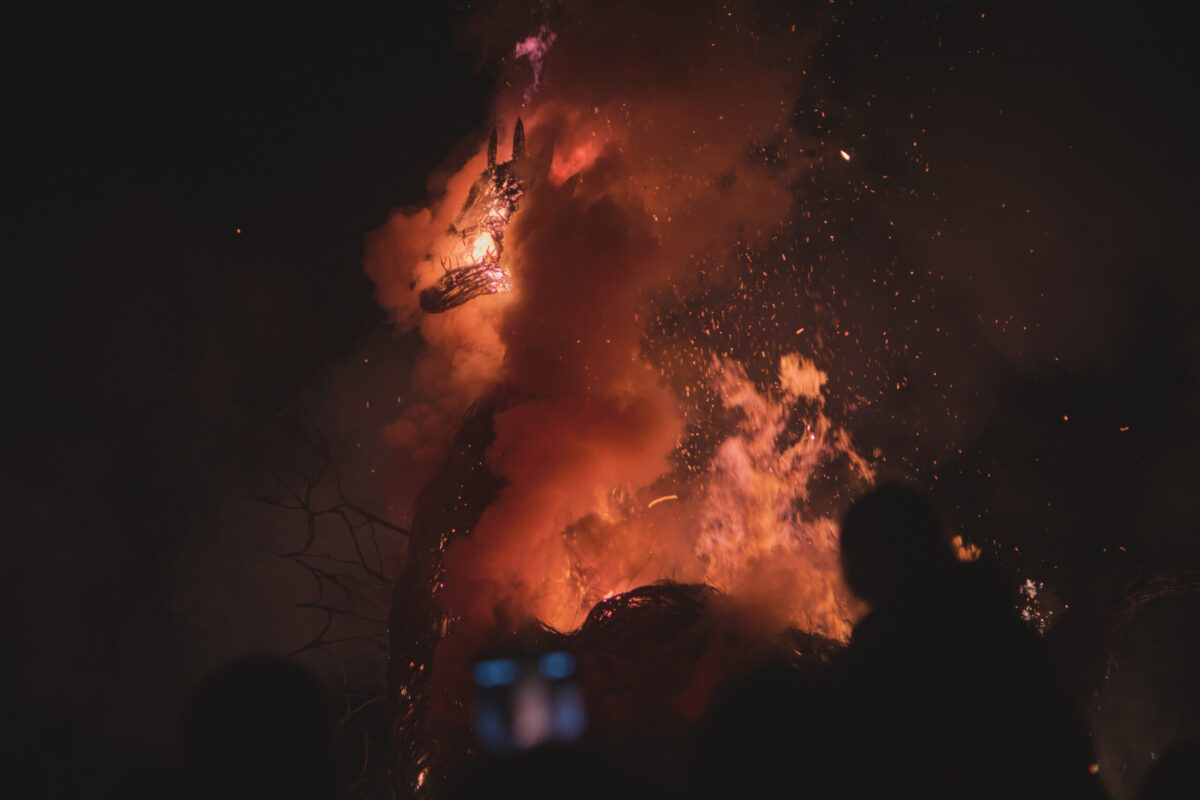
On the night of 6 November, fireworks filled the sky above The Newt in Somerset as a giant dragon burned in the gardens.
Hundreds of us gathered that evening for Fire Night, a celebration reserved for members of The Newt and guests staying at the hotel. The ceremony began with live music and a reading about the origins of the tradition. Then a robed figure approached the willow dragon, torch in hand, and set it alight. Watching the flames work their way through the branches reminded us of the cremà at Valencia’s Fallas festival, although the two celebrations have very different origins. The music was still playing when the first fireworks burst overhead. It gave us goosebumps!
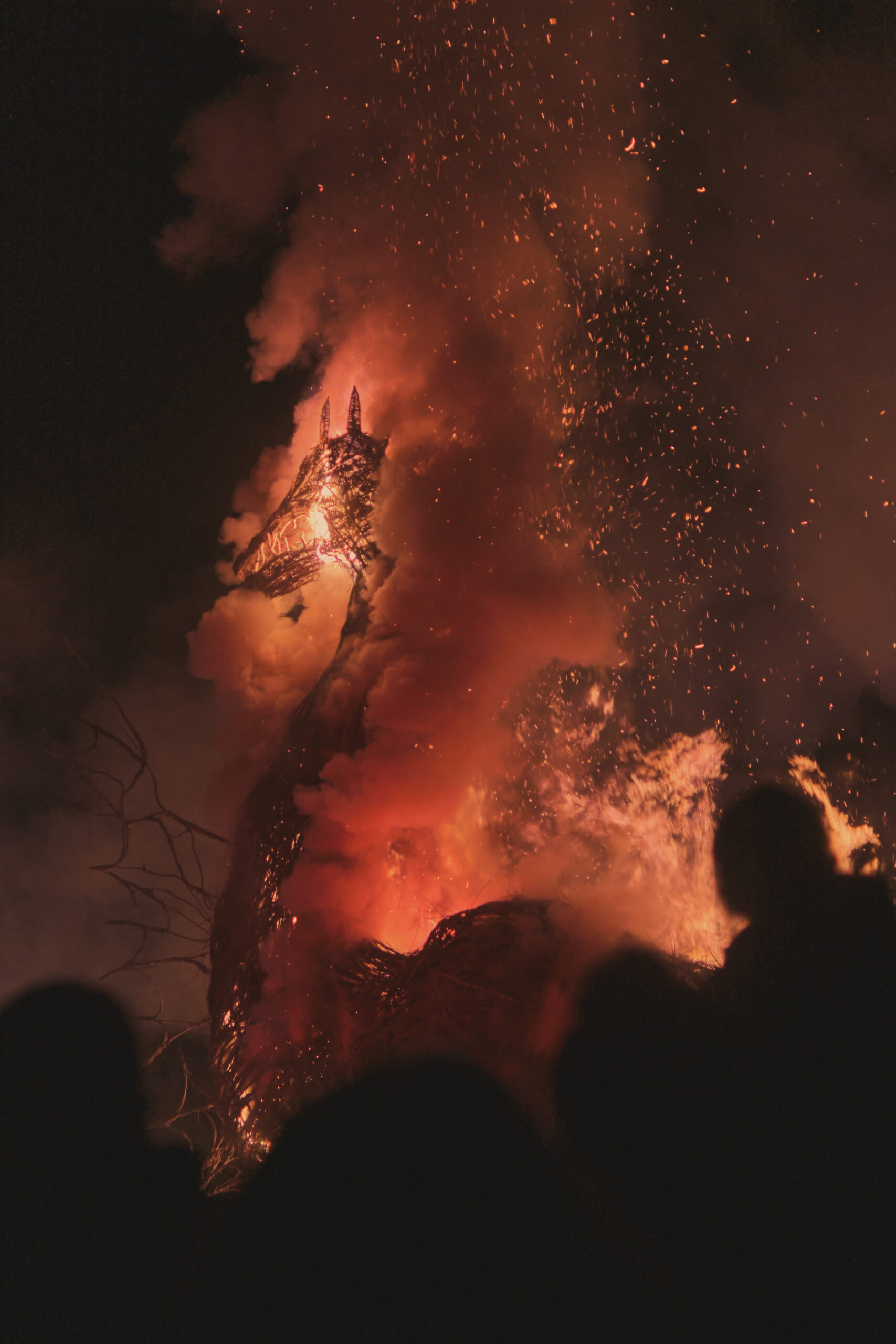
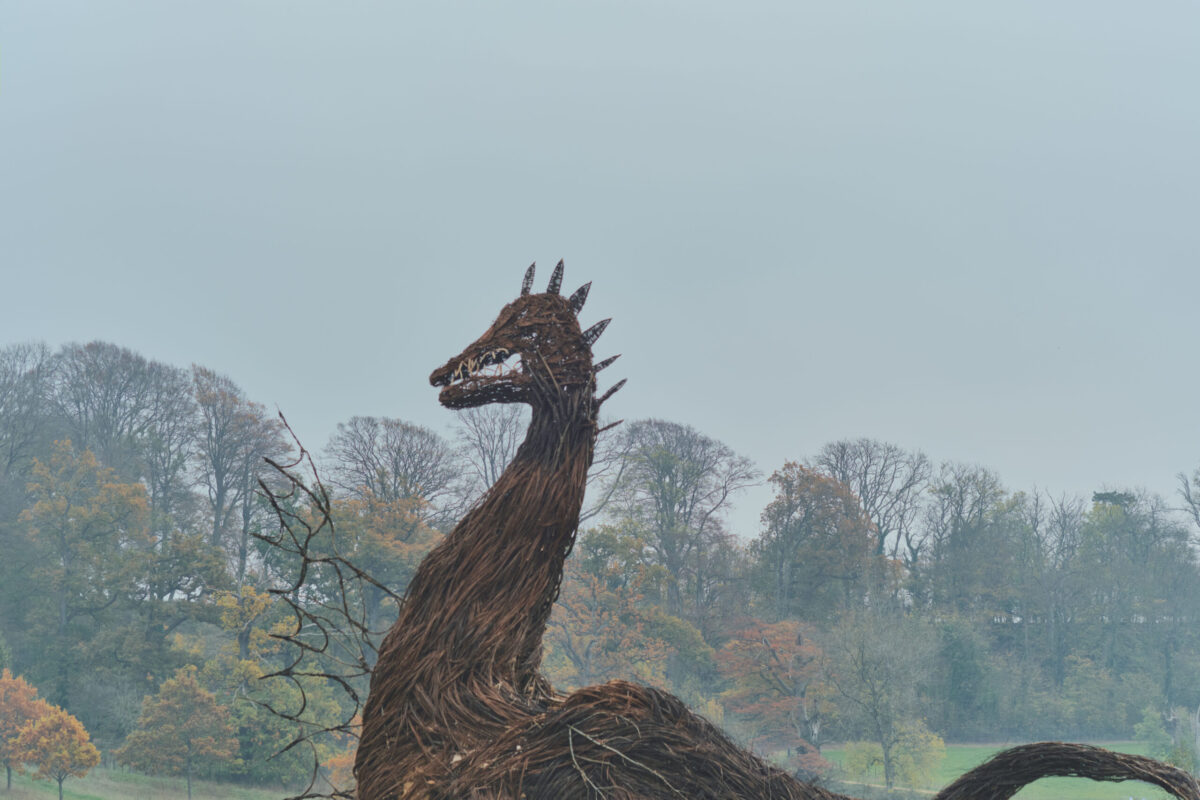
This year’s dragon, a wyvern, was the work of sculptor Stefan Jennings, who specialises in working with willow. In previous years, Jennings created the figures for Fire Night with artist Serena de la Hey.
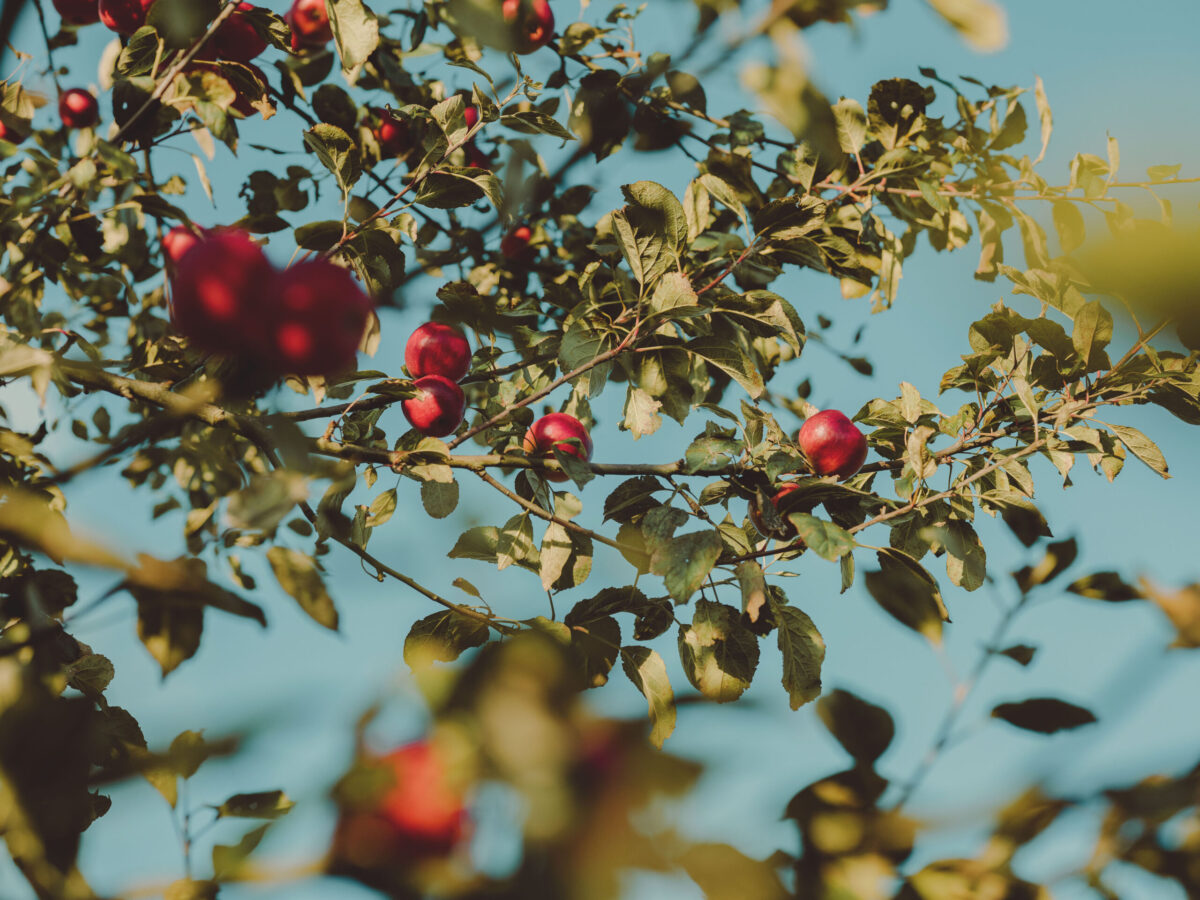
The Newt is a working farm, and in Somerset the apple harvest is one of the highlights of the year.
The apple harvest in Somerset
Somerset’s mild climate and fertile soil have sustained apple growing for centuries, making the county one of the historic heartlands of English cider. The Newt is still a working farm, and every November, once the last apple has been picked, the estate brings its community together to give thanks for the harvest and wish the apple trees a good winter’s rest.
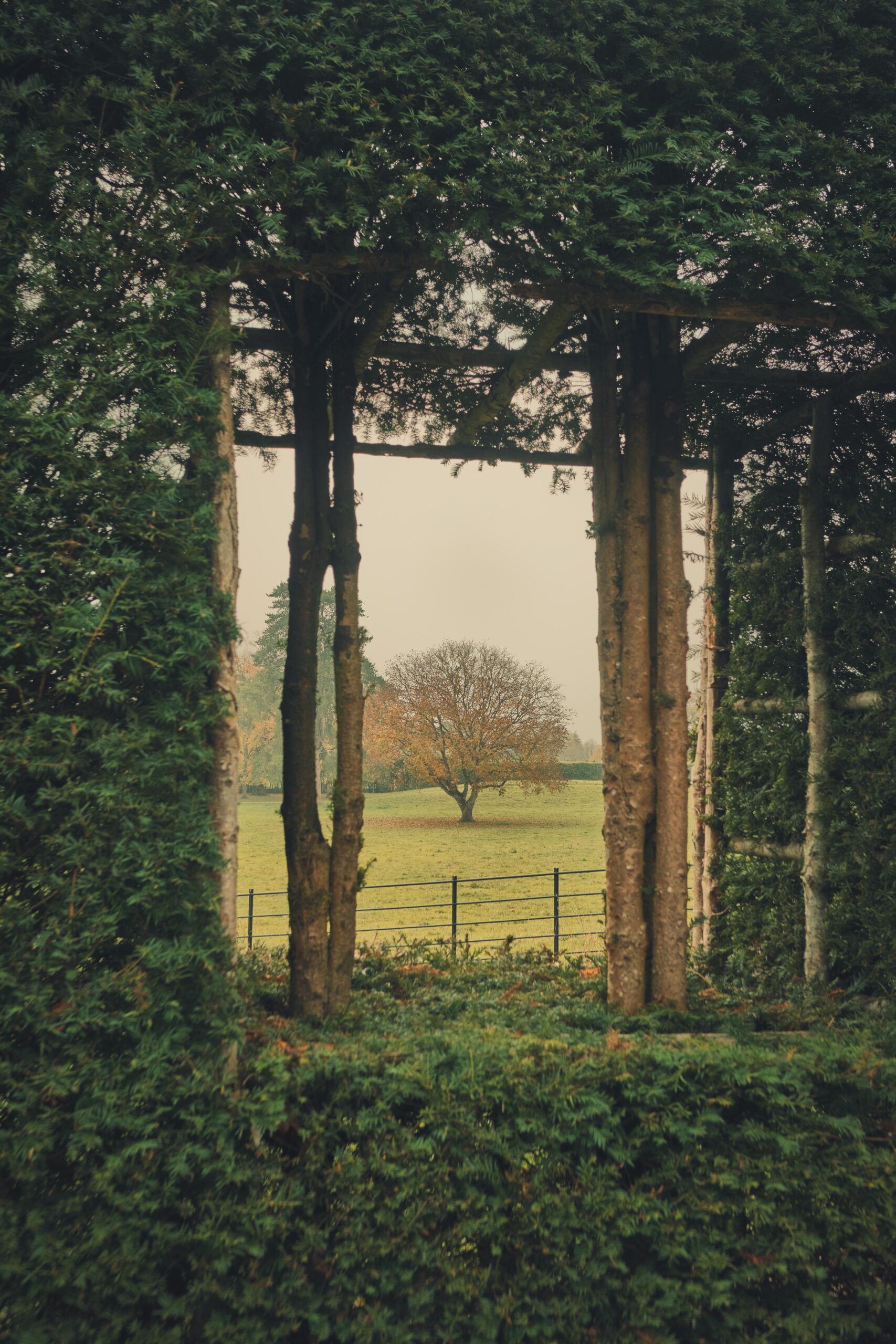
That also explains the fire. According to an old Somerset pagan belief, burning the willow figure wards off evil spirits and protects the trees through the colder months. In the depths of winter, the community returns to the orchards for the Wassail, which The Newt sees as the counterpart to Fire Night. This time, the toast is to the apples yet to come.
Three centuries of history in the Somerset countryside
Across its nearly 810 hectares, The Newt in Somerset is home to a Georgian mansion, a former dairy farm, orchards, woodland where deer roam, a cider house, several restaurants and even a museum built over the remains of a Roman villa. It reminded us of a small town, with its shops, its meeting places and celebrations of its own.
What we enjoyed most was discovering the connections between places as different as the cider house and the bakery. Some of the apple pulp left in the press after cider-making goes into the bread served on the estate.
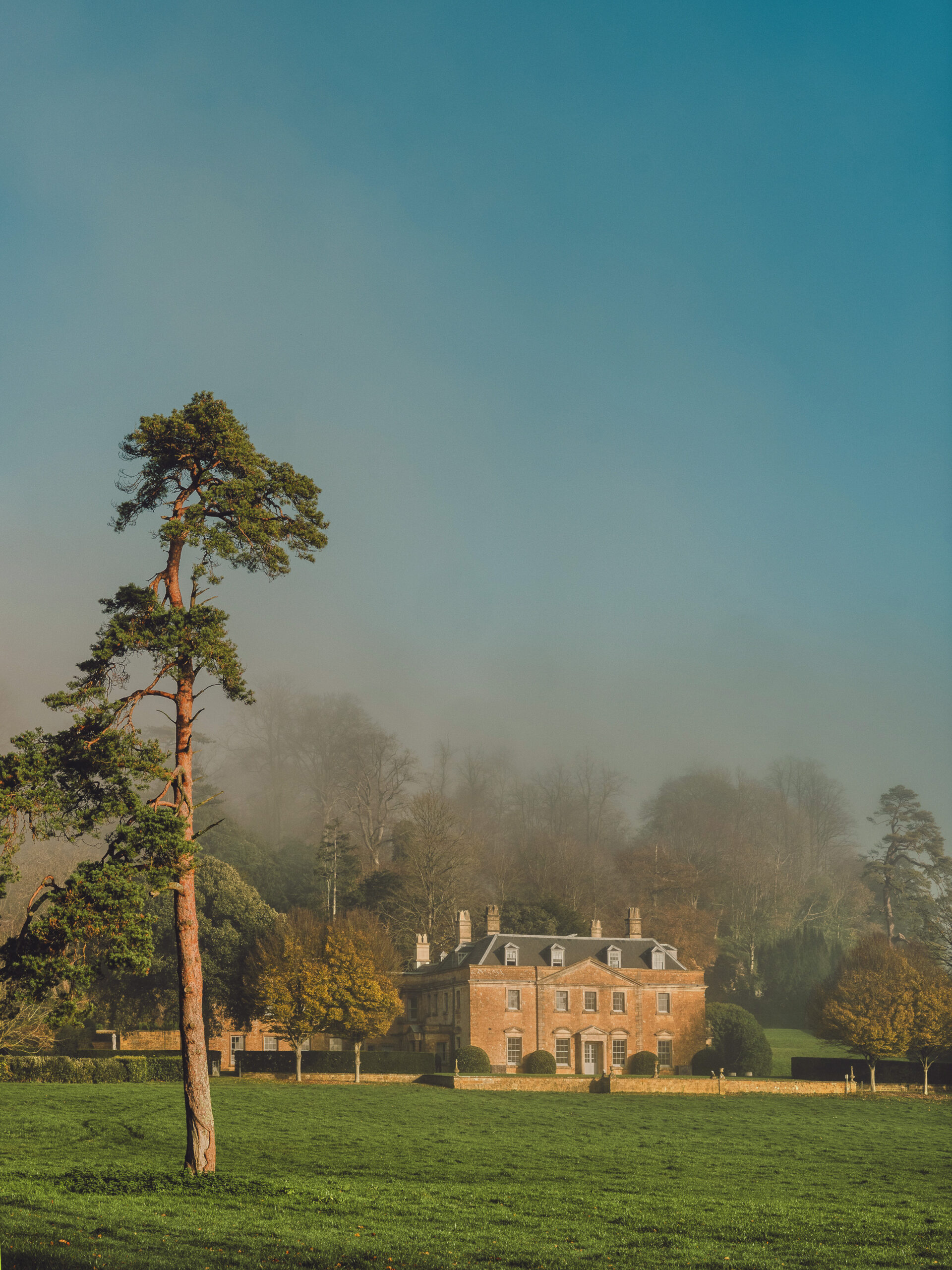
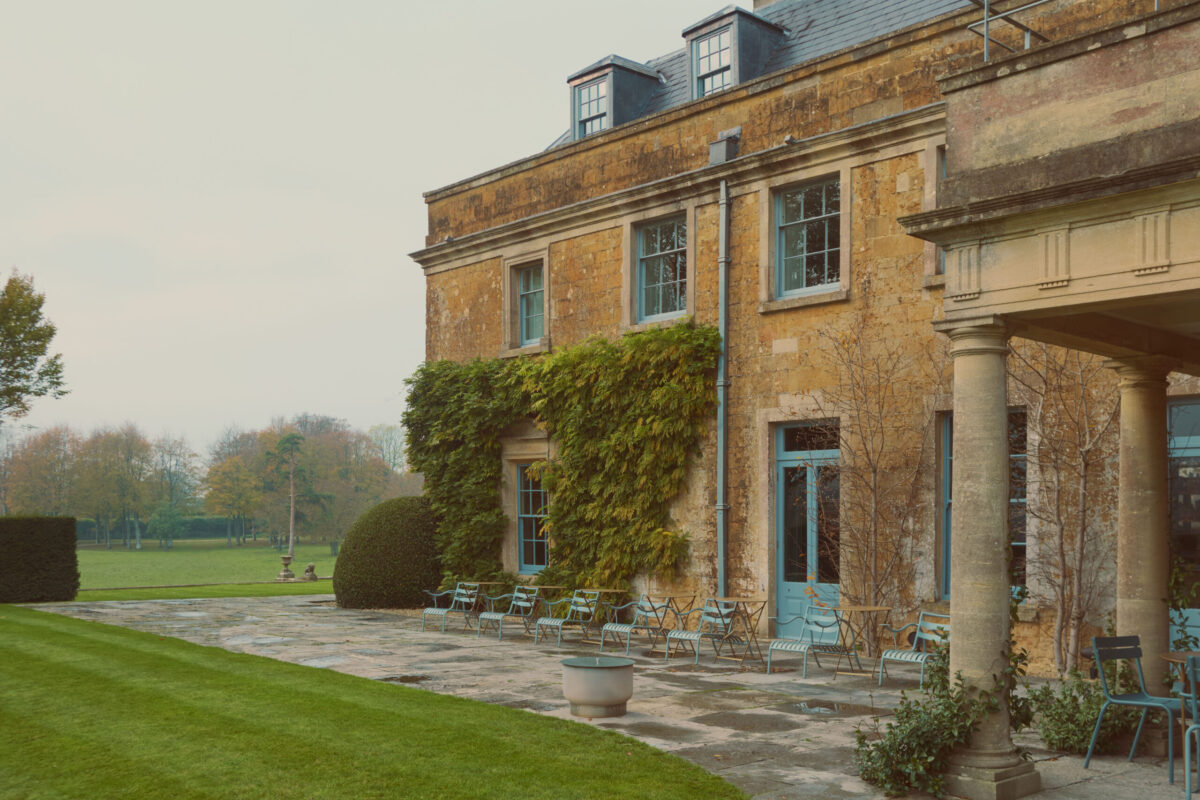
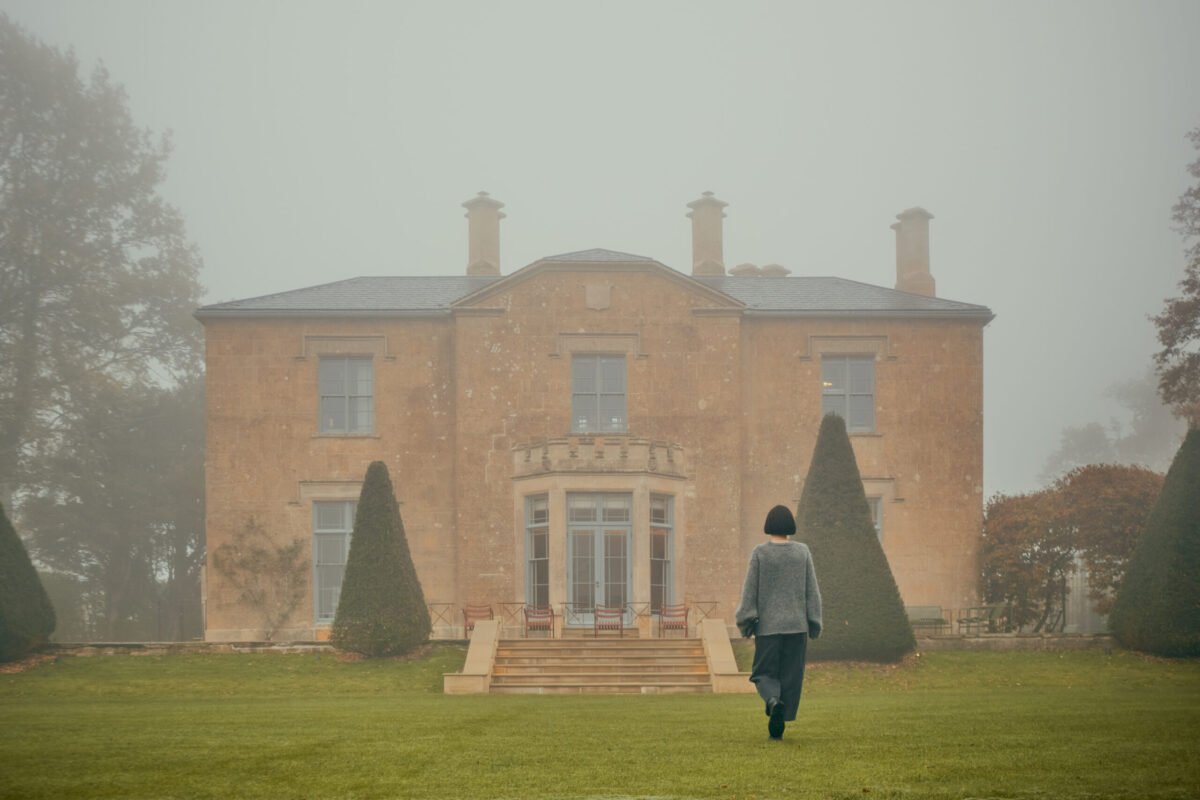
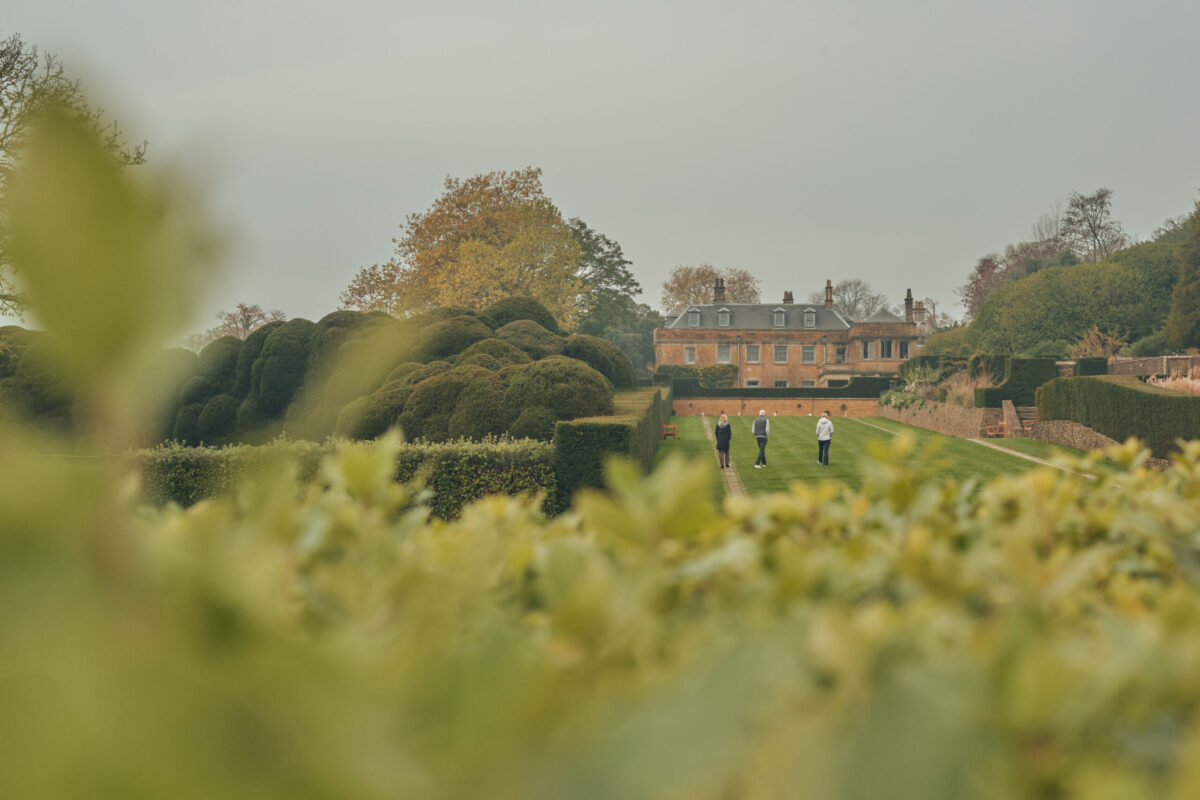
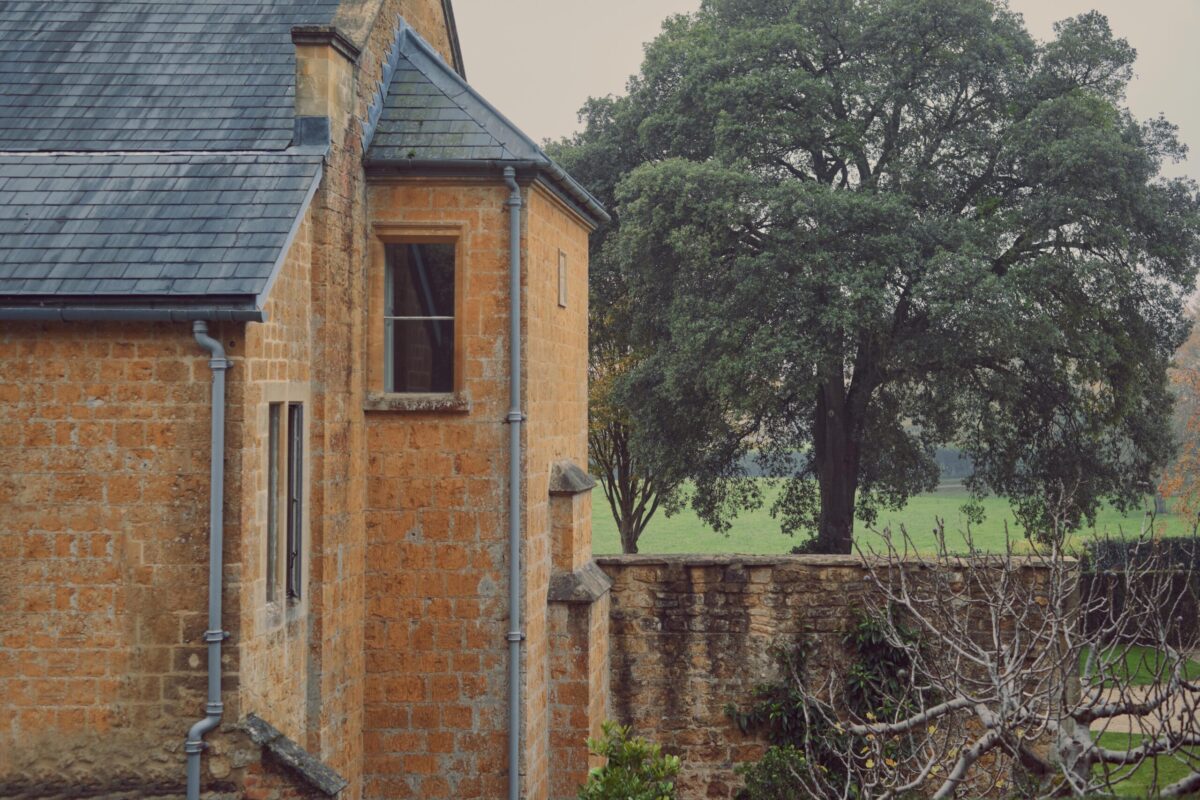
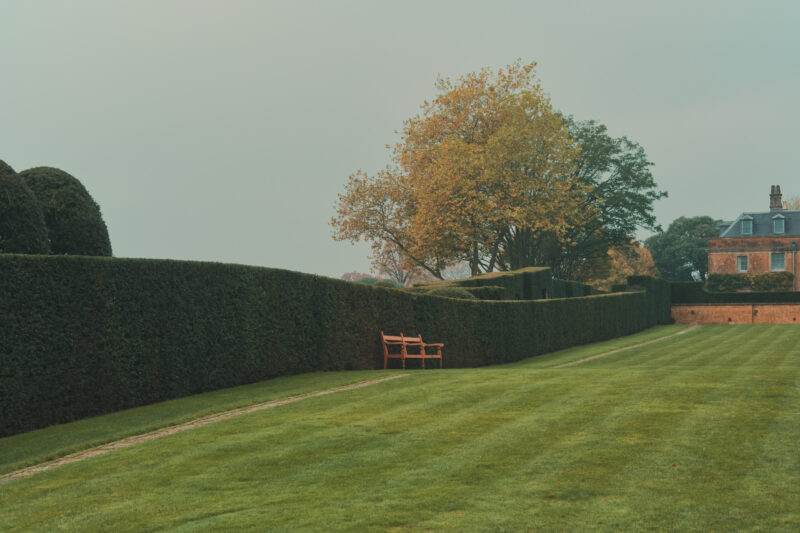
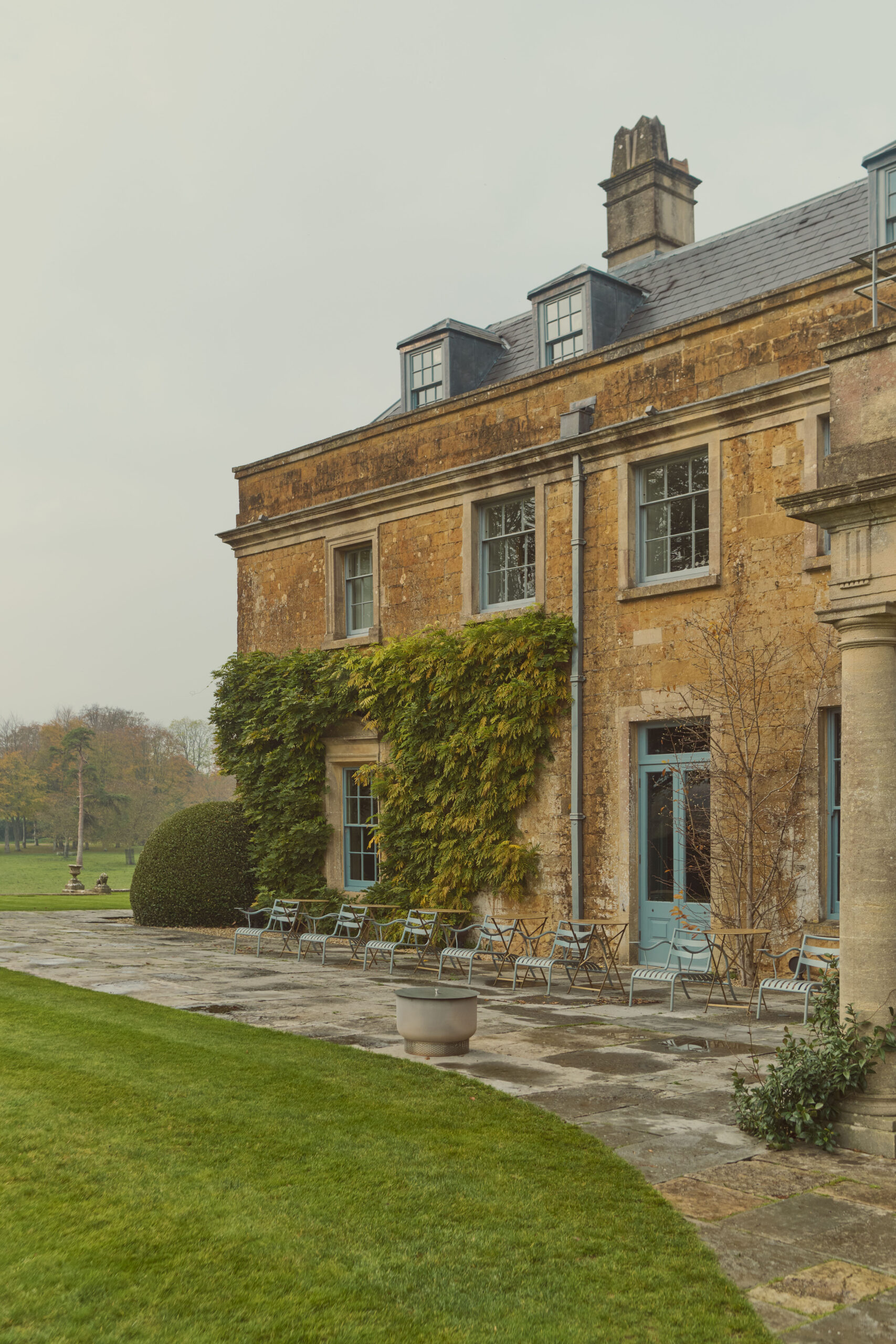
Looking at Hadspen House today, it is hard to imagine that the Georgian mansion began life as a farmhouse. In the late 17th century, William Player had it built in Cary stone, the local limestone that gives so many houses in this part of Somerset their distinctive honey colour.
In the mid-18th century, Vickris Dickinson remodelled the house, giving it much of the Georgian character it retains today. In 1785, the estate passed to the Hobhouse family. Over several generations, the family extended the house and transformed the grounds around it. Long before anyone could book a room at Hadspen House, its gardens were already well known in gardening circles.
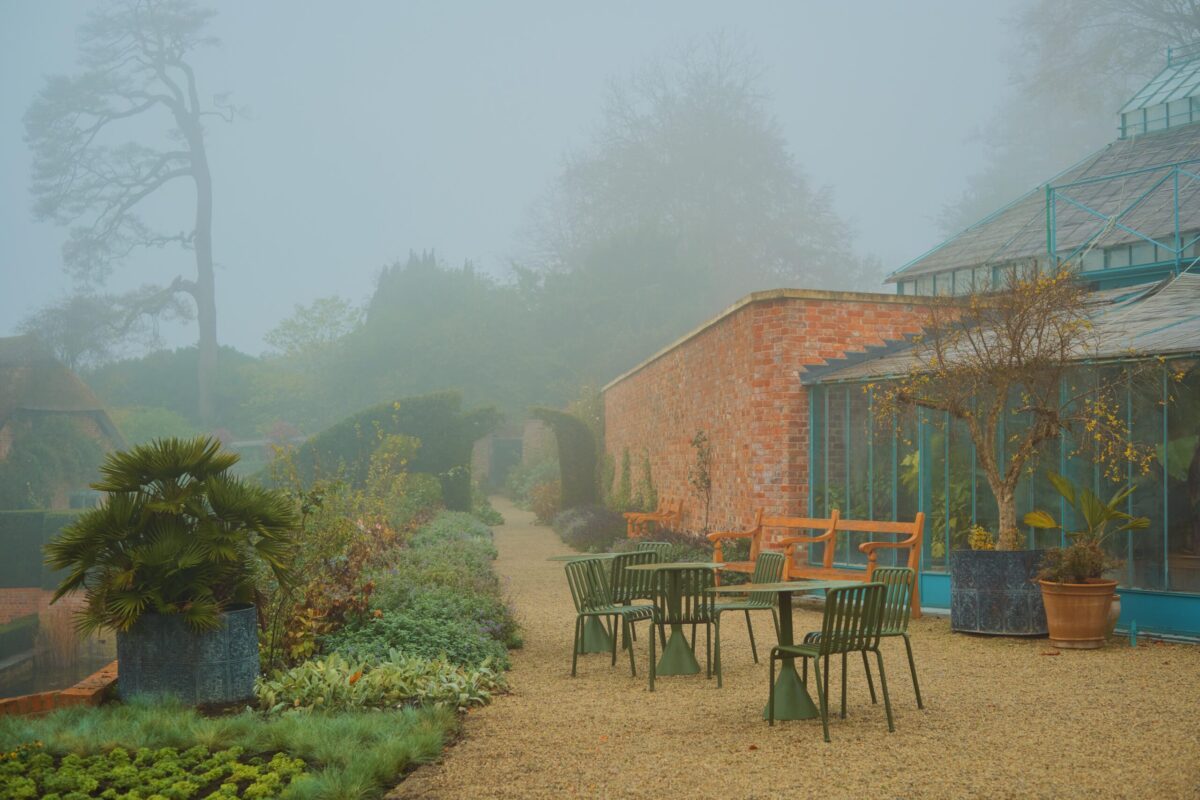
Among those who helped build that reputation were Margaret Hobhouse and the garden designer and writer Penelope Hobhouse. Later, Canadian gardeners Nori and Sandra Pope turned the old walled kitchen garden into a place to experiment with colour in their planting. So when Karen Roos, the South African former editor of her country’s edition of ELLE Decoration, and her husband, businessman Koos Bekker, bought Hadspen in 2013, there was almost as much to preserve in the grounds as there was inside the house.
The couple already knew what it meant to open a working farm to the public. At Babylonstoren, their estate in South Africa, visitors could also stay the night, explore the gardens and see the work in the fields at close quarters.
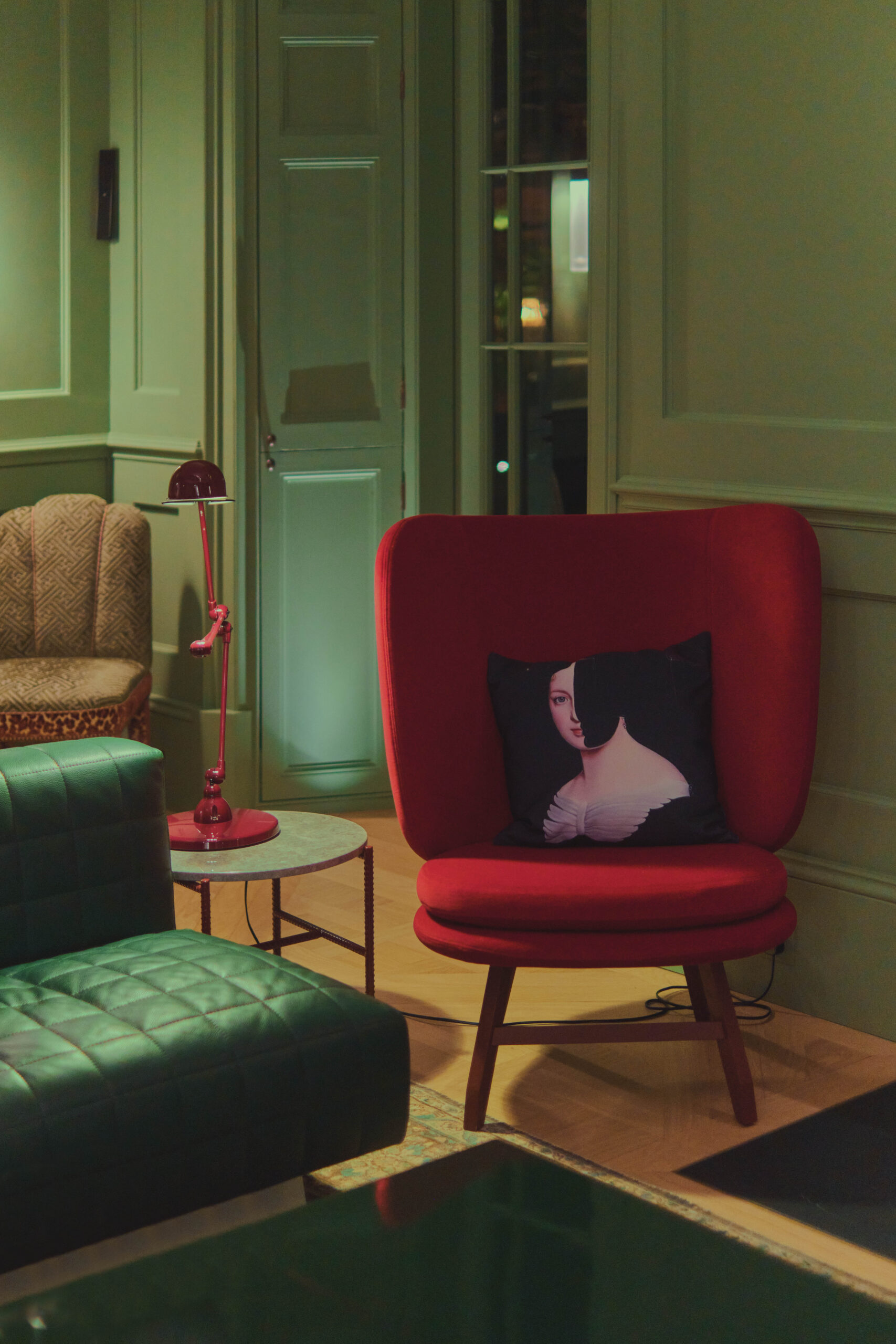
After six years of work, The Newt opened its doors in August 2019. It takes its name from one of the estate’s smallest inhabitants, the newt that lives in its ponds. Roos took charge of the interiors and French-Italian landscape designer Patrice Taravella designed the gardens.
Since then, the estate’s architect, Katie Lewis, has overseen projects ranging from the Four Seasons Garden and the gardening museum to a visitor experience exploring Somerset’s Roman past. Atsushi Hasegawa oversees creative direction. We tend to take as much interest in the objects someone has chosen for a room as we do in the architecture itself, so it was a pleasure to discover Yarlington Lodge, the house where we stayed.
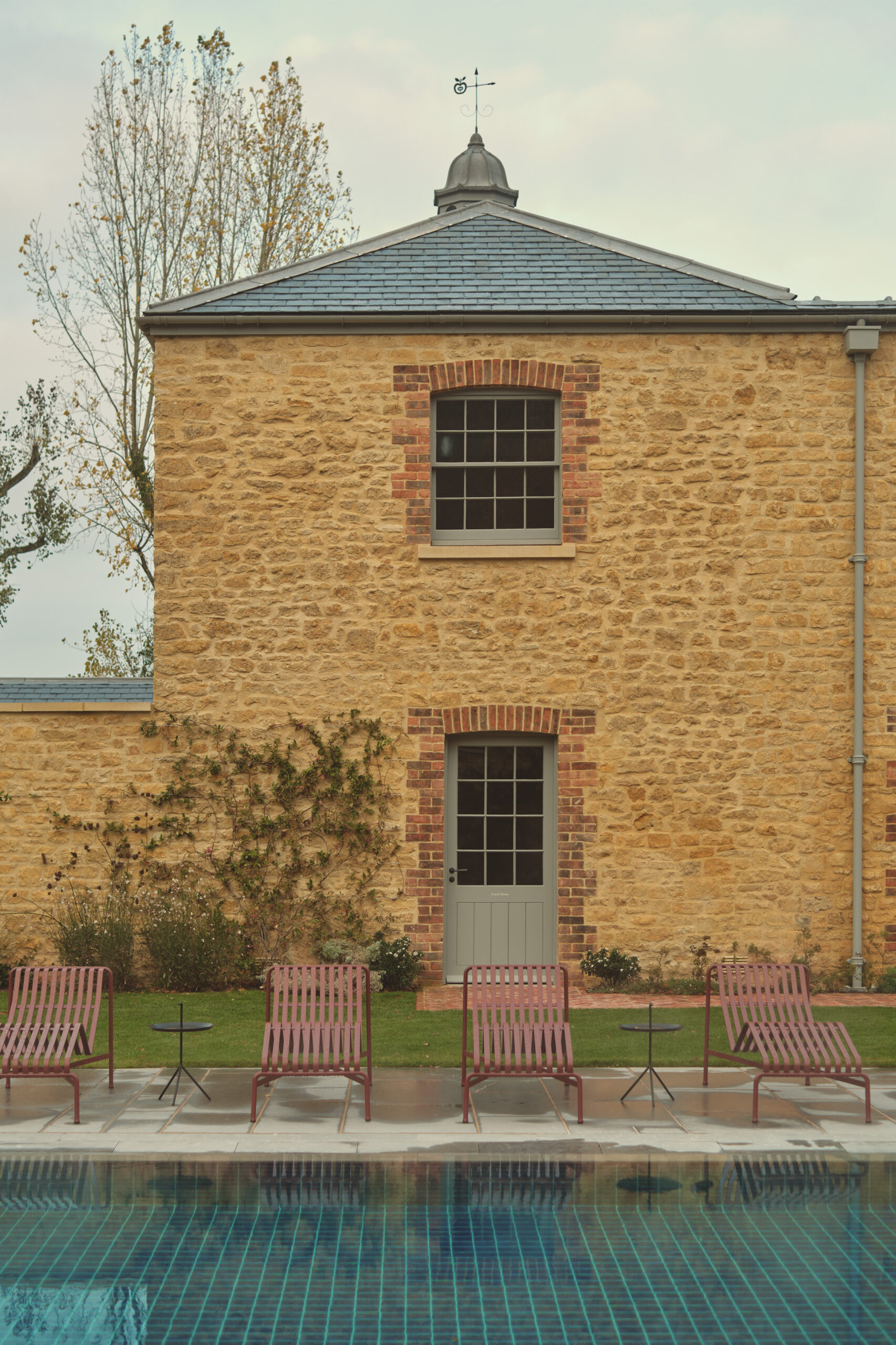
Yarlington Lodge, our home in Somerset
Just over a mile from the main estate, a lane leads between fields and old orchards to Yarlington Lodge. The house opened to guests on 1 June 2026, almost two centuries after the rector of Yarlington chose this spot on the hillside for his rectory.
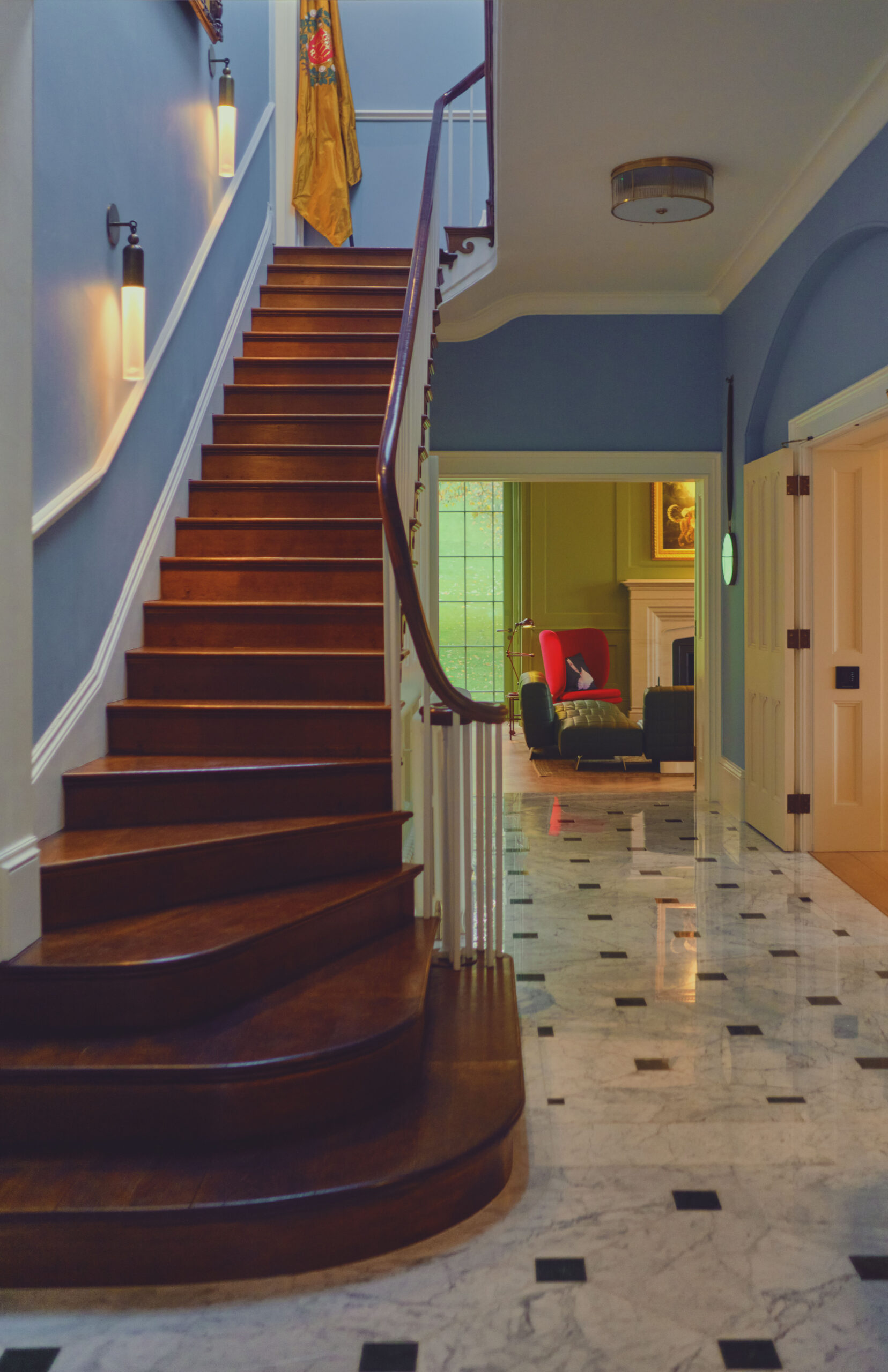
Between 1827 and 1830, Robert Green Rogers, who served as the village rector for half a century, had the house built on a site overlooking the Somerset Levels to the west and wooded hills to the south. He had a good eye. As early as 1836, the historian William Phelps wrote admiringly of both the views and the rector’s taste in architecture.
In an illustrated booklet we found in the house, we read that long before the rectory was built, the land had belonged to Catherine Howard and Catherine Parr, two of Henry VIII’s wives. Our favourite story, though, was about the neighbours who, in 1887, greeted the then rector and his wife with the words ‘Welcome Home’ spelt out in flowers at the entrance to the house.
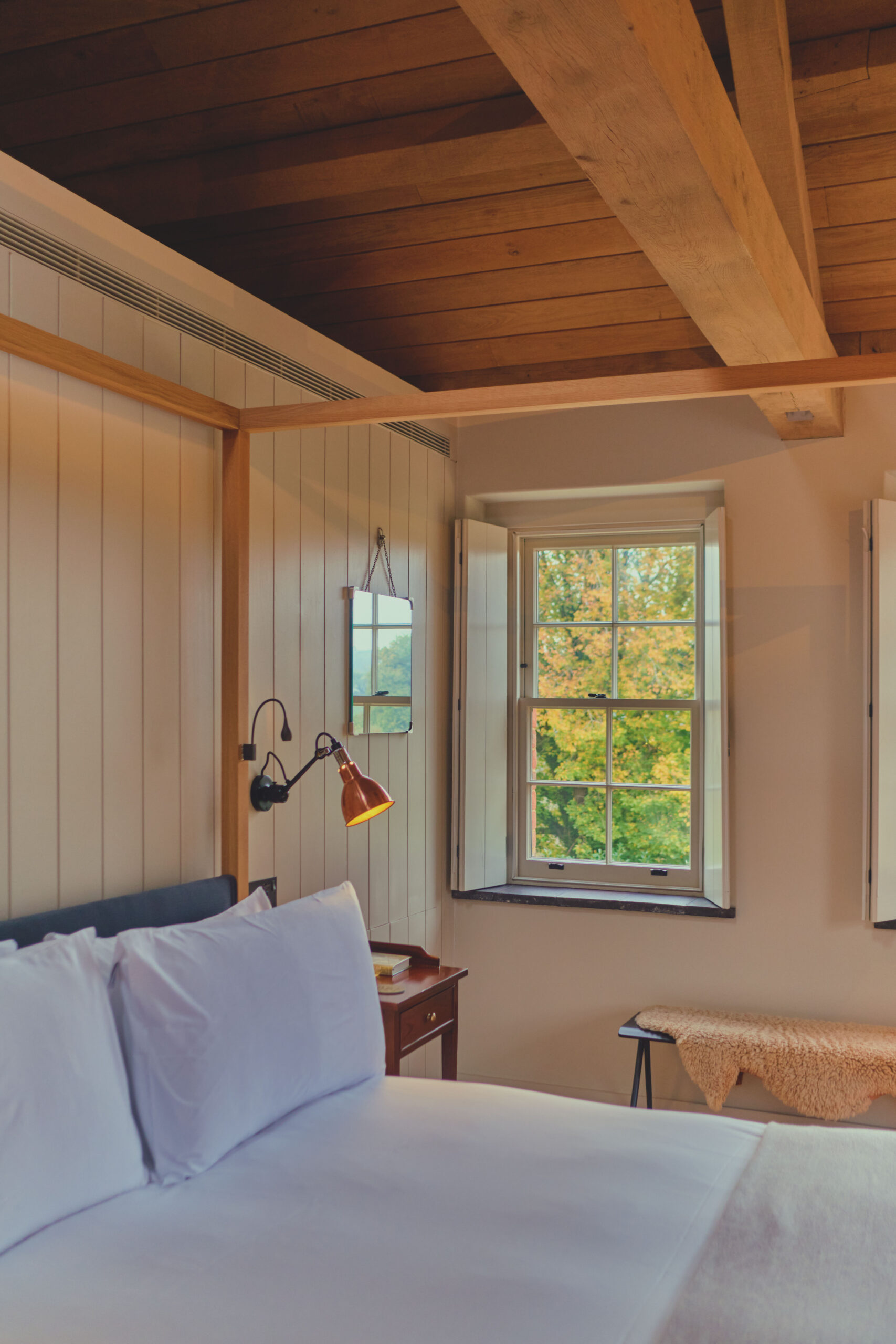
The house remained the village rectory until 1966. During the restoration, Karen Roos and the practice Richard Parr Associates retained the original layout, keeping the service quarters separate from the family rooms.
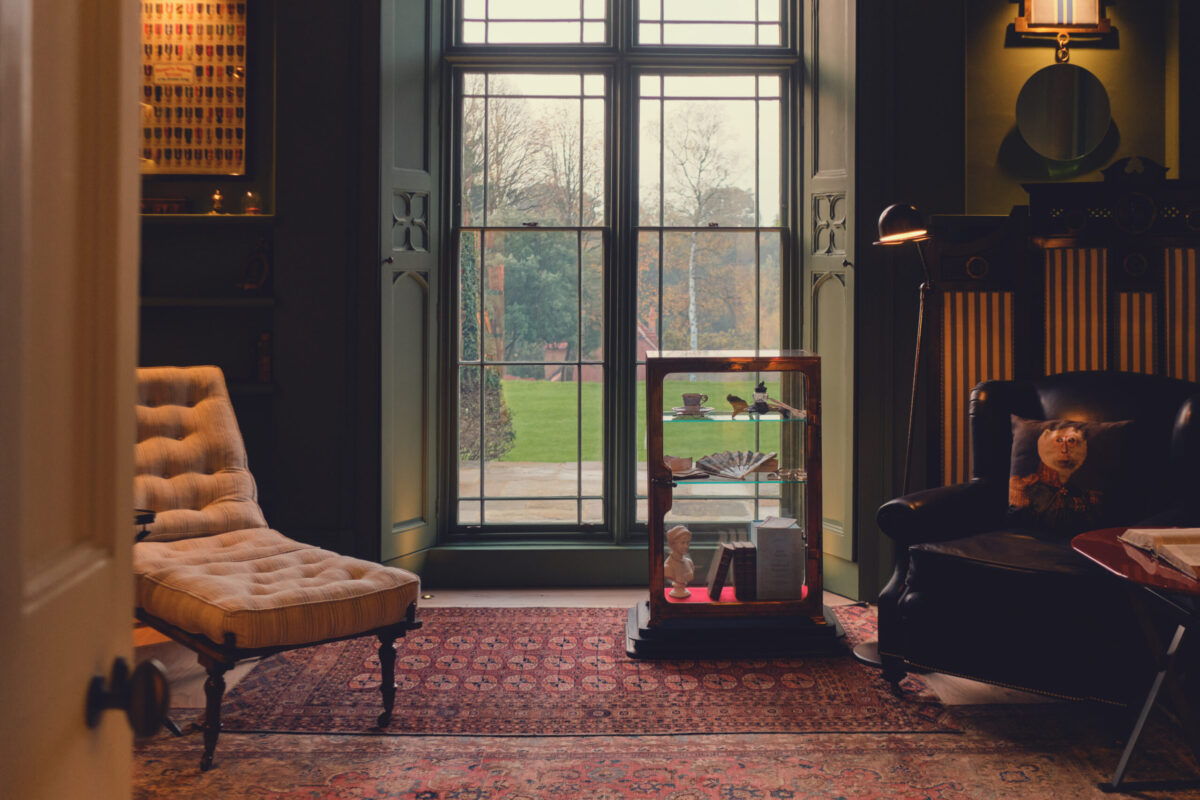
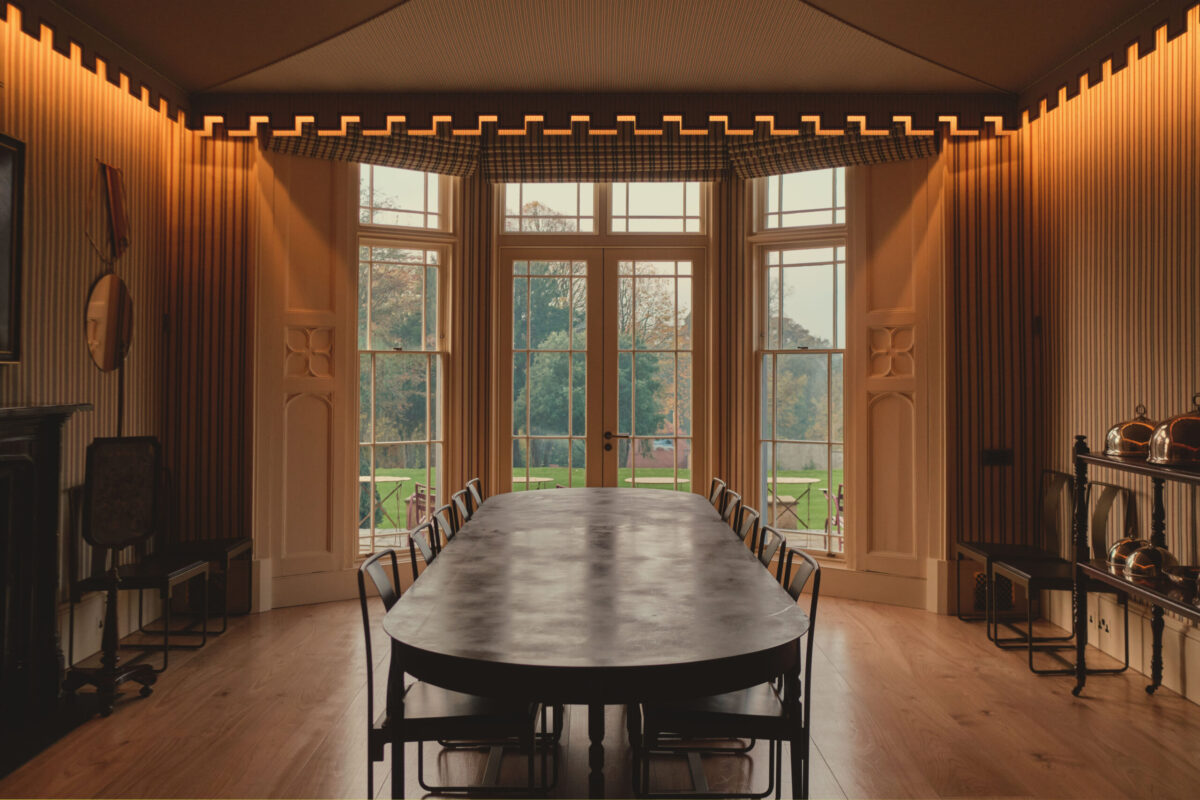
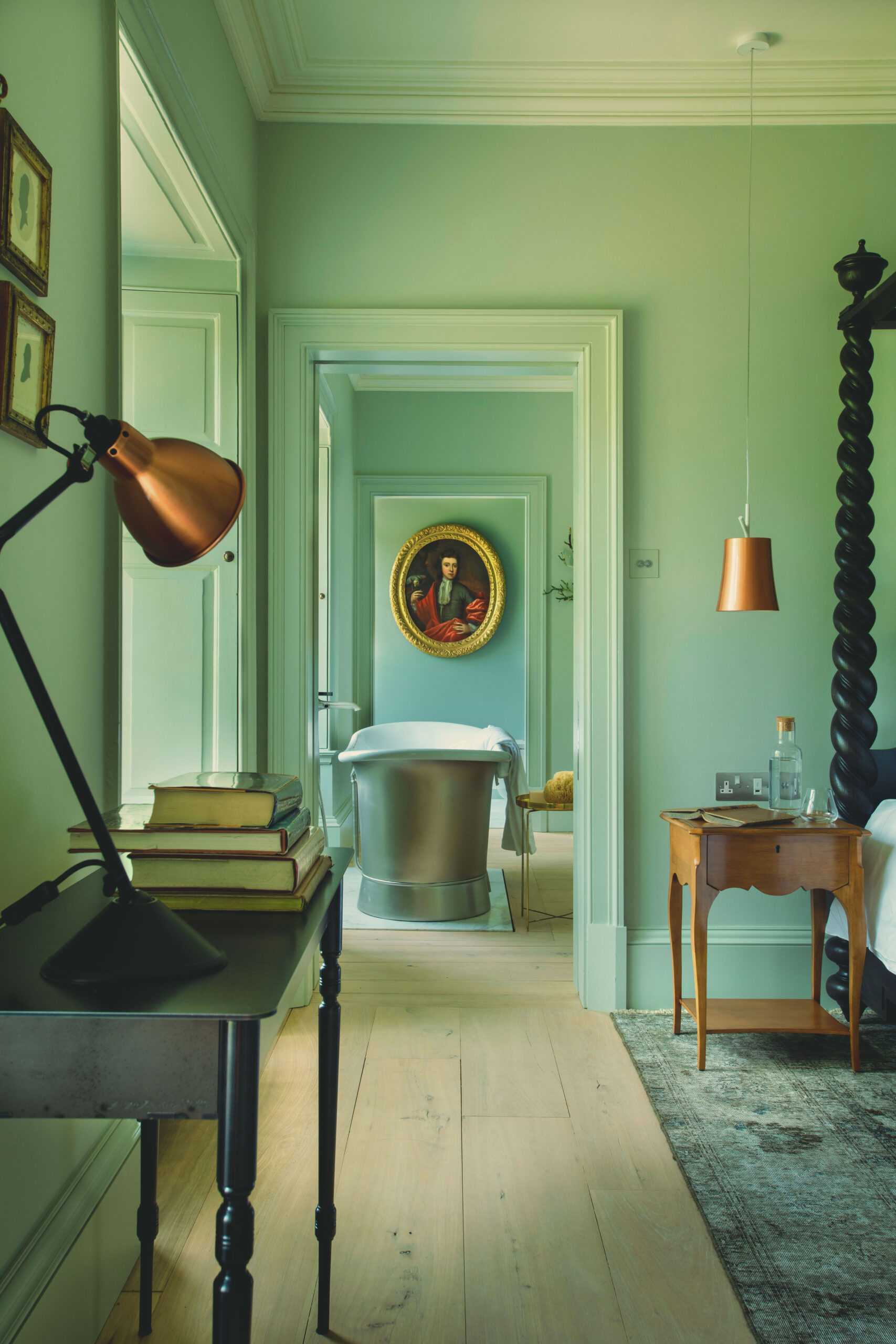
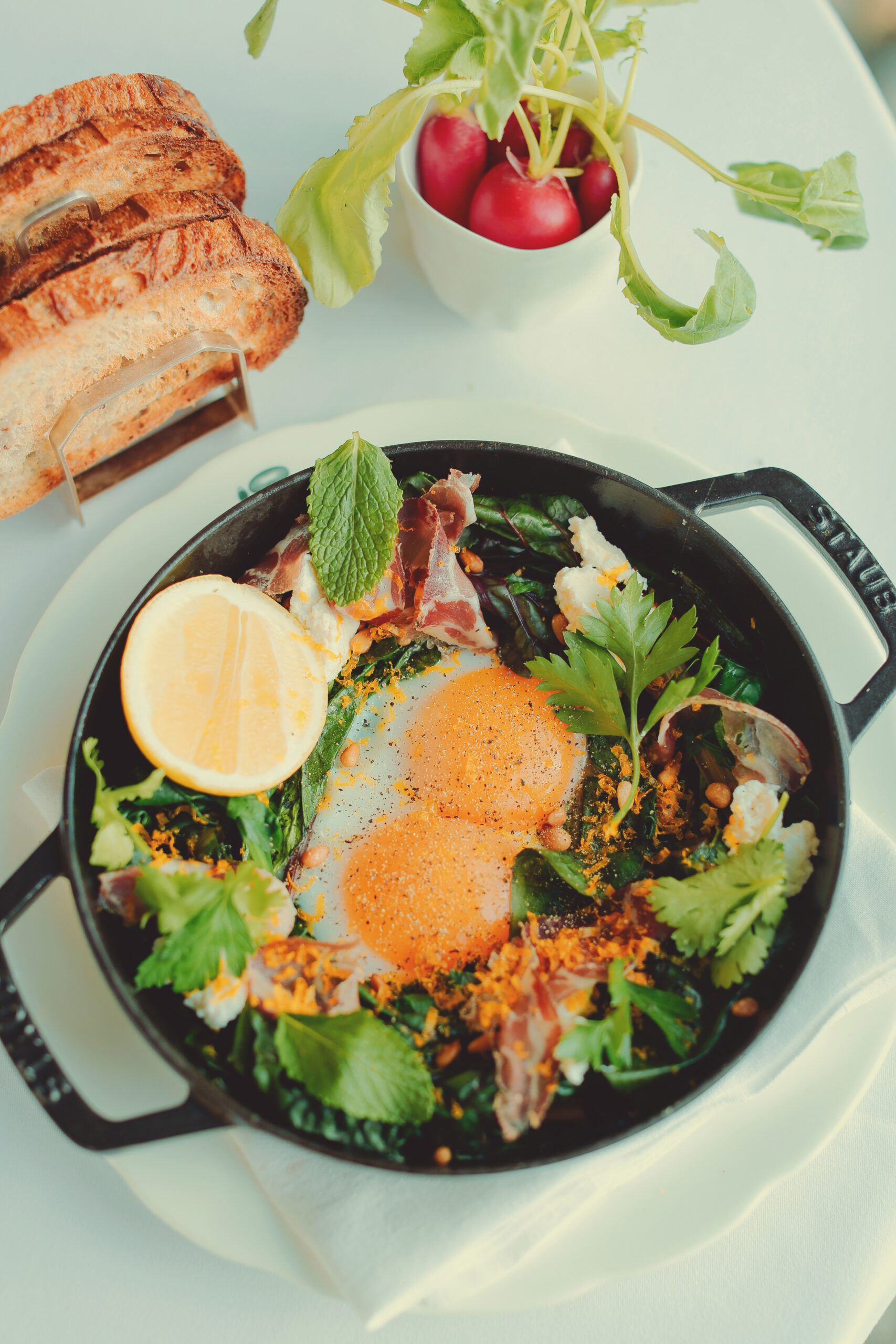
For the interiors, Roos drew on English Regency and Empire styles, bringing to both a love of colour that’s apparent as soon as you step inside. The entrance hall is sky blue, the library picks up the green of Hadspen House, and stripes appear on the upholstery and even on the ceilings. Of all the rooms, our favourite was the kitchen, for which Roos commissioned bespoke Delft tiles from the Netherlands. Having breakfast there was a dream.
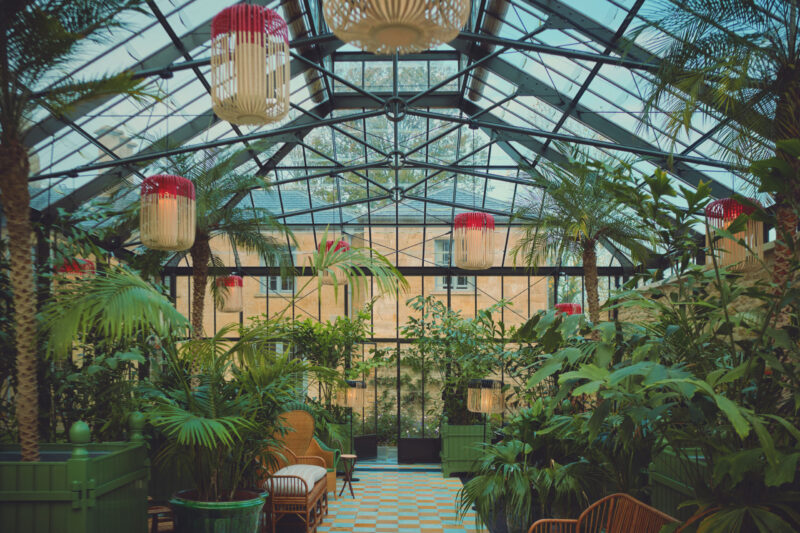
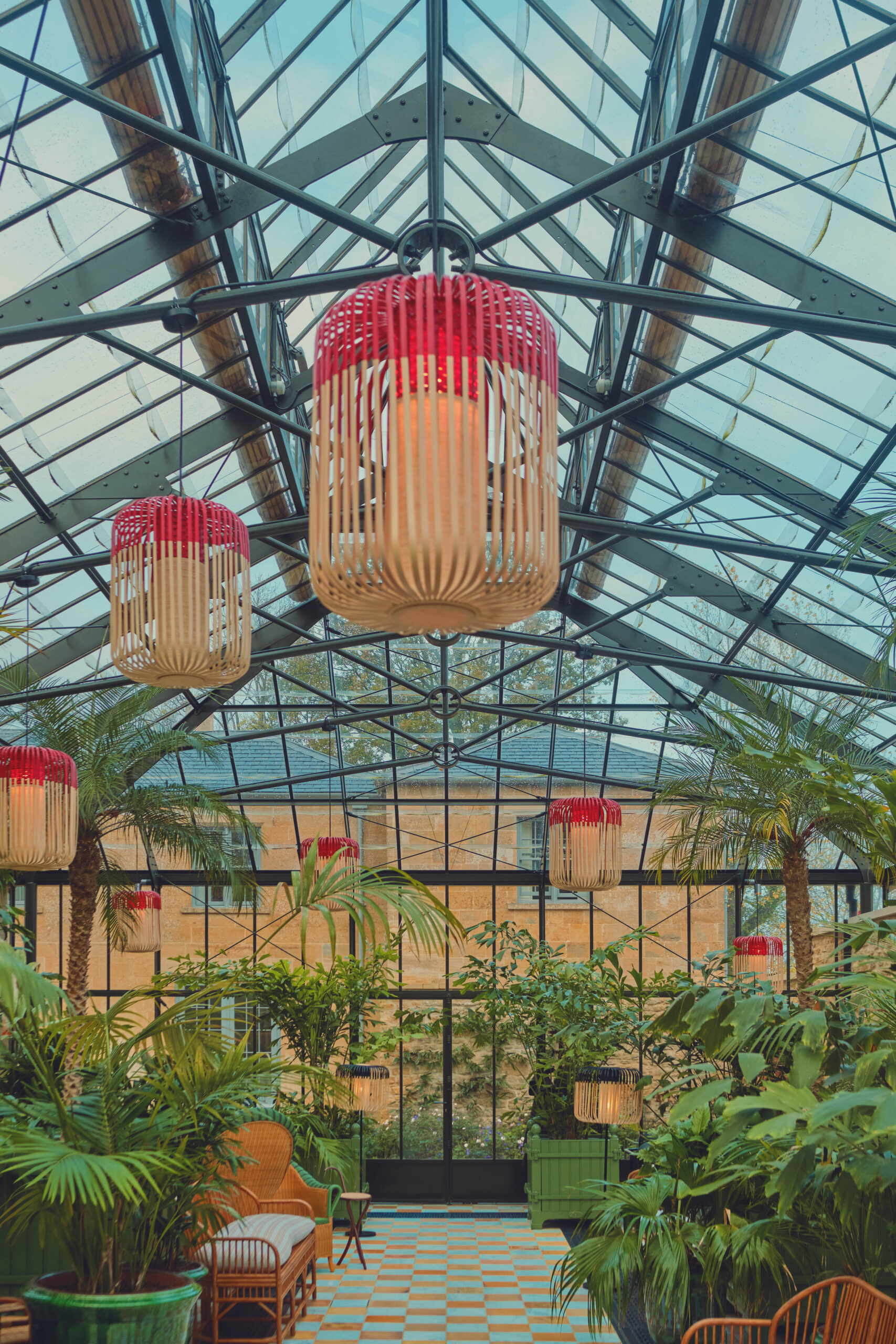
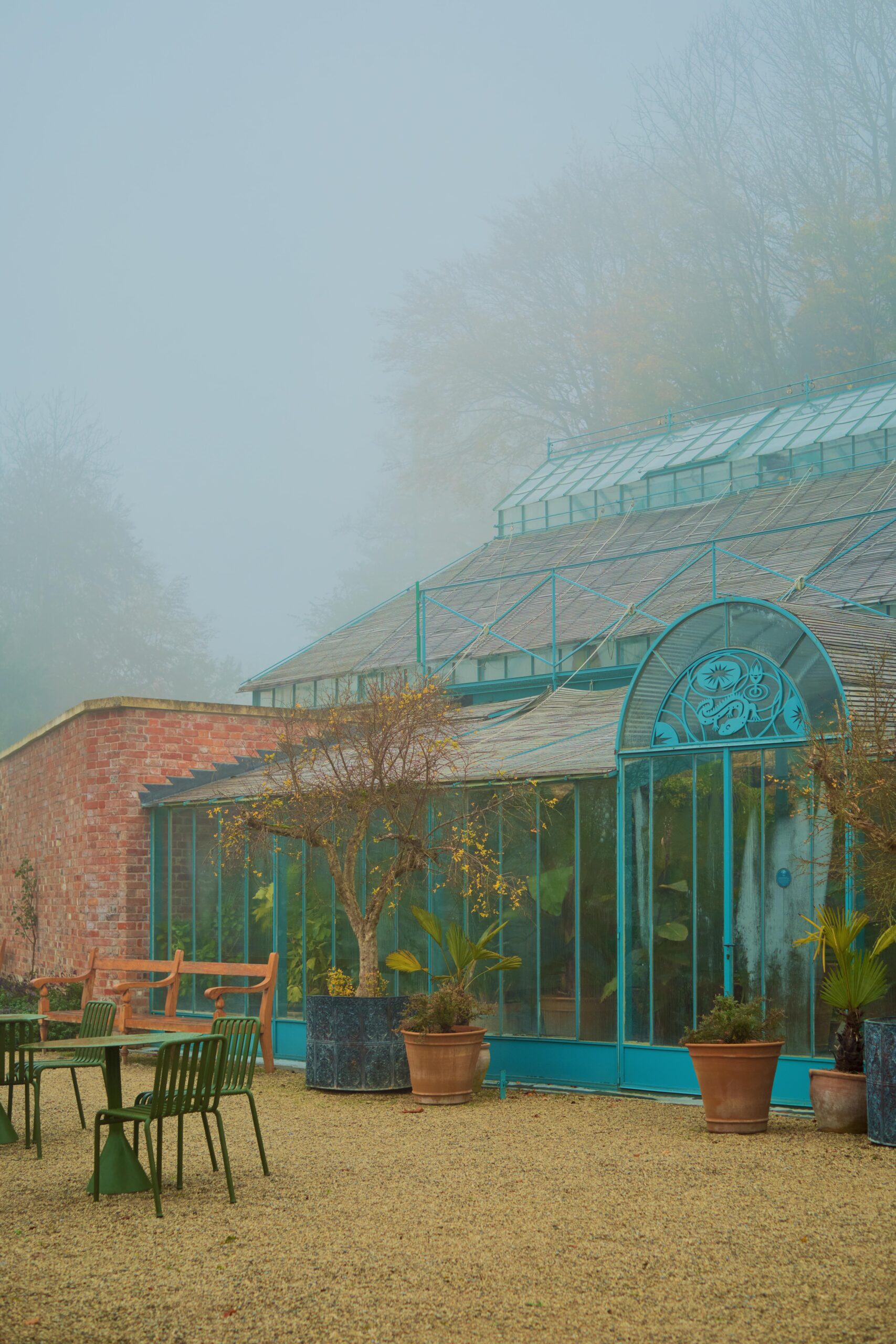
Beside the rectory are two more houses, each with four bedrooms. The Coach House occupies the former stables, and Cottage in the Wall was once the gardener’s home. The three houses share nearly five hectares of gardens and woodland, a swimming pool and a glasshouse, the Palm House. They can be booked separately or together, with room for 32 guests in all. A private chef and butler service are included in the stay.
Staying at Hadspen House and The Farmyard
On the main estate, Hadspen House and The Farmyard have 42 rooms between them. At Hadspen, you can stay in the Georgian mansion, where the library retains its fitted Chippendale-style bookshelves, or in one of the old buildings overlooking the stable yard.
On the other side of the apple trees, The Farmyard occupies a former dairy farm. Cattle still graze near the house, and you can cycle from one property to the other along the path through the orchards.
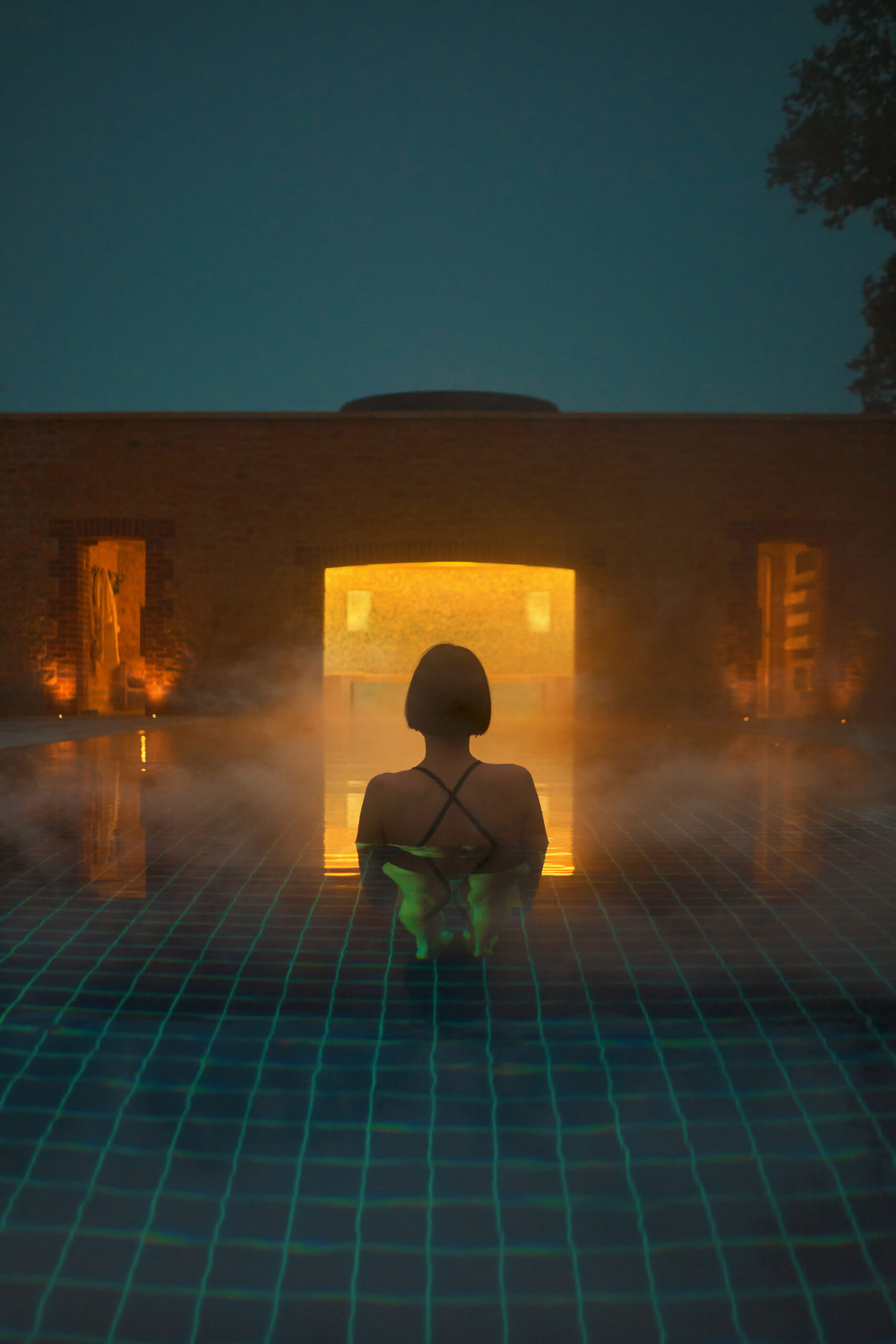
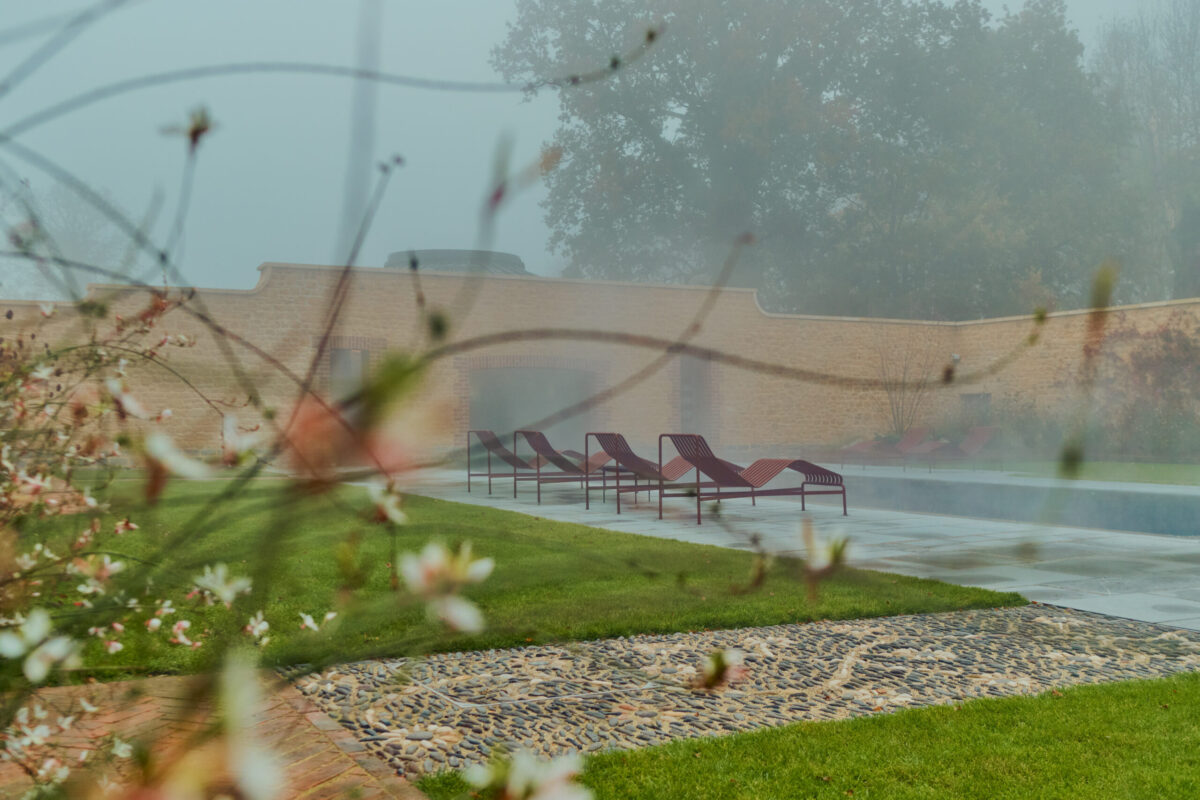
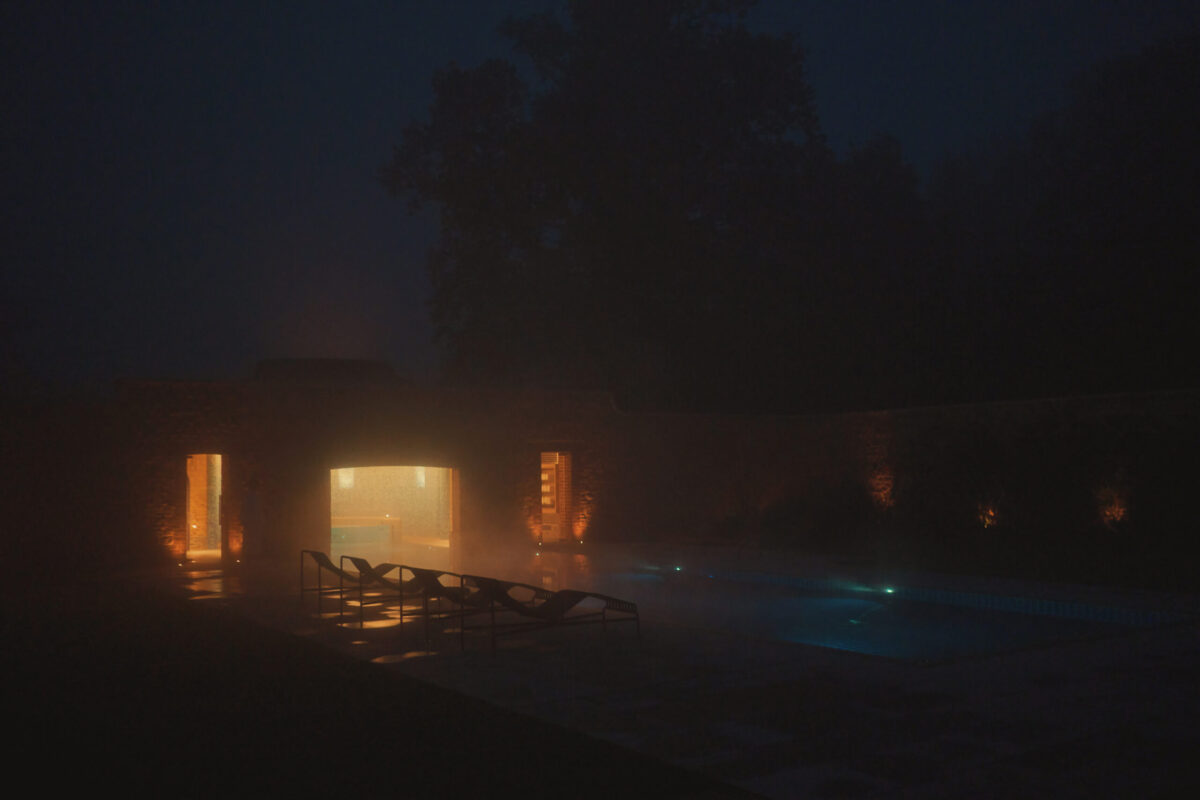
Both have a swimming pool, and guests at The Farmyard also have access to the spa at Hadspen House. Its heated indoor pool opens onto the garden. There’s a hammam and a sauna, as well as a gym overlooking the kitchen garden, where you can watch the gardeners at work.
The gardens at The Newt, from the Parabola to the woods where the deer roam
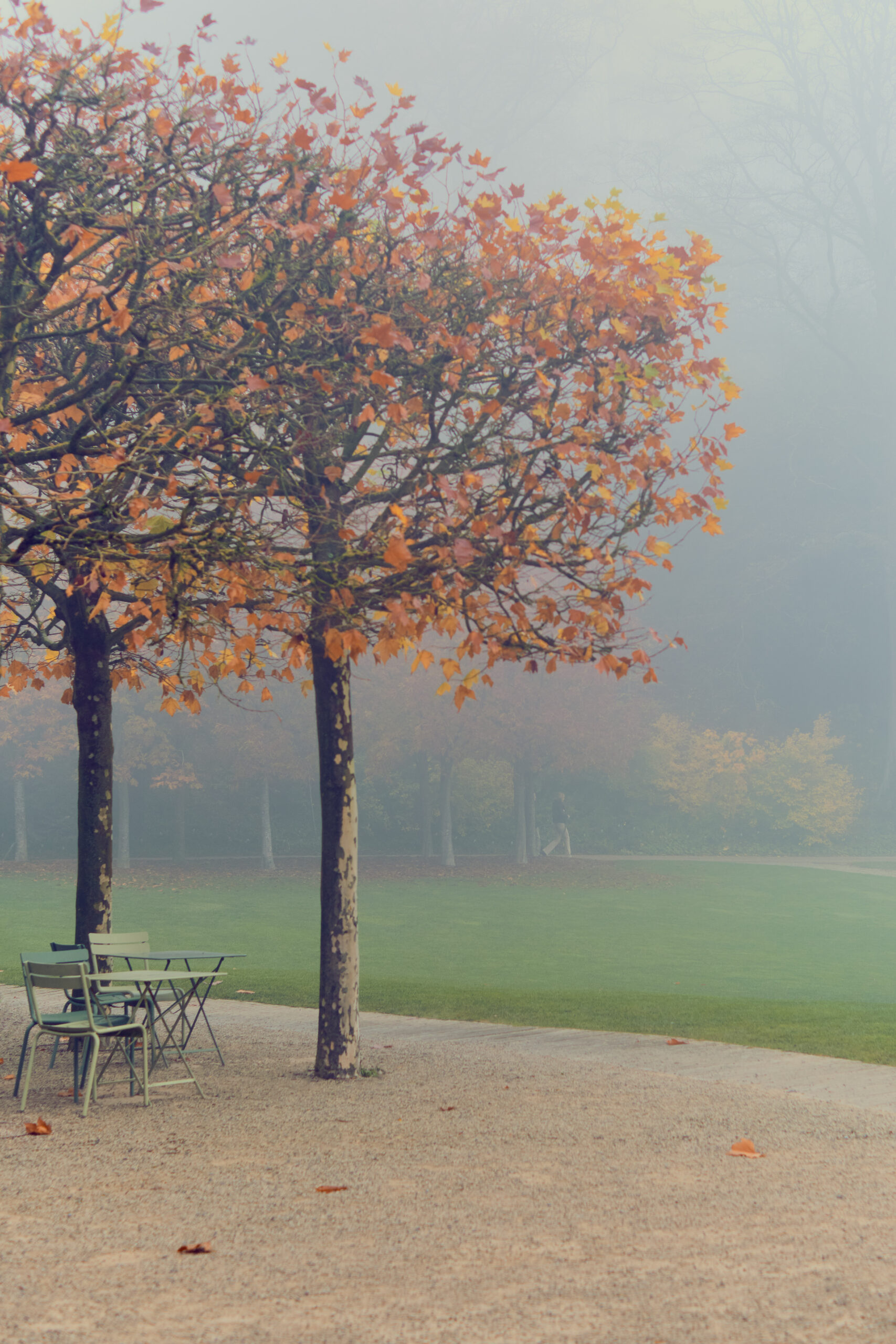
To explore The Newt’s twelve hectares of formal gardens, we’d start with the Parabola. Henry Hobhouse II conceived this D-shaped walled enclosure as a kitchen garden to supply the house. Today, some 460 apple trees grow here, representing 267 varieties grouped by place of origin. There are varieties from every apple-growing county in England, as well as from Wales, Scotland and Ireland.
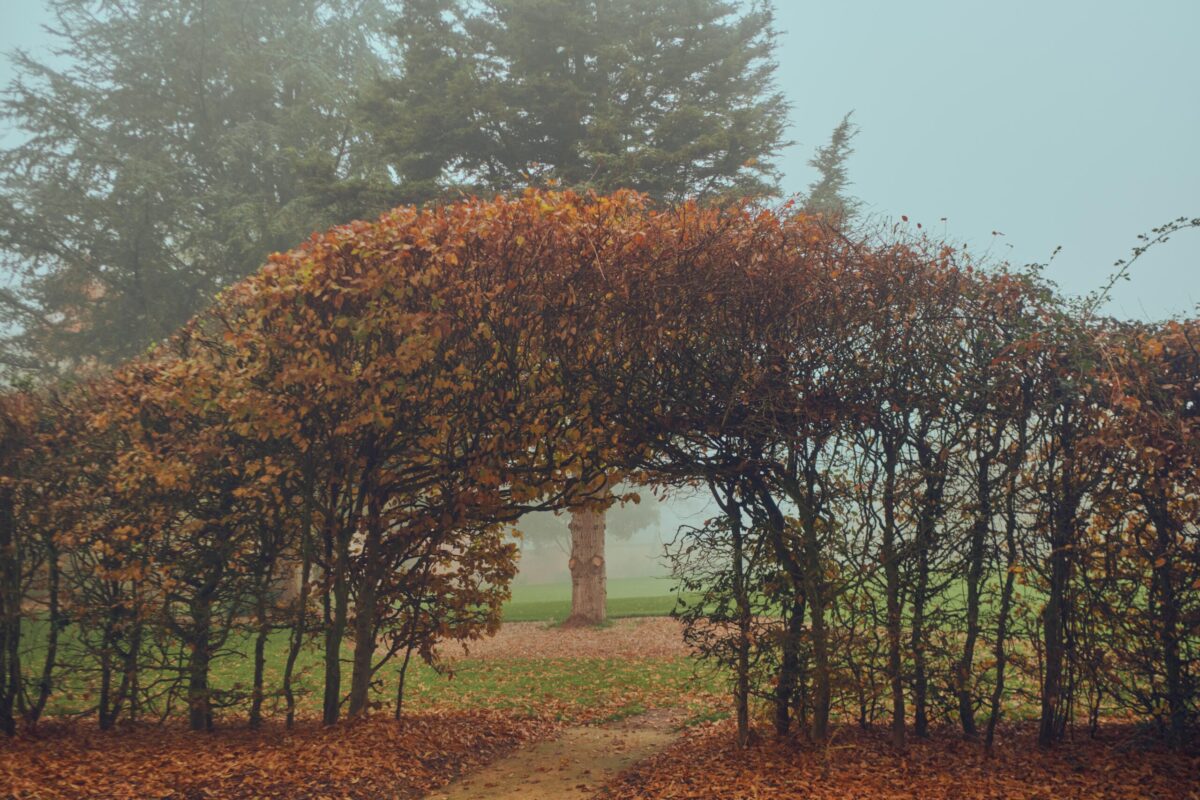
What struck us most was the shape the gardeners have given the trees. Over the years, they’ve trained the branches into espaliers, gradually creating a Baroque-inspired maze.
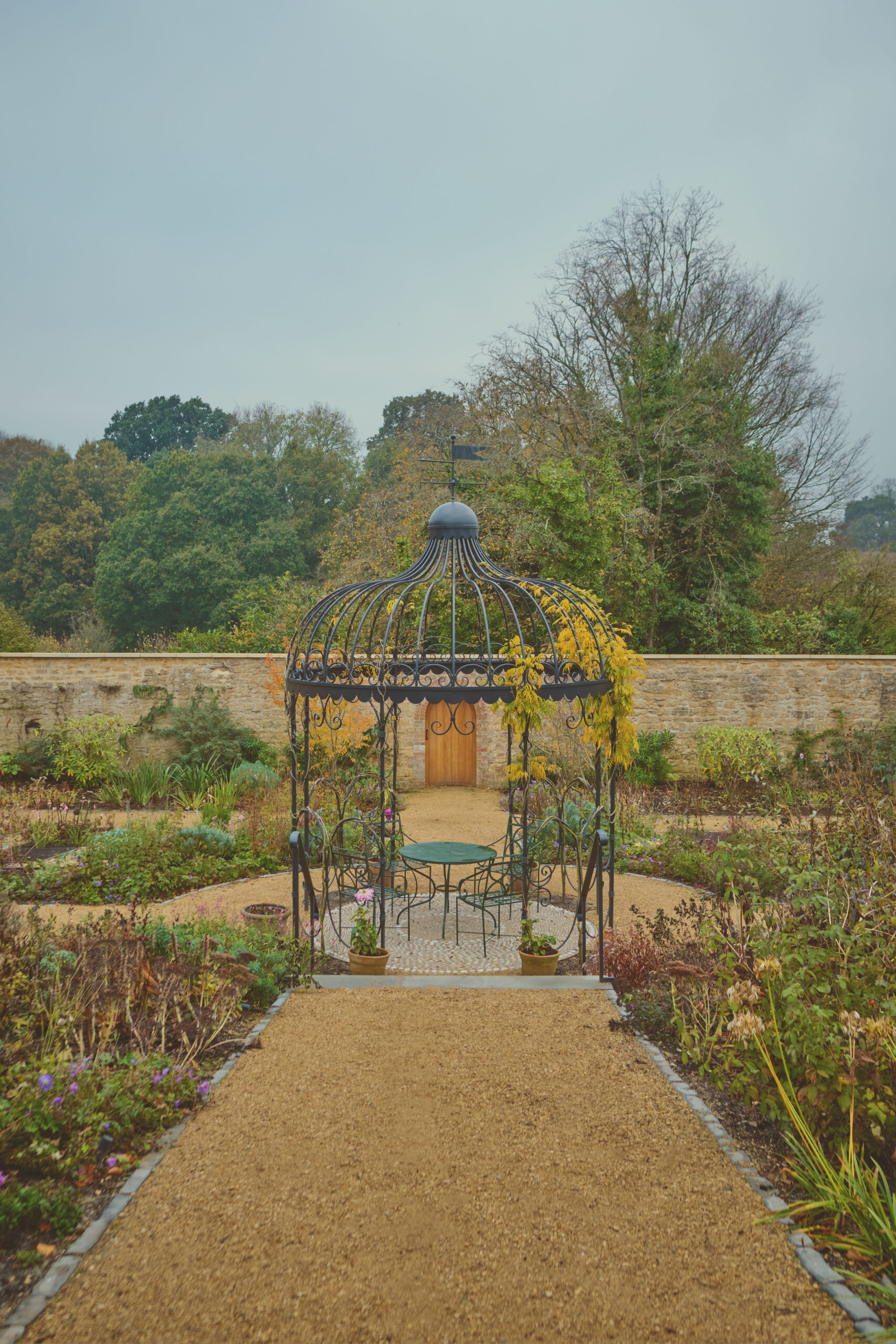
From the Parabola, you can stroll along The Avenue, head towards the kitchen gardens or carry on to the Four Seasons Garden, which opened in 2024. Each of its four gardens comes into its own in a different season. We’d love to return in spring, when the Japanese cherry trees are in blossom and you can see their reflection in the lily pond.
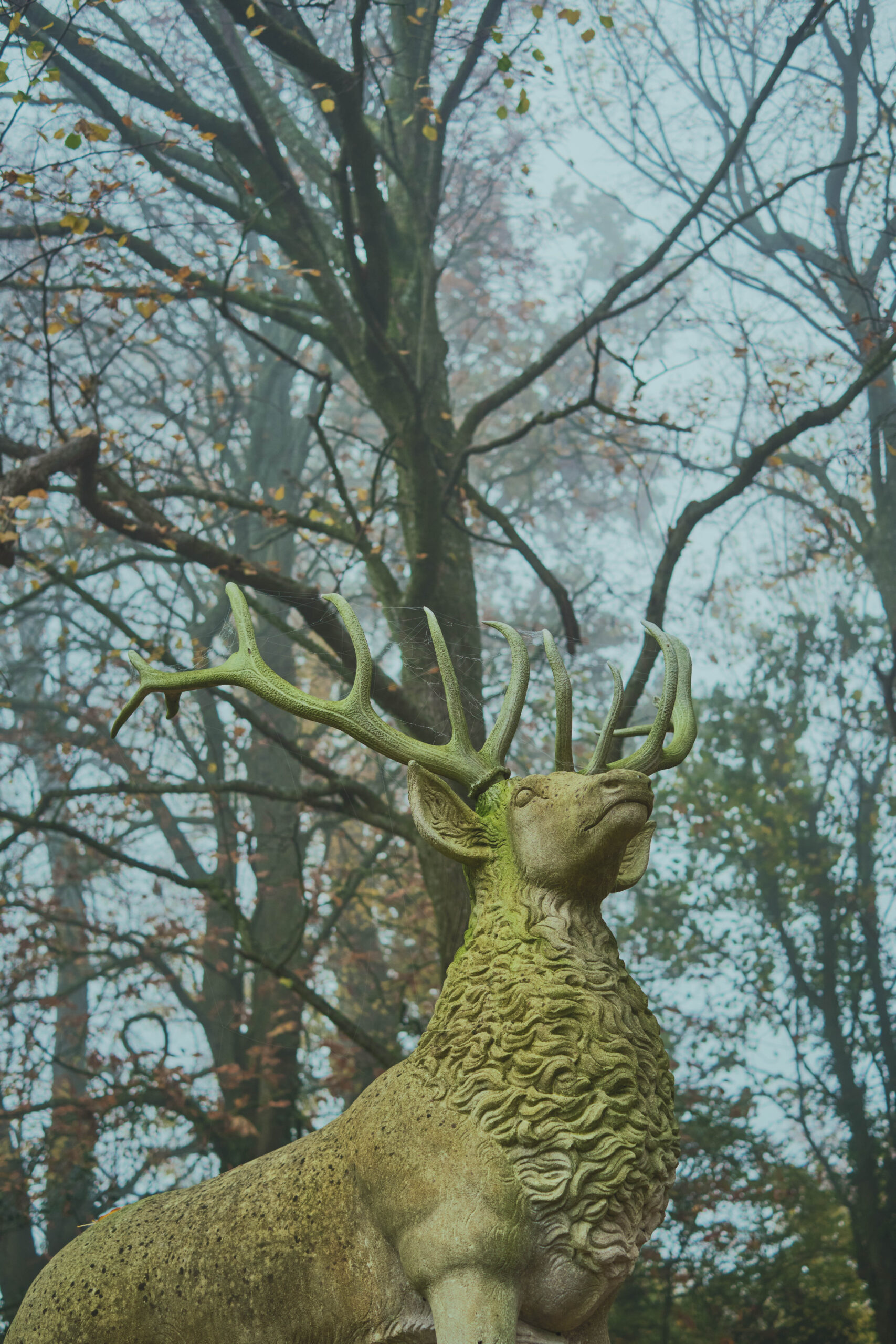
Ferns, orchids and tropical fruit trees grow under glass in the Winter Garden. Hidden in the woods is The Grotto, a cavern of volcanic rock and crystals that serves as the lair of a bronze wyvern, a dragon like the one we saw burn on Fire Night. The sculpture is remarkably lifelike, especially when you hear it roar. Children are advised to tread softly as they go in, in case they wake it…
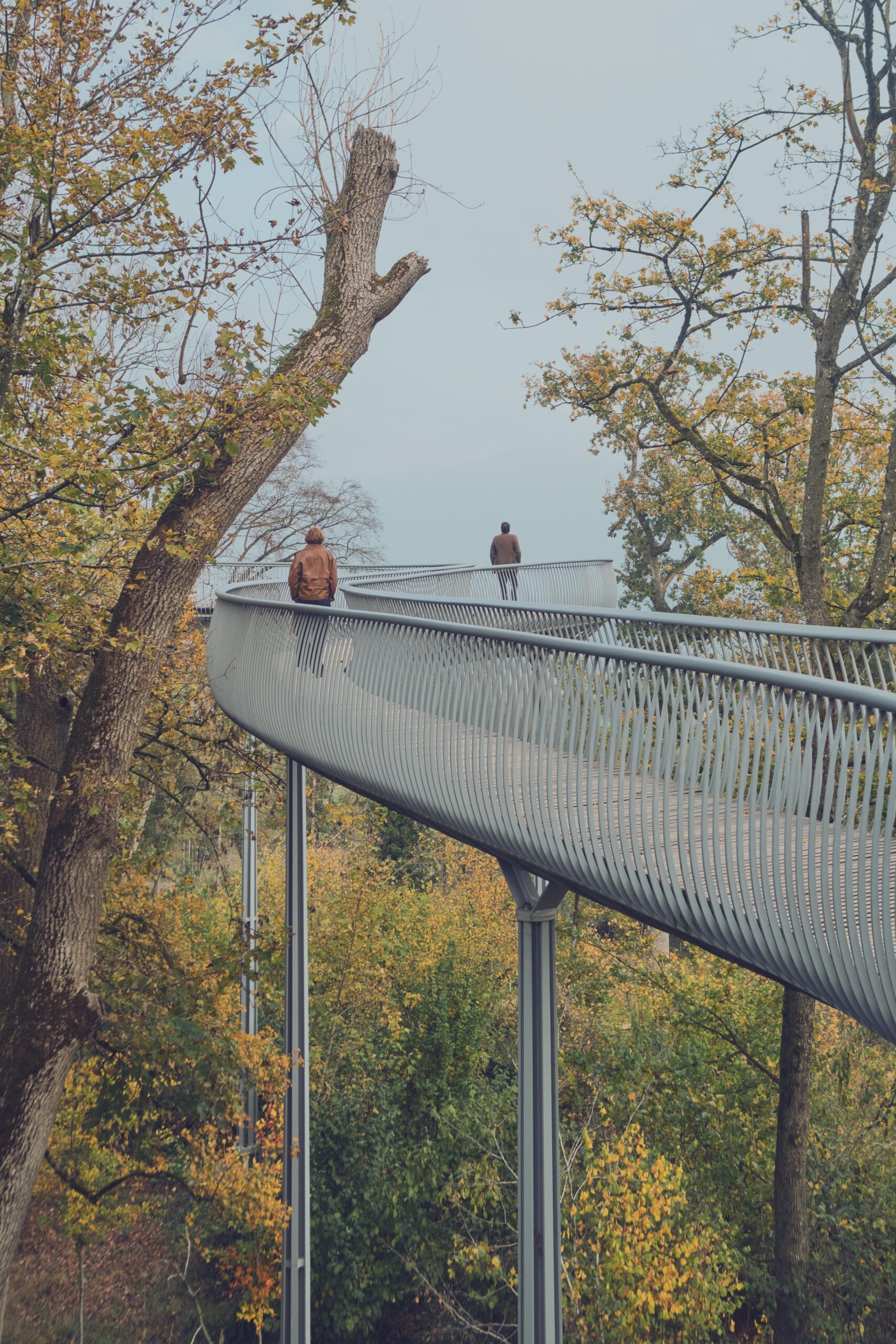
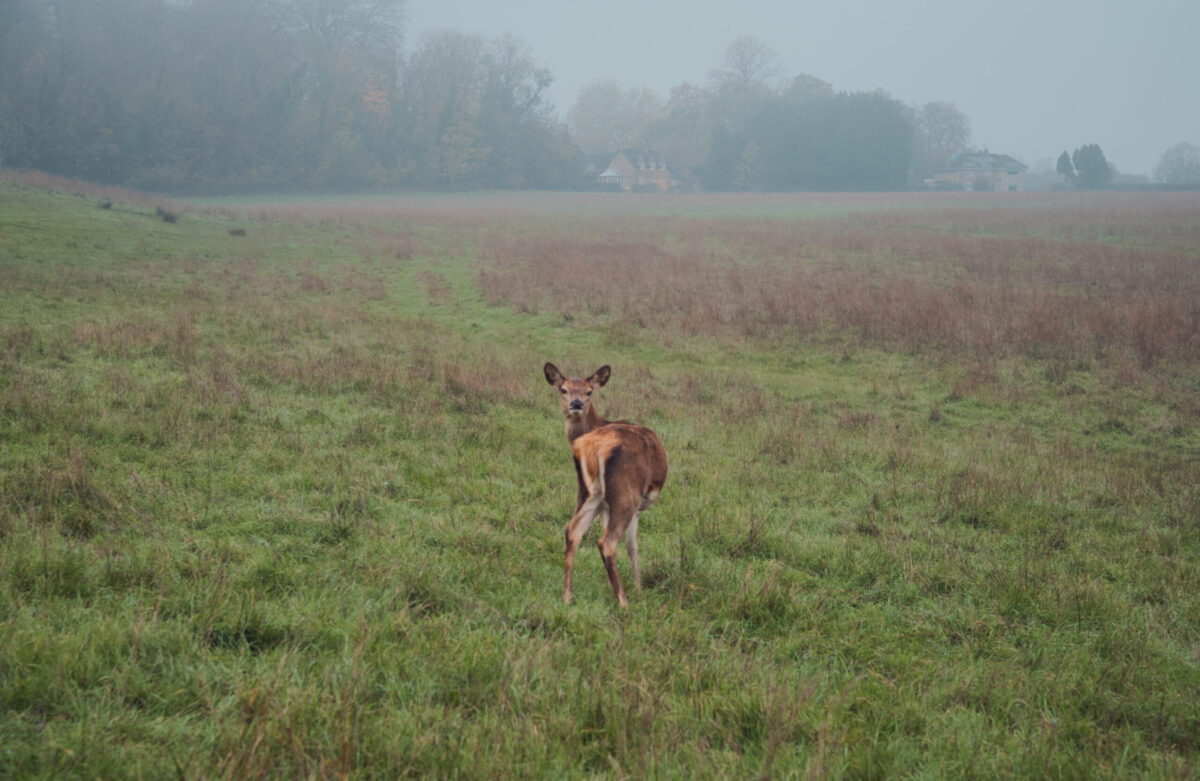
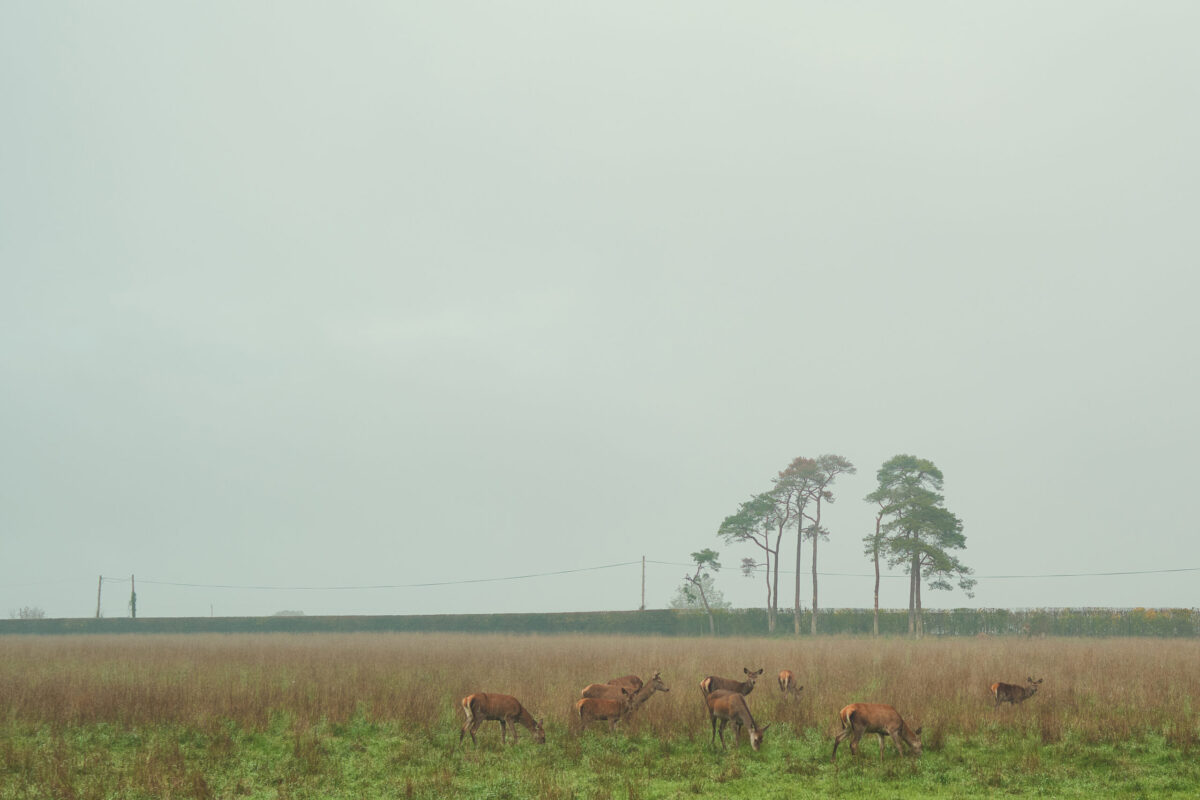
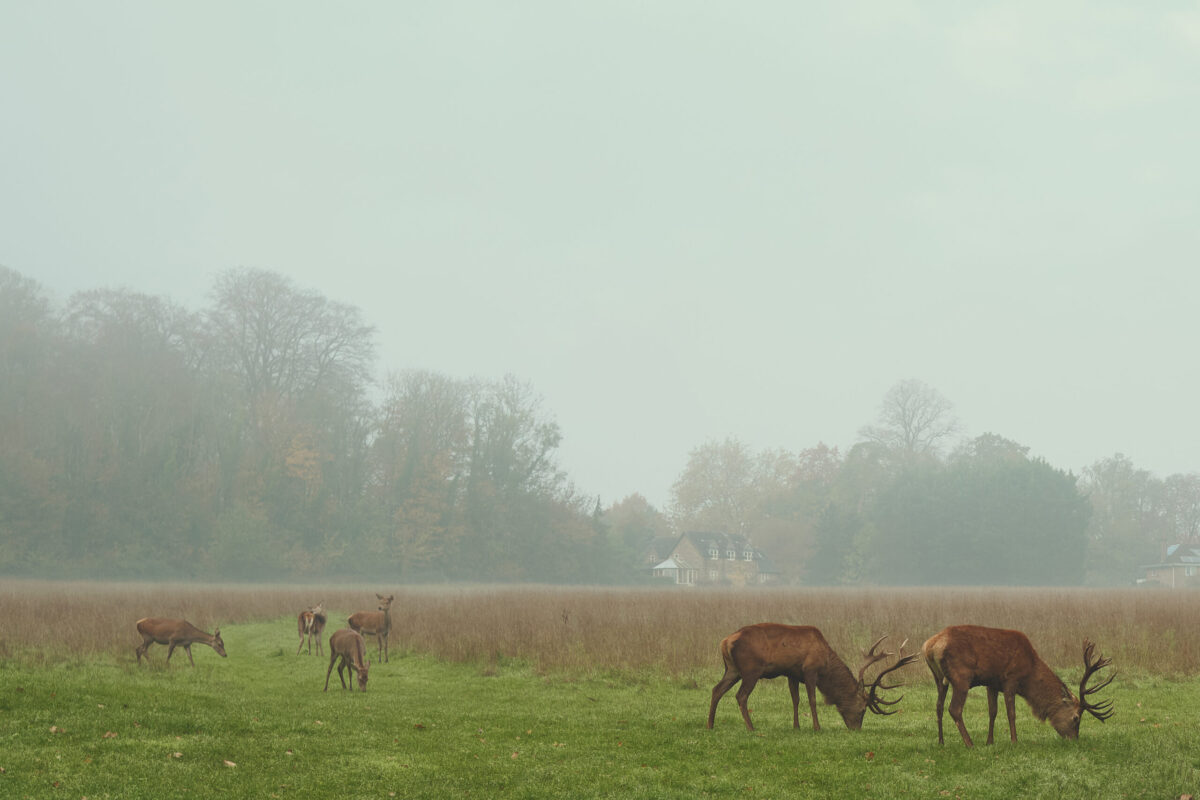
When you leave the grotto, it’s worth following the path a little further among the old oaks. We were surprised by how many deer we saw in the woodland clearings. Seeing them there among the trees was one of the loveliest moments of our stay.
Villa Ventorum, The Newt’s Roman villa
About twenty minutes’ walk from the Threshing Barn stands Villa Ventorum, a full-scale reconstruction of the Roman villa discovered on the estate. The Newt dates the original villa to around AD 351. We began our visit in the archaeological museum, where the original foundations are preserved alongside objects found during the excavations.
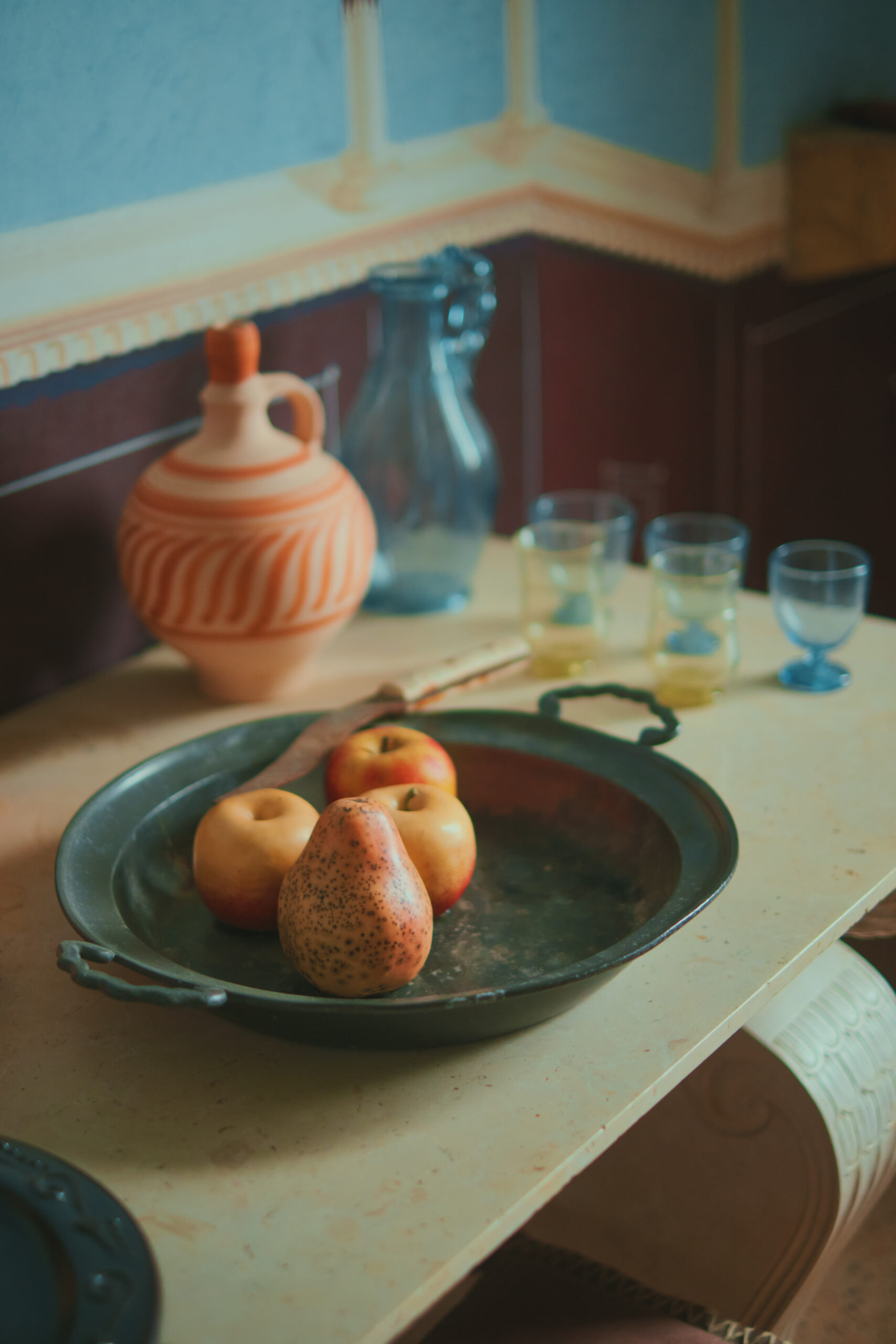
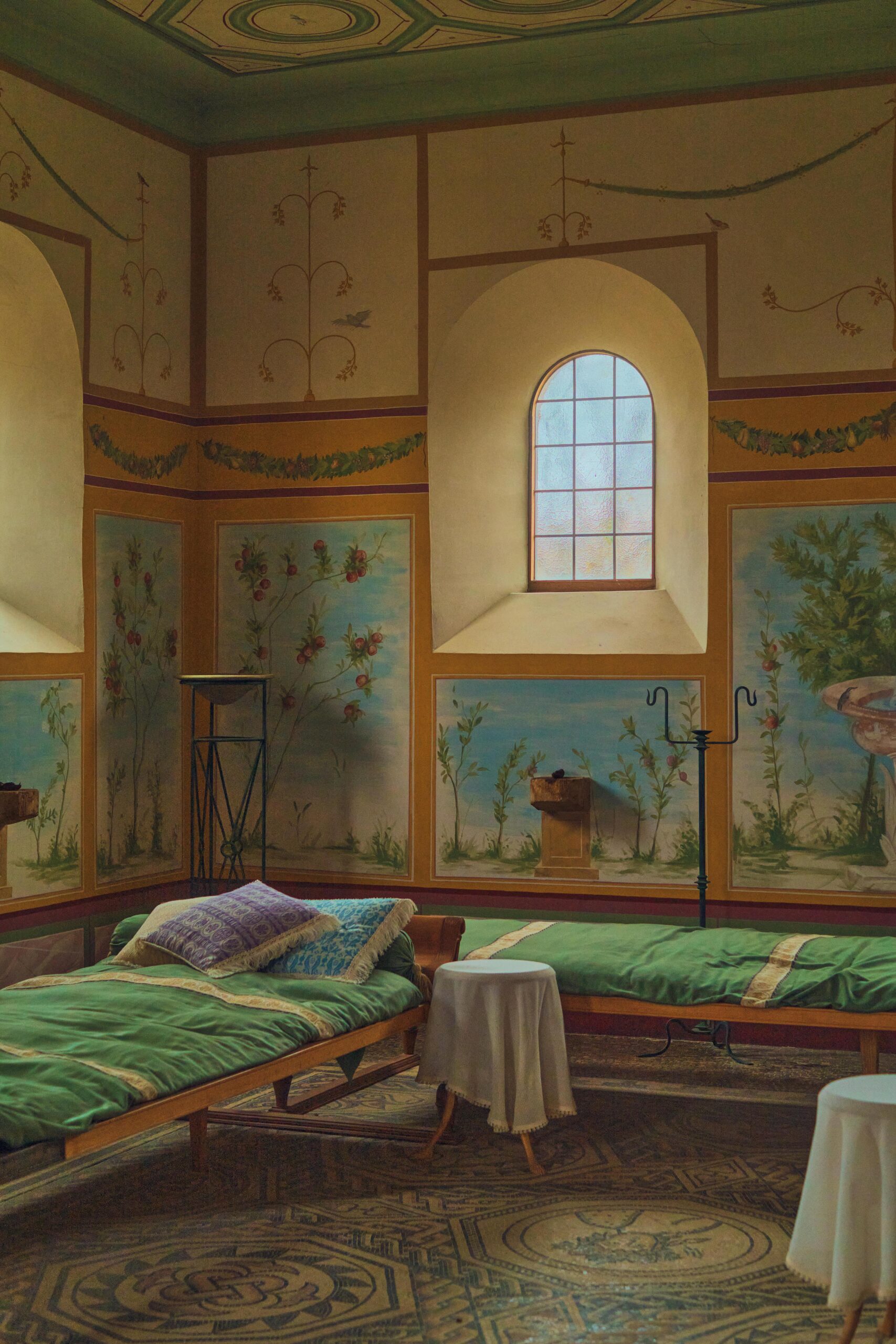
What we enjoyed most was walking from the museum into the villa itself. Just a few minutes earlier, we’d been tracing the outlines of the walls with our eyes, trying to imagine what it would have been like to live there. Now we could walk through the rooms, see the frescoes and mosaics up close and even look out over the garden.
From Avalon Farm to the table, where to eat at The Newt
Much of what you eat at The Newt comes from Avalon Farm. Here, David Rowley, who has a background in biodynamic farming, works to regenerate the soil and oversees the cultivation of more than 350 varieties of fruit, vegetables and herbs across nearly five hectares.
When Gelf Alderson, who oversees the food at The Newt, decides what to serve in the restaurants and what to sell in the shops, his starting point is what’s grown, reared and made on the estate.
The estate even has its own butchery, which supplies the restaurants and shops and allows the meat to be traced from the field right through to the butcher’s block.
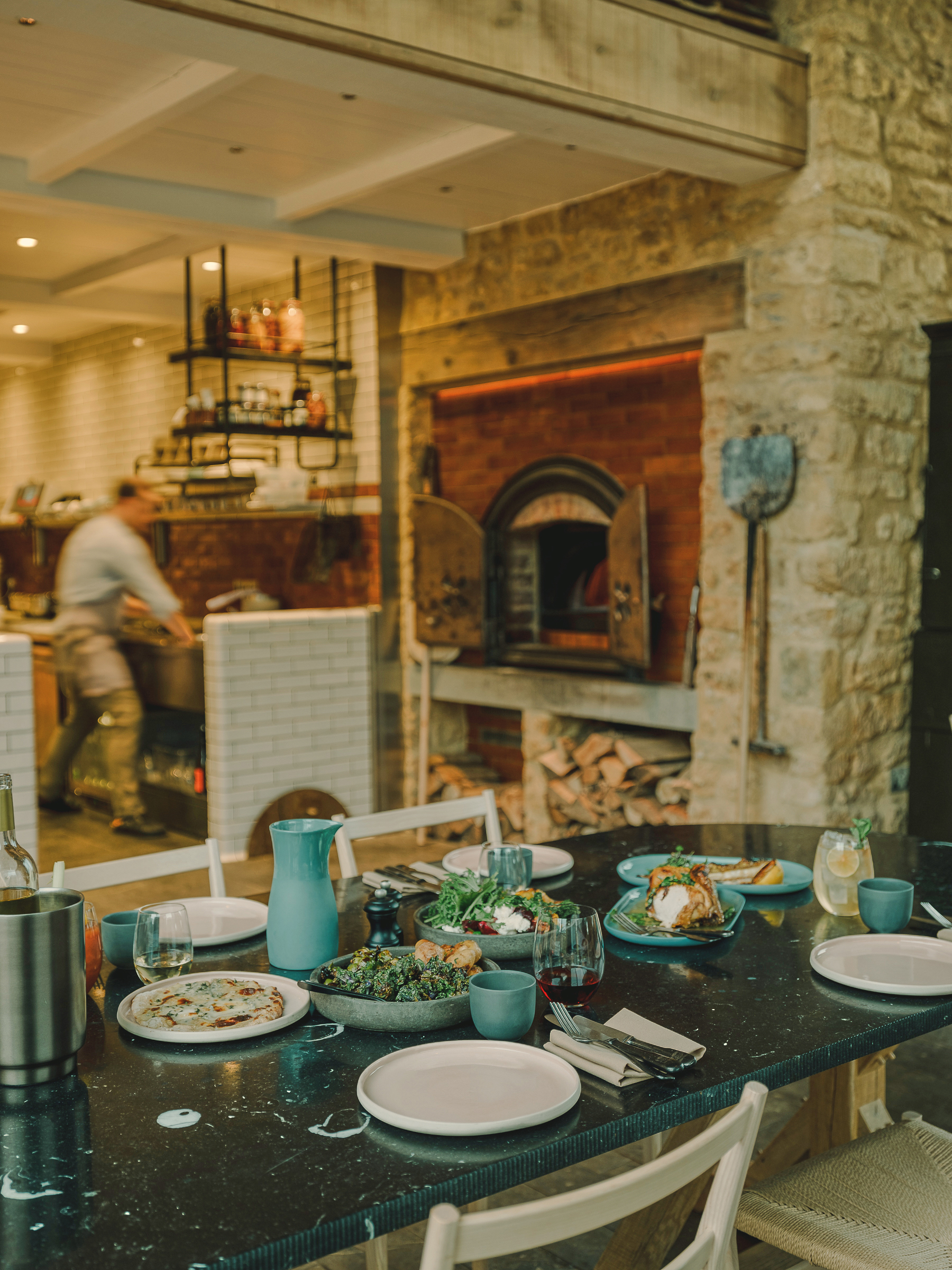
At the Garden Café, you only have to look out of the window to see where much of what’s on your plate comes from. The dining room overlooks the Parabola and the kitchen garden plots, and the vegetables growing just below take pride of place on the menu. At The Botanical Rooms, the restaurant at Hadspen House, the cooking follows the seasons too, and you eat in a dining room with leather banquettes and a vaulted glass roof.
At Farmyard Kitchen, in the old threshing barn on the former dairy farm, the food is cooked over embers and the dishes are served in the middle of the table for everyone to share. And if you’d prefer a quicker stop along the way, there’s the Cyder Bar.
The Creamery, a cheesemaking dairy at Castle Cary station
At Castle Cary station, Karen Roos and Richard Parr Associates restored an old dairy dating from 1912. It now houses The Creamery, where the cheese is made with milk from a rather unusual source for the English countryside, The Newt’s own buffalo herd.
Through a large window in the café, you can watch head cheesemaker Margaretha Van Dam and her team making the cheeses and yoghurts that are sold in the estate’s shops and served in its restaurants. In the café itself, the buffalo mozzarella comes with lemon zest and olive oil from Babylonstoren, bringing Karen Roos and Koos Bekker’s English and South African estates together on one plate.
Beside the station stands The Maid of Somerset, a 1921 Pullman carriage restored for afternoon tea.
The Creamery is open to the public, so you can also drop in for breakfast, pick up some cheese or have a coffee before catching your train.
Food and graphic design in The Newt’s shops
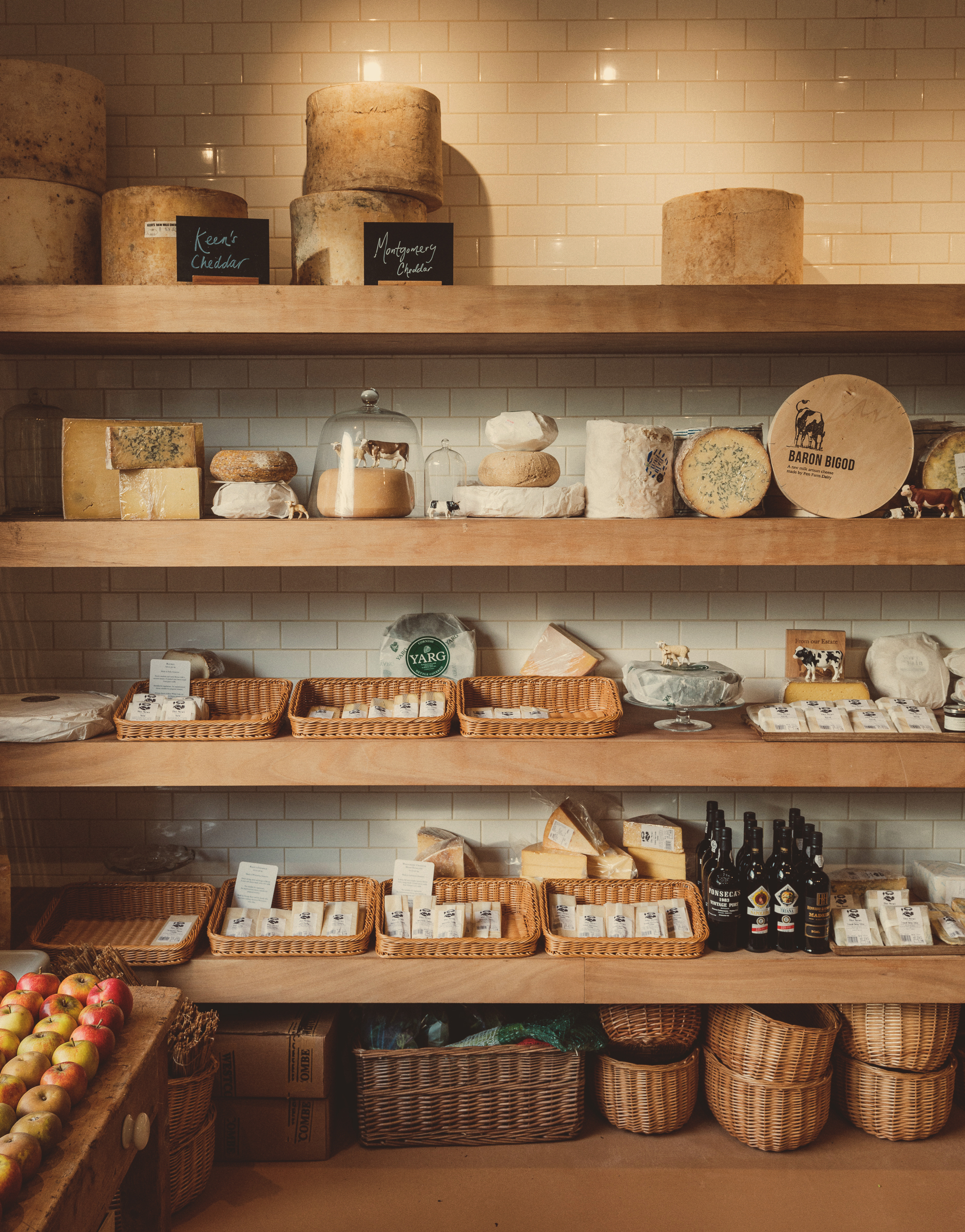
We could happily have spent ages in The Newt’s farm shops just looking at the packaging. We loved the dark green tins with gold lettering, the illustrated boxes of sweets and the sort of cider bottles you want to keep long after they’re empty. The designs are the work of the estate’s creative team, led by Atsushi Hasegawa.
For the Fine Cyder collection, whose name revives the Georgian spelling of cider, The Newt worked with the British studio Here Design.
Among the ciders was a name we recognised straight away, Yarlington Mill. The apple it’s made from is native to Yarlington. It was there, in the late 19th century, that a miller named Edward Bartlett discovered an apple tree that had sprouted from the wall of his mill.
And from cider to bread. Paulo Silva, who runs the bakery, works the apple pulp left in the press after cider-making into one of his sourdough loaves. His bakery also makes the estate’s buns, tarts and other sweet treats.
On the shelves you’ll find cheeses, yoghurts and honey from the estate, alongside preserves, chocolate, speciality coffee and a delicious chocolate and cherry granola. There are wines and olive oils from Babylonstoren too, including a Frantoiooil made with olives grown on the slopes of Simonsberg in South Africa.
What’s on at The Newt and a podcast to make the trip last a little longer
Besides Fire Night and the Wassail, there are two more dates worth putting in the diary. Over the nine days of the Great Garden Show, gardeners and specialists share their knowledge through talks, tours and workshops. If you’re interested in cider, Apple Day is a whole weekend of pressing apples, tasting different ciders and taking tractor rides through the orchards. Depending on the time of year, you can also join a dawn walk, go foraging for mushrooms or take part in a workshop with the estate’s beekeepers.
If you’re in London, the Great Garden Escape offers a day out at The Newt. The outing begins with breakfast aboard the train from Paddington and ends with afternoon tea on the journey back. If you’d rather make your own way there, you can stay on the estate or become a member to visit the gardens and exhibitions throughout the year.
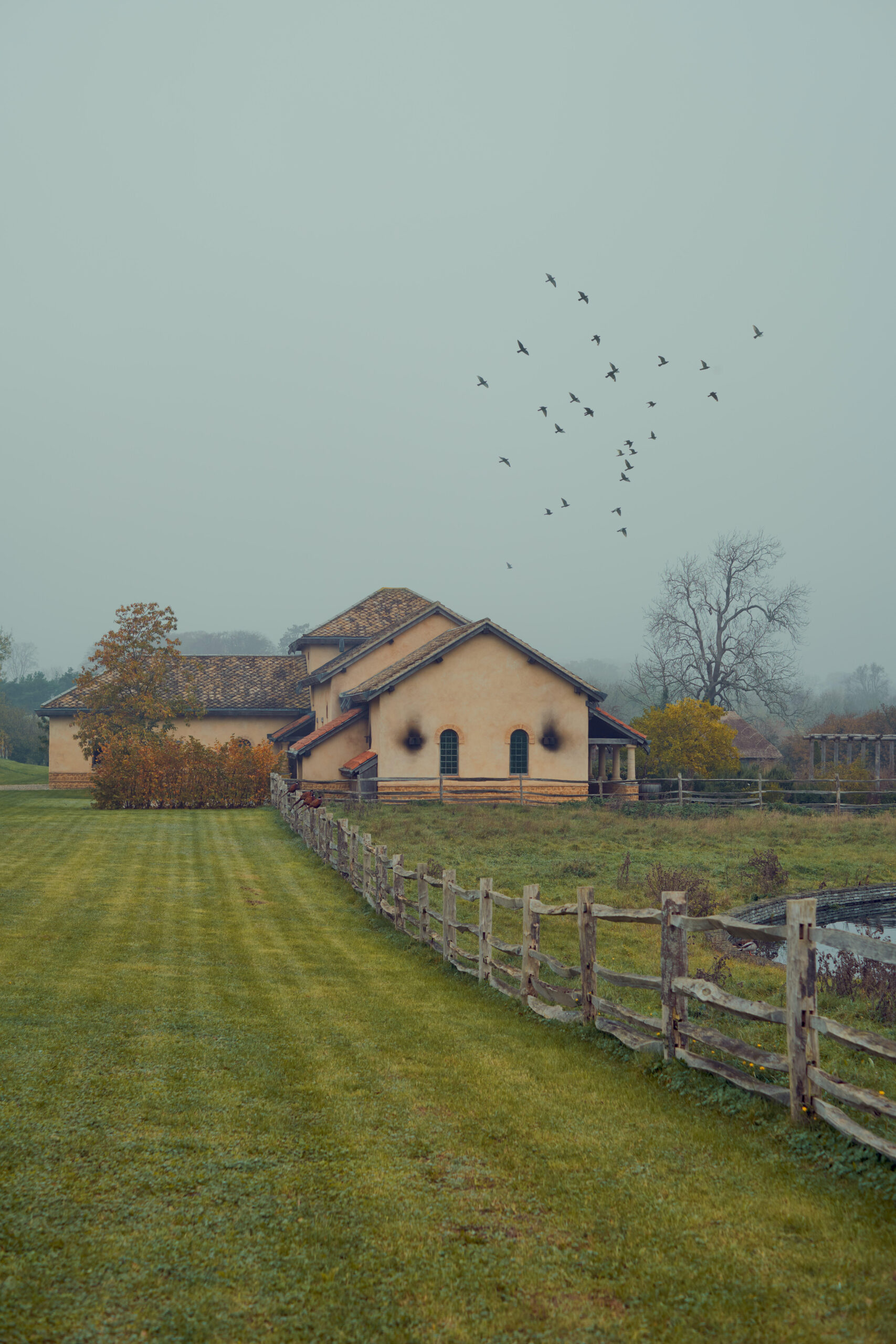
Once we were home, we were delighted to discover The Newt Podcast. Arthur Cole, the estate’s head of programming, interviews his guests as they walk. He’s discussed regenerative gardening with landscape designer Marian Boswall and explored the Marl Pit with psychotherapist Julia Samuel. Having walked through those very gardens ourselves, we found that listening to their conversations was a lovely way to make the trip last a little longer.
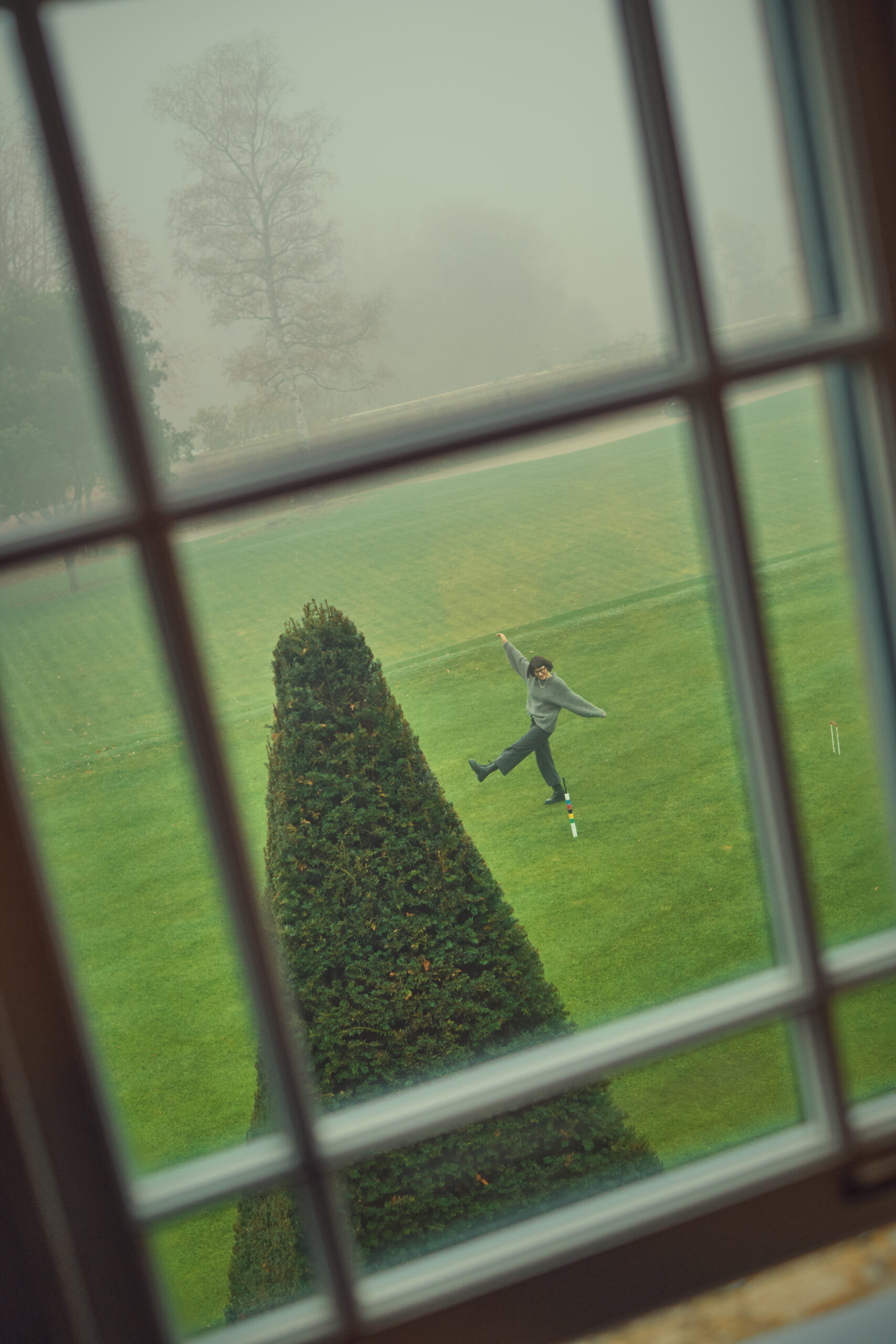
Glastonbury Tor, on the trail of Avalon
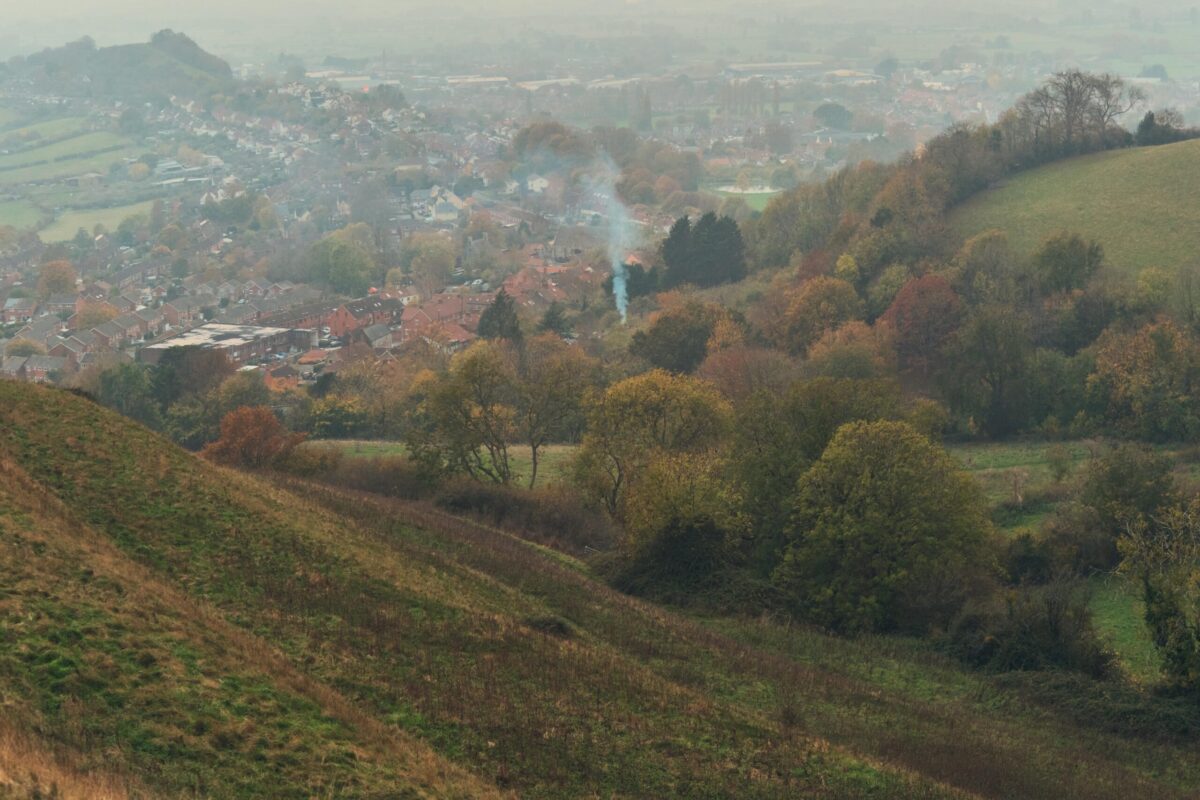
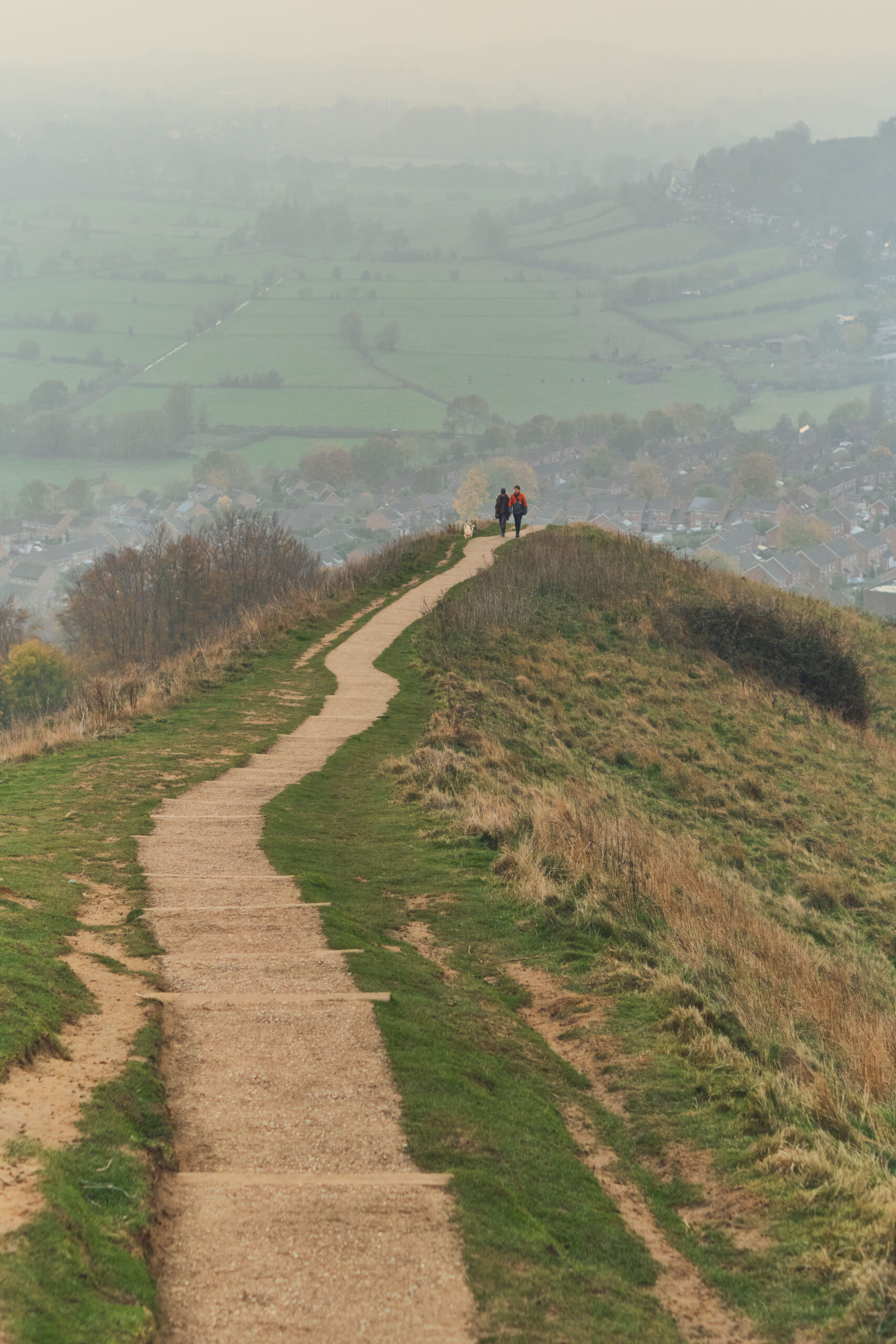
During our stay, we also made our way to Glastonbury to climb the Tor, the hill overlooking the Somerset Levels. From the bottom, we could already make out the silhouette of St Michael’s Tower, all that remains of the medieval church that once stood on the summit. It guided us all the way up, though the best view came when we reached the foot of the tower and turned round.
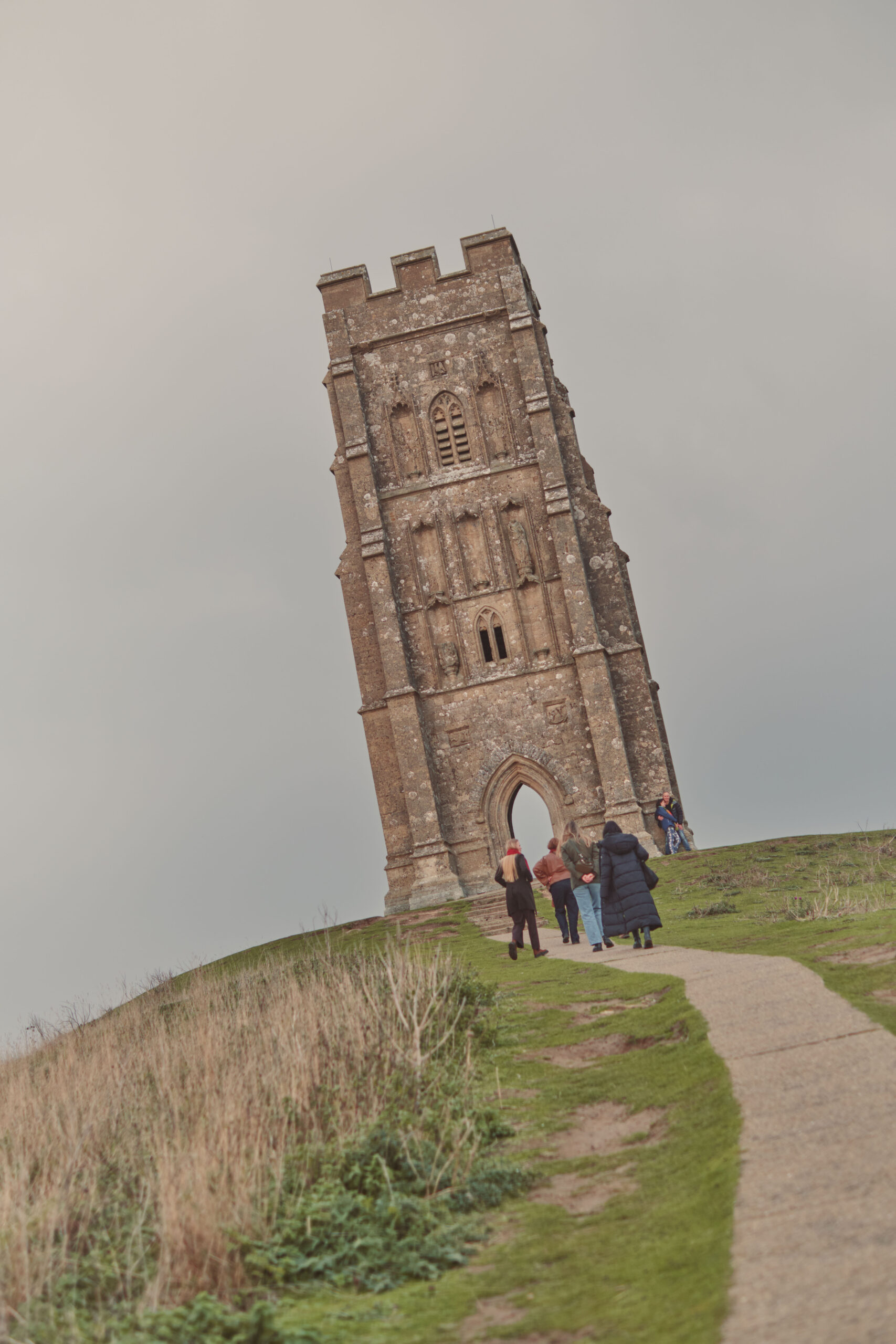
Centuries ago, when water covered much of this land, the Tor rose like an island from the marshes. From the top, with the tower behind us, we tried to imagine how far the water had once stretched across the fields before us. Looking out over that landscape, it was easier to understand why medieval tradition identified Glastonbury with Avalon, the legendary island where King Arthur was taken to have his wounds tended after the Battle of Camlann.
There are plenty of reasons we’d go back to The Newt. We’d love to see the cherry trees in blossom in spring and, of course, to find out which willow creature will take the dragon’s place at the next Fire Night.
We remember our walks among the apple trees, the deer we saw in the woods and our breakfasts in the kitchen at Yarlington Lodge just as fondly as the night we watched the dragon burn. We enjoyed discovering the little details that connect one part of the estate to another, and we loved its delicious artisan produce and beautifully designed packaging. You can find the products in The Newt’s shops, in London delicatessens and in its online shop.
We also loved chatting to the people who work there and hearing the enthusiasm with which they spoke about this corner of Somerset. Until next time!
(*) Photographs by Ely Sánchez (CC/studio · CC/magazine).